Robert Draper looks into revisionist accounts that suggest history hasn’t been entirely fair to the Roman emperor:
The dead do not write their own history. Nero’s first two biographers, Suetonius and Tacitus, had ties to the elite Senate and would memorialize
his reign with lavish contempt. The notion of Nero’s return took on malevolent overtones in Christian literature, with Isaiah’s warning of the coming Antichrist: “He will descend from his firmament in the form of a man, a king of iniquity, a murderer of his mother.” Later would come the melodramatic condemnations: the comic Ettore Petrolini’s Nero as babbling lunatic, Peter Ustinov’s Nero as the cowardly murderer, and the garishly enduring tableau of Nero fiddling while Rome burns. What occurred over time was hardly erasure but instead demonization. A ruler of baffling complexity was now simply a beast.
“Today we condemn his behavior,” says archaeological journalist Marisa Ranieri Panetta. “But look at the great Christian emperor Constantine. He had his first son, his second wife, and his father-in-law all murdered. One can’t be a saint and the other a devil. Look at Augustus, who destroyed a ruling class with his blacklists. Rome ran in rivers of blood, but Augustus was able to launch effective propaganda for everything he did. He understood the media. And so Augustus was great, they say. Not to suggest that Nero was himself a great emperor—but that he was better than they said he was, and no worse than those who came before and after him.”
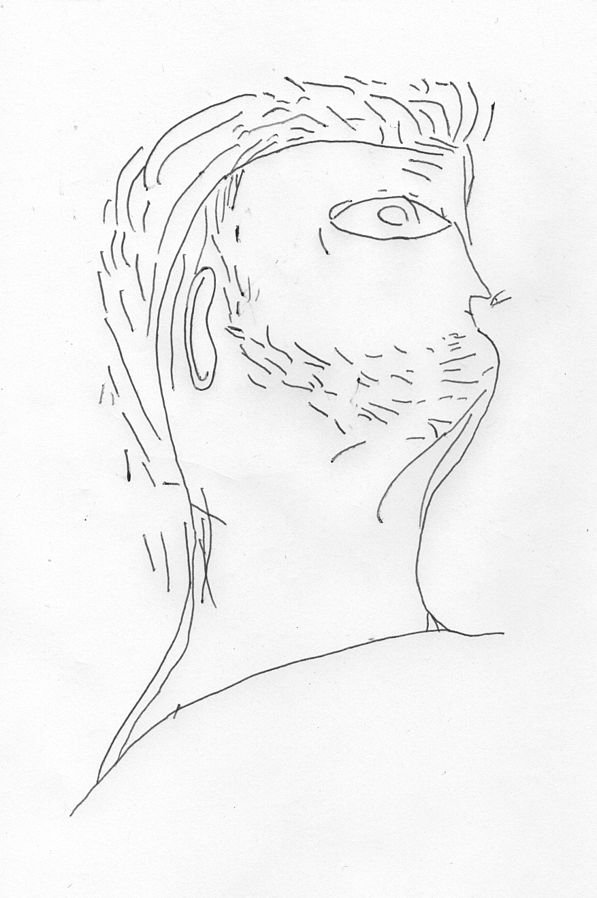
(Image: Graffiti portrait of Nero, c. 1st century, via Wikimedia Commons)
 The Dish
