Turkey’s hostages were freed over the weekend:
Turkey’s President Recep Tayyip Erdogan said Sunday that the release of 49 hostages held by Islamic State had removed the main obstacle to joining a U.S.-led coalition against the extremist group, spurring hopes that Ankara would take a more robust role.
The US is certainly eager for Turkey to join the fight. Joshua Keating explains:
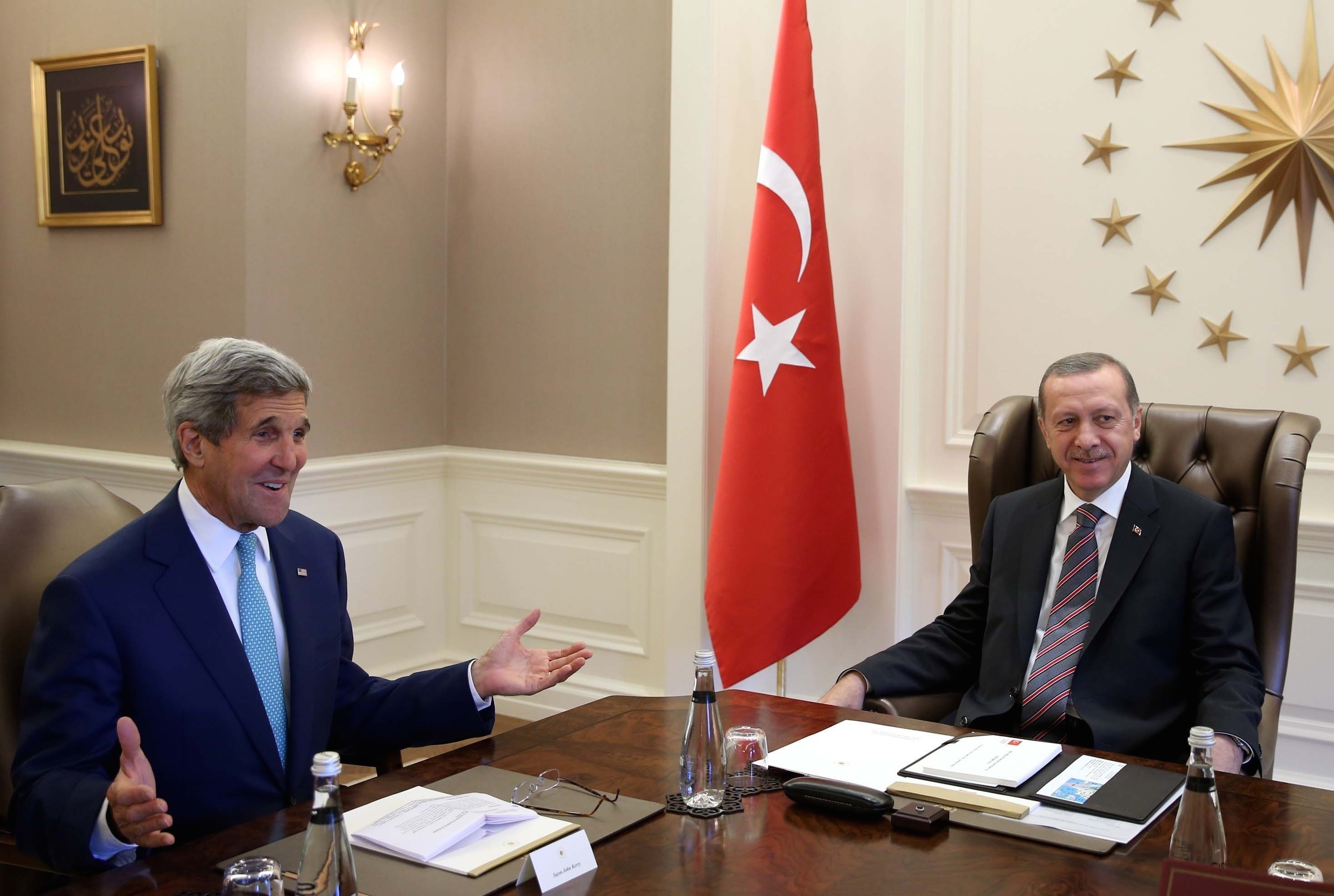
The U.S. badly wants Turkey to take a prominent role in its anti-ISIS coalition, including allowing its bases to be used to launch airstrikes. Ankara has been reluctant to fully commit to the effort so far, due to fears of blowback and, in particular, concerns about the status of the Turkish hostages. Secretary of State John Kerry said today that now that the hostage situation has been resolved, he expects Turkey to commit its resources to the fight. “The proof will be in the pudding,” he said.
Joshua Walker encourages Turkey to act:
The alternative of Ankara remaining on the sidelines once again dooms Iraq to the same outcomes it faced the last time Turkey chose not to participate. Unlike last year when Erdogan bemoaned the lack of international consensus behind acting in Syria, he should seize the initiative that President Obama has already provided with airstrikes and increased surveillance against a universally acknowledged threat to galvanize an international response. Only time will tell if Washington can “reset” its Turkey policy by bringing Ankara into its coalition by a mix of private tough love and public flattery. Assuring Ankara that the anti-ISIS coalition will not harm its own national interest, but rather help eliminate a mutual threat that Turks are struggling to cope with further through economic assistance for the refugees already within their borders and potentially creating defactobuffer zones within existing ISIS territory would go a long way. Making Turkey the tip of the spear against ISIS would defuse any anti-Islamic theatrics and also help plan for a post-ISIS future that involves complicated questions about the status of the Kurds that Ankara is particularly worried about.
But Marc Champion foresees complications:
Erdogan aggressively committed himself to Assad’s demise soon after Syria’s military began slaughtering protesters in 2011. He opened Turkey’s borders and coffers to opposition groups willing to fight the Syrian dictator, including Islamist radicals. Whether or not Islamic State received any of this official support, it has been recruiting within Turkey and is embedded among the 850,000 Syrian refugees on Turkish soil.
(Photo: By Kayhan Ozer/Anadolu Agency/Getty Images)
 The Dish