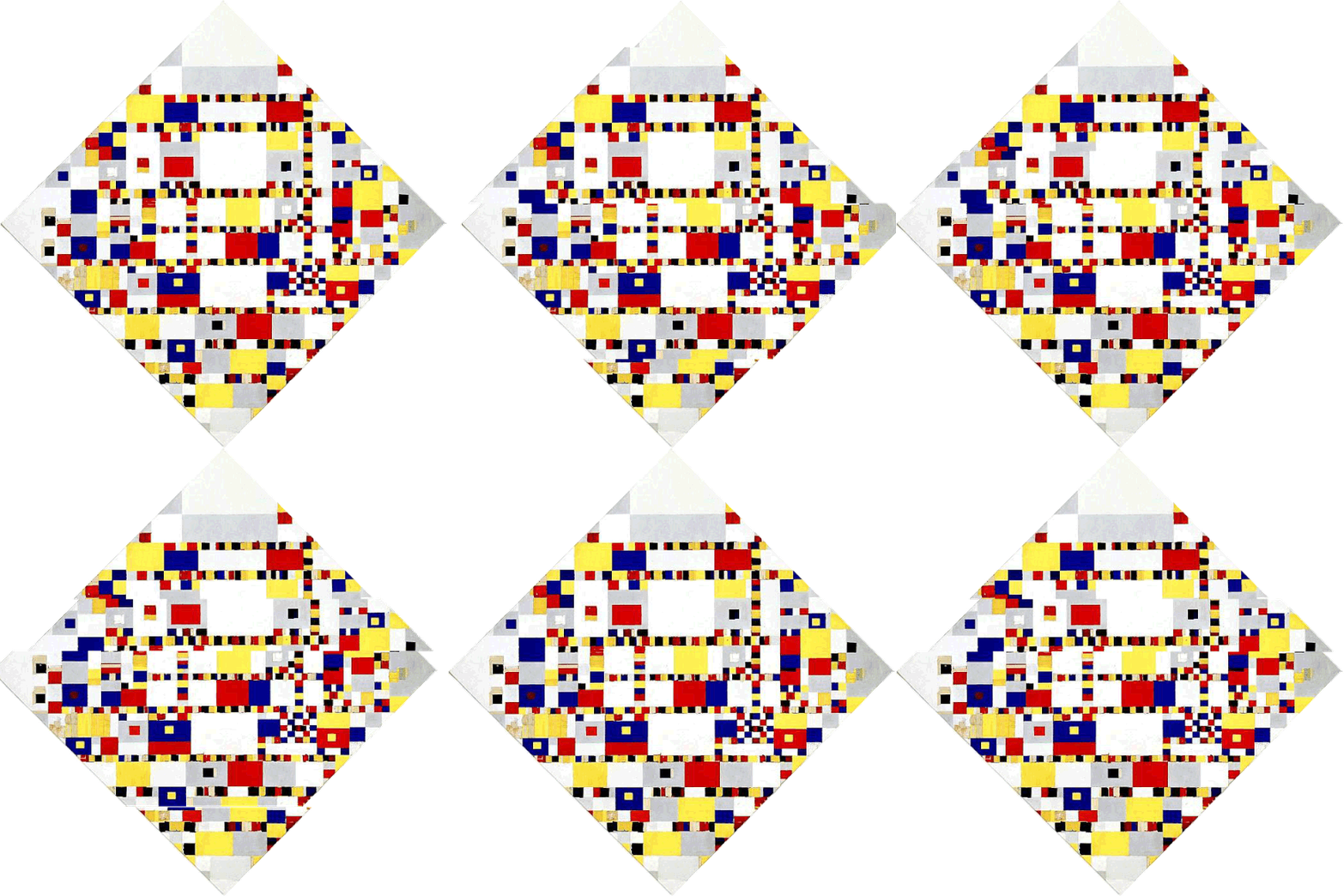
On a visit to the Gemeentemuseum in his home country of the Netherlands, Joseph O’Neill paused before a work by Piet Mondrian:
There was one painting which triggered no déjà vu: Mondrian’s final work, the unfinished “Victory Boogie-Woogie”. The museum acquired it in 1998. Here was something I could inspect with critical purity. I was looking at a large, lozenge-shaped surface occupied by hundreds of quadrilaterals of varying sizes distributed in an irregular gridiron. I was looking at blue and yellow and white and black and grey. I was looking at a canvas marked with oil and rectangles of painted paper tape. I couldn’t help it:
I went from seeing to sensing, which is to say I detected a strong painterly gladness and vibrancy in what I saw, as if a mark, before it is anything else, is a feeling. And then, by a further reflex of subjectivity, I transgressed into the realm of interpretation Mondrian so strenuously resisted: this was a jazzy and urban painting, surely, a homage to the city in which the artist lived as a war exile from 1940 to 1944—New York, where I live. How else to explain the taxi-yellow squares? How else to account for this humming and tooting gridlock? …
Mondrian always worked to music, and in his New York years he loved to paint to jazz. With “Victory Boogie-Woogie”, he never tired of applying and re-applying provisional squares of painted paper tape to the canvas. Either the painting never achieved a satisfactory stasis, or Mondrian joyfully lost faith in the idea of the static. The latter seems more likely. What is seen cannot be reconciled with what is remembered.
(Animated GIF of Mondrian’s Victory Boogie Woogie by Rosa Menkman)
 The Dish