Concluding a series of conversations with philosophers of religion – many of which we’ve featured on the Dish – Gary Gutting conducts a self-interview, posing and answering the question:
G.G.: How can you be an agnostic and still claim to be a Catholic?
g.g.: Because, despite my agnosticism, I still think it’s worth pursuing the question of whether God exists, and for me the Catholic intellectual and cultural tradition has great value in that pursuit.
G.G.: Still, I don’t see how you can find a place in a church that claims to be the custodian of a divine revelation, when you don’t believe in that revelation.
g.g.: The fundamental revelation is the moral ideal expressed in the biblical account of Christ’s life.
Whether or not that account is historically accurate, the New Testament Christ remains an exemplar of an impressive ideal. Engagement with the practices (ethical and liturgical) inspired by that ideal is the only requirement for being a Catholic. Beyond that, historical narratives and theological doctrines can at least function as useful means of understanding, even for those who aren’t prepared to say that they are true in any literal sense. Some believers may have experiences (or even arguments) that have convinced them that these doctrines are true. But religions — even Catholicism — should have room for those who don’t see it that way.
G.G.: So it seems that you agree with most of your interviewees — believer and nonbelievers — that practice is more important than doctrine.
g.g.: Yes, and I agree with Kitcher that the greatest obstacle facing atheism is its lack of the strong communal practices that characterize religions. People need to believe something that provides a satisfying a way of living their lives, and most people need to find this in a community. So far atheism has produced nothing like the extensive and deep-rooted communities of belief that religion has.
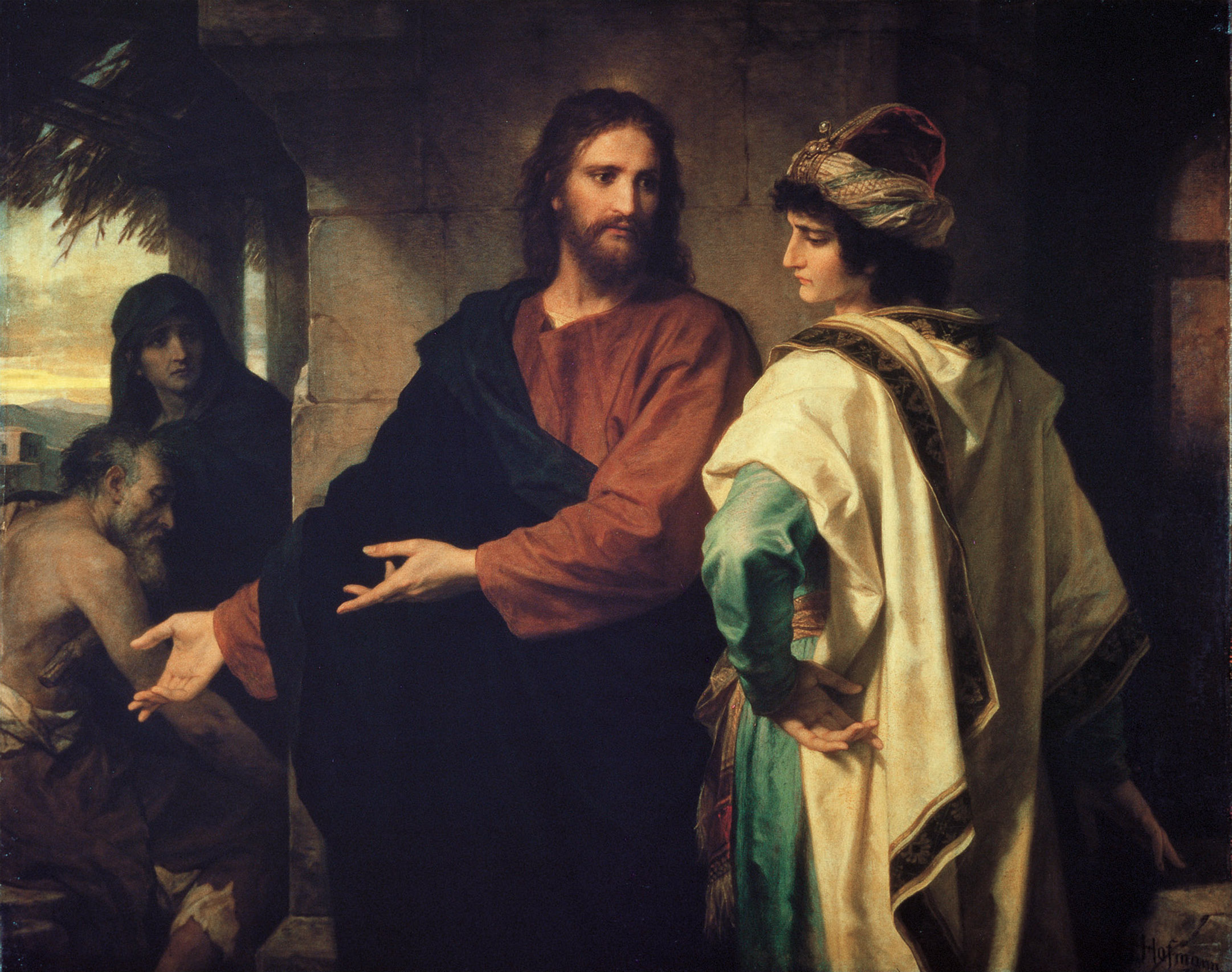
(Image: Christ and the Rich Young Ruler by Heinrich Hofmann, 1889, via Wikimedia Commons)
 The Dish
