A clever stop-motion that puts the park in parkour:
Month: October 2014
Why Did SCOTUS Punt?
Timothy Kincaid wonders:
[I]t should be noted that the decision to grant or deny certiorari is not a majority vote. It takes but four justices to decide that a court will hear an appeal. This suggests that either the conservative end of the court is hoping to wait for an appeal that better fits their opposition, or (despite long supposition otherwise) there are not four justices on the Supreme Court that oppose marriage equality and find it’s prohibition to be within the confines of constitutional enactment by the states.
Jeffrey Toobin thinks it’s “possible that neither the liberal nor the conservative bloc felt confident enough of Kennedy’s vote to risk letting him decide the case”:
The conservatives have a special reason for delay. Ginsburg, at 81 the oldest justice, will probably leave during the next president’s term. A Republican president would replace Ginsburg with a solid conservative vote and make Kennedy’s vote irrelevant. So waiting might be an appealing option for them.
The liberals had their own reasons for delay.
Same-sex marriage has marched with great speed across the country. Today’s non-decision means that more than half the states, with well more than half the population, have marriage equality. Those facts create their own momentum. More time equals more states, which might (the theory goes) make Kennedy’s vote easier to get a year from now.
Noah Feldman suspects that the Justices didn’t want to incite a backlash:
Inevitability, it might be thought, is what the Supreme Court waits for before making any landmark decision. But in this case, there is another major consideration: The justices are also worried about fueling a backlash that would render their decision illegitimate, even if it seemed inevitable. The great worry of the Supreme Court – or at least of Justice Kennedy – is that a premature gay-marriage decision would produce the kind of substantial public disagreement that followed Brown v. Board of Education and Roe v. Wade.
Cass Sunstein argues along the same lines:
Many people are stunned by the U.S. Supreme Court’s refusal to review any of the recent lower-court decisions requiring states to recognize same-sex marriages. They shouldn’t be. The court’s silence is a fresh tribute to what Yale law professor Alexander Bickel, writing in the early 1960s, called “the passive virtues.” For the Supreme Court, not to decide is often the best course, especially when the nation is sharply divided.
Bickel was no critic of the liberal Warren Court of the time. He vigorously defended Brown v. Board of Education, striking down school segregation. More broadly, Bickel believed that the court had an important national role as the arbiter of what was required by constitutional “principle.” Nonetheless, he thought that the justices had to be both humble and strategic. An aggressive insistence on vindicating fundamental principle could tear the country apart – and undermine the justices’ own goals in the process.
Amending The Media Madness
A front-page of sanity from the Independent, a British newspaper, yesterday:

Spare The Rod, Ctd
A reader writes:
The line from one of your readers about the need to break a child’s spirit made me weep. It is the last thing any of us need as children. Parents need to building up a child’s spirit to withstand the inevitable disappointments of adulthood.
On that note, another reader touches on the religious angle of corporal punishment:
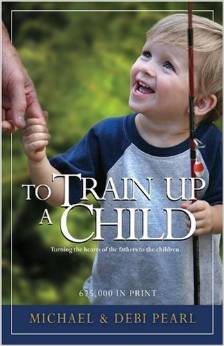
Have you seen this book, To Train A Child? Apparently is it “christian” to start beating children with a rubber hose before (~12 months) they are capable of understanding of why they are being punished. A “good christian” parent is supposed to break their children’s will and make them utterly obedient to them as they are obedient to god, all because of a line about “spare the rod, spoil the child.” It is horrifying how many five-star reviews the book has. Just reading them makes one wonder how this book can possibly be regarded as “christian” in anything other than a deranged sense of the word.

From a one-star review that cites several horrific passages:
This book has been linked to several cases of child abuse and the deaths of no less than 3 children.
I am the mama of 6 beautiful children – some homegrown, some who came to us from other countries – each of them precious. I firmly believe that each child comes to you a full person. It is my job as a mama to encourage their strong points and give them tools to help them overcome their weaker qualities. It is never, ever my job to decide who they are, to break their spirits or to teach them cruelty in their own homes. My kids range in age from 14-2 and each of them is a blessing. Each of them is different. Each of them needs something different from us regarding discipline. Love your kids. Get to know them. If you are a believer, ask God for guidance. And DON’T BUY THIS BOOK.
Some excerpts: On p.65 co-author Debi Pearl whips the bare leg of a 15 month old she is babysitting, 10 separate times, for not playing with something she tells him to play with. After about ten acts of stubborn defiance, followed by ten switchings, he surrendered his will to one higher than himself. In rolling the wheel, he did what every accountable human being must do-he humbled himself before the “highest” and admitted that his interests are not paramount. After one begrudged roll, my wife turned to other chores
On p.59 they recommend spanking a 3 year old until he is “totally broken.” She then administers about ten slow, patient licks on his bare legs. He cries in pain. If he continues to show defiance by jerking around and defending himself, or by expressing anger, then she will wait a moment and again lecture him and again spank him. When it is obvious he is totally broken, she will hand him the rag and very calmly say, “Johnny, clean up your mess.” He should very contritely wipe up the water.
On p.79 they recommend switching a 7 month old for screaming. A seven-month-old boy had, upon failing to get his way, stiffened clenched his fists, bared his toothless gums and called down damnation on the whole place. At a time like that, the angry expression on a baby’s face can resemble that of one instigating a riot. The young mother, wanting to do the right thing, stood there in helpless consternation, apologetically shrugged her shoulders and said, “What can I do?” My incredulous nine-year-old whipped back, “Switch him.” The mother responded, “I can’t, he’s too little.” With the wisdom of a veteran who had been on the little end of the switch, my daughter answered, “If he is old enough to pitch a fit, he is old enough to be spanked.”
Lord have mercy.
Update from a reader:
I can’t stand to read this thread any longer. It is so painful to realize how I applied some the same practices described because my “church” taught me to. And, even after I left that church, my depression kept me in so much pain that I would lash out against my children’s infractions with those same tactics. I’m so very thankful that I got the treatment I needed for my depression before my children left the home, so I could show them the patient, kind, loving person who was entrapped in that depression.
So painful to read. So desperately necessary to be written.
The Vanishing Idols

The Synod convened by this remarkable Pope is now in session – and there are some reactionary voices being heard – as there should be. The head of the Polish church just described cohabitation as “the self-mutilation of [a couple’s] love”. He also noted with dismay that “some parents like to teach boys that they should clean up after themselves, and not wait until girls do it for them.” Ed Morrissey just reported that the opening statement by Cardinal Peter Erdo was also uncompromising: “Erdo emphasized that recognition of divorce and remarriage without a church finding of nullity in the first marriage ‘is impossible, while the first spouse is still alive.'”
And this is how it should be. Along with arguments about the need for pastoral change and adjustment – the Pope himself, after all, just married a previously divorced couple in the Vatican! – the arguments for no change at all need to be heard. What’s truly new about this papacy is its endorsement of this very debate – the very thing that John Paul II and Benedict XVI made anathema. Can you imagine this tweet appearing at any time since 1979 until now?
Speak clearly. Don’t tell anyone, “you can’t say that,” #PopeFrancis tells #Synod14
— Catholic News Svc (@CatholicNewsSvc) October 6, 2014
James Alison has taken up that offer. Last Friday he addressed a meeting in Rome for “The Ways of Love,” an international conference on Catholic pastoral care for gay and trans people. It’s not part of the Synod of Bishops on the Family. It’s an off-off-Broadway production, as it were. But it should not be dismissed for those reasons. Some of the most important discussions during the Second Vatican Council occurred informally off-site, and aired issues that emerged eventually as central to the Church’s opening to the modern world. The question of same-sex love and homosexual dignity is not likely to be part of the formal Synod. But it hovers around it – even as the Church in America has intensified its cruelty and unjust discrimination against homosexuals seeking to follow Jesus.
So you may be surprised to find in James’ latest talk in Rome an element of joy and magnanimity. He sees the emergence of gay and trans people’s own self-understanding of our equal worth in the eyes of God as quite simply irreversible, unstoppable – not a breakdown of the church’s teachings but an eruption within it of Catholicity itself:
This has been exactly our experience as LGBT Catholics over the last thirty or so years. It has become clearer and clearer, until it is now overwhelmingly clear, that what used to seem like a self-evident description of us was in fact mistaken. We were characterized as somehow defective, pathological, or vitiated straight people; intrinsically heterosexual people who were suffering from a bizarre and extreme form of heterosexual concupiscence called “same-sex attraction.” That description, which turned us, in practice, into second-class citizens in God’s house, is quite simply false. It turns out that we are blessed to be bearers of a not particularly remarkable non-pathological minority variant in the human condition. And that our daughterhood and sonship of God comes upon us starting as we are, with this variant being a minor but significant stable characteristic of who we are. One, furthermore, which gives gracious shape to who we are to be.
His talk is worth reading in full because it brilliantly analogizes the strictures against gay people to the very early church’s strictures against inclusion of Gentiles. Saint Peter shocked his early followers by insisting that all such categories melted away in the new age of Jesus: “God has shown me that I should not call anyone profane or unclean.” Or in Saint Paul’s words that ring through the ages:
There is neither Jew nor Gentile, neither slave nor free, nor is there male and female, for you are all one in Christ Jesus.
Alison conjures up the radicalness of all this for the Jewish sect then struggling to find its way in the world after the Resurrection:
Well, each one of us was as shocked as the person next to them: the first-class citizens finding themselves on the same level as us, with all their purity and sense of separateness deflated, and having to overcome a certain repugnance about dealing with people like us; and the second class citizens having to get used to taking ourselves seriously and behave as sons and daughters, rather than dirty servant children who had a sort of built in excuse for impurity.
Regardless of where the collective hierarchy is, it is quite clear that Pope Francis does not see gay people as second-class citizens. If they are earnestly seeking the Lord, “who am I to judge?” It is also clear that the moral movement I described earlier today cannot but affect the people of God, as they wrestle with a a new understanding of gay people – which the church itself recognized as long ago as 1975 – and try to do God’s will. But James has moved on already. He sees gay Catholics not as a problem to be solved but as an opportunity to be seized:
We, as well as anyone, know how the Spirit of God humanizes us, not destroying culture, but defanging it from all that is violent and destructive of who humans are called to be. We know that thanks to Jesus there is no such thing as religiously pure or impure food, there are no such things as religiously mandated forms of mutilation, genital or otherwise. We know that only culture, and never God, has demanded the veiling and covering of the glory of the head and hair of women. We know that the same Spirit that taught us these things, making available to us what is genuinely true, has enabled us to discover the graced banality of our minority variant condition, allowing it to be the shape of our love that turns us into witnesses of God’s goodness as we are stretched out towards those who are genuinely suffering from terrible injustice and deprivation.
It may seem bleak for many LGBT people right now, grappling with Christianity and the institutional church’s cruelty and dehumanization. But James sees through this, the way Jesus saw through the exhausted taboos of his time. There is a serenity to him that comes with a faith lived, and not imposed.
(Photo: Pope Francis delivers his speech during the Synod of the Families, to cardinals and bishops gathering in the Synod Aula, at the Vatican, on October 6, 2014.By Andreas Solaro/AFP/Getty Images.)
The Battle For Kobani
Kurdish fighters in northern Syria, who are desperately trying to hold off an ISIS advance on the border town of Kobani, are pleading for heavy weapons, saying US air strikes are not really helping:
The jihadis, who this weekend generated further outrage with the murder of the British hostage Alan Henning, are simply too numerous to be cowed by the air assault by US fighter jets, the Kurds say. “Air strikes alone are really not enough to defeat Isis in Kobani,” said Idris Nassan, a senior spokesman for the Kurdish fighters desperately trying to defend the important strategic redoubt from the advancing militants. “They are besieging the city on three sides, and fighter jets simply cannot hit each and every Isis fighter on the ground.”
He said Isis had adapted its tactics to military strikes from the air. “Each time a jet approaches, they leave their open positions, they scatter and hide. What we really need is ground support. We need heavy weapons and ammunition in order to fend them off and defeat them.”
Jamie Dettmer reviews the weekend’s events from his vantage point on the Turkish side of the border:
Although the weekend air raids were hardly intense, the effect of even limited U.S. bombing runs was telling. The missiles launched on Friday and Saturday night interrupted what had been salvo after salvo of tank and mortar fire from the jihadists during daylight hours and forced Islamic State militants to move half-a-mile back from the besieged town. They also emboldened the Kurdish defenders, who are lightly armed and fending off heavy armor. On both nights the Kurds counter-attacked and had some successes, destroying at least one ISIS tank.
Despite the airstrikes, the town’s fate hangs in the balance, says Ismat Sheik Hasan, a commander in the YPG Kurdish self-defense forces, whose vanguard is formed by an offshoot of Turkey’s outlawed Kurdistan Workers Party (PKK). Even so, the point of American airpower was made, adding further poignancy to the Kurds’ questioning about why the U.S. is not being more forthright in assisting them to defend the town from an enemy President Barack Obama says he wants to “degrade and defeat.”
Jeremy Bender attributes the ineffectiveness of US airstrikes in Syria to a lack of intel and coordination on the ground:
The US simply doesn’t have the same kind of on-the-ground intelligence presence and capabilities in Syria that it has in neighboring Iraq, where coordination with the Kurds and the Iraqi government allowed American airstrikes to help dial back a major ISIS assault. The US lacks those kinds of partnerships in Syria, and the resulting shortage of intelligence is a major strategic shortcoming — something that may plague the coalition’s overall goal of disrupting and destroying ISIS’ network within Syria.
Liz Sly explains why Turkey hasn’t rushed to save the city:
Turkey remains ambivalent about joining the coalition against the Islamic State, despite a vote in parliament Thursday authorizing military intervention. Turkey is anxious not to take any action that would embolden its Kurdish foes on either side of the border, and the resolution named the Kurdish Workers’ Party, or PKK — the parent organization of the Kurdish militia fighting in Kobane — as one of the targets of any future military intervention, along with the Islamic State and Syria’s President Bashar al-Assad.
Turkish Prime Minister Ahmet Davutoglu signaled late Thursday that Turkey might be prepared to act. “We wouldn’t want Kobane to fall. We’ll do whatever we can to prevent this from happening,” Davutoglu told Turkish journalists. But it remains unclear what Turkey is prepared to do.
Michael Stephens worries:
https://twitter.com/MStephensGulf/statuses/519174472872787968
Adam Chandler presents the battle over Kobani as a sign of how ISIS is adapting to the presence of American air power:
The advance of the Islamic State fighters into a strategically important Syrian city is a development that U.S.-led airstrikes were supposed to preclude. But as many are suggesting, the coalition efforts to stem the Islamic State onslaught have been ineffective. This is, at least in part, because ISIS has changed its tactics.
“In Syria and Iraq, they took down many of their trademark black flags, and camouflaged armed pickup trucks,” The Wall Street Journal wrote of ISIS. “They also took cover among civilians.” The group is also said to have decentralized some of its command structure, adjusted its movements to nighttime, and eschewed the frequent use of cellphone and radio communications.
Australian Defense Minister David Johnston also sees ISIS adapting rapidly:
Johnston acknowledged the potential for Isis extremists to adapt to the expanded air strike campaign by presenting fewer targets to the air forces. “I think that’s pretty certain that they will adapt very quickly not to be out in the open where the Iraqi security forces can call in an air strike.” The embedding of Isis militants in towns was “a much more difficult proposition and I think we’ve started to see adaptation already”, Johnston said. “It was always going to be that the Iraqi security forces would have to step up and go into these towns and clean them out,” he said. In a separate interview on Sunday, Johnston said Isis could be “extremely adaptive” and Iraq could be “quite a long campaign”.
The Agenda Of A GOP Senate
Krauthammer has high hopes for it:
Winning control of the Senate would allow Republicans to pass a whole range of measures now being held up by Reid, often at the behest of the White House. Make it a major reform agenda. The centerpiece might be tax reform, both corporate and individual. It is needed, popular, and doable. Then go for the low-hanging fruit enjoying wide bipartisan support, such as the Keystone XL pipeline and natural-gas exports, especially to Eastern Europe. One could then add border security, energy deregulation, and health-care reform that repeals the more onerous Obamacare mandates.
Ponnuru delivers a reality check:
Republicans, if they control the Senate, are not going to be able to pass “a whole range of measures.”
Certainly not tax reform, where they have no consensus that gets much further than the phrase “tax reform.” (They might be further along in building a consensus if some of them were running on tax reform this fall.) I’m not even sure Keystone is as low-hanging as Krauthammer thinks — if there’s a Republican Senate this year, it will be because several pro-Keystone Democrats were defeated. Republicans can use the “reconciliation” process to bypass filibusters, but they can use it only rarely and on some subjects.
Larison also predicts a watered-down agenda:
Having won a Senate majority simply by running against the administration, Republicans leaders in Congress would have very few incentives to promote their own agenda and will satisfy themselves with derailing and undermining whatever is left of the president’s. Especially as this relates to diplomacy with Iran, that could have very unfortunate effects, that will hardly seem unattractive to the party’s members of Congress. Most of the intra-party quarrels that Cohen identifies in the rest of his argument are more likely to be postponed or suppressed ahead of the primary season. If Republican leaders are anxious not to give their opponents ammunition ahead of the midterms, when Republican candidates face a much more supportive electorate, they are likely to do the same thing ahead of a presidential election.
A Long Drive To Get An Abortion In Texas

Lyle Denniston unpacks last week’s big abortion ruling:
The ruling, issued Thursday evening by the U.S. Court of Appeals for the Fifth Circuit, is expected to mean that only seven or eight clinics located in the largest cities in Texas will remain open. Not long ago, Texas had more than forty clinics operating throughout the state.
This marked the second time that the Fifth Circuit had overturned most of a ruling by a federal trial judge in Austin blocking enforcement of provisions in a broad new abortion-regulation law that was passed by the state legislature in July of last year. Earlier this year, the Fifth Circuit had allowed the state to continue to enforce — and later upheld as constitutional — a requirement that took effect last October that any doctor performing an abortion in the state must have privileges to send patients to a hospital within thirty miles. After that rule went into effect, the number of clinics still open dropped from more than forty to fewer than thirty. In its Thursday ruling, the Fifth Circuit reaffirmed its view that this limitation is valid.
The second provision, not yet upheld as constitutional but now allowed to go into effect, requires all abortion clinics in the state to have facilities equal to an “ambulatory surgical center.” It has been estimated that, if a clinic does not meet that standard, it could cost upwards of $1 million to upgrade.
Hayley Munguia illustrates the impact of this ruling with the above chart:
Certainly, an increased number of women will have to travel farther to legally obtain an abortion.
Before the new law was passed, no Texan lived more than 200 miles away from a clinic that performed abortions in the state. The closures mean that almost 800,000 women of reproductive age will live outside that range. With Texas law requiring a 24-hour waiting period after an in-person consultation, many women who make two trips to a Texas abortion provider will have to travel more than 800 miles total to legally obtain the procedure. And the clinics that are remaining open won’t have the capacity to help every woman who requests their services.
Sophie Novack talked to both supporters and opponents of the regulations:
“Abortion facilities should raise their standard of care to the level of ambulatory surgical centers to ensure that abortions are not performed in a manner that endangers the health and safety of women,” Joe Pojman, executive director of Texas Alliance for Life, said in a statement. “Texas women deserve no less.”
Abortion rights activists argue that it is a political move meant to shutter clinics and make abortions difficult to access. Health groups like the Texas Medical Association and the American Congress of Obstetricians and Gynecologists agree, saying the restrictions are not medically necessary.
“Thanks to good medical care, abortion is one of the safest procedures,” John C. Jennings, president of ACOG, said in a statement. “Under the guise of making abortion safer, these requirements actually make abortion less safe and will prevent women from getting the abortions they need. Even procedures with higher complication and mortality rates don’t have to meet these specious standards.”
Amy Davidson is among the opponents:
There is another factor, involving other numbers: poverty. The Fifth Circuit judges acknowledged that women without much money would be more affected by the law than others: they might not have a car, or a way to take a day off from work to drive six hours. But that didn’t, somehow, change the judges’ calculation.
Wesley J. Smith finds it ironic “that Planned Parenthood says only 3 percent of its business is abortion, yet closes its clinics en masse when the abortion going gets tough.” But he is unsure about what comes next:
Will the Fifth Circuit take it en banc? Don’t know. Will the case go to the Supreme Court if it survives the Fifth? I think so. Will it survive the Supremes? Don’t know.
Drum also wonders if the case will reach SCOTUS:
Conservatives, including those on the Fifth Circuit, are increasingly confident that Anthony Kennedy’s position on abortion has evolved enough that he’s finally on board with a substantial rewrite of current abortion law. And since the other four conservative justices have been on board for a long time, that’s all it takes. Kennedy might not quite be willing to flatly overturn Roe v. Wade, but it’s a pretty good guess that he’s willing to go pretty far down that road.
Waldman fears the consequences of such a ruling:
[I]f the Supreme Court were to uphold this decision, it would be a signal to every Republican-controlled legislature — one you can bet they’d heed — that there’s almost no restriction on abortion rights that is too extreme, too contemptuous of women and their rights, or too disingenuous to pass the Court’s muster. Right now, there are states where abortions are all but impossible to get; for instance, there’s only one clinic in all of North Dakota that performs them. But ten years from now, half the country could look like that.
Even states like Pennsylvania already have significant hurdles. Emily Bazelon recently reported on the arrest of a Pennsylvania mother, Jennifer Whalen, for trying to obtain an illegal abortion for her teenage daughter:
The closest clinic was about 75 miles away. Pennsylvania requires women seeking abortions to first receive counseling and wait 24 hours before returning for the procedure. The cost of a first-trimester abortion is typically between $300 and $600. Whalen works as a personal-care aide at an assisted-living center for the elderly. She didn’t have health insurance for her daughter. And she was worried about taking time away from work and her family to make two trips or to stay overnight. At the time, Whalen and her husband shared one car, which they both used to get to work. And she hadn’t told her husband about the pregnancy. “I knew he would be upset, and I was protecting the whole family,” she said. (Whalen’s husband, who waited outside in the car during our interview, declined to talk to me.)
Whalen called a local women’s center on her daughter’s behalf but was told no one there could help, she said. She and her daughter did more online searching, and a site popped up with misoprostol and mifepristone for sale for $45. Whalen hadn’t heard of the medication before. “I read all the information,” she said. “They said these pills would help give a miscarriage, and they were the same ones a doctor would give you.” She says she had no idea that buying them was illegal.
Are Hong Kong’s Protests Out Of Steam?
This morning, the city awoke to sparser crowds of demonstrators in the streets and uncertainty about what happens next:
Schools reopened and civil servants returned to work Monday morning after protesters
cleared the area outside the city’s government headquarters, a focal point of the demonstrations that started the previous weekend. Crowds also thinned markedly at the two other protest sites, and traffic flowed again through many roads that had been blocked.
The subdued scenes left many wondering whether the movement, which has been free-forming and largely spontaneous, had run its course — or whether the students have a clear strategy about what to do next. Early talks between the government and the students have started, but many disagreements remain. Students say they will walk away from the talks as soon as the government uses force to clear away the remaining protesters.

Alex Ogle, an AFP photographer, captured the above photo with the caption:
ghost town hong kong, sunday morning, haven’t seen this area of occupation site so empty all week
Heather Timmons is also on the ground:
Protesters cleared a corridor through the blockades outside one entrance to the government’s headquarters building on Sunday night, after protest leaders and government representatives agreed to meet for the first time. On Monday morning, makeshift tents and supply centers still dotted a main highway in the center of town, and protesters were sprawled in the middle of key roads as government employees filed in to work.
“We’re going to see how the government reacts,” said one 19-year old protester at the entrance, who said his surname name was Lui, sitting near the cleared corridor. Because of the corridor, government employees “can go back to work, and other citizens won’t blame us,” he said. Lui said he and the scant dozen protesters sitting near him had decided to clear the corridor themselves, rather than acting on specific directions from student leaders or Occupy Central, the groups that started the protests. “We don’t know what direction this is headed, and we don’t know what to do next,” he said, so his group was acting on its own.
Hannah Beech also sees the protest movement winding down:
As the workweek began in Hong Kong and traffic snarled because of the protest roadblocks, patience from a sector of ordinary citizens may wear thin. Already, some Hong Kong residents were quietly criticizing the continuing shutdown of major business and tourist areas. “Of course I support more democracy for Hong Kong and am not opposed to [the protesters’] ideals,” said a woman surnamed Liu, who came with her 11-year-old son to look at the occupied site in Mongkok district. “But we need to eat, to do business. How can we do that when they take over the streets?”
Whatever happens, Hong Kong’s political consciousness has been awakened. Emily Lau, a veteran local legislator, jokes that she’s been labeled “a head-banger” for her decades of pro-democracy work. “It’s very invigorating to have such a spontaneous, peaceful movement full of young people,” she says. “Once people have been shown their power they will know how to use it again and again.”
Friday’s violence, which continued late into the night, may also have put a damper on the protests. Ben Leung listens to how Hong Kongers are talking about the attacks, in which the city’s infamous organized crime syndicates (the “triads”) are believed to have been involved:
Over dinner, an elderly waitress at a nearby restaurant thought the timing of the attack was suspicious. Hong Kong Chief Executive CY Leung refuses to quit, and the next day this happens, she said: “The two events are linked. Whoever did this are not human – they must be the PLA [People’s Liberation Army] from China; Hong Kong people don’t do these things to one another!” But what everyone is talking about is what role the notorious triads played in Friday’s violence.
The question was put to the police at a press conference on Friday night. “None,” said spokesman Kong Man-keung, “and to say we allow them to operate is grossly inaccurate.” He claimed there was no evident to support the rumors. But hours later, shortly after 4:00 a.m. Saturday morning, the police issued a statement saying 19 people had been arrested, and of those at least eight are reportred to have links to the triads.
William Pesek argues that it’s time for the protesters “to face reality and plot an endgame”:
Why not parlay what’s been achieved so far into meaningful concessions from the government? These could include access to affordable housing and education, efforts to redress inequality, improved public services and a genuine framework for political reform and engagement with Beijing. The first direct talks between the protest leaders and government officials began Sunday night. Now, leaders should demand to plead their case directly to Leung.
Critics will say such concessions have nothing to do with democracy — and thus would render the protests futile. But any movement toward egalitarianism in oligarched Hong Kong would be a vital step toward genuine representation. By winning an accommodation or two from China, student leaders like 17-year-old Joshua Wong can demonstrate that they gave Goliath a good fight and achieved something substantial.
While Hong Kong’s protest leaders have appreciated the international attention being heaped upon their movement, Ishaan Tharoor observes that they’re less appreciative of its portrayal:
They are sensitive to how the protests are being received both by other Hong Kongers as well as authorities in the mainland. China’s rulers do not countenance such challenges to the status quo; the Hong Kong public, meanwhile, isn’t interested in prolonged, destabilizing upheaval either. The idea of a “revolution” on China’s doorstep may play well before the lenses of the international media, but it does not help the students, who are seeking reform and practical political gains.
“This is not a color revolution,” Lester Shum, the deputy leader of the Hong Kong Federation of Students, referring to the generic term used for transformative political movements elsewhere. “This is a citizens’ fight for democracy.”
Larison recalls that we’ve made this category error before, to ill effect:
When the Green movement protests began in Iran, there was a strong desire among many in the West to see those protests as a complete rejection of the regime and as an opportunity to bring the regime down, and they dubbed this “the Green Revolution.”
This mistaken belief was broadcast far and wide for months. Hard-liners in the regime also perceived–or claimed to perceive–the protests as a “color revolution,” which they understood to mean that the protests were sponsored and fomented by foreign powers aimed at the destruction the regime. The destruction of the regime was never going to happen, but the point is that this wasn’t what the protesters were seeking. It did the regime a favor that it didn’t need and shouldn’t have been given to suggest otherwise. Many Westerners took an interest in the Green movement because they wanted it to be a regime-changing revolutionary force, and then lost interest in the Iranian opposition when the latter failed to share their preoccupations. For the same reasons, Western coverage of the protests in Hong Kong shouldn’t try to turn them into something that they’re not.
A Month Until Midterms

Cillizza passes along the above chart from Republican lobbyist Bruce Mehlman:
Remember that to win the Senate majority in 32 days, Republicans need to net six seats – right where history suggests they’ll be if Obama’s approval stays close to where it is today. And also remember that there are seven Democratic-held Senate seats in states that Obama lost in 2012 – and where his numbers have only fallen since.
Silver analyzes a recent batch of Senate polls:
The least favorable results for Democrats were the YouGov numbers in Alaska, Arkansas and Louisiana, all of which had Republican challengers ahead of the Democratic incumbents by margins of about 5 percentage points. Democrats Mary Landrieu of Louisiana and Mark Begich of Alaska each saw their chances decline to about 25 percent from 30 percent with the new polls added.
It would be a mistake to dismiss the importance of these states. If Republicans become more certain to win them, they’ll have a clear path toward picking up six Democrat-held Senate seats, as the races in Montana, South Dakota and West Virginia look like near-certain gains for the GOP. Republicans would then need to win just one of Iowa, Colorado or Kansas to take control of the Senate (or they’d need to convince Orman to caucus with them if Roberts loses). With only 30 days to go until the election, any polling confirming Republican leads in these states qualifies as bad news for Democrats.
Nate Cohn expects that “turnout will be pivotal in many contests”:
The Democrats have invested millions more than Republicans in building a strong turnout operation, and the effects of that effort are already evident in the YouGov data. More voters have been contacted by Democratic than Republican campaigns in every state but Kansas and Kentucky, where Republican senators fought competitive primaries. Whether the Democratic turnout machine can turn its advantage in voter contacts into additional votes on Election Day might well determine Senate control.
Cillizza also checks in on various election models:
The Washington Post’s Election Lab is the most bullish on Republicans’ chances, pegging it as a 78 percent probability they win control of the chamber. LEO, the New York Times’ Upshot model, has the chances at 60 percent — roughly the same as Nate Silver’s FiveThirtyEight at 59.4 percent. The overall predictions of Election Lab and FiveThirtyEight are virtually unchanged from a week ago (click here to see how things looked then) while the LEO model is less optimistic about a Republican-controlled Senate this week than it was last week (67 percent probability on Sept. 29.)
Harry Enten employs a sports analogy:
The model on Friday gave the GOP about a 59 percent chance of winning a majority in November. That’s about the same chances the Baltimore Ravens, leading 16-15, had of beating the Cincinnati Bengals in Week 1 with 6:01 left in the 4th quarter. The Ravens had just kicked off after scoring on an 80-yard touchdown catch by Baltimore receiver Steve Smith. But less than a minute later, Cincinnati quarterback Andy Dalton connected with A.J. Green on a 77-yard touchdown pass. That was followed by a successful two-point conversion. And that’s how the scoreboard would remain: 23-16, Bengals.
Roughly speaking, Republicans are ahead by a point, but they’re kicking off and there’s time left on the clock.
Jonathan Bernstein chips in two cents:
[I]t’s worth emphasizing how much uncertainty is involved. Polling remains spotty in many states. Many surveys aren’t as reliable as we’d like. And the polls are still close enough that late-breaking shifts, get-out-the-vote advantages or even minor miscalculations by polling firms (about the size and composition of the electorate, for example) could easily yield different results. Outcomes ranging from minimal Democratic losses to a Republican landslide remain plausible, which means it’s going to be a fun final month for election watchers.
Along those lines, most pollsters are predicting greater polling error this year:
the top reason cited was the difficulty of forecasting turnout in midterm elections, without a presidential race to bring voters to the polls. And the crucial midterms are in states that don’t usually have close races. “The key Senate battlegrounds this year are also places like Alaska, Arkansas, Kansas, Louisiana, etc., where most of the public pollsters don’t have a ton of experience,” one pollster said. “It’s not the Ohios and Pennsylvanias and Floridas of the world that we’re all used to polling a lot.”
 The Dish