Congress is preparing to vote on Keystone XL pipeline:
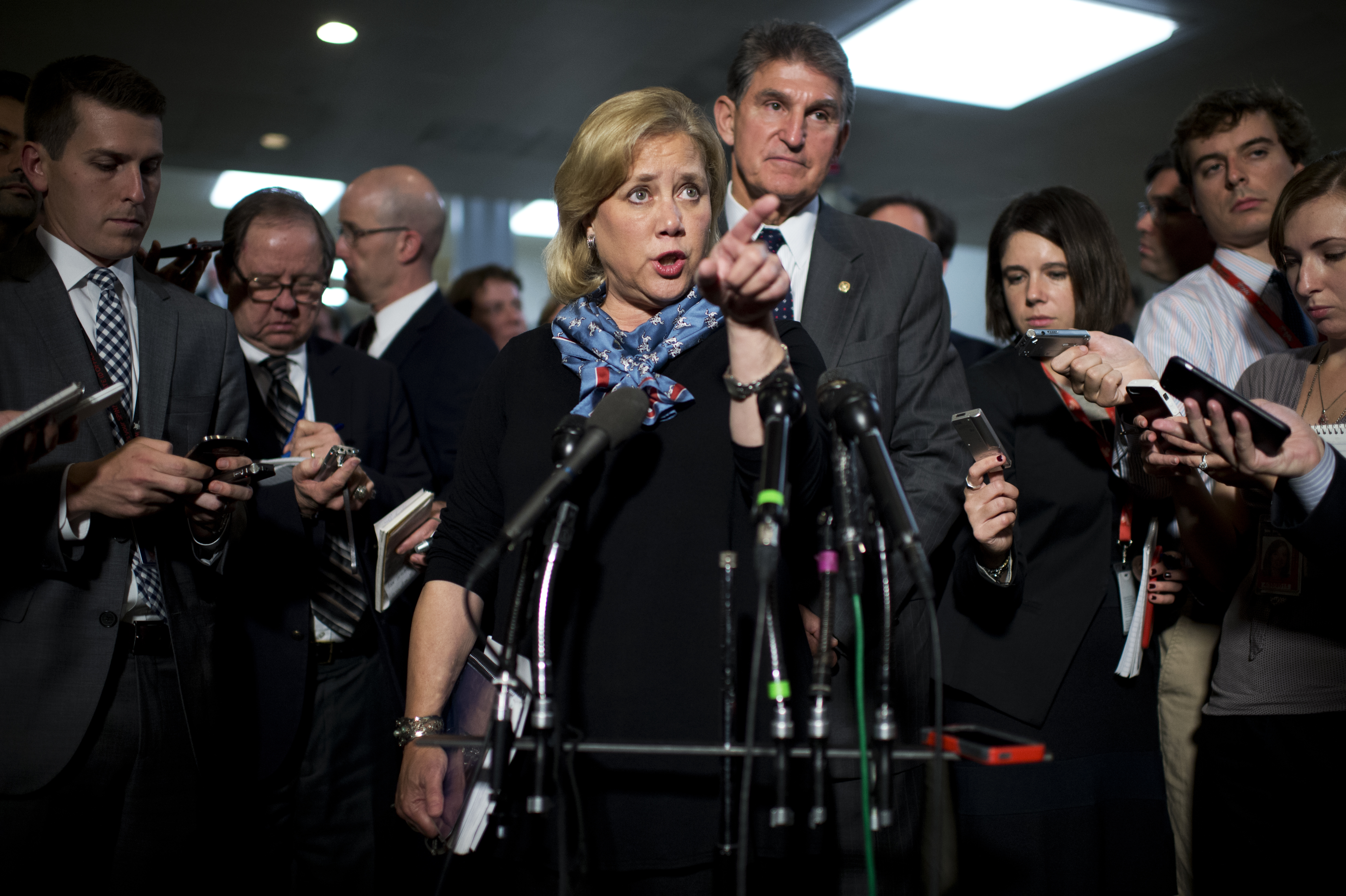
Incumbent Sen. Mary Landrieu (D-LA) and Rep. Bill Cassidy (R-LA) are competing against each other in a run-off election next month for the seat — the last race still up in the air. And, by way of appealing to voters in the oil-rich state, they’re each sponsoring a bill in Congress to approve the pipeline, which would bring oil from the tar sands of Alberta, Canada, down to Nebraska and on to refineries in Texas.
Cassidy’s Keystone bill in the House is expected to pass easily on Friday during the lame-duck session. Republicans, who control the chamber, are overwhelmingly in favor of approving the project — which has been held up by the Obama administration over concerns that it could exacerbate climate change. Landrieu, meanwhile, is co-sponsoring a Keystone bill in the Senate with Sen. John Hoeven (R-ND) — and Democrats have now agreed to schedule a vote on it for Tuesday.
Joe Romm is puzzled:
Having spent months negotiating such a breakthrough deal with China — whose ultimate goal is to enable a global agreement that can stabilize CO2 levels and keep total warming as close to 2°C (3.6°F) as possible — why would the U.S. then approve a pipeline whose operation is incompatible with 2C warming? Why would the U.S. approve a pipeline that makes it harder for the country to meet its previous 2020 target (17 percent reduction in greenhouse gases vs 2005 levels), let alone the tougher 2025 target (26-28 percent below 2005 levels) that was part of the breakthrough deal?
Chris Mooney tries to put a positive spin on the news:
[W]hat may happen here is that the more politically radical climate change grassroots loses out on a symbolic issue (blocking a pipeline that will transfer dirty tar sands oil) but climate moderates win really meaty progress on cutting greenhouse gas emissions. And that aligns nicely with the theory of “radical flank effects” in social movements, as suggested in 1988 by the scholar Herbert Haines, who argued that in the Civil Rights Movement, a “radical flank” — groups like the Black Panthers — paved the way for the ultimate success of moderates, like Martin Luther King, Jr.
Alex Rogers contemplates Landrieu’s Hail-Mary pass:
Landrieu’s gambit may help her re-election chances, but it comes at a cost. Forcing a Keystone vote in Congress will give McConnell and Boehner an unexpected win on the list of issues they want to tackle when the GOP takes control of both chambers of Congress early next year. White House press secretary Josh Earnest signaled Wednesday that the President would oppose the legislation, as he has in the past.
“We have indicated that the President’s senior advisors at the White House would recommend that he veto legislation like that,” said Earnest. “And that does continue to be our position.” And it’s not even clear how much Landrieu’s push will help her chances.
Josh Voorhees highly doubts the vote will save Landrieu:
Even if we suspend disbelief—and, again, we shouldn’t—and imagine a world in which Congress passed this Keystone bill and Obama signed it, it’s highly unlikely that would be enough for Landrieu to win over the conservative voters she needs to hold on to her seat. Polls show Cassidy winning a one-on-one matchup with Landrieu, and whatever happens in the lame-duck session is unlikely to change that. Adding to Landrieu’s woes is the fact that the GOP’s midterm successes will strip her of one of her chief selling points: her power as the chairwoman of the Energy and Natural Resources Committee. Things are so bleak, in fact, that the Democratic Senatorial Campaign Committee has pulled the plug on nearly $2 million worth of ads it had planned to run on her behalf.
Drum declares that there’s “simply zero chance that this is going to help Landrieu”:
There’s not a person in Louisiana who doesn’t know that she supports the oil industry and hates hates hates President Obama’s energy policy. She’s made that crystal clear, and everyone who’s persuadable has already been persuaded. A Keystone XL vote just won’t move the needle.
So Democrats would be giving something away and getting literally nothing in return. In fact, since this would outrage all the people who do care about Keystone XL, Democrats would probably be giving something away and losing support from key supporters at the same time. It’s crazy.
Waldman wants Democrats to get something in return for approving the pipeline:
Republicans have been desperate to build the pipeline for years now; ask them what they would do to improve the economy, and “Build the pipeline!” is often the first thing out of their mouths, despite the fact that the effect it would have is so small as to be barely distinguishable from zero. So if you’re going to give in to them, wouldn’t it make sense to get them to give you something in return? If Obama threatens a veto, he could then say, “All right, well let’s add this to the bill, and I’ll sign it,” this being something Democrats want.
Aaron Blake points out that the pipeline is popular:
Poll after poll has shown support for Keystone is somewhere between very strong and overwhelming. A Pew Research Center survey this month showed support for the project at nearly two-to-one, 59 percent to 31 percent. And that was about the lowest level of support we’ve seen to date. Support has registered as high as two-thirds of Americans. And as another recent Pew poll showed, it’s not just Republicans and independents driving support for the project. In fact, basically the only group that opposes it is the most liberal of Democrats.
But Blake also admits that fracking doesn’t poll so well anymore:
As of March 2013, the Pew Research Center showed Americans approved of this technique by 10 points, 48-38. As of today, they oppose it, 47-41. Support for fracking has fallen most notably among younger Americans and among independents, who supported it 51-36 in early 2013 but oppose it 53-37 today.
Rebecca Leber wonders whether Keystone can still be stopped:
If Obama does veto, then the question is whether the Senate has enough votes to override this veto. Because the Senate doesn’t turn over until January, they probably won’t have the 67 votes needed to override it, yet. They might with the Republican majority, though.
All this makes the Keystone drama’s final act, years in the making, look like a lost cause for activists. But they have one last chance to block the project. The pipeline would go through Nebraska and there’s a legal dispute over whether the governor or a state agency has authority to approve it. The Nebraska Supreme Court has heard the case and if the court rejects the route, then TransCanada, the company building the pipeline, would have to push back its timeline while it develops a new route. The longer the delay, the more expensive, and less financially viable it becomes.
Along the same lines, Jared Bernstein keeps an eye on the price of oil:
Crude is trading at $75/barrel as we speak, and the [Canadian Energy Research Institute] just cut its year-ahead forecast by $18 to $85/barrel. Of course, they could be wrong and oil could climb to a high-enough perch to make tar sand extraction profitable. Meanwhile, the timing of the politics could easily push Congress to offer bipartisan support for Keystone this week, as Louisiana Sen. Mary Landrieu wants this behind her in her upcoming runoff election. But for now, the economics may be doing the environment a favor by pricing oil at a level that could keep the tar sands underground.
(Photo: Senators Mary Landrieu, D-La., and Joe Manchin, D-W.Va., conduct a news conference on the Keystone XL pipeline in the basement of the Capitol on November 12, 2014. By Tom Williams/CQ Roll Call)
 The Dish