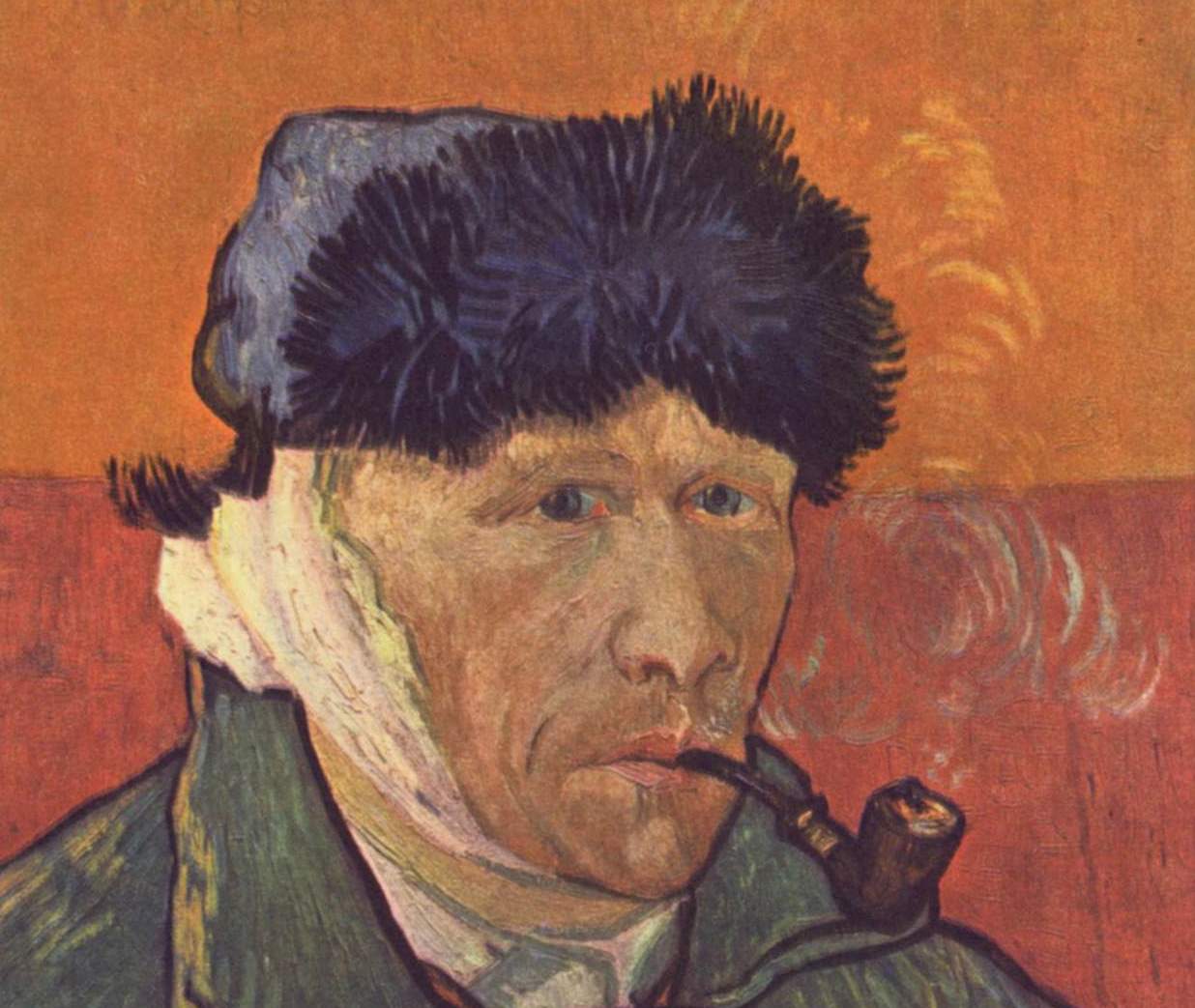
That’s the case Steven Naifeh and Gregory White Smith make in their fascinating investigation into the painter’s death, which unsettles the familiar story of a mad artist killing himself. The entire essay is worth reading, but it begins with these questions:
Van Gogh himself wrote not a word about his final days. The film [Lust for Life] got it wrong: he left no suicide note—odd for a man who churned out letters so profligately. A piece of writing allegedly found in his clothes after he died turned out to be an early draft of his final letter to his brother Theo, which he posted the day of the shooting, July 27, 1890. That letter was upbeat—even ebullient—about the future. He had placed a large order for more paints only a few days before a bullet put a hole in his abdomen. Because the missile missed his vital organs, it took 29 agonizing hours to kill him.
None of the earliest accounts of the shooting—those written in the days immediately after the event—mentioned suicide. They said only that Van Gogh had “wounded himself.” Strangely, the townspeople of Auvers, the picturesque community near Paris where he stayed in the last months of his life, maintained a studied silence about the incident. At first, no one admitted having seen Van Gogh on his last, fateful outing, despite the summer crowding in the streets. No one knew where he would have gotten a gun; no one admitted to finding the gun afterward, or any of the other items he had taken with him (canvas, easel, paints, etc.). His deathbed doctors, an obstetrician and a homeopathist, could make no sense of his wounds.
And, anyway, what kind of a person, no matter how unbalanced, tries to kill himself with a shot to the midsection? And then, rather than finish himself off with a second shot, staggers a mile back to his room in agonizing pain from a bullet in his belly?
(Image: Van Gogh’s 1889 self-portrait, via Wikimedia Commons)
 The Dish
