Is Another Shutdown Brewing? Ctd

Lauren Fox reports on the thinking of Republicans:

Many rank-and-file Republicans see an upcoming funding bill that must pass by Dec.11 as the party’s best shot to stop Obama from implementing his immigration plan. Boehner has signaled that “no option” is off the table, and more than 60 House Republicans have already sent a letter advocating the approach. In the Senate, top Republican Mitch McConnell has attempted to squash any shutdown banter, but some in his right flank still might push for a funding showdown.

Members of the Republican Conference say they don’t want the confrontation over government funding to come down to a government shutdown, but many don’t see how, even if that does happen, they could lose politically.

Erick Erickson is itching for a shutdown:

Sure, the GOP may get blamed. But so what? And that is key here — so what. They got blamed last time and the public rewarded them with the biggest election wave in modern American political history from the local level to the federal level.

Bill Scher suspects Obama is trolling the GOP:

Despite the strong sense coming from the House Republican leadership that it has far more control over its caucus now than it did during the Tea-Party-fueled insurgency of 2010, no issue has more potential than immigration to ignite the hard-right base and embarrass Speaker John Boehner—especially after the speaker’s post-election warning to Obama not to “play with matches”—or to cause headaches for the GOP heading into the 2016 elections.

The White House knows this. Thus, we could be witnessing the deployment of a strategy in which the president does indeed play with matches, quite deliberately, and he’s about to throw one right into the tinderbox of the House GOP caucus.

The prospective shutdown is such an insanely bad idea that it is worth diagnosing what mental breakdown led the party to a place where this course of action has received serious consideration. One possible answer is that it stems from a congenital aggressiveness. Tom Edsall, a Washington reporter and longtime denizen of bipartisan poker games, once observed that the two parties display notably different approaches toward risk. “Conservative poker players are more willing to go for the kill,” while liberals “will simply check and turn over their cards to collect a more modest amount.”

There are times when the all-or-nothing play makes perfect sense. This is not one of them. A government shutdown does not give Republicans leverage — it gives Obama leverage. They have no winning move here. The only play is to cut their losses and muddle through while sustaining as little damage as possible.

Previous coverage of the possible shutdown here.

Uber Creepy

This embed is invalid


I’ve long been a fan of Uber. For someone who doesn’t know how to drive, it’s been a godsend. The cab industry deserves all the competition it can get. It empowers individual entrepreneurs and uses technology in ways that improve everyone’s lives. But it sure does appear that the company’s management is more than a little douchey. My suspicions began when, after I first approved a surge-pricing fare increase, suddenly every subsequent car request came with such a surcharge – even on a quiet Sunday morning. Last night, a driver canceled a trip two minutes after informing us that he was “arriving now”. I’ve had to get out of two Ubers in the past year because the driver was an asshole. And, of course, the rumors and stories of its unethical and puerile hounding of its competitors are legion.

And now its senior vice president, Emil Michael, was dumb enough to get all frank and intimate with Ben Smith at the Waverly Inn last Friday suggesting that the company hire opposition researchers to dig up dirt on journalists who criticize its business practices, specifically citing legendary PandoDaily journalist, Sarah Lacy, who had accused the company of “sexism and misogyny”:

At the dinner, Michael expressed outrage at Lacy’s column and said that women are far more likely to get assaulted by taxi drivers than Uber drivers. He said that he thought Lacy should be held “personally responsible” for any woman who followed her lead in deleting Uber and was then sexually assaulted. Then he returned to the opposition research plan. Uber’s dirt-diggers, Michael said, could expose Lacy. They could, in particular, prove a particular and very specific claim about her personal life.

Uber wouldn’t be the first tech company to investigate journalists who report on it, but the incident didn’t do much for Uber’s public image as a hyper-aggressive firm with loose ethics. Uber CEO Travis Kalanick took to Twitter soon after the story broke to apologize to Lacy, denounce Michael’s “lack of humanity”, and stress that the company has no plans to doxx journos it doesn’t like. Michael himself also apologized. These mea culpas – in fourteen separate tweets – don’t quite cut it for Alison Griswold, though:

Kalanick thinks Michael’s comments were “terrible.” He says those comments display a “lack of leadership, a lack of humanity, and a departure from our values and ideals.” He says Uber should be focused on building a positive narrative to “inspire” riders and drivers, to show the “positive principles that are the core of Uber’s culture.” He promises to do “everything in my power” to earn trust from Uber’s community. So as many Twitter users have already pointed out: Doesn’t that start with firing Michael?

Lacy herself is furious:

Uber’s dangerous escalation of behavior has just had its whistleblower moment, and tellingly, the whistleblower wasn’t a staffer with a conscience, it was an executive boasting about the proposed plan. It’s gone so far, that there are those in the company who don’t even realize this is something you try to cover up. It’s like a five-year-old pretending to be Frank Underwood. Only one with billions of dollars of assets at his disposal.

And lest you think this was just a rogue actor and not part of the company’s game plan, let me remind you Kalanick telegraphed exactly this sort of thing when he sat on stage at the Code Conference last spring and said he was hiring political operatives whose job would be to “throw mud.” I naively thought he just meant Taxi companies. Let me also remind you: This is a company you trust with your personal safety every single time you use it. Let me also remind you: The executive in question has not been fired.

Josh Marshall is mystified at how Uber’s executives can be so tone-deaf:

Separate from the details of this incident, it’s been quite a while since I’ve seen what is by any measure an amazingly successful startup manage to generate this much negative publicity based fairly narrowly on the behavior of its top executives. … But what is so odd is that Uber, at the end of the day, is in a business where the basic project is about reliability and safety. And yet the guys running the company seem kind of reckless and even a bit nuts. Unlike the men and women you’d hope would be driving your Uber ride (and, in my experience, they often are those people), the guys running Uber seem like the result of some genetic experiment marrying up the 17th century Caribbean pirate with the 21st century North American Bro.

To Alexander Howard, the incident raises serious privacy concerns, given that Uber collects enough data about users to infer, say, where they slept last night, or with whom:

With great data comes great power, and therefore responsibility. That means culture and ethics matter. The reason Michael was angry at Sarah Lacy appears to be because of her excoriating post about Uber’s culture.

Now, imagine if powerful members of Congress decide that they don’t like Uber’s labor practices, or surge pricing, or its approach to flaunting regulatory strictures, or the way it lobbies city governments not to be subject to reporting on compliance with accessibility laws. What then? Will the same executives who have shown a limited “God View” at launch parties choose not to use more powerful internal analytics to track who is going where and when? What policies and code would stop them from looking at the profiles of Senators and Representatives and drawing conclusions about where and when they go? Or for that matter, my profile, or yours?

I can’t imagine Uber regaining minimal trust without firing Michael. Tim Lee is not far off the same page:

There’s no evidence that Uber has ever misused its data in this way, and Uber says it has strict policies designed to safeguard customer privacy. But policies are only as trustworthy as the people enforcing them. When an Uber executive openly muses about intimidating reporters with sensitive personal information, that’s a sign that he might not be sufficiently committed to ethical behavior to be a senior executive at a powerful company like Uber. And the fact that Kalanick sat silently through Michael’s comments, and then chose not to fire him when the comments became public, suggests he might not take ethical considerations seriously enough, either.

It’s also worth talking about whether Uber’s customers should have legally enforceable rights protecting the privacy of their travel data.

In response to these concerns, Uber published a post on its company blog Tuesday night clarifying that it has “a strict policy prohibiting all employees at every level from accessing a rider or driver’s data”, with exceptions for “a limited set of legitimate business purposes” such as facilitating payments or detecting fraud. Meanwhile, Katie Benner reminds the Uberites that they won’t be the only game in town forever:

Remember, Uber is special because it was the right company at the right time. It’s the most elegant expression of how real life, mobile devices and payments are coming together to make our phones a remote control for the way we live.

Yet Uber’s underlying software is replicable. Uber refuses to make its drivers actual employees, and those drivers can always go to a competitor that offers a better deal. Consumers aren’t locked in either. So if a mass group of consumers (not just those that obsess over industry blogs like TechCrunch and Valleywag) now see Uber as a company that doesn’t respect their safety, their data or their drivers, they can drop Uber from their trusted group of apps. Other options are available.

And Neil Irwin declares that it’s time for the company to grow up:

The idea of a showing up to a meeting with a JPMorgan executive and hearing, “I notice you were late on your mortgage payment last month,” is just unfathomable, so great are the protections in the financial industry between access to consumer data and the executives and public relations people who tend to deal with reporters. The same could be said for any number of other industries where big companies have access to private data. Hotel chains? Retailers? This is just not the way things work.

And the reality for Uber is that, much as it may still see itself as a start-up, its scale and ambitions mean that it is rapidly becoming an important company, operating in 48 countries with thousands of drivers. … It’s great to have employees exhibit “fierceness” and “super-pumpedness,” two qualities on which Uber reportedly evaluates its workers. But the bigger you get, the more you also need qualities like discipline and wisdom.
What Do Americans Want On Immigration?

Immigration Polling

Aaron Blake tries to square the circle:

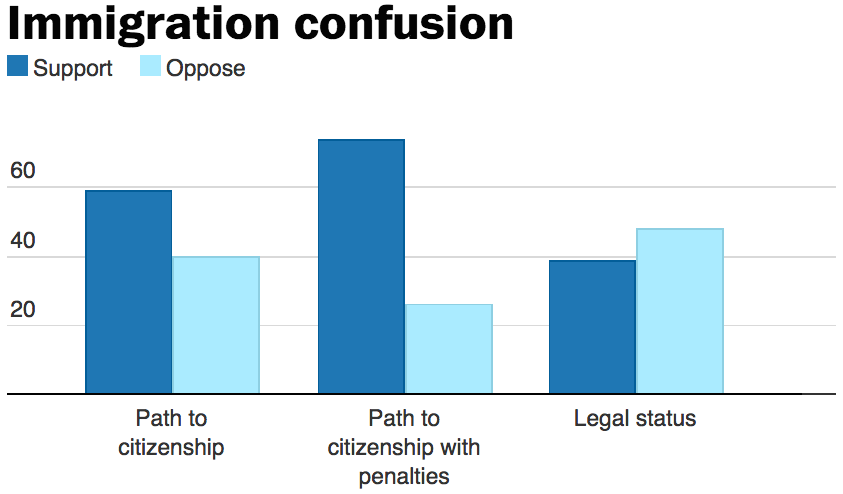
While polling has long shown a clear and strong majority of Americans support a path to citizenship, some recent polls have shown far less support for legal status. While the NBC/WSJ poll shows Americans oppose legal status 48-39, a Washington Post-ABC News poll in September showed Americans opposed legalization 50-46. Among registered voters, it was 53-43.

Why the support for citizenship but not legal status? Your guess is as good as ours. Maybe people don’t like the idea of two classes of Americans. Maybe they think of citizenship as something that is earned, and legal status as something that is bestowed without cost to the beneficiary.

Whatever the reason, it bears emphasizing that Obama’s announcement tonight has much more to do with legal status and nothing to do with citizenship.

Kevin Drum focuses on the partisan split:

According to a USA Today poll,Democrats want action now; Republicans want him to wait; independents are split down the middle; and the overall result is slightly in favor of waiting, by 46-42 percent. In other words, pretty much what you’d expect. Politically, then, this probably holds little risk for Obama or the Democratic Party.

But Jonathan Cohn is unsure how the executive action will play out:

[A]s Greg Sargent notes, congressional action really isn’t an option right now. And the Obama Administration is likely to frame its action in ways that polls suggest the public likesby emphasizing that people who go through the new programs will have to go through background checks and, afterwards, will have to start paying taxes. Will these arguments play well? Will the image of a president getting something done assuage those frustrated by Washington gridlock? Your guess is as good as mineand I guess we’ll start to find out tonight.

Previous speculation about the popularity of Obama’s forthcoming executive order here.

The Culture Wars And … Manners

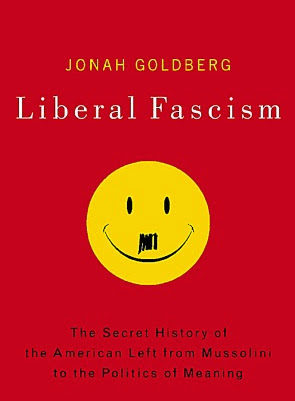
We really are back to the 1990s when I find myself agreeing with Jonah Goldberg:

We live in an age of diversity, defined not merely by gender and race, but by lifestyles and values. That’s mostly a good thing — mostly. Like all other good things in life, diversity comes at a cost. And a big part of the tab is a lost consensus about what constitutes good manners and propriety. So instead of knowing how to behave, we spend vast amounts of our time worrying and arguing about it, with combatants on every side insisting it’s “Live and let live” for me but “Shut up! How dare you!” for thee.

In this age of unprecedented cultural liberty, we’ve lost sight of the fact that common standards of decency and decorum can be liberating. They inconvenience everyone — a little — but they also free us from worrying about who we might offend or why. School uniforms, remember, constrain the wealthy kids for the benefit of the poor ones.

For millennia, good manners were understood as the means by which strangers showed each other respect. Now, too many people demand respect but have lost the ability, or desire, to show it in return.

One way to defuse the issue of, say, cat-calling is to insist on decent manners, rather than to turn the question into a bloody fist-fight over patriarchy. One way to have avoided “shirtgate,” for example, would have been to parse that micro-aggression as a failure of appropriate taste in the context of a public appearance, rather than seeing it as another micro-aggression against an entire gender. Of course, this can obscure deeper issues. And I’m sure not advocating that we constrain robust feminist critiques of clueless or sexist boorishness. But a question of manners can be neutral and less emotive grounds for actually achieving what we want to achieve in creating a culture more aware of what the world feels like for many women. Demand that men be gentlemen, rather than something other than men.

I wonder also if our digital life hasn’t made all this far worse. Conor has a typically smart and nuanced take on this in its particulars. When you sit in a room with a laptop and write about other people and their flaws, and you don’t have to look them in the eyes, you lose all incentive for manners.

You want to make a point. You may be full to the brim with righteous indignation or shock or anger. It is only human nature to flame at abstractions, just as the awkwardness of physical interaction is one of the few things constraining our rhetorical excess. When you combine this easy anonymity with the mass impulses of a Twitterstorm, you can see why manners have evaporated and civil conversations turned into culture war.

I’m as guilty of this as many. There have been times – far too many – when my passion for an idea or revulsion at a news story can, in its broadness of aim, impugn the integrity or good faith of other individuals. If I had to speak my words to the faces of those I am painting with too broad and crude a brush, my language would be far more temperate (and probably more persuasive). And so restoring manners to online discourse is a hard task – especially in an era of instant mass communication and anonymity. It’s hard for a blogger or writer not least because you don’t want to sink into torpor or dullness or vapidity. You want to keep the debate fresh and real.

But all this means, of course, is that we actually need a set of manners for this age more urgently than in many others. Our web silos – from the Jihadists to the left-blogosphere to the right-media complex – make it easy to thrive and succeed without manners, and even easier to fail in the marketplace by upholding them. But manners matter. They create the climate in which free debate is possible. They are the lubrication that can make a liberal polity actually work.

Update from a reader, for the record:

Jonah Goldberg sighs about society’s lack of manners and decency:

unnamed (15)

(Sidebar photo by Flickr user Butupa. This image was cropped by the Dish.)

How Much Does Keystone Matter? Ctd

A reader writes:

This is an issue that chafes me to the core.  I’m an oil and gas attorney in Houston (although I’m moving in-house with a Dallas-based midstream pipeline company next week).  The political parties are strangely upside-down on this issue.  Not only are Republican claims of job-creation largely false, but Democrats and environmental activists in particular have not grasped that alternatives to pipeline transportation of production – oil trains and tanker trucks – are inherently more dangerous.

Not like, I-forgot-to-wear-my-seatbelt-to-the-grocery-store more dangerous.  I’m talking about a failure/spill incidence close to 5,000x greater than most pipelines.

Google the Lac Megantic disaster in Quebec in July 2013, or the oil train explosion in Aliceville, Alabama last November, or the James River derailment in Lynchburg, Virginia this past August.  Oil trains literally explode into fireballs about once every six months!  In each case, the damage and contamination is mind-bending.

This is not to say that pipelines are perfectly safe; they are not.  But if you’re trying to protect the environment and you know that fossil fuels will be around for at least another generation, you should advocate for more pipelines and tighter safety and inspection standards.  This isn’t a hard or unrealistic political goal for the environmental movement: interstate pipelines are already under the jurisdiction of the Federal Energy Regulatory Commission (FERC) and the Pipeline and Hazardous Materials Safety Administration (PHMSA), the bulk of whose regulations are determined by the executive branch, not Congress.

But another reader emphasizes the risks of a pipeline:

How much does Keystone matter? Potentially quite a bit. You quoted Rebecca Leber as saying, “In the end, most Americans wouldn’t notice Keystone’s impact – both good and bad.” The people who do have a good chance of noticing its impact would be those who depend upon the soil and water along its path. They are the classic case of people having to socialize risk while others privatize the reward.

A publication out of Cornell University (pdf) found that TransCanada and the first stage of the Keystone pipeline, completed in 2010, have a pretty poor track record when it comes to spills:

TransCanada has claimed that Keystone XL will be the “safest pipeline in the U.S.” However, since the initial Keystone 1 pipeline began operation in June 2010, at least 35 spills have occurred in the U.S. and Canada. In its first year, the U.S. section of Keystone 1 had a spill frequency 100 times greater than TransCanada forecast. In June 2011, federal pipeline safety regulators determined Keystone 1 was a hazard to public safety and issued TransCanada a Corrective Action Order.

To make matters worse, the type of heavy tar sand oil they transport is more corrosive and appears to be the cause of more frequent spills that result in more difficult cleanups:

There is evidence that pipelines transporting diluted bitumen tar sands oil have a higher frequency of spills than pipelines carrying conventional crude. Between 2007 and 2010, pipelines transporting diluted bitumen tar sands oil in the northern Midwest spilled three times more oil per mile than the national average for conventional crude oil. The relatively high spill record of pipelines transporting diluted bitumen has raised concerns about the spill potential of Keystone XL and other proposed tar sands pipelines. Diluted bitumen is heavier, more corrosive, and contains more toxic chemicals and compounds than conventional crude oil. There is also evidence that tar sands pipeline spills inflict more damage than spills from conventional crude pipelines. Tar sands oil spills are more difficult to clean up, and the diluted bitumen’s toxic and corrosive qualities may increase the overall negative impacts to the economy and public health.

More generally, Elizabeth Kolbert argues that Keystone is important because “it illustrates a basic point,” that the “U.S.—and the world more generally—cannot reduce carbon emissions while at the same time continuing to exploit every fossil-fuel source that presents itself”:

Even as it has been tightening fuel-efficiency standards and regulating power plants, the Obama Administration has presided over a dramatic expansion of U.S. fuel production, which has included a sixty per cent increase in domestic oil output. The Administration doesn’t deserve all of the blame—or, depending on your outlook, the credit—for this development; many of the relevant leases were issued under the Bush Administration. Still, the result has been an energy policy that’s really no energy policy at all—a one-from-Column-A, one-from-Column-B approach that may have marginally reduced domestic emissions, but probably has helped to increase them abroad. Since 2008, coal exports from the U.S. have nearly doubled.

Along the same lines, opposition to Keystone has served a purpose insofar as it has slowed down development of Canada’s tar sands. Earlier this month, Jeff Spross passed along a report to that effect:

The report — Material Risk: How Public Accountability Is Slowing Tar Sands Development — looked into the delays and project cancellations that have been caused by public opposition to the development of the tar sands. The ongoing battle over the Keystone XL pipeline is the most prominent example. But what it all adds up to is transportation bottlenecks, and falling profits for the industry even as crude oil has kept flooding in from Canada’s tar sands fields.

That difference between what oil companies have sold and what they could have sold in the absence of the bottlenecks amounts to $30.9 billion from 2010 through 2013, according to the analysis. A good portion of that is from the inevitable changes and risks that come along with any marketplace. But after going through the various circumstances of the last few years, and teasing out various signals in the data, the researchers concluded that $17.1 billion (or 55 percent) of that “can be credibly attributed to the impact of public accountability campaigns.”

Chewing Over Executive Action On Immigration, Ctd

Reagan and Bush acted in conjunction with Congress and in furtherance of a congressional purpose. In 1986, Congress passed a full-blown amnesty, the Simpson-Mazzoli Act, conferring residency rights on some 3 million people. Simpson-Mazzoli was sold as a “once and for all” solution to the illegal immigration problem: amnesty now, to be followed by strict enforcement in future. Precisely because of their ambition, the statute’s authors were confounded when their broad law generated some unanticipated hard cases. The hardest were those in which some members of a single family qualified for amnesty, while others did not. Nobody wanted to deport the still-illegal husband of a newly legalized wife. Reagan’s (relatively small) and Bush’s (rather larger) executive actions tidied up these anomalies. Although Simpson-Mazzoli itself had been controversial, neither of these follow-ups was.

Executive action by President Obama, however, would follow not an act of Congress but a prior executive action of his own: his suspension of enforcement against so-called Dreamers in June 2012. A new order would not further a congressional purpose. It is intended to overpower and overmaster a recalcitrant Congress.

Vinik counters:

What both Frum and Krikorian’s analyses fail to explain is how Obama’s planned action is not a faithful attempt at executing the law. You can’t argue that Obama’s “order would not further a congressional purpose” without explaining what Congress’s purposes are in passing immigration laws. This error isn’t unique to Frum or Krikorian: Conservatives often fail to use a legal framework in analyzing Obama’s action. … Bush and Reagan’s actions were legally acceptable for the same reason Obama’s would be: ensuring that our immigration policy is fair.

Gabriel Malor pushes back on Vinik:

Obama, in contrast to Reagan and Bush 41, is not trying to implement a lawfully created amnesty. There has been no congressional amnesty. In fact, there has been no immigration action from Congress in the past few years except the post-9/11 REAL ID Act of 2005, which made it harder, not easier, for aliens to qualify for immigration relief. More than that, Congress declined to pass a legalization of the type Obama is issuing during both Obama’s term and in a hotly-contested bill during President Bush 43′s term.

Thus, Obama is clearly contravening both ordinary practice and the wishes of Congress—as expressed in statute—by declaring an amnesty himself. This is nothing like Reagan’s or Bush’s attempts to implement Congress’ amnesty.

Beutler is unimpressed by such arguments:

Republican presidents can, and will again, avoid enforcing environmental regulations. If Republicans identified a serious legal basis for selectively enforcing the estate tax, they could go ahead and do it. It would infuriate liberals just as weak environmental enforcement infuriates liberals. And it would be incumbent on the norms police to show that the discretion that exists in immigration law also exists in tax law. But it wouldn’t add up to a new method of politics.

It could pass legislation terminating the grant of work authorization to this population. It could use its power of the purse to prevent the Department of Homeland Security from expending funds to give the beneficiary class employment authorization documents. Ultimately, only Congress can decide the permanent legal fate of undocumented immigrants receiving the temporary immigration benefits that Obama is considering now. This happened, for example, when President Jimmy Carter in 1980 blessed the legal entry of certain Cubans and Haitians who arrived during the Mariel Boatlift. But these individuals did not obtain the right to permanently stay in the country until Congress acted to recognize these rights for those in this group without disqualifying criminal records.

In short, the immigration debate is primarily a question of politics and policy, not law. The president must act within certain legal parameters, but he apparently will do so. Congress has many legal tools to respond to his actions.

And Francis Wilkinson fears DC will only get more dysfunctional:

If Obama is not departing from norms in this case, he certainly looks to be pushing the line. With a functioning Congress, large changes to immigration would rightly be the legislature’s prerogative. Of course, we don’t have a functioning Congress, and we do have millions of people living in limbo. It’s not hard to understand why Obama is doing this, and perhaps party relations in Washington really can’t get much worse. But I think they will.

Being Conscious Of Your Own Circumcision, Ctd

Readers continue to provide the best MGM conversation out there:

This is in response to this reader. The condition that worries the dads is called phimosis. Until my mid-twenties, I couldn’t see more than a dime-sized area of my glans when I pulled back my foreskin. I didn’t even realize my foreskin was supposed to retract until I stumbled upon information about the condition online.

I recommend the dads look at the archives of this forum. It contains many first-hand accounts of successfully overcoming phimosis with stretching exercises. After stretching my foreskin twice per day for a year, I was able to fully retract my foreskin when flaccid. My sensitivity decreased, but that was necessary. I was overly-sensitive, and now I’m able to retract to wash my glans every shower with soap and water, which any healthy uncircumcised man will tell you is simple and necessary. I don’t stretch now, years later, and my frenulum is still a bit tight when erect, but I was amazed by the improvement.

The forum is sometimes antagonistic to doctors, with the allegation that American doctors are too willing to circumcise in phimosis cases because they don’t know any better. Some extreme phimosis cases may need circumcision, but I recommend the dads do extensive research of their own before subjecting their son to a scalpel.

Another reader is pretty antagonistic toward American doctors:

America just doesn’t know how to deal with foreskins.  We didn’t circumcise my son and his foreskin didn’t retract by age 5.  We were told that it should by age 3, and the cure for a non-retracting foreskin was circumcision.  No other advice was offered in England or America.

Then we moved to Bulgaria.

The doctor said we should pull the foreskin back to the point of gentle tension every day in the bath.  Now, it’s a bit awkward for a mother to be handling her son’s penis, so I tried to get my son to do this himself, with so-so results.  Not many months later, my son got an infection in his foreskin, from sloughed off skin cells trapped under the foreskin. He didn’t tell me in time, because he was an accident-prone kid and his solution to avoiding the doctor was to ignore the infection until he had a fever and was walking funny.

I checked on the web, consulted my home medical books, and called my American insurance company’s hotline.  All the advice was to lop off that useless (and, it was hinted, disgusting) foreskin.  But we were in Bulgaria, so we went to a Bulgarian hospital.  The doctor was built like a weight lifter and had odd English. I explained my husband’s preference was to try to save the foreskin, if possible, expecting to be told it wasn’t.  The doctor was absolutely horrified at the barbaric notion that anyone would consider removing a part of a man’s or a boy’s penis, especially for a trivial problem like a nonretracting foreskin with a treatable infection.

He forced the foreskin back, disinfected the infection, slathered antibiotic cream and told us to keep putting the cream on and that the foreskin now retracted. The procedure took under 5 minutes, cost $60 (10$ fee, 50$ tip) and solved the problem.  That was years ago.  My son remains intact.

I think it’s the cultural value that foreskins are useless at best and otherwise potential for disgusting reservoirs for grunge that makes the American and English solution to be lop it off at the slightest hint of any problem – and better yet, before there’s a problem.

And back Stateside:

I have been reading your circumcision thread and thought your readers may want a perspective from a female pediatrician who actually performs circumcisions on a regular basis.

My patient base is semi-rural, mostly white, blue collar, in the heart of Appalachia. They feel that their newborn sons are not “normal” if they are not clipped, and in fact that is sometimes the only question they ask when their son is just born – “Will he be circumcised?” Typically my partners and I will do a circumcision before the child leaves the hospital, but it can be done with local anesthesia up to two months of age in an office setting. There are different types of circumcision procedures that can be done and different doctors are trained on different procedures, but the basic principle is the same: the foreskin is loosened from the glans, a dorsal slit is performed and the foreskin is either placed in a clamp, or tied off around a plastic ring. There are pluses and minuses to each procedure, but it is mostly doctor preference regarding which one is done. And as I said, local anesthesia is given.

As part of my practice, I want my patients’ parents to make the right decision, and so I typically perform a thorough explanation of the risks and benefits of the procedure. But I do get frustrated that despite letting them know they don’t need the procedure, the parents feel it must be done.

Reading your readers stories, I am sad and a little disappointed because although I was not involved in these cases, I feel like the medical field have let them down.  And I think the reason is because the majority of males in the US are circumcised, and that creates a bias and a misunderstanding of the true nature of the foreskin and the male sex organs. If you only see circumcised boys, you may not really know when the foreskin should protract, and you would view something that is completely normal as abnormal just because it is different.

First off, ALL males are born with a natural phimosis. With time the phimosis loosens. This can vary, but there is a key ingredient needed and that is TESTOSTERONE. That is why the doctors of the various readers gave them steroid cream, but that is just not as effective as your own production of testosterone. Now some mothers with uncircumcised boys are aggressive with “cleaning”  and that traction will loosen the foreskin. Some boys are more playful, and that too will loosen foreskin, but a boy of age 3, 5, 7, 8 – even sometimes 14 – has very little testosterone flowing, so it is needed to mature the the male sex organ to function like it should. (As a side note, we recommend not pulling the foreskin down to clean, as that may cause it to rip from the glans but stick, swell and potentially cause loss of blood to the glans, which is bad.) Once the testosterone is flowing, the adolescent maleusually provides enough friction that any minor tightness will also loosen.

Obviously there are some exceptions to this rule, and a circumcision may need to be performed for medical reasons, but that is the exception. I would highly question any physician who tells you a prepubertal boy needs a circumcision if they are urinating with no problems. I also feel very sorry for the man that had a circumcision as an adult with just a local anesthetic that is cruel. No child or adolescent would get a circumcision out of the newborn period without general anesthesia, so why would we do that to an adult?

One more thing: I am surprised that nobody has mentioned circumcisions that had complications. Commonly I see penile adhesions where the foreskin has reattached itself to the glans of the penis, sometimes making it appear as though the child has never been circumcised.  Unfortunately I actually had a mother re-circumcise her son due to this very issue, despite my explaining that this was completely unnecessary, as the boy was two and thus had no testosterone, and that it will get better with time. Unfortunately she became obsessed with it and insisted it be done. I will never forget that boy. (Interestingly enough, prepubertal girls have a similar condition in which the labia minor fuse together, because there is no estrogen blocking the opening of the vagina and even the urethra, but of course we would never perform procedures to separate that.)

So that’s my two cents, for what it’s worth. I found you a few years ago and have thoroughly enjoyed reading your blog.

And we never cease to enjoy these incredible contributions from readers. Update from another:

(Interestingly enough, prepubertal girls have a similar condition in which the labia minor fuse together, because there is no estrogen blocking the opening of the vagina and even the urethra, but of course we would never perform procedures to separate that.)

Actually, this is exactly what my daughter’s pediatrician recommended when she was less than a year old; we were told to put estrogen cream on it (don’t worry if your infant develops breasts, that’ll be temporary … never mind the people freaking out about exposing their children to tiny amounts of estrogenic compounds in BPA plastics and possible links to the obesity epidemic). And if that didn’t work, we were told surgery might be necessary. Thank god for the Internet. The problem went away on its own at about 18 months. Never caused any trouble.

Ethically-Sourced Junk Food Still Junk Food

4333271953_df97a34904_b

Alice Robb flags a new paper in the Journal of Public Policy and Marketing:

A team of researchers led by John Pedoza, an associate professor of marketing at the University of Kentucky, found that we assume that food made by a socially conscious company is also healthy.

Pedoza and colleagues asked 144 students to evaluate a new brand of granola bar after reading a fictitious newspaper article about the company behind the product. Half the participants read an article describing a company that had won awards for its corporate social responsibility; the other half read about a company whose charitable activities were more modest. (This company had only recently begun donating to a charity.) The newspaper articles also portrayed the companies as having either selfish or altruistic motives for their charitable activities: “selfish” managers admitted that they were hoping their philanthropy would enhance their company’s reputation; “altruistic” managers were motivated primarily by a desire to help the community.

After reading the articles, the students were shown a fact sheet about the granola bars, with details on proposed flavors, launch date, and suggested price, but nothing on nutrition. Then they had to indicateon a scale of 1 to 7how much they agreed with statements like, “I expect this product will contain few preservatives,” “I expect this product will be made with natural ingredients,” and “I expect this product will be very healthy.” They also ranked their expectations of its “deliciousness” on a 7-point scale.

As Pedoza expected, students assumed that the more socially responsible companies were also producing a healthier snack food: The average composite score of the granola bar produced by these companies was 4.58, compared to 3.9 for the less socially responsible brand.

(Photo by David Berkowitz)

The Costs Of Fighting Climate Change

Elizabeth Kolbert takes to task Naomi Klein’s latest book for downplaying those costs:

The need to reduce carbon emissions is, ostensibly, what This Changes Everything is all about. Yet apart from applauding the solar installations of the Northern Cheyenne, Klein avoids looking at all closely at what this would entail. She vaguely tells us that we’ll have to consume less, but not how much less, or what we’ll have to give up. …

To draw on Klein paraphrasing Al Gore, here’s my inconvenient truth: when you tell people what it would actually take to radically reduce carbon emissions, they turn away. They don’t want to give up air travel or air conditioning or HDTV or trips to the mall or the family car or the myriad other things that go along with consuming 5,000 or 8,000 or 12,000 watts. All the major environmental groups know this, which is why they maintain, contrary to the requirements of a 2,000-watt society, that climate change can be tackled with minimal disruption to “the American way of life.” And Klein, you have to assume, knows it too. The irony of her book is that she ends up exactly where the “warmists” do, telling a fable she hopes will do some good.

Previous Dish on Klein’s book here.