And They Shall Beat Their Melting Pots Into Fenceposts

Concerned that the American “melting pot” isn’t living up to its promises, Reihan argues that curtailing the influx of low-skill immigrants would actually help existing communities assimilate:

If you believe Gregory Clark, an iconoclastic economist at UC–Davis, it might take even more than three generations for the descendants of less-skilled immigrants to reach an average level of social status. Legalizing large numbers of unauthorized immigrants will definitely help them attain that social status. Yet it won’t change the fact that even under the best circumstances, the wages commanded by people with less than a high school diploma tend to be very low, and the social connections they can draw upon are usually limited to other people facing similar challenges. Moreover, while the best evidence we have finds that less-skilled immigration doesn’t have a negative effect on the wages of less-skilled natives, it does have a substantial negative effect on the wages of less-skilled immigrants already living in the U.S. These are precisely the people who have the weakest social connections to other Americans, and who need all the help they can get to put down roots in this country.

Which brings me back to the melting pot. There is an alternative to allowing today’s less-skilled immigrants and their descendants to form the bedrock of an ever-expanding underclass. There is a way to help poor members of our foreign-born population form the social connections they will need to move from the margins of American society to the mainstream. What we need to do is limit the future influx of less-skilled immigrants.

Noah Smith begs to differ:

Would an immigration “pause” really increase the rate of assimilation? Actually, it depends on math. If the chance that someone assimilates is simply a fixed percentage chance (a Poisson process), then adding more immigrants will simply leave the rate of assimilation unchanged. If immigrants assimilate at slower rates when there are more of their co-ethnics around — the “ethnic replenishment” hypothesis — then adding more immigrants will indeed slow the melting pot, and may even increase the fraction of unassimilated people as time goes on. Or it could even be that a higher rate of immigration forces more people out of ethnic enclaves, by decreasing the opportunities available within those enclaves — in this case, more immigration would mean a faster rate of assimilation.

Tyler Cowen presents a related pro-immigration argument. He contends that “developed countries that can absorb new immigrants at a modest cost should have relatively bright futures”:

If you’re not convinced that a declining population is a problem, consider Japan. In terms of real gross domestic product per hour worked, Japan has continued to have good performance, but it has a fundamental problem: The working-age population has been declining since about 1997. And Japan’s overall population has been growing older, so with fewer workers supporting so many retirees, national savings will dwindle and resources will be diverted from urgent tasks like revitalizing companies and otherwise invigorating the economy. Japan has already gone from being a miracle exporter to a country that runs steady trade deficits. Perhaps there is simply no narrowly economic recipe to keep its economy growing; Edward Hugh made this argument in his recent ebook, “The A B E of Economics.”

Japan now has two main options: encouraging more childbearing and learning how to accept and absorb more immigrants. But it does not seem close to managing either task.


The Best Hangover In Fiction? Ctd

A reader, defining “fiction” liberally, nominates Johnny Cash’s version of Kris Kristofferson’s “Sunday Morning Coming Down” as the best depiction of the morning after:

Another suggests a musical one-liner:

A character who awakens after a long night of drinking says, “All my teeth have little sweaters on.” That’s always been my favorite literary description of a hangover. It’s from the 1943 Broadway musical One Touch of Venus – book by S. J. Perelman, lyrics by Ogden Nash, music by Kurt Weill, so the line almost certainly belongs to Perlman.  It’s perfect.

Another points to a novel:

I feel compelled to mention the hangover of Peter Fallow, the expatriate British journalist (supposedly based on Hitch) in Tom Wolfe’s The Bonfire of the Vanities:

The telephone blasted Peter Fallow awake inside an egg with the shell peeled away and only the membranous sac holding it intact. Ah! The membranous sac was his head, and the right side of his head was on the pillow, and the yolk was as heavy as mercury, and it rolled like mercury, and it was pressing down on his right temple… If he tried to get up to answer the telephone, the yolk, the mercury, the poisoned mass, would shift and roll and rupture the sac, and his brains would fall out.

Another nomination:

Neil Gaiman, in his Anansi Boys, does a decent job. Must be an English thing:

Fat Charlie was thirsty and his head hurt and his mouth tasted evil and his eyes were too tight in his head and all his teeth twinged and his stomach burned and his back was aching in a way that started around his knees and went up to his forehead and his brains had been removed and replaced with cotton balls and needles and pins which was why it hurt to try and think, and his eyes were not just too tight in his head but they must have rolled out in the night and been reattached with roofing nails; and now he noticed that anything louder than the gentle Brownian motion of air molecules drifting softly past each other was above his pain threshold. Also, he wished he were dead.

Another:

Surely Malcolm Lowry of Under the Volcano fame deserves a mention in this context. There are so many passages both in his masterpiece and in his other works (all more or less autobiographical) that explore the experience of waking up with a hangover that it’s difficult to point to a representative instance. They are also so tightly entangled with the particular concerns of the book in which they appear that quoting them would not evoke the kind of visceral response Dixon’s experience provides the reader, an experience by the way that seems to me rather shallow, focused as it is more on the physical consequences of drinking a lot (and finding the right metaphors to convey it) than on the psychological consequences an alcoholic like Lowry might experience.

As delightful to read as Amis’ bravura passage may be (despite Dixon’s acute discomfort), Lowry registers the deeper truth of hangovers: that they can be occasions for acute mental anguish. But that’s as it should be. Lucky Jim is a comic novel. Under the Volcano is not.

The Universal Anger Over Money In Politics

Lexington compares political spending Britain and the US:

Total spending by political parties in the British general election was £31.5m ($49.9m). Total spending by outside groups was £2.8m ($4.4m). So all in all: $54.3m. With 45.6m registered voters in Britain, that comes out at $1.19 per voter. Scan down the Brookings list, and that is less than the seventh most-costly Senate race (Arkansas), which cost $56.3m, or $26.47 per Arkansas voter. So the seventh costliest Senate race cost more than the entire 2010 general election in Britain.

But, like Americans, “British voters are convinced that democracy is being undermined by vast sums of corrupting money, to the point that elected representatives are essentially bought and paid for by wealthy special interests”:

Yet British election spending is regulated more tightly than any model dreamed of by even the most starry-eyed campaigner in America. Which suggests, I would submit, that when voters say that rich donors control everything, they may not be talking about absolute amounts of money, or even individual election rules. They are—at least in part—saying something else: that they feel the fix is in and ordinary voters are powerless in an economy run for the benefit of the rich and well-connected.

Next Up: Telepathic Tweeting

NSFW, because Alec Baldwin:

This embed is invalid


Leslie Horn flags a recent study suggesting that Shitter isn’t as fictional as you might think:

Basically what happened is this: One subject was located in one room and the other in another room, and they couldn’t communicate in any way other than via their brains.

They both looked at a game where they had to defend a city by firing a cannon. But one guy had his brain hooked up to a electroencephalography machine that read his brain signals, and instead of having any kind of joystick, he’d just think about moving his hand to fire the cannon. That was be transmitted over the Internet to the other operator, whose hand was situated on a touchpad, and would twitch and tap in the right direction if the signals went through.

Researchers tried this out on three pairs of six, and saw a 25 to 83 percent success rate. Which is a really wide range, but your main takeaway is this: the researchers have now seen enough success with brain-to-brain mind/motor control, they’re confident it’s a thing that works.

Susannah Locke reminds us that this study wasn’t the first telepathy experiment of note:

In August 2014, an international group led by Starlab Barcelona researchers in Spain used similar technology to have someones end a one-word email to someone else. They called it the “realization of the first human brain-to-brain interface.” But the process of sending that one-word e-mail was extremely complicated, not very practical, and far more time-consuming than playing video games. It involved translating a message into a binary code of “0”s and “1”s. The sender imagined moving his feet for 0s and hands for 1s. And then the receiver was hooked up to a device that stimulated his brain to create the perception of flashes of light, which was then translated back into 0s and 1s. All in all, this method of communication had a speed of 2 bits per minute – roughly one millionth the average internet speed in the US. That meant it took roughly 70 minutes just for one person to say “hola” or “ciao” to another.

Going Against The Stream, Ctd

A reader sounds off on Swift vs Spotify:

Musician here, with music on Spotify/iTunes etc. Spotify, and streaming services in general, ARE THE BEST THING TO HAPPEN TO MUSIC SINCE CDs. Why? Because people are paying for music again.

Musicians want to turn back time. Back to the days where people bought CDs for $19 a piece and the record labels and the musicians made a killing. Those days are dead. Napster killed them. But instead of monetizing Napster, the musicians and record companies tried to kill it. Then they fought iTunes (which is also slowly losing to streaming services, unless Beats takes off). In the meantime, most people were just stealing their music from Pirate Bay, Kazaam, Bit Torrent, etc.

The problem with Aloe Blacc, Taylor Swift and every other musician, is that they think their music is worth a lot more than it actually is. They should be happy that people are paying for music again instead of stealing it. The irony is, they are bitching about Spotify when people can still hear all their music for free – on YouTube. Because the major labels refused licensed to Spotify in time, the public went to YouTube to listen to their music, which is 100% free and musicians make NO money from. If most of the public was on Spotify or beats or Pandora, the musicians would be making a lot more money. Instead, they are tilting at windmills.

One of several more readers:

I am a rabid fan of music (and part owner of a vinyl record store) and have always believed that people who create music deserve to reap the fruits of their labor and artistic expression. And although nothing will beat the sound and warmth of a needle bouncing through the grooves of vinyl, there is also no question that Spotify is one of my very favorite applications. Here’s an idea:

Why doesn’t Spotify truly establish themselves as the most Artist-Friendly service, and offer a more expensive Ultra-Premium subscription (say, for $20 or $30 or $50/month more than the $10 they currently charge me), with the understanding that the incremental difference that I choose to pay (because I want to support the artists) gets paid out 80-90% directly to the artist/publisher?  I’d sign up for that in a heartbeat.  Much like I happily pay The Dish more than your asking price for the valuable and independent news content you provide, I would also happily pay a higher price to Spotify as a Musical Content Provider.  They would make more money, and the artists would make more money.

Bill Wyman was right: People will just flock to The Pirate Bay to get Taylor’s music virtually for free. (Frankly, she would have to pay ME to listen to that dreck, but that’s just a matter of taste, I suppose.)  But given the option to pay up a little bit and establish oneself as being committed to paying the artists for the art they give us, while still leveraging the massive benefits of a customizable platform like Spotify … well, that would be the best of both worlds. Digital distribution is never going away, the industry, artists and content providers need to work together more effectively to make the process work for everyone.

Another illustrates how Spotify helps the little guy:

My friend is the founder of a mid-market band and tackled this issue on their blog. As the sort of band that is most financially impacted with a lot less cushion than Swift, he seems willing to take the hit to build their brand:

Spotify has undeniably changed the consumption patterns of our fans…My guess is that Spotify turned a lot of iTunes downloaders into streamers. That certainly affected our bottom line and ability to recoup what we spent on the record. But far more people consumed our music which is the probably more important for long term growth of the band…To me, everyone that streams our songs for free (or pays a tiny amount to do so on Spotify/YouTube) would probably just not consume our music if their only choice was to pay for it. By giving them the chance to hear us for next to nothing we are (hopefully) creating a relationship with a fan that will result in financial support down the road.

I’ve heard this from other musicians struggling to break through. They see streaming as a means to building a fan base, while artists like Taylor Swift may see streaming as a threat to their hegemony in the music business.

Another sees a savvy strategy from that hegemon:

Taylor Swift is either an incredibly talented businesswoman and promoter at age 24 or has some really good people working for her. The two really go hand in hand. Taking her music off of Spotify was not about hating streaming. It’s not even about thinking music should not be free. If she had a problem with streaming, she would have removed her albums from other streaming services. Instead she targeted the largest streaming provider and got THEM to complain about it. Here we are a week after her album release still talking about her and bringing up how many albums she sold in the first week.

It’s an excellent publicity stunt, but considering she makes approximately $6 million a year from streaming on Spotify, it’s not one that will be continued too long. Every media outlet pushing this “story” has been providing Taylor with the best thing ever – free advertising that doesn’t even look like advertising.

The Best Of The Dish Today

US-VETERANS DAY

No word back from  WAM on whether they were the ones behind the suspension of a journalist from Twitter for disagreeing with them. But good to know that Gawker believes that journalists who sail close to the wind need to be silenced if possible. Name-calling is something they absolutely never do.

As always on some of these fraught gender questions, Dish readers find the nuances. Our discussion thread on masculinity that does not denigrate women is a hugely interesting one. Today’s post includes this reader:

As a millennial, straight, white, male, feminist, gamer, I think I’d have a good case for being able to make some claims about masculinity. But what really gives me some credibility here is that I used to be the angry, homophobic, misogynistic young man. Over the past decade, I’ve had my mind changed on damn near everything that I once believed. I’ve also come to accept that being masculine doesn’t have one definition.

Puts the entire #gamergate fooferaw in some context. Meanwhile, another reader flags a small but important story:

On November 6, 2014, a Florida court decided that a healthy four year old boy will undergo an unnecessary, risky surgery at the insistence of his father. The boy’s name is Chase and his 81ab41d2-55e1-4ff3-b2b9-008437e51489_profilemother is fighting a battle to save him.

According to court records, in December 2011, Heather Hironimus signed a parenting agreement which gave Chase’s father, Dennis Nebus, permission to have their (then) baby boy circumcised. Three years later, Chase is still intact, happy and healthy …

Genital autonomy advocates believe Chase’s physical and mental health are at risk. He is aware of his body and does not want to have surgery on his genitals. Forcing a child to undergo cosmetic surgery is a violation of basic human rights and medical ethics. This is an unprecedented case worthy of international media attention.

The purpose of this fundraiser is to draw attention to Chase’s case and to provide a safe place for concerned citizens to contribute financially for the appeal. Heather has been (illegally) prohibited from fundraising for her appeal, so we are doing it for her, without her participation.

You can donate here.

Today, we covered our usual diversity of topics: Taylor Swift’s decision to opt out of Spotify (dumb); Obama’s decision to back net neutrality (dead-on); John Roberts’ choice on Obamacare again at SCOTUS (a toughie); and Flannery O’Connor’s view of Ayn Rand (hilarious). Plus: Putin’s collapsing economy (which might be bad news for European security); and a totes adorbs drumming toddler.

The most popular post of the day – by a mile – was The SJWs Now Get To Police Speech On Twitter; followed by Where The Logic Of “Hate Crimes” Leads.

Many of today’s posts were updated with your emails – read them all here.  You can always leave your unfiltered comments at our Facebook page and @sullydish. 22 more readers became subscribers today. You can join them here – and get access to all the readons and Deep Dish – for a little as $1.99 month. Gift subscriptions are available here. Dish t-shirts are for sale here.

See you in the morning.

(Photo: A US Navy veteran salutes during the Veterans Day Parade in New York on November 11, 2014. By Jewel Samad/AFP/Getty Images.)

The Soldiers Who Didn’t Make It Back

Marine Lance Cpl. Travis Williams was the only member of his squad to survive an explosion by a roadside bomb. He movingly tells the story of the attack and aftermath:

Robert M. Poole reflects on Arlington’s Section 60:

As the last combat troops leave Afghanistan and new fighting spreads over Syria and Iraq, Section 60 is nearing capacity—a testament to the human cost of America’s longest war, a conflict largely hidden from ordinary life in America. “This is one of the few places you’d know we’ve had a war going on,” retired Navy Commander Kirk S. Lippold, skipper of the U.S.S. Cole, said last year, standing near the center of Section 60. He had come to pay his respects to three shipmates—Technician Second Class Kenneth Eugene Clodfelter, Chief Petty Officer Richard Dean Costlow and Seaman Cherone Louis Gunn—now lying side by side beneath neat white tombstones.

The trio of sailors, among 17 killed when Al Qaeda suicide bombers attacked the Cole in Yemen in 2000, were among the earliest casualties in the long war that in fact began months before the phrase “9/11” entered Americans’ vocabulary. “Their deaths were prelude to everything that’s happened in Iraq and Afghanistan,” said Lippold, who regularly visits this part of the national cemetery, just across the Potomac River from Washington, D.C.

In the years since the Cole bombing, Section 60 has been filling up row by row. It is the busiest part of the cemetery, with the crack of rifle salutes and the silvery notes of Taps announcing the arrival of new conscripts with depressing frequency. The whole history of our recent wars can be traced among the closely packed tombstones, which mark the graves of soldiers, sailors, marines and airmen who earned a berth in the national cemetery by volunteering, suiting up and paying the ultimate sacrifice in Afghanistan, Iraq and other battlegrounds of the war on terror.

Sallie Lewis notes that Arlington is being expanded to make room:

Around thirty funeral services take place at Arlington National Cemetery every day. Saturdays are thankfully slower, when there’s typically only six to eight. As the large number of regular burials continues to consume space at Arlington, the question of future availability looms. The Millennium Project attempts to address this by adding twenty-seven additional acres to the northern edge of the cemetery, along with 30,000 new burial sites. The first interment there is expected to occur in the summer of 2019.


When Shakespeare Read Montaigne

Danny Heitman takes a stroll through Shakespeare’s Montaigne, a new edition of John Florio’s 16th-century English translation of the Essays that almost certainly made its way into the playwright’s hands:

Many of the details of Shakespeare’s life are unknown, and how closely he might have read Florio’s Montaigne is unclear. But in a couple of plays, Shakespeare’s debt to Montaigne seems obvious. In “Of the Cannibals,” an essay about people recently discovered in the New World, Montaigne writes admiringly of natives who “hath no kind of traffic, no knowledge of letters, no intelligence of numbers, no name of magistrate, nor of politic superiority.” Very similar language appears in The Tempest, when Gonzalo considers the kind of society he wants to establish on the island where he and others have been shipwrecked. There’s another apparent instance of borrowing in King Lear, which includes a passage that seems cribbed from Montaigne’s observations about the ideal relationship between parents and children.

Beyond that, the question of Montaigne’s influence on Shakespeare becomes more speculative. [In his introduction, scholar Stephen] Greenblatt shrugs at that ambiguity, concluding that whatever the possibilities, the mere existence of these two men was a miracle in itself: “Two of the greatest writers of the Renaissance—two of the greatest writers the world has ever known—were at work almost at the same time, reflecting on the human condition and inventing the stylistic means to register their subtlest perceptions in language.”

An excerpt from Greenblatt’s introduction on the connection between the two great writers, in which he notes that “what is a problem for the scholarly attempt to establish a clear line of influence is, from the perspective of the common reader, a source of deep pleasure”:

And though, as we have noted, they came from sharply differing worlds and worked in distinct genres, they share many of the same features. Both Montaigne and Shakespeare were masters of the disarming gesture, the creation of collusion and intimacy: essays that profess to be “frivolous and vain” (“The Author to the Reader”); plays with titles like As You Like It and Much Ado About Nothing. Both were skilled at seizing upon anything that came their way in the course of wide-ranging reading or observation; both prized the illumination of a brilliant perception over systematic thought; both were masters of quotation and transformation; both were supremely adaptable and variable. Both believed that there was a profound link between language and identity, between what you say and how you say it and what you are. Both were fascinated with ethical meanings in a world that possessed an apparently infinite range of human behaviors. Both perceived and embraced the oscillations and contradictions within individuals, the equivocations and ironies and discontinuities even in those who claimed to be single-minded and single-hearted in pursuit of coherent goals. Montaigne and Shakespeare created works that have for centuries remained tantalizing, equivocal, and elusive, inviting ceaseless speculations and re-creations. In a world that craved fixity and order, each managed to come to terms with strict limits to authorial control, with the unpredictability and instability of texts, with a proliferation of unlimited, uncontrolled meanings.

The Love Of War

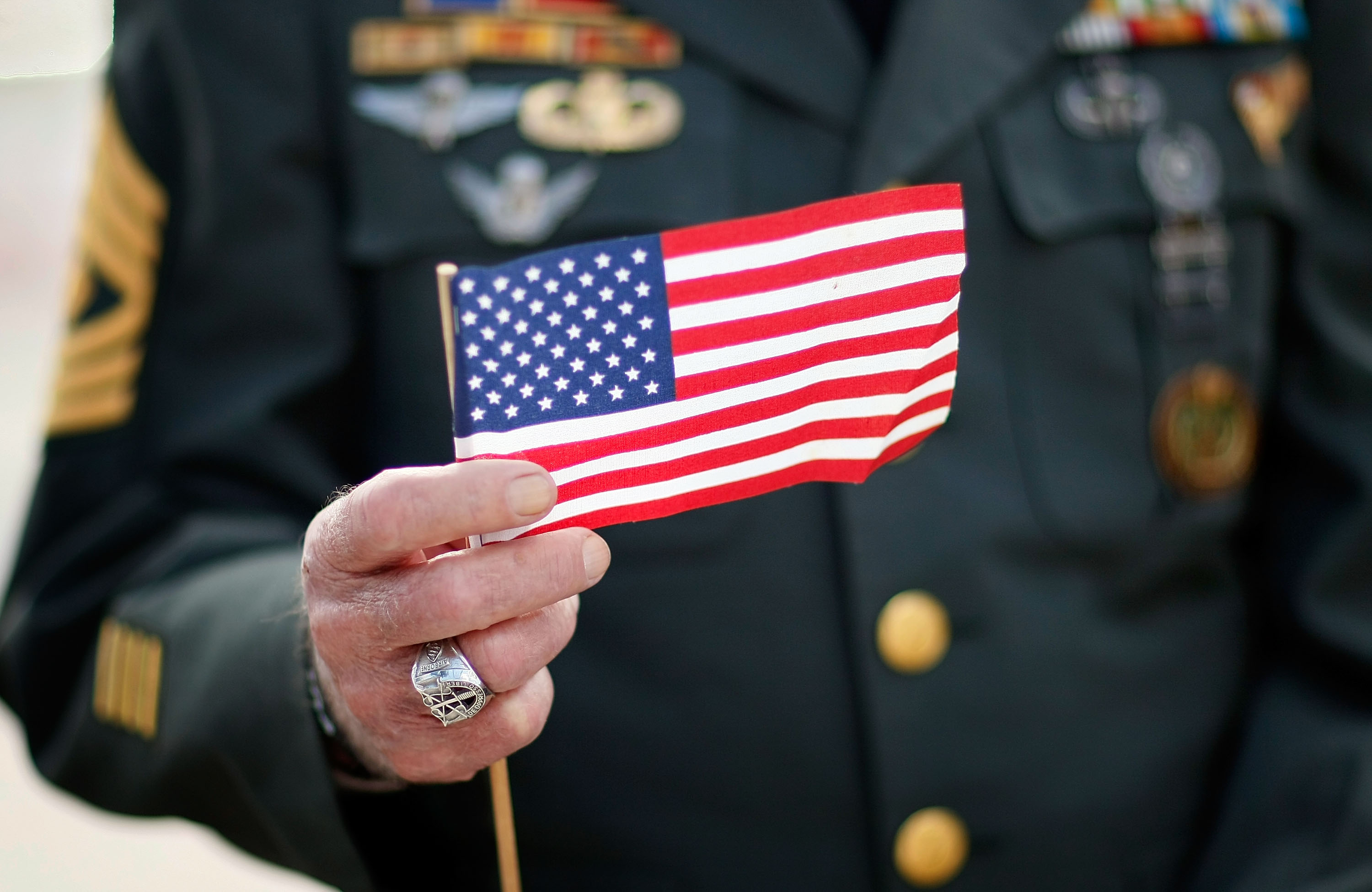
Miami Area Observes Veterans Day

Veteran Dan Gomez heartily endorses William Broyles’ 1984 essay “Why Men Love War“:

It is the most perfect piece of military writing on the subject of ‘why’ that I have ever come across. It is for me, the ‘big bang’ theory of why we fight.

Broyles’ takes the reader through a fantastically descriptive journey of what war feels like and he gets it down better than anything I’ve ever read or even anything I’ve even seen in film. It’s a long form piece that he wrote more than fifteen years after returning from Vietnam. He had the time to reflect on his experience and the space in the magazine to get it all down. In 6,588 words, he paints the thoughts in his head and the feelings in his heart.

Thats why men in their sixties and seventies sit in their dens and recreation rooms around America and know that nothing in their life will equal the day they parachuted into St. Lo or charged the bunker on Okinawa. Thats why veterans reunions are invariably filled with boozy awkwardness, forced camaraderie ending in sadness and tears: you are together again, these are the men who were your brothers, but its not the same, can never be the same. Thats why when we returned from Vietnam we moped around, listless, not interested in anything or anyone. Something had gone out of our lives forever, and our behavior on returning was inexplicable except as the behavior of men who had lost a great perhaps the great love of their lives, and had no way to tell anyone about it. …

This month marks the thirty-year anniversary of the publication of ‘Why Men Love War.’ It’s no less true today than it was then. I hope that it will be widely read, especially among today’s newest generation of veterans, to give them the peace of mind that what they’re experiencing is not new. If they read with an open mind, they might even come closer to reconciling their feelings on war, and recognize that there is no great answer but the terrible truth. We love war because it’s fun. It’s terrible, reviling, and true. The dirty, nasty thing was a blast, and we know we’re not supposed to think that. We’re especially not supposed to feel that. But we do.

(Photo by Joe Raedle/Getty Images)