Kate Havard elaborates on the revisionist case Maurizio Viroli makes in his Redeeming “The Prince”: The Meaning of Machiavelli’s Masterpiece, which portrays the Florentine writer as being concerned mainly with the liberation of Italy. Such a case rests on the claim “that the most important chapter in The Prince is the last, ‘Exhortation to Seize Italy and to Free Her From the Barbarians'”:
This is an audacious claim because the Exhortation is usually regarded as the worst and least
interesting chapter in the book. For those who love Machiavelli for his cynicism, the fervor, patriotism, and piety in the Exhortation is puzzling. Was Machiavelli forced to include it? Was he merely shilling for a job? Is this some kind of trick? Is somebody being esoteric?
Viroli says no. When a book is as spare and carefully constructed as The Prince, it is unwise to dismiss any of it as superfluous. It’s especially unwise to dismiss its final chapter as meaningless, because, of course, this is the book where Machiavelli advises all men to “look to the end” for ultimate guidance.
“Looking to the end” is the literal translation of what has become the bumper-sticker version of Machiavelli, the assertion that “the ends justify the means.” Looking to the end is not permission to do anything: It demands consideration of the worthiness of the goal. The worthiness of Machiavelli’s goal—Italian liberation—is what redeems the prince, in Viroli’s view, and so he argues that The Prince is not a guidebook for evildoers.
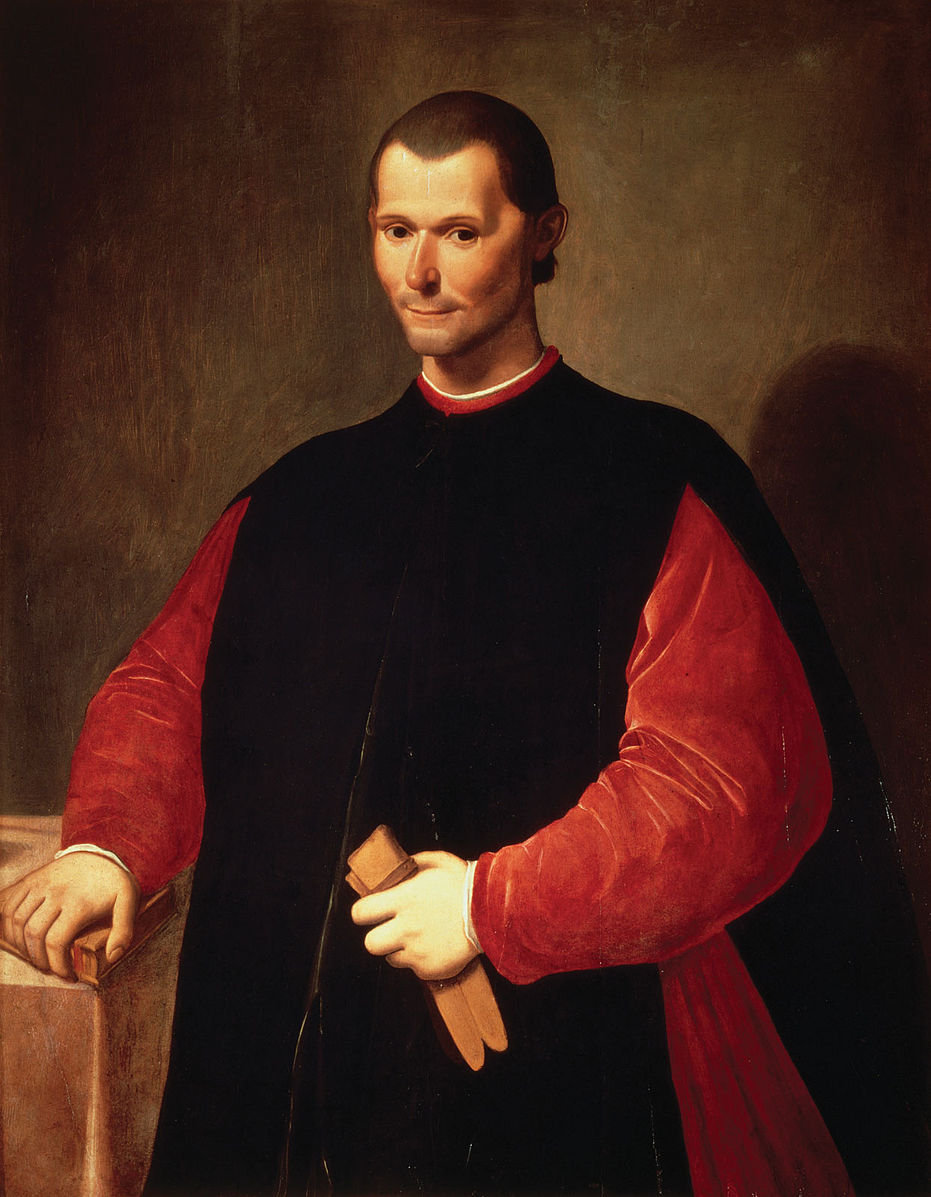
(Portrait of Niccolò Machiavelli, by Santi di Tito, via Wikimedia Commons)
 The Dish
