by Dish Staff
Leann Davis Alspaugh revisits the mauve craze that swept Europe in the mid-19th century:
In the 1850s, the color mauve was discovered by a young chemist who was trying to synthesize
artificial quinine. The residue from one his experiments became the world’s first aniline dye, guaranteed not to fade with time and washing. Queen Victoria wore a mauve gown to her daughter’s wedding, and Empress Eugénie of France cooed that the color matched her eyes—and an epidemic of “mauve measles” swept Europe. As cultural historian Simon Garfield noted in his 2001 book on the history of mauve, the color’s popularity led to burgeoning interest in the practical applications of chemistry and advances in the fields of medicine, weaponry, perfume, and photography. Mauve became indelibly associated with the elaborate, overstuffed décor of the Victorian period; when mauve returned in the 1980s, it was billed as “dusty rose,” a name much more congenial with that era’s other favorite color: hunter green.
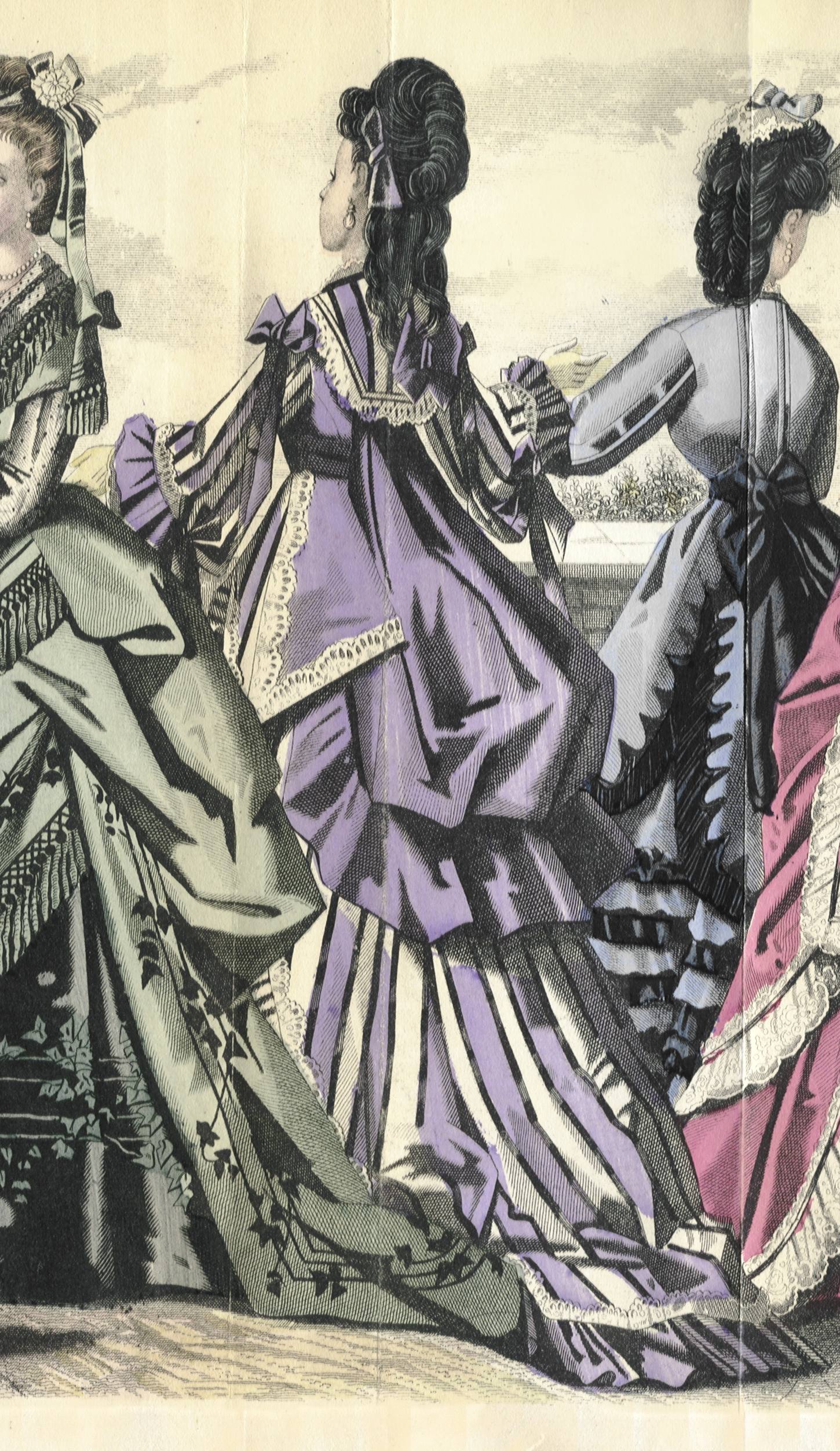
(Image: Fig. 3 from a Godey’s Lady’s Book fashion plate, May 1872, via Flickr user clotho98)
 The Dish