Cast Away

by Dish Staff

3659766107_f3252d36e7_b

Chris Mooney flags a troubling new study finding that the world’s oceans now contain more than five trillion pieces of plastic, weighing more than 250,000 tons:

With a global population of about 7.2 billion, that’s nearly 700 pieces per person.

The study, published in the journal PLOS One by Marcus Eriksen of the Five Gyres Institute in Los Angeles and a large group of colleagues, is based on data from 24 separate ocean expeditions, conducted between 2007 and 2013, to sample plastic pollution. Plastic was either observed from boats, or hauled up from the ocean by nets, in 1,571 locations. The data were then used to run an ocean model to simulate the amount and distribution of plastic debris.

The result not only yielded the estimate of over 5 trillion pieces of plastic in the global ocean — it also cast light on how plastic changes within the ocean (breaking down into smaller pieces) and circulates around the globe. Pieces between 1 millimeter and 4.75 millimeters in size were by far the most prevalent class of plastic in the ocean. However, by weight, really large pieces of plastic, greater than 200 millimeters in size, were the most significant.

Katy Steinmetz touches on efforts to rein in microbeads – the tiny bits of plastic found in exfoliating body washes and face scrubs – which contribute significantly to this problem:

These little orbs, introduced to replace harsher exfoliants like pumice, are so small that after they’re washed down the sink or tub, they sneak through sifters at water treatment plants and end up in the ocean and other bodies of water. Once in the ocean, researchers have found, these plastics act like sponges for toxins, and can be accidentally ingested by fish, thus ending up in the food chain. Several states considered bills to ban microbeads last session, but only Illinois passed a law, becoming the first state to do so. Now lawmakers in at least three states are gearing up for another go in 2015.

“We were outgunned,” says Stiv Wilson, associate director at 5 Gyres, a non-profit dedicated to fighting plastic pollution. In California, the industry group Personal Care Products Council—which represents companies like Johnson & Johnson and Clinique—lobbied members to oppose a bill that would have banned the use of microbeads, saying it was “overly aggressive and unrealistic.” The bill failed by one vote. The same state assemblyman who proposed that bill, Richard Bloom, plans to try again, with what Wilson says will be a “much broader coalition” of supporters.

Previous Dish on microbeads here and plastic more generally in the oceans here.

(Image via Antonio Foncubierta)

Exonerated, But Executed

by Michelle Dean

In the midst of the hustle and bustle of yesterday’s Cuba and Sony-centric news, one of America’s ghosts shimmered into view in the background. It was the spirit of a black fourteen-year-old named George Stinney. He was executed in 1944 for the murder of two young white girls in Alcolu, South Carolina. The only evidence of his guilt was a confession he said he’d been coerced into making. There was no physical evidence, but he became the youngest person executed in the United States in the 20th century anyway.

On a motion from the family, a judge just recently vacated his conviction:

Judge Carmen T. Mullen of Circuit Court did not rule that the conviction of Mr. Stinney for the murder of two white girls in the town of Alcolu was wrong on the merits. She did find, however, that the prosecution had failed in numerous ways to safeguard the constitutional rights of Mr. Stinney, who was black, from the time he was taken into custody until his death by electrocution.

The all-white jury could not be considered a jury of the teenager’s peers, Judge Mullen ruled, and his court-appointed attorney did “little to nothing” to defend him. His confession was most likely coerced and unreliable, she added, “due to the power differential between his position as a 14-year-old black male apprehended and questioned by white, uniformed law enforcement in a small, segregated mill town in South Carolina.”

The order was a rare application of coram nobis, a legal remedy that can be used only when a conviction was based on an error of fact or unfairly obtained in a fundamental way and when all other remedies have been exhausted.

Just to compound the awful picture of the American criminal justice system this provides, allow me to add that the time from crime to Stinney’s execution was unusually swift, a mere 83 days.

Here’s the thing: I know it’s tempting to tuck this case away in a drawer. I know it’s tempting to classify it as a product of its time and place, to say that Jim Crow laws are over, that we don’t allow executions of minors, that this is an America of the past. Problem is, the America of the present stands atop the America that convicted Stinney on the flimsiest grounds. When people qualifiedly sing the praises of the American justice system, they are singing the praises of the system that killed him in 83 days. And they are being a bit blasé about how it took more than a half-century for that same system to say they regretted doing it.

A Poem For Friday

by Alice Quinn

4965398476_1b756274b4_b

“A Morning” by Mark Strand (1934-2014):

I have carried it with me each day: that morning I took
my uncle’s boat from the brown water cove
and headed for Mosher Island.
Small waves splashed against the hull
and the hollow creak of oarlock and oar
rose into the woods of black pine crusted with lichen.
I moved like a dark star, drifting over the drowned
other half of the world until, by a distant prompting,
I looked over the gunwale and saw beneath the surface
a luminous room, a light-filled grave, saw for the first time
the one clear place given to us when we are alone.

The Dish looked back at Strand’s life and work after his recent death here.

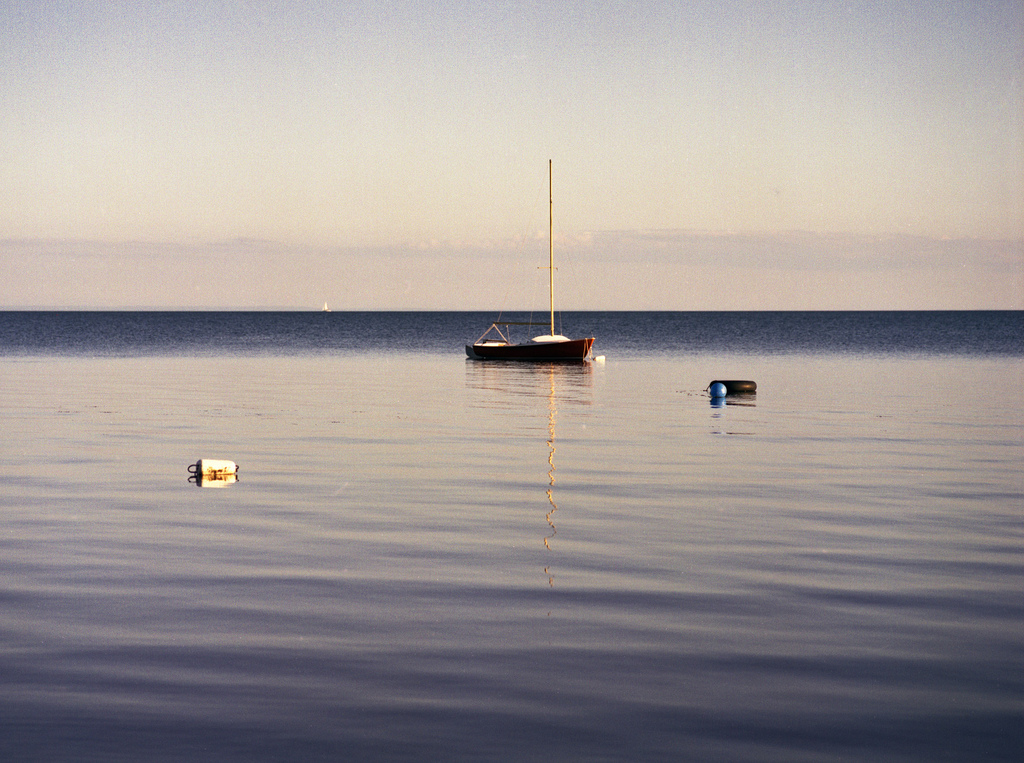
(From Selected Poems by Mark Strand © 1979, 1980 by Mark Strand. Used by permission of Alfred A. Knopf, an imprint of the Knopf Doubleday Publishing Group, a division of Random House LLC. All rights reserved. Photo of a small boat off of Prince Edward Island, where Strand was born, by Angus MacAskill)

The Best Of The Dish Today

by Chris Bodenner

We missed a BOTDT last night because of a Dish holiday reunion with current and former staffers at Arts and Crafts Beer Parlor, near where we hold staff meetings. Before the drunken revelry, we snapped a rare photo of the whole staff together (except Alice, who joined us at the bar):

staff-photo

Update from a reader:

Love the staff photo. Can you please let us know who’s who? It’s nice to put a face to the name that we see all too rarely. Thanks for all your work and contributing so much to so many.

Left to right, that’s Phoebe (Dishtern), Jonah (international editor), Matt (literary editor), “some clapped out old bear“, me (editor, in charge of email), Patrick (editor, in charge of RSS), Jessie (editor, in charge of weekend), Chas (managing editor, aka Special Teams), and Tracy (associate editor, Jill of all trades). At the bar were former interns Brendan, Doug, Gwynn, Katie, and general manager Brian.

Andrew, now officially the most frequent guest on the Colbert Report, is attending the series finale tonight, so be sure to tune in. For a dose of nostalgia, check out Andrew’s first appearance on the show back in 2006. And for an even bigger dose, don’t miss this new supercut of Colbert over the years.

The most popular posts today were Will’s “On The Right Not To Be “Triggered” and “Obama Just Ruined Cuba!” His followup to that Cuba post is here. Will also responded to a dissenting reader over his semi-defense of dynasty, spied on the “Elf on the Shelf” Christmas trend, and absorbed the American public’s acceptance of torture.

Michelle, meanwhile, confronted in two parts the caving of Sony Pictures to the terrorist threat over The Interview. She also discussed the discussion of rape, touched on the cycle of outrage stoked by Twitter, took before and after looks at the end of the Serial podcast, and penned an appreciation for Penelope Fitzgerald.

Phoebe also chipped in with her thoughts on white privilege. Don’t miss this epic MHB of Germans playing head-pong, and be sure to contribute to our new Losing Your Faith In Santa reader thread, which is a much lighter counterpart to our popular and continued thread on rape.

We’ve updated many recent posts with your emails – read them all here. You can always leave your unfiltered comments at our Facebook page and @dishfeed. 17 more readers became subscribers today. You can join them here – and get access to all the readons and Deep Dish – for a little as $1.99 month. Gift subscriptions are available here (you purchase one today and have it auto-delivered on Christmas Day). Dish t-shirts are for sale here and our new mugs here.

See you in the morning.

The Simpsons, Eternal

by Dish Staff

Marking the show’s 25th birthday yesterday, Todd VanDerWerff pens an appreciation:

Yes, the show repeats itself a fair amount, but it would be hard for it not to. And, yes, the show has sort of lost a point-of-view character, as its writers have aged past first the Simpson kids and then even the Simpson parents. Many stories in its later years tend to be along the lines of “Can you believe things are this way?!” and have the tone of a particularly perturbed anecdote in the “Life in These United States” feature in Reader’s Digest. All of these things mean it’s hard for the program to create classic episodes week in and week out now.

But what the [recent Simpsons] marathon underlined for me, more than anything, is that the series has attempted to stay true to its characters, and that it still takes chances, especially in its visuals. Both of these things are immensely important to its longevity, and the fact that it remains a pretty reliable form of entertainment from week to week. Seeing all of the episodes one after the other made the continuum that much more apparent: the show started great, became absolutely brilliant, then declined back to just great, before taking a few seasons to find a plateau of better than average.

Listening For The Voice Of God

by Dish Staff

In an interview about his new book, A Mess of Help: From the Crucified Soul of Rock’n’Roll, David Zahl notices that many of the artists he profiles – who range from ABBA to Morrissey to Axl Rose – “point to some sense of strength being found in weakness, of inspiration being bound up with suffering rather than apart from it.” Still, he’s wary of the didactic approach Christians too often bring to their cultural commentary:

That phrase “Christian approach” often implies that religious people should approach things with trepidation and/or suspicion, and measure them against the standard of our religion. There seems to be an agenda, sometimes an unspoken or unconscious one, that culture is valuable only insofar as we can harness it in some way. But I’m convinced that, to quote someone I admire, “any goodness, beauty, truthfulness, or enlivening candor we have the wit to discern is something for which we have God to thank.” That is, that it’s already been harnessed. So this isn’t a Christian “take” on secular music, at least as I see it. The artists I wrote about are the ones that have spoken and continue to speak to me rather than vice versa; I talk more about what I’ve learned from them than how their work filters through a religious framework. I gave myself plenty of room to explore, though, so who knows (“preacher brain” is not the easiest thing to shut off). Again from the introduction:

“It wasn’t that I set out to write about the intersection of Christianity and culture; it was simply that music was the most honest language available to me—the lingua franca of my inner life, my immediate vocabulary for understanding what was happening to me. In fact, so immersed in it was I, that to avoid pop culture would have been to embrace precisely the kind of phoniness that permeates so much religious ‘engagement’ with it these days.”

Why Not Open Up To Cuba?

by Dish Staff

Screen Shot 2014-12-18 at 12.43.00 PM

Aaron Blake flags one argument that won’t get much traction – that Cuba is a genuine national security threat:

Despite Cuba’s proximity to the United States (about 90 miles from Florida) and its alliance with other antagonistic countries like North Korea and Russia, Americans have grown progressively less and less concerned that the island country actually poses a threat to the United States. A CNN/Opinion Research poll earlier this year, in fact, showed that just 5 percent of people viewed Cuba as a “very serious threat” and 21 percent said it was a “moderately serious threat.” Another 72 percent said it wasn’t a threat at all or “just a slight threat.” Back in 1983, two-thirds of Americans viewed Cuba as at least a “moderately serious threat,” but that numbers has fallen steadily since then.

Zack Beauchamp notes that another favorite talking point of anti-Cuba hardliners – calling the country a state sponsor of terrorism – is a bit outdated:

The US government designated Cuba a state sponsor of terrorism in 1982, which imposed financial penalties on the Cuban government. At the time, the US accused Cuba of supporting the Spanish Basque terrorist group ETA and the FARC militants in Colombia. Though the US continues to label Cuba a terrorism sponsor, that’s just transparently untrue. According to the State Department‘s most recent annual review of terrorism worldwide, “there was no indication that the Cuban government provided weapons or paramilitary training to terrorist groups.”

“Cuba’s ties to ETA have become more distant, and that about eight of the two dozen ETA members in Cuba were relocated with the cooperation of the Spanish government,” the report reads. And “throughout 2013, the Government of Cuba supported and hosted negotiations between the FARC and the Government of Colombia aimed at brokering a peace agreement between the two.” That doesn’t sound much like a state sponsor of terrorism.

In fact, FARC announced a unilateral ceasefire yesterday, possibly (though not necessarily) pointing the way to peace in Colombia. Richard McColl wonders whether these two events were connected:

How much influence Cuba had in the decision taken by the FARC is up for speculation since Colombian President Juan Manuel Santos has been making conciliatory overtures in his statements to the press in recent weeks. Now the question in Colombia, is, will a bilateral ceasefire be announced in coming days? In the past, Santos has been stubbornly opposed to a bilateral ceasefire, but his position on the issue may be shifting. In an interview with W Radio in Bogota on Wednesday morning before the news about Cuba broke, he said that he was waiting for concrete actions from the FARC that would enable a deceleration of the conflict. Less than six hours later, the FARC potentially came good on the challenge.

Larison pushes back on the notion, per Elliott Abrams, that Obama’s opening to Cuba will embolden other enemies of the US:

Restoring diplomatic relations with Cuba isn’t going to have negative “repercussions” around the world. For one thing, persisting in a useless policy towards Cuba doesn’t tell us anything about Washington’s willingness to back up its guarantees elsewhere in the world. It does hint that the U.S. is eventually capable of recognizing policy failure when it is staring it in the face, and that has to be modestly reassuring to our allies and regional neighbors. If there are any repercussions from this decision, they are all likely to benefit America. Latin American governments will have less of a reason to fault U.S. policy towards Cuba. The U.S. will be able to demonstrate that it is still capable of resuming relations with states that it has previously treated as pariahs, and that might make U.S. diplomacy more effective in other places.

Ishaan Tharoor finds it odd that Republicans who tout the benefits of trade liberalization everywhere else don’t extend the same optimism to Cuba:

It’s a strange irony that some of Washington’s biggest proponents of free trade don’t want to see the United States enable such liberalizing changes in Cuba. Closer ties to Cuba, including trade links, will ideally lead to a deepening of Cuba’s own curtailed civil society. That, at least, is the current message of the Obama administration. The more open Cuba gets, the more access its people may have to the Internet and to outside channels of information. That, the hope goes, may speed political reform in Havana.

Critics may point to countries like China and Vietnam, where decades of economic development and free enterprise have yet to yield any real liberal, democratic dividend. But Cuba is fundamentally different; it exists in the U.S.’s shadow and its links to the American mainland, including some 1.5 million Cuban Americans, mean that even the most dogged authoritarian leader will struggle to inoculate the regime from American influence — that is, once Washington finally chooses to engage with Cuba.

Joe Klein makes a similar argument:

Those who favor a continuation of our failed Cuba policy are a reflexive lot with a muddled argument. They’re the usual myopic tough guys–John McCain and Lindsey Graham immediately jumped on the President after his Cuba announcement today–who have no idea of the seductive power of the American way of life in the rest of the world. I can understand why the corroding Iranian regime would want to keep us out (a sign in Tehran: “When the Great Satan praises us, we shall mourn”). I’ve always thought: then let’s recognize the hell out of them. Let ‘em mourn. Let the Revolutionary Guard try to fend off Kanye West and Star Wars. Good luck with that.

Rich Lowry, however, insists that easing trade restrictions won’t spur the growth of free enterprise in Cuba, but rather will only enrich the Castro regime:

Consider tourism. The Cuban military has a enormous holding company called GAESA. One of its companies, Gaviota, operates an extensive network of hotels and resorts from which it earns a bonanza of foreign exchange, according to the strategic consultancy Stratfor. Imagine if the Pentagon owned the Radisson, Marriott and Hilton hotel chains. That is the Cuban tourism industry in a nutshell. If tourism were the key to empowering and eventually liberating the Cuban people, the country would be a robust democracy by now. About a million Canadian tourists go to Cuba every year. In total, more than 2 million tourists visit annually, and yet the Castro regime is still standing.

Michael Daly, meanwhile, points out that Cuba still harbors a number of American fugitives, including the infamous Assata Shakur:

Among the roughly 80 other American fugitives in Cuba is Ishmael Ali LaBeef, who hijacked an airplane after he and four buddies murdered eight innocents during a robbery at a Virgin Islands golf course in 1972. There is also Victor Gerena, who is wanted in connection with a $7 million armored car robbery in Connecticut in 1983. And then there is William Morales of the Puerto Rican independence group the FALN. He lost most of both hands while assembling a device in an FALN bomb factory in 1979, but managed to escape from a hospital ward where he was being fitted for prosthetic hands after being convicted of weapons charges and sentenced to 99 years.

Face Of The Day

by Dish Staff

Bird Feeding

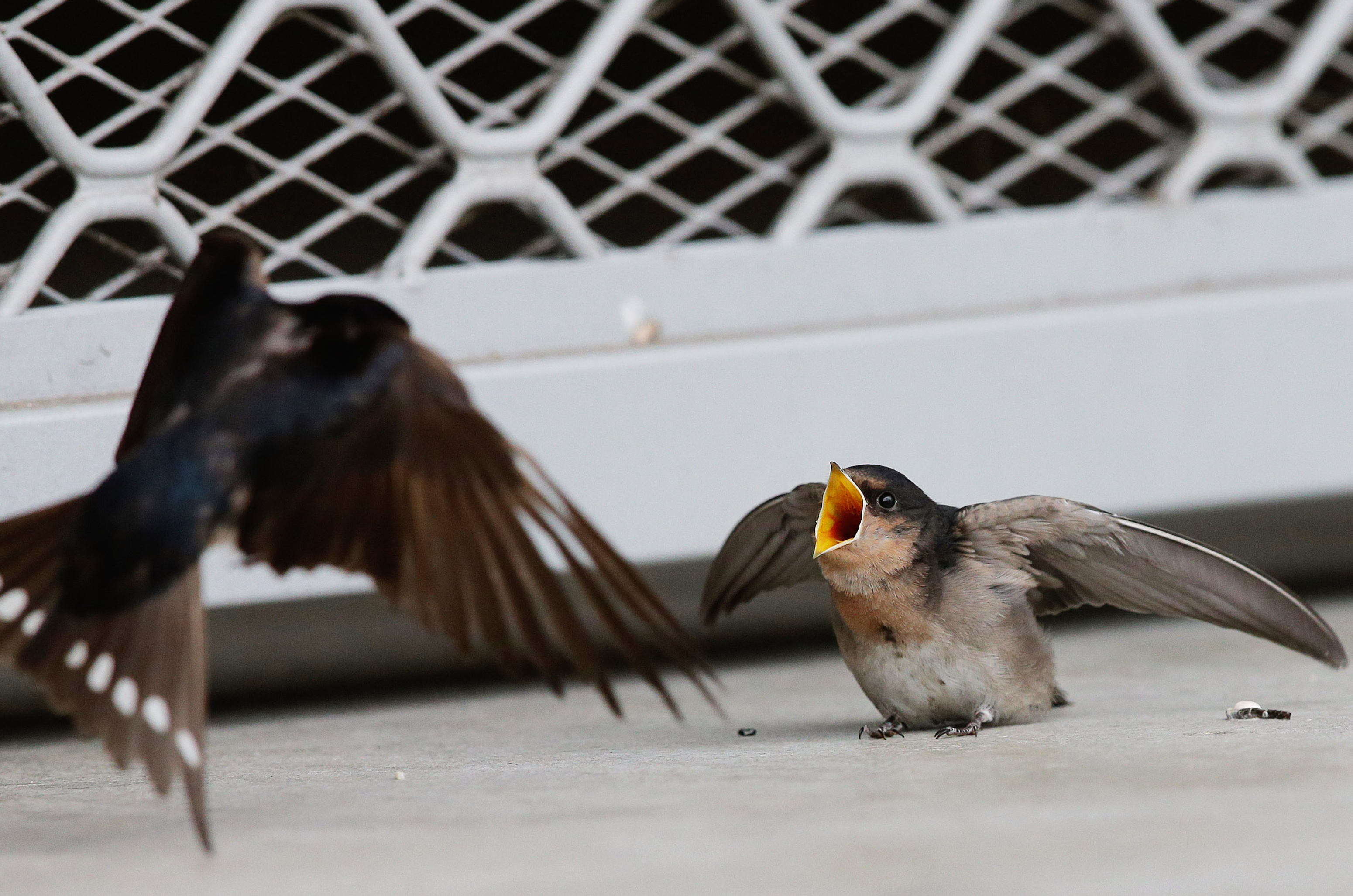
A Mynah bird feeds its young in Sydney, Australia on December 18, 2014. By Guillaume Gros/GG. Update from a reader:

I’m sure I’m not the first to tell you, but those do not look like Mynah birds. They look to be swallows, but I don’t know what species they would be in Australia.

Another adds, “They are probably Welcome Swallows, Hirundo neoxena.”

Getting High For Two

by Dish Staff

Libby Copeland tells the story of Tamara Loertscher, “a woman arrested for drug use even though she says she stopped when she realized she was pregnant, brought to court and twice refused lawyers (even though her fetus was given one), and then sent to jail for 17 days, where she was placed in solitary confinement, denied prenatal care even as she began cramping, and not given her thyroid medication for two days, according to the woman and her lawyers”:

[Y]ou can’t consider Wisconsin’s punitive approach to pregnant women—which purports to protect “unborn children”—without first considering how the state has failed to promote actual family values.

Loertscher, who suffers from hypothyroidism and depression (they are often linked), says she quit her job last February during a depressive episode and then found herself without insurance. Wisconsin is one of the states that turned down the Medicaid expansion tied to Obamacare that might have made it easier for people in her situation to get health insurance. She says she started using meth and marijuana in an attempt to self-medicate for the fatigue and depression she was experiencing, using meth two to three times a week and marijuana less often. She also took an over-the-counter supplement for the thyroid problem.

Commenting on the case, Katie McDonough notes:

Wisconsin is far from the only state to subject pregnant women to a different set of rules and the threat of arbitrary detention. Earlier this year, Tennessee became the first state in the nation to criminalize pregnancy outcomes, though other states have used existing child abuse laws to detain pregnant women.

Between 1973 and 2005, National Advocates for Pregnant Women have documented 413 documented cases in which a woman’s pregnancy was a necessary factor in criminal charges brought against her by the state. There have been an additional 350 cases documented within the last decade. In each of these cases, women have been deprived of due process, the right to legal counsel and other basic constitutional protections because they were pregnant.

Amanda Winkler focuses on Tennessee:

The number one cause of death in Tennessee is drug overdose, surpassing the number of vehicle accidents fatalities in 2013. And pregnant women aren’t immune from addiction: approximately 900 babies were born with Neonatal Abstinence Syndrome (NAS) in the state last year, a ten-fold increase from a decade ago. NAS is caused when mothers continue their opiate or narcotic drug use through pregnancy; babies can usually be weened off the drug within a few weeks after birth and there are no known long term effects.

However, Tennessee officials have declared NAS an “epidemic” and took action this past July with the implementation of Public Chapter 820. The law makes it possible for a woman to be charged with assault for the use of a narcotic drug while pregnant if her child is born harmed by the drug. An assault conviction is punishable by a fine and anywhere from one to 15 years in prison. So far, around 9 women have been charged under this law. The law has been controversial, with opponents saying it’s counter-productive to put a drug-addicted mother in jail.

Obama Scraps Our Failed Cuba Policy, Ctd

by Dish Staff

Screen Shot 2014-12-18 at 12.26.49 PM

Erik Voeten notes that, in one respect, Cuba isn’t the only country that’s been internationally isolated by the US embargo:

The United Nations General Assembly has voted since 1992 on an annual resolution on the “necessity of ending the economic, commercial and financial embargo imposed by the United States of America against Cuba.” In 1992, with the Cold War just ending, fewer than 50 percent of all member states voted in favor of the resolution (more than half abstained). The graph above shows how quickly any semblance of support for the embargo evaporated.  In its latest iteration only Israel joined the Americans in voting against the resolution, although, to its credit, the United States did get the Marshall Islands, Micronesia, and Palau to abstain.

U.N. General Assembly resolutions have mostly symbolic value as they do not create binding legal obligations. Yet, U.S. isolation probably undermined the effectiveness of the embargo.

Juan Carlos Hidalgo applauds Obama’s decision to re-establish relations:

The president’s move should be uncontroversial. U.S. policy toward Cuba has been a blatant failure. It has not brought about democracy to the island and instead provided Havana with an excuse to portray itself as the victim of U.S. aggression. It has also served as the scapegoat for the dilapidated state of Cuba’s economy. Moreover, according to government reports, the embargo has also become somewhat of a U.S. security liability itself. As for the economic measures, they are significant in symbolism, yet limited in their likely impact as long as Cuba retains its failed communist economic system. The 114th Congress should pick where the president left off and move to fully end the trade embargo and lift the travel ban on Cuba.

The Bloomberg View editors argue that Obama’s move will hasten the end of the Castro regime, especially if (as is unlikely) Congress plays along and lifts the trade embargo:

The opening of embassies will also have beneficial effects diplomatically. It sucks some air out of the most fevered denunciations of the U.S. by fellow Cuban travelers such as Venezuela, makes it easier for the U.S. to partner with countries such as Brazil, and helps transform the doddering Castros from symbols of resistance to minor diplomatic players.

Of course, as long as the U.S. embargo remains in place, the Castros will retain some of their revolutionary cachet, not to mention their grip on Cubans’ livelihoods. For that to go away, and for Cuba to leave socialism and its 1950s Chevrolets in the rearview mirror, the U.S. Congress must act: Under the terms of the Helms-Burton Act and other laws, the embargo can’t be fully lifted without its concurrence.

Fallows calls the embargo the stupidest American policy of the last 35 years:

I choose “at least 35 years” as the demarcation point for undeniable irrationality because that is when the U.S. fully normalized its relations with mainland China. If successive Republican and Democratic administrations could see the merit of trying to engage (rather than exclude) a one-party repressive communist-run state, even when that state had four times as many people as the U.S. did, and is nuclear-armed, and is a regional rival of several U.S. allies, how much more obvious is the case for a tiny little island practically within eyesight of the American mainland and certain to fall under the sway of U.S. cultural and economic influence if given a chance?

Not to mention that recognizing the People’s Republic of China meant cutting off America’s relationship with the people and government of the Republic of China on Taiwan, which itself has twice the population of Cuba and nearly 10 times as large an economy. There is no comparable tit-for-tat cost for the U.S. in normalizing relations with Cuba.

Keating wonders, however, what Castro’s motives are:

“I do think that they’re trying to lay the groundwork for a process of change in which they can keep their scalps and guide the country toward a more sustainable political system,” Christopher Sabatini, senior policy director and chairman of the Cuba Working Group at the Americas Society/Council of the Americas, told Slate.

The other big factor at play here is the turmoil in Venezuela. The South American nation threw the tottering Cuban economy a lifeline during the regime of Hugo Chávez, providing the island with 100,000 barrels of oil per day. Today, in the aftermath of Chávez’s death and bruised by political turmoil and the plummeting price of oil, Venezuela’s economy is in chaos and the government is on the verge of defaulting on its debt. “You don’t need to be a capitalist to realize that Venezuela’s economy is in very dire straits,” said [Christopher] Sabatini. “It’s getting worse literally by the day. So they’re going to lose that benefactor.” Add the Venezuela situation to the Castros’ advancing years and you can understand what’s driving Raúl toward a more accommodating stance.

Jason Koebler highlights what a big deal it will be for Cuba to finally get the Internet:

What’s this all have to do with the internet there? Well, the ​submarine cable system that connects much of the world with fiber optics has basically bypassed Cuba. Instead, the country has been relying on extremely old and slow satellite technology to give its people (limited and censored) internet access. Obama specifically said he will allow American telecom companies to work with Cuba. …

That’s huge. Internet access in the country is abysmal. Only 5 percent of Cubans have internet access, and barely anyone had internet in their homes until this year, when the state-owned Empresa de Telecomunicaciones de Cuba began offering very limited, very slow internet connections to some residents. Before that, the internet was only available at 118 kiosks, where residents had to pay $4.50 an hour (an astronomical sum in Cuba) to use computers.