
Waialua, Hawaii, 12 pm
Waialua, Hawaii, 12 pm
This is a question on which I am utterly unqualified to offer an opinion. My sex life at college was zero; my sex with women at grad school was not mainly (ahem) at my instigation; and all my boyfriends were off-campus. I knew of no alleged rapes when I was at either place; and have minimal knowledge of the whole heterosexual thing. So what actual solid data do we really have of a crime that is notoriously under-reported and thereby very difficult to assess? Emily Yoffe – in a piece that shows how long-form journalism has a real and vital future online – unpacks it for us. As well as providing chilling evidence of kangaroo courts and procedures, designed to eviscerate any due process for the accused, Yoffe reveals the very thin statistical base on which the left-feminists have launched their crusade. Here, for example, is the author of the study that is used to claim that one in every five female students is raped:
“We don’t think one in five is a nationally representative statistic.” It couldn’t be, he said, because his team sampled only two schools. “In no way does that make our results nationally representative,” Krebs said.
Then this:
The Sexual Victimization of College Women, a 2000 study commissioned by the U.S. Department of Justice, is the basis for another widely cited statistic, even grimmer than the finding of CSA: that one in four college women will be raped. The study itself, however, found a completed rape rate among its respondents of 1.7 percent.
They got to 25 percent by extrapolating that number for five years and doubling it because the survey was conducted in the spring semester:
In a footnote, the authors acknowledge that asserting that one-quarter of college students “might” be raped is not based on actual evidence: “These projections are suggestive. To assess accurately the victimization risk for women throughout a college career, longitudinal research following a cohort of female students across time is needed.” The one-fifth to one-quarter assertion would mean that young American college women are raped at a rate similar to women in Congo, where rape has been used as a weapon of war.
Are American campuses as dangerous for women as war-torn Congo? To express any skepticism about this is to be a rape-denialist or a rape-truther. But the inviolate truth of one in five women raped on campus requires no skepticism at all.
Late Friday night, American photojournalist Luke Somers and a South African teacher Pierre Korkie, who were being held hostage in Yemen by al-Qaeda militants, were killed by their captors during a failed rescue attempt by US special forces:
It was the second U.S. attempt to free Somers in 10 days and Kerry said it had been approved because of information that Somers’ life was in imminent danger. “It was our assessment that that clock would run out on Saturday,” one U.S. official said. However, the Gift of the Givers relief group, which was trying to secure Korkie’s release, said it had negotiated for the teacher to be freed and had expected that to happen on Sunday and for him to be returned to his family.
Somers’s death, after two attempts to free him, has reignited the debate over whether the US’s policy of never paying ransoms for captives held by terrorist groups is appropriate. Joel Simon argues that it’s time to rethink that blanket prohibition:
The US government has said it will not review the prohibition on paying ransom, which I believe is a missed opportunity.
While I accept the US government’s logic that the payment of ransom increases the risk for kidnapping, there should be some flexibility built into the policy to address extenuating circumstances. The review should certainly explore ways to engage with hostage takers through other means. According to Diane Foley, her son’s kidnappers were angered by the fact that the US government refused to respond to their emails. Communication with kidnappers is not the same thing as negotiating with kidnappers. It is akin to the local police talking through a bullhorn to someone holding up a bank in order to buy time, gain intelligence, and seek a possible resolution. Talking should be a normal and natural response when lives are at stake.
But the Bloomberg View editors are still resolutely opposed to changing the policy:
Since 2008, the kidnapping-for-ransom industry has raised as much as $165 million for terrorist organizations, most of it paid by European governments. Those governments routinely deny making the payments, because they know it’s bad policy: It encourages further kidnappings, and it funds terrorist operations as well as the slaughter of civilians in the Middle East and Africa. It also contravenes multiple international commitments.
As for the U.S. and U.K. governments that ran the unsuccessful military raid, there are certainly questions as to how they failed to know that Korkie’s release was to happen on Saturday, or that he might be with Somers. But whatever the answers, they are irrelevant to the question of whether governments should ransom their citizens. That calculation remains the same: The only way to end the ransom business is to close the market.
Jonathan Tobin criticizes the South African charity that was working to ransom Korkie:
Unfortunately, the problem with ransoms is not limited to the aid the transactions give to the terrorists. By not coordinating with Western governments, the efforts of groups like the Gift of the Givers charity—the organization that was working for Korkie’s release—make it difficult, if not impossible for the U.S. military to avoid operations that might interfere with a hostage’s release. Instead of castigating the United States for a rescue operation that went wrong, those who, even for altruistic reasons, conduct negotiations that aid the terrorists are ultimately to blame.
Jazz Shaw zooms out:
I’m sure there will be some backlash since we failed to get Somers out alive, but given the circumstances it doesn’t sound like the odds were very good in the first place. A better question is what we should be doing about Yemen in the long run. The government there, such as it is, appears to be on the brink of collapse. Their leadership has been pointing their fingers at Washington and accusing the Obama administration of fomenting unrest. They lost control of their own capital, Sana, earlier this year to a group of rebels called the Houthis. Outside of a couple of major population centers, nobody is in control, which is probably what made it such an attractive destination for al Qaeda.
With no reliable governmental partner to work with, our options appear limited except for high risk military incursions such as this one. And until the larger problem of terrorist networks is dealt with, I’m afraid we can expect repeat performances of this raid in the future.
Danielle Campoamor shares her own experience:
I always thought that if I ever became a victim of sexual assault, I’d say something. I’d be the girl reporting it, sitting on a witness stand and pointing a defiant finger, just like the actresses on SVU. There wouldn’t be a second thought or a deliberate pause; I’d simply speak up because that’s, of course, what you do. And then I became a victim of sexual assault.
When the police officer was standing in front of me, a pad of paper in one hand and an overworked pen in the other, and asked me if I wanted to file charges, I paused. Tears were running down my cheeks and my legs wouldn’t stop shaking and my best friend’s hand, honorable in its intentions, failed to comfort me. The officer had already asked me how many drinks I had consumed. In fact, he asked me on three separate occasions. He had already asked what I could have possibly said or unintentionally inferred, prior to being forced onto a bed. He had already raised his eyebrows and tightened his lips and wrinkled his brow.
And a part of me already knew. So, I said no. I just wanted it over.
She did eventually report the assault, only to be met with condescension:
The detective explained to me that women get “confused” rather regularly. He explained that many a woman sat in my chair, defiantly lying until they couldn’t lie anymore. He told me that drinking and judgment and embarrassment, even boyfriends, can contribute to a woman continuing to cry wolf. He asked me if this was what I was doing. Was I confused? Was I ashamed? After all, I had been drinking.
I said no.
The detective nodded, almost annoyed that I didn’t save him the extra paperwork. He told me he would do what he could, but often times the “he said/she said” cases don’t go anywhere. He assured me that even if it didn’t, a report would be on record. I guess he thought that would be comforting.
That was almost two years ago. Nothing has happened. The evidence is backlogged and the detective is out of contact and the monster is still hiding.
McArdle tries to relate to such stories:
When I was in college, I was the victim of someone who stole a bunch of money from me. I knew who it was, and I didn’t report it to anyone except a couple of friends. Why not? Years later, I’m not sure I can say. I can cite a deeply ingrained aversion to asking for help from authorities, which is certainly a part of my character, or point out that the accusation would have been hard to prove, even though, for tedious reasons I won’t go into, I was quite certain who had committed the theft. But that could just be post-hoc rationalization; what I actually remember is that it happened, and I didn’t report it. Instead, I stopped buying food for about a week. And I wasn’t even faced with having to rehearse hours of unimaginably gruesome trauma over and over to investigators.
So I find it extremely easy to believe that a girl stumbled out of a fraternity house, bruised and humiliated, and just wanted to go home and pretend it never happened. But even if I couldn’t, that wouldn’t be evidence of much of anything, except the contours of my imagination. People do crazy, insane, unaccountable things all the time — if you found it hard to believe that fraternity brothers committed a premeditated gang rape, why was it so easy to imagine that a girl made up a rape story to recount to a national magazine, where she risked humiliating exposure? Whichever you believe, the explanation for this seemingly insane behavior is the same: Sometimes, people aren’t very good at counting the consequences of their own actions.
A clever short that could be retitled “Shit Roommates Say”:
Bouie confronts the challenge:
Changing the culture of policing to de-emphasize violence and leave room for ordinary human behavior won’t be easy, but it’s possible. And it doesn’t have to lead to more crime. In Philadelphia this year, police have shot and killed just three people, compared with 12 by this point in 2013 and 16 by this point in 2012. What changed? The culture, and specifically, the department’s approach to the use of force. After a local news story found a spike in officer-involved shootings despite a drop in crime, the police commissioner invited federal officials to examine the department’s practices as part of a “collaborative review.”
The full report isn’t public, but the recommendations included new directives involving the use of force—in which officers state that they “hold the highest regard for the sanctity of human life” and the “application of deadly force is a measure to be employed only in the most extreme circumstances”—and intensive training designed to de-escalate confrontations before they turn deadly. “As the new policies have been phased in,” notes Philly.com, “the total number of shootings to date—fatal and nonfatal—has plummeted from 48 in 2012 to 35 in 2013 and to 18 so far this year, according to the department.”
Rosemarie Ward highlights the successes of Camden, NJ:
As the administration casts about for ways to build trust between police departments and the public, they would do well to look at what is happening in Camden, New Jersey, a poor city that once had the reputation for being America’s most dangerous. Camden disbanded its police department about 18 months ago, installing a new county unit in its place. Crime has since fallen considerably. Murders dropped by 49% to 31 between 2012 and 2014 (January 1st through November 30th). Shootings have been halved, robberies and rape are down by a third, and other violent crimes are down by a fifth. In a population of around 77,000, 35 fewer mothers are now burying their sons each year.
What is Camden’s police force doing right? At the most basic level, the city has returned to old-style policing. Instead of using squad cars, officers now patrol their beats on their feet in pairs (or on bicycles). They knock on doors and introduce themselves, and learn the names of people in a neighbourhood. “Nothing builds trust like human contact,” says Scott Thomson, Camden’s police chief. Locals can be a great source of information about where the problems are, he adds, “but that’s not going to happen without trust.”’
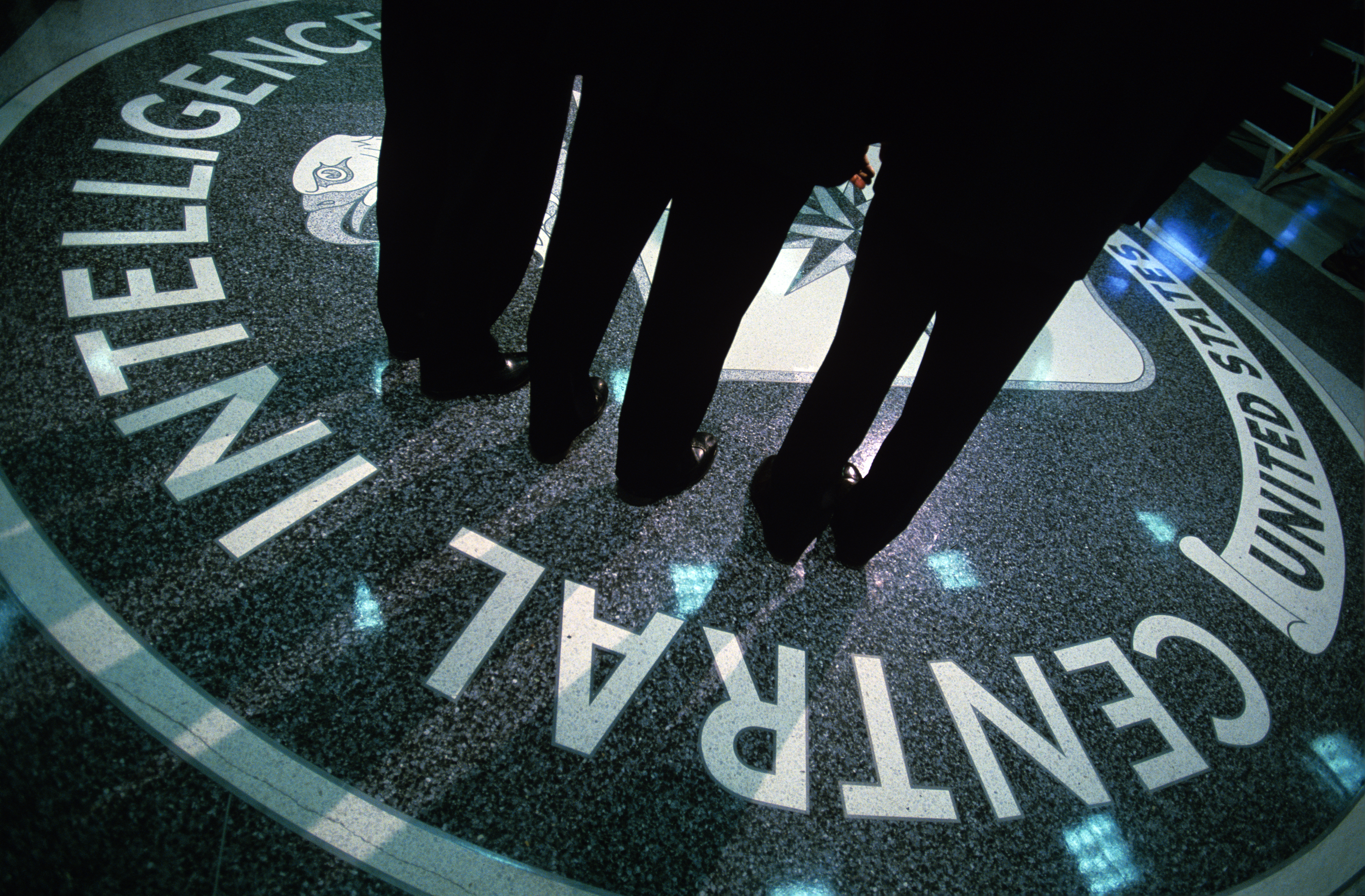
Former CIA director Michael Hayden claims that the torture report “will be used by our enemies to motivate people to attack Americans and American facilities overseas.” Drezner doesn’t buy it:
There is no shortage of US foreign policy actions and inactions in the region to inflame enemies. The Senate report is small potatoes compared to that.
Larison seconds Drezner:
It is extremely convenient for these people to discover the possibility that a report about past U.S. abuses might inspire outrage and even violence in response. There was no such concern among hawks about the foreign policy implications of torturing people when it was being done, and they expressed no similar worries that other U.S. actions would provoke violent responses. If one raises the possibility that aggressive U.S. actions in other parts of the world could have dangerous consequences for Americans later on, that is normally denounced as “blaming” America. Strangely enough, that doesn’t seem to apply when there is a chance of exposing our government’s egregious abuses to public scrutiny and some small measure of accountability for those abuses.
And many of the people crying blowback over this report were the same ones dismissing concerns that keeping Gitmo open would stoke resentment and terrorism in the Middle East. Waldman has it right:
The cynicism necessary to attempt to blame the blowback from their torture program on those who want it exposed is truly a wonder. On one hand, they insist that they did nothing wrong and the program was humane, professional, and legal. On the other they implicitly accept that the truth is so ghastly that if it is released there will be an explosive backlash against America. Then the same officials who said “Freedom isn’t free!” as they sent other people’s children to fight in needless wars claim that the risk of violence against American embassies is too high a price to pay, so the details of what they did must be kept hidden.
On that count, Drum argues that the release of the torture report will save lives:
[O]ur conduct during the early years of the war on terror almost certainly inflamed our enemies, bolstered their recruitment, and prolonged the wars in Afghanistan, Iraq, and elsewhere. This cost thousands of American lives.
President Obama may have banned torture during his administration, but is there any reason to think we’ve now given up torture for good? Not that I can tell, and it will cost many more thousands of American lives if it happens again. So for our own safety, even if for no other reason, we need to do everything we can to reduce the odds of America going on another torture spree.
(Photo by Charles Ommanney/Getty Images)
Maya Inamura defends the alleged UVA rape victim from those who would label her a liar:
While Rolling Stone undoubtedly should not have published an article that had inconsistencies, the fact that Jackie got some details wrong is not reason for the rest of us to throw out her entire story. Victims of trauma often have trouble remembering the exact nature of their assault, including the date on which it occurred, for which my own story of sexual assault should serve as a case in point. This is the nature of trauma: It makes forgetting easy, because forgetting is exactly what a traumatized person wants to do. It’s a coping mechanism.
As I’ve said before, I think it’s highly likely that Jackie was raped – and it’s worth noting that neither Jackie nor her friends have claimed that she was not assaulted. But, to my mind, that could lead to minor inconsistencies, or a mixed up time-line, or lots of details being wrong. But remembering that you were pinned down on a pile of broken glass, referred to as “it” and repeatedly raped with quite precise details filled in leads me to scratch my head. Anne J. Jacobson stresses that Jackie’s memory of that night could have been severely warped by whatever trauma she actually endured:
Ordinary people often enough take the fact that we have memories to show that we have recording devices inside us that somehow secure most of the details of our experiences. There are several reasons why this is false. If nothing else, calling up a memory and then restoring it alters it a bit. And memory follows vision in getting the gist of things better than getting the precise details down. There was a recent NY Times OpEd by two top researcher on memory and its fallibility. Given what we know about memory, we should expect this young woman’s memory to be gappy and to have errors. And even more so considering the trauma of the experience she was reporting. Because an organization was named by her, it may be that a reporter aware of recent memory research should have checked it.
The evidence of some trauma happening to Jackie is strong, as a former roommate explains:
I fully support Jackie, and I believe wholeheartedly that she went through a traumatizing sexual assault. I remember my first semester here, and I remember Jackie’s. Jackie came to UVA bright, happy and bubbly. She was kind, funny, outgoing, friendly, and a pleasant person to be around. That all notably changed by December 2012, and I wasn’t the only one who noticed. Our suite bonded that first semester and talked many times about the new troubles we were facing in college. Jackie never mentioned anything about her assault to us until much later. But I, as well as others, noticed Jackie becoming more and more withdrawn and depressed. …
Sometime that year I remember her letting it slip to me that she had had a terrible experience at a party. I remember her telling me that multiple men had assaulted her at this party. She didn’t say anything more. It seemed that was all she’d allow herself to say. I wish I had done something sooner. I wish I had known how to help. But I applaud Jackie for telling her story, now two years later. It was a story that needed to be told.
But if the story is not true, does it still deserve to be told? And do the people inevitably incriminated by it not have a right to respond?
I hope you’re able to find five minutes to watch this:
It’s extremely rare for us to see inside the factory farms where living creatures are subjected to endless torture. And it’s extremely rare to see with our own eyes what the USDA rating of “humanely raised” actually means:
Compassion in World Farming isn’t shy about placing some of the onus on the USDA. The government does have a list of labels that must meet certain requirements in order to be used by meat producers on their packaging, such as “organic,” “free range,” and “no antibiotics.” But the terms that Perdue is using, like “humanely raised” and “raised cage free” aren’t regulated by the government in the same way. Instead, they are based on The National Chicken Council’s animal welfare guidelines, an industry-created standard.
The USDA doesn’t approve the label so much as verify that it meets the standards the industry decided it should meet. Samuel Jones, a spokesperson for the USDA, confirmed the process. “Some companies pay the USDA to verify that they’re meeting specific processing points,” he said. “If it’s cage-free, and they want us to verify that they are meeting their set guidelines, that’s what we do.” A lot of this nuance can be lost on consumers, who aren’t aware that labels are often defined by the industry, not by the government.
Take “cage-free”. We think of it as a positive in buying chicken. But almost all chicken designed to be eaten are raised cage-free. It tells us nothing about the way in which they are subjected to conditions and lives no living creature should be forced to endure.
Judith Levine has a must-read on the intellectual climate that prompted some to attack any early skepticism of the Rolling Stone story:
On Jezebel, Anna Merlan expressed her opinion with characteristic Jezebelian eloquence: “‘Is the UVA Rape Story a Gigantic Hoax?’ Asks Idiot” And typically, readers chimed in with gender-baiting: “But never mind Erdely’s months of work. Two guys who have no idea what they’re talking about don’t believe it. Case closed.” “Newsflash: Most libertarians are misogynist/racist white men.”
Lovely, innit? The way in which these individuals use race and gender as ipso facto damning aspects of people’s identities does not seem to jolt them into any self-awareness. These crusaders against bigotry are awfully fond of it when it can be used to dismiss critics. But what I see most acutely is the sense – prevalent on the left these days – that there are no fair-minded people out there, that all men are potential rapists or rape-denialists, that patriarchy is so powerful there’s no chance at all that someone could actually believe, say, that there is a serious rape crisis on many campuses but that the Rolling Stone story is too flawed a piece of journalism to defend:
I will say that even if Erdely had done a more thorough job, none of her doubters would believe her. They’d find some other reason to hate.
— Amanda Marcotte (@AmandaMarcotte) December 3, 2014
Which is to say that these writers are not liberals in any meaningful sense of the word. Deep down, they simply don’t believe people are open to persuasion. Which is why they need to rely on graphic exaggerations, emotional blackmail or endless circles of victimology to make their case. So anyone who might question the specific details of an alleged rape are “rape-denialists” or “rape-truthers” rather than, you know, journalists. And that particularly includes women who may not tow toe the party line:
Vanquished bodies litter the blogosphere. Canadian journalist Anna Duckworth knew CBC radio host Jian Ghomeshi well; he’d been her generous mentor for years. So when accusations began to surface that he had sexually brutalized numerous women, she spoke up. She stressed that she didn’t think his accusers were lying. All she asked was that her friend be assumed innocent until proven guilty.
Duckworth’s attackers “made me feel great shame for coming to Jian’s defense,” she wrote on Huffington Post. “Some went as far as to call people like me misogynists, victim blamers and perpetrators of rape culture.” In a short piece, the word “shame” appeared six times.
Over the years, Cathy Young, a Newsday columnist and contributor to Reason, has written and spoken widely on false accusations of rape and the threats to justice in a kind of overzealous feminist jurisprudence. Young is a feminist who also cherishes individual liberty (you can’t blame her; she grew up in the Soviet Union). Her reporting is meticulous. She never claims that rape is not real, though she is interested in why someone might lie. But Young’s work is repeatedly twisted and she is tarred as, among other things, an “anti-feminist victim blamer.”
I also feel that this climate subtly makes errors like the Rolling Stone story more likely. And Lizzie Crocker fears that culture of victimhood is making it more difficult to find the truth behind stories like Jackie’s:
The problem with valorizing the victim, as a “victim culture” does, is that anything that runs contrary to the victim’s narrative is cast as an attack on that person. Question them, and you are colluding in exacerbating the awful effects of their trauma. Question their actions or motives and you are “victim shaming” and “victim blaming.”
Of course, the flip-side of a victim is a bully, and it is notable that today, everyone rushes to be a victim—the right wing under attack from the left, the left under attack from the right, bigots still seeking to attack gay people, and claiming they cannot voice their bigotry. “Playing the victim” used to be a term of scorn, now it’s a daily modus operandi to score any number of political and cultural points. Question those taking on the mantle of victimhood and you are immediately cast as some kind of aggressive, unfeeling oppressor.
The sad consequence of a culture of victimhood is that it obscures real victims and obscures the genuinely felt experiences of those victims, whatever they have endured.
Couldn’t put it better myself. Previous Dish on illiberal feminism here. Update from a reader, who notes the classy apology from Merlan (which we highlighted last week) and makes some key distinctions:
I appreciate this discussion, I really do. But as a person who has voraciously consumed everything I could find on the UVA story, I feel it important to note that once the Rolling Stone story was retracted, Anna Merlan offered a sincere apology to both Richard Bradley and Robby Soave. I think all of us have gone off half-cocked at some point in our lives, and Merlan showed some class by owning up to her mistake and apologizing.
I will add that that while there has been some of the usual illiberal ranting and raving (see e.g. Marcotte), there has also been a lot of great writing on the RS piece by feminists and liberals at DoubleX, TNR, Feministing, and the New Yorker, among others. It seems that quite a few liberals, leftists, and feminists still care about the truth. That has been an enormous relief and so gratifying to see. I had begun to wonder if the left believed the narrative really was more important than the truth. I’m relieved to see that many people on the left still think the facts are important, and are still dedicated to getting those facts right.
I was one of your first subscribers, and I’ll be the last one to bail. Just keep doing what you’re doing.
 The Dish