Amazon Invests In Woody Allen

James Poniewozik ponders the new deal:

Allen agreeing to make a TV series for anyone would have been big news in itself a few years ago. But now, after last year’s renewal of charges that the director sexually abused his adopted daughter Dylan Farrow when she was a child—charges Allen has long denied—it’s going to be a lightning rod. The re-emergence of rape accusations by many women against Bill Cosby was evidently enough last year to scuttle preliminary plans for him to return with a sitcom for NBC, even though he continues to deny them. Maybe Amazon feels that Allen’s circumstances are different, or that the blowback will be worth taking. But it’s hard to imagine there won’t be blowback; as many fans as Allen may still have, we saw around last year’s Oscars that there are legions who will view this deal as rewarding a predator.

Jessica Goldstein wonders, “Why do repeated accusations of rape just bounce off some beloved figures and burn others to the ground?” Among her theories:

Our collective vision of Bill Cosby was that of a warm father, the Jell-o pudding man. His crimes feel personal to the viewers who love him, who grew up on The Cosby Show, thinking of him as the Platonic ideal of a dad. Audiences feel betrayed on an intimate level, like they were sold a false bill of goods. And so the dismantling of Cosby’s myth, though it was many, many years in the making, was ultimately quick.

Allen’s public persona has never relied on the same mainstream appeal. He is, in the eyes of even his most ardent fans, a bit of weirdo; his self-aware awkwardness is essential to his shtick.

Momentarily putting aside the abuse allegations, Todd VanDerWerff asks, “Why on Earth did Amazon want to make a TV series with Woody Allen?”:

The writer/director has shown no real affection for the medium, even though he got his start in show business writing for it. He’s made some solid-to-great films in the last decade, sure, but TV requires a very different skill set, one Allen doesn’t particularly possess.

Yet there he is. And the answer for why Amazon wants to be in business with him is the dark flip side of my argument for why ratings increasingly don’t matter to niche outfits. When all a network cares about is media buzz and potential awards attention, then it’s easy enough to pre-game that system by signing big names who will generate buzz by virtue of having big names.

Alyssa Rosenberg views the deal as “proof that even the companies that want to lead us into pop culture’s future are anxiously looking over their shoulders back at the past”:

Rather than elevating new voices, as Amazon did previously with filmmaker Jill Soloway and her groundbreaking series “Transparent,” a Woody Allen television show feels like insurance. It’s an attempt to get his existing fans to sample Amazon’s streaming offerings, rather than as proof that Amazon can do things other outlets can’t. …

Maybe Amazon has bought itself the next “Blue Jasmine,” or “Vicky Cristina Barcelona,” or “Match Point,” all of which stand among Allen’s better projects in recent years. Or maybe the streaming service will end up with his latest “Scoop” or “The Curse of the Jade Scorpion.” As of this writing, Allen apparently has no idea what story he wants to tell, and Amazon seems to be okay with that, as long as Allen can fit the company into his already frenetic schedule, which has produced such uneven results.

David Sims remarks that “Amazon’s motive in signing Allen up for his first TV series is a smart one—as online studios further fracture the TV landscape, the value of a well-known brand is crucial.” But he still sees the series as a major risk for Amazon:

Will the viewer boost outweigh whatever hit Amazon’s prestige might take? It’s hard to say. Thinkpieces will undoubtedly flood the Internet, but despite the chilling nature of Dylan Farrow’s public letter, when actors who worked with Allen were asked about it, they mostly referred to the matter as a complicated family issue too sensitive to wade into, and the furor eventually died down. Other networks have worked with unappealing creative personnel without really harming their brand—FX gave accused serial domestic abuser Charlie Sheen 100 episodes of Anger Management in 2012, but remains best-known for highly praised original programming like Louie, The Americans and Justified.

A Western Blind Spot?

ICOAST-FRANCE-ATTACKS-CHARLIE-HEBDO-DEMO

Boko Haram’s deadly attack on a Nigerian village has received a fraction of the attention paid to the attacks in France. Caroline Bankoff acknowledges that relative disinterest among white Western audiences is surely a factor, but she notes it’s also important to realize how hard it is to report from, or even travel to, any part of Nigeria under Boko Haram control:

The insurgents have destroyed much of the area’s telecommunications infrastructure, making it almost impossible to quickly transmit the photos, videos, and first-person accounts that news-watchers have grown accustomed to. “In Nigeria, you still have to contend with actually trying to ascertain what exactly went on,” said professor and African development expert Muna Ndulo. “To some extent, that does affect the way people look at things.”

When reporting on the Baga killings, journalists [also] had to rely on sometimes unreliable information from terrorized survivors and local officials, which is why we still don’t really know how many casualties there were (estimates range from Amnesty International’s figure of 2,000 to “hundreds” to, as the New York Times cautiously reported, “dozens“). Meanwhile, the Nigerian government isn’t exactly eager to facilitate the spread of news from Baga. President Goodluck Jonathan, who is up for reelection in February, has yet to publicly mention the massacre, though he did send a condolence message to France in the wake of the Charlie Hebdo shootings.

Ethan Zuckerman puts into context the divide in overall coverage:

A study we conducted in April 2014 suggests that media outlets publish three to ten times as many stories about France than about Nigeria. This disparity is striking as Nigeria’s population (estimated at 173 million) is almost three times the size of France’s population (66 million). There’s [also] bad news for those hoping online media will change existing patterns of media attention:

while broadcast news outlets ran 3.2 times as many stories about France as about Nigeria, online media outlets published more than ten times as many French as Nigerian stories (10.4 to be precise). We tend to read about countries like Nigeria only when they are in crisis, from terrorist attack or epidemics like Ebola. Despite the shocking magnitude of the attacks in Baga, the story can feel predictable, as the news we get from Nigeria is generally bad news. …

Attacks like the one on Paris are shocking, visible and rare, while attacks on Baga are common (though the scale of the Baga attack is unprecedented.) When we understand extremist violence as attacks on urban, developed, symbolic targets, we’re missing a much broader, messier picture, where religious extremism blends with political struggles and where the victims are usually anonymous, uncelebrated and forgotten. We miss the point that Islamic extremists are at war with other Muslims, that the source of terror is not a religion of 1.6 billion people, but a perverse, political interpretation held by a disenchanted few.

Along those lines, Hilary Matfess has a reality check for those who attempt to write off Boko Haram as just another Muslim extremist group like al Qaeda or ISIS:

[L]umping these organizations together ignores the local conditions that give rise to their specific characteristics. Attempting to understand Boko Haram from a transnational perspective yields very little; in more than a decade, the organization has only engaged in one attack on an “international target,” bombing the United Nations building in Abuja in 2011. For all of the rhetoric and symbolic overtures to internationalization that Pham and others point to, the operational characteristics of the Boko Haram insurgency are overwhelmingly focused on Nigeria.

The changes in the insurgency’s tactics in Nigeria are likely a reaction to the policies of the Nigerian government and the resources available to the insurgency than a response to global jihadist currents. It’s critical to note that Boko Haram began as a largely non-violent (though anti-system) Muslim reform movement, targeting local imams and politicians that were unsympathetic to their strict interpretation of sharia law. The movement only became radicalized following the Nigerian government’s 2009 offensive, in which an estimated 700 people, including Boko Haram’s founder Mohammed Yusuf, were killed by members of the Nigerian security sector, while members of the Joint Task Force engaged in egregious human rights abuses and violations of the rule of law. While Abubaker Shekau may include in his sermons international jihadist rhetoric, much of Boko Haram’s ideology and mobilization centers on the specific abuses of the government.

Ryan Cummings suggests reporters and NGOs be more careful with their death tolls as well:

By punting uncorroborated and likely inflated casualty figures, we run the credible risk of quantifying human suffering in a manner which could discourage much-needed international awareness of the Boko Haram conflict. Death tolls which do not tally into the thousands may no longer draw headlines.  Nor will such reports likely evoke the condemnation which accompanied initial reports of Baga and its dead. Instead, Nigerians will continue to die by the scores awaiting help from a world which will only care when they are dying by the thousands.

(Photo: A man holds a placard that reads “Je suis Charlie, n’oublions pas les victimes de Boko Haram” (“I am Charlie, let’s not forget the victims of Boko Haram”) as people gather outside the French embassy in Abidjan, on January 11, 2015, in tribute to the 17 victims of the three-day killing spree in Paris last week. By Sia Kambou/AFP/Getty Images)

The Politics Of “Fertility Fog” Ctd

A few readers write in:

I read Amy Klein’s article (and your accompanying post) with great interest. Whenever the fertility issue arises in my group of friends (as it does often, given that we are a group of professional women in our mid- to late 30s), I inwardly cringe. On the one hand, it would be viewed as incredibly anti-feminist and mean to say, “Maybe you SHOULDN’T wait to have a baby.  Maybe you SHOULD put your career on hold for a year or two. You’re 38.  All the statistics show that the chances of having a baby drop precipitously from here on out.” On the other hand, it’s incredibly dishonest to say what I’ve learned you’re *supposed* to say in these situations: “You have plenty of time! Don’t worry about it! Look at (insert celebrity)! She had a baby at (age over 45)!”

It becomes a political issue at work, as well.  Several years ago, I became a professor.

My husband and I already had one child and we wanted a second.  Our strong inclination was to try for the next baby right away given that we were in our mid-30s.  Every single one of my female mentors and peers on the faculty, however, STRONGLY dissuaded me from doing so. “Wait until you get tenure,” everyone cried, “No one will take you seriously if you have a baby so early in your career.”

My desire to avoid fertility issues won out, though, and I became pregnant at the end of my first year of at the university.  While having our second child has not impacted my productivity at work, a number of my female colleagues have treated my childbearing almost as a personal offense.  One colleague, in particular, who waited to have children until she attained tenure and who is currently in the midst of a difficult battle with infertility, seems incredibly resentful.  I’m convinced that I made the right choice, but I didn’t anticipate the political fallout from women who have negotiated the fertility minefield differently.

Another woman:

Just as doctors are sometimes reticent to talk to patients about obesity, I get how the fertility topic can seem like a third rail. This to me is total bullshit from a medical perspective and a real disservice to women. A lot of women don’t think about their fertility at all. In fact, as a young woman, I spent way more time trying to make sure I avoided pregnancy.

My husband and I are currently embarking on IVF (I’m 39, he’s 44) and it’s just plain hard. Injections, appointments, copious blood work – just to name a few of the things you have to go through (multiple transvaginal ultrasounds anyone?). I, and many of my Ivy League, high-income friends, really didn’t give our fertility the weight it deserved relative to work, school, travel and even mate selection (e.g. “Hey, maybe I shouldn’t be selecting guys based on cuteness or income but rather paternal fitness”).

I don’t regret my life, because it has been pretty freaking awesome, but dammit I really would have appreciated looking at these charts and having an honest dialogue about what my future options would be.  To a person, all the women in my circle totally underestimated what it would take to get pregnant over the age of 35. I work in science, so yes, I always knew IVF was an option, but to be candid, my present self would gladly skip all these steps to do something my body (and my husband’s, for that matter) were much better suited for 10-15 years ago.

That quote from NOW you cited is why I’m in conflict with organized feminism. By all means women should be free to pursue their academic and professional goals, but that doesn’t reflect a holistic representation of womanhood. I want to be a mother, and it’s hard to accept that now something that should be natural has to happen so unnaturally.

Meanwhile In Nigeria, Ctd

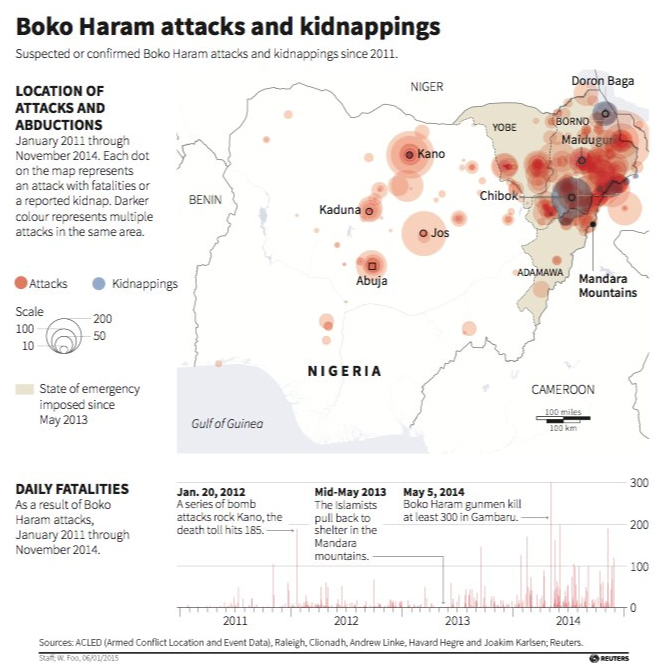
Reuters-Boko-Haram-attacks-fatalities-dishedit

Earlier this week, Alexis Okeowo filed an update that lowered the death toll from Boko Haram’s recent assault on the Nigerian village of Baga to “hundreds, but not as many as a thousand.” The UN additionally estimates that some 20,000 people have been displaced by the fighting in the past two weeks. And as Peter Dörrie notes, the atrocity in Baga was only part of the increasingly-distressing story:

The Islamists [also] captured and partially destroyed no fewer than 16 other towns and villages in Borno state. The army repelled a large-scale attack on Damaturu, the capital of neighboring Yobe state. Two suicide bombers blew themselves up in a market in Potiskum, a town in Yobe. The blasts killed at least 19 people. One attacker was a 10-year-old girl. …

The attack also hit the official base for the Multi-National Joint Task Force tasked with beating back the militants. It’s a further blow to a force that was already struggling. The MNJTF originally planned to incorporate 700 soldiers each from Nigeria, Niger, Chad and Cameroon to counter the insurgents in a region where borders have little practical relevance. But the MNJTF never took off, and now Niger has officially ruled out helping Nigeria take back Baga. Chad and Cameroon kept their distance from the project, citing Nigeria’s unwillingness to live up to its troop commitments for the force.

Sadly, Obinna Anyadike notes that neither Boko Haram’s use of teenage girls as suicide bombers nor the inability of Nigerian troops to hold territory is news at this point. She asserts that “Nigeria is proof that military spending does not necessarily buy security”:

The 2014 defence budget was $2.1 billion and the overall security allotment $5.8 billion – the largest slice of the government’s expenditure pie. And yet the regular excuse is that its soldiers are out-gunned by Boko Haram, despite the helicopter gunships, ground-attack aircraft, and surveillance drones in the official inventory. … Corruption is said to the biggest enemy, with money and fuel meant for the troops siphoned off by senior officers. The repeated failure to destroy munitions and equipment before positions are surrendered to Boko Haram is another factor, as is – sadly, given Nigeria’s peacekeeping pedigree – military incompetence.

When the troops are well led and properly supplied they win their battles. But there have been repeated reports of the military even failing to make use of reliable intelligence provided by its allies. And now the government has splurged on opaque defence contracts, with more helicopter gunships, mine-resistant armoured vehicles and possibly a squadron of new, never-before flown by any other air force, counter-insurgency aircraft.

The response to Boko Haram from Nigerian President Goodluck Jonathan has been lackluster at best. As for the timing of the new violence, last month Ryan Cummings predicted the militants would attempt to influence February’s presidential election:

From an ideological perspective, Boko Haram [will] undoubtedly seek to undermine any process which would underpin its greatest adversary; namely, a secular Western-styled democracy. By violently disrupting the election cycle, the sect could raise serious questions regarding the perceived inclusiveness and transparency of the ballot—a move which could delegitimize the voting process and its eventual victor.

To deal with such a threat, the Bloomberg editors argue that Nigeria’s leaders and the international community need to step up – and fast:

The parties contesting the vote can best respond by toning down their mutual antagonism and bloodthirsty rhetoric. The government must also try harder to provide security for polling places, especially in the north, and speed up its introduction of biometric voting cards. More international observers, deployed for longer, would help.

There’s a limit to what outsiders can do, though. The U.S. and U.K. have curtailed cooperation with Nigeria’s beleaguered army because of human-rights abuses. Specific, vetted units might still be receptive to training and assistance. Beyond that, strengthening the ability of Nigeria’s neighbors to prevent Boko Haram’s incursions might be the best outsiders can do.

Remi Adekoya suggests that Nigeria’s former military dictator, the opposition presidential candidate Muhammadu Buhari, might be just what the country needs:

[A]fter a year in which Boko Haram and government corruption has dominated local headlines, the ex-general has two things going for him: a reputation for strong leadership and incorruptibility. He is probably the only prominent Nigerian politician today who isn’t hounded by allegations of embezzling public funds. [Also, a] president with military experience to take on corrupt army officers would surely serve as a morale booster to the Nigerian soldiers battling Boko Haram.

Granted, the ex-general has no magic wand to make the militants simply vanish. But in this period of existential crisis, Nigeria may need a wartime leader who can project reassuring strength and provide a plausible strategy for overcoming the insecurity in the country. Time is running out.

But in a recent profile, the BBC highlighted Buhari’s mixed record during the 20 months he led the country:

About 500 politicians, officials and businessmen were jailed as part of a campaign against waste and corruption. Some saw this as the heavy-handed repression of military rule.

But others remember it as a praiseworthy attempt to fight the endemic graft that prevented Nigeria’s development. He retains a rare reputation for honesty among Nigeria’s politicians, both military and civilian, largely because of this campaign. As part of his “War Against Indiscipline”, he ordered Nigerians to form neat queues at bus stops, under the sharp eyes of whip-wielding soldiers. Civil servants who were late for work were publicly humiliated by being forced to do frog jumps. He also introduced a notorious decree to restrict press freedom, under which two journalists were jailed. However, his attempts to re-balance public finances by curbing imports led to many job losses and the closure of businesses.

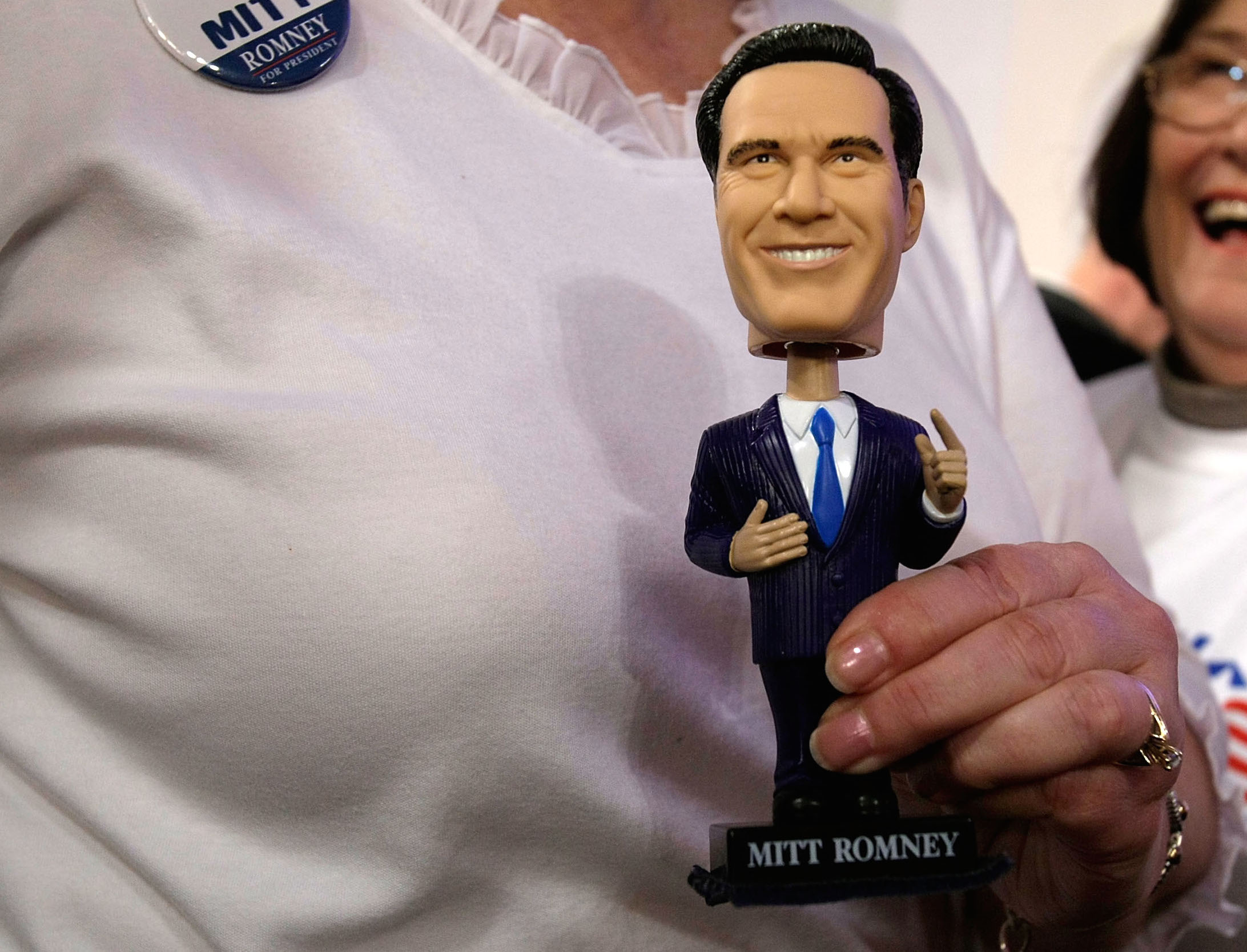
Which Romney Will Run This Time?

Mitt Romney Holds Florida Primary Night Event

David Graham’s best guess:

Incredibly, Romney now wants to run in 2016 as The Compassionate Conservative Champion of the Poor. There’s a logic here. Since the economy has been steadily improving for years now, there’s no need for a Mr. Fix-It, and in a field with candidates like Ted Cruz and Rand Paul, Mitt Romney will never be the conservative choice. The premises of both of Romney’s previous runs have been completely demolished, so he’s creating a new one out of whole cloth. According to John Dickerson, he has acknowledged that the weak economy is no longer a good basis for a campaign, but he somehow is spinning it as a boon.

Joe Klein asks whether Romney 3.0 will “come equipped with a backbone”:

The last two certainly didn’t, to the point of embarrassment. In neither campaign did Romney take a position that was even vaguely controversial with his party’s rabid base. He was disgraceful on immigration, “self-deporting” himself to Dantean circles of chicanery. He was craven on fiscal sanity, opposing in one debate—along with all his fellow candidates—a budget proposal that would include 90% cuts and 10% revenue increases. Worst of all, he self-lobotomized on the subject of health care, dumbing himself down egregiously, denying that his (successful) universal-health-coverage program in Massachusetts was the exact same thing as Barack Obama’s (increasingly successful) national version.

Suderman expects Romney to shape-shift once again:

He’s still someone whose interest in running for and being president comes before any serious inkling about what, exactly, he’d do if he got the job, and he’s still someone willing to overhaul his self-presentation in order to sell himself to whatever cohort he thinks is politically ascendant at the moment. So sure, the third installment in the Romney franchise would be different in the sense that every Romney reinvention is different from the last one. But in the ways that matter, every sign so far suggests it would just be more of the same.

The Boston Globe hears that foreign policy will one of Romney’s ace issues this time around. Drezner laughs at his adviser’s claim that, were he president right now, “There wouldn’t be an ISIS at all, and Putin would know his place in life.” Larison pounces on that quote:

It would be one thing for Romney backers to think that U.S. policies would be better than they are if he were president, but it is absurd to believe that other regimes and groups around the world would behave in a dramatically different fashion or would not exist under a different administration. By what magical powers of resolve would Romney have eliminated ISIS? How exactly would he have made Putin to “know his place”? Presumably this adviser thinks this would happen because Romney’s policies would convey “strength” rather than “weakness,” but that just underscores that this adviser–like Romney–doesn’t have a clue how this would happen.

I don’t doubt Romney’s sincerity. But I do think he and those close to him are fooling themselves that he can simply proclaim that he is running a new and different campaign — one based on foreign policy and poverty, according to Politico — and that will be that. … There’s no question that Romney feels a call to service and believes that he is uniquely able to solve the problems of the GOP and the country at the moment. But, the assumption that he can pluck the good things from his past candidacies while wiping away — “Eternal Sunshine of the Spotless Mind”-style — all the bad stuff from voters’ minds is a deeply flawed reading of how politics works. And it’s why it makes little sense for Romney to run again.

Yglesias suspects that greed is fueling this run:

To really understand why it’s happening, you need to remember this one sentence from an article Sean Sullivan wrote in December 2013: “Romney’s seven highest-paid campaign staffers all made more in 2012 than anyone on Obama’s campaign.” That is nice work if you can get it. Another relevant point is from Jim Rutenberg’s July 2012 article about the network of wealthy Mormon families who’ve supported Romney in his every political campaign. Add access to a unique donor base to a candidate whose known for generously compensating his senior campaign staff, and you have not quite a rationale for a national campaign but a reason for a group of seasoned political operatives to come up with one.

Cassidy’s view of the big picture:

Perhaps the lesson is that Presidential candidates aren’t like the rest of us. The same qualities of overconfidence, manic ambition, and propensity for risk-taking that enable them to embrace the horrors of a modern campaign also make it hard for them to grasp reality.

(Photo from Getty)

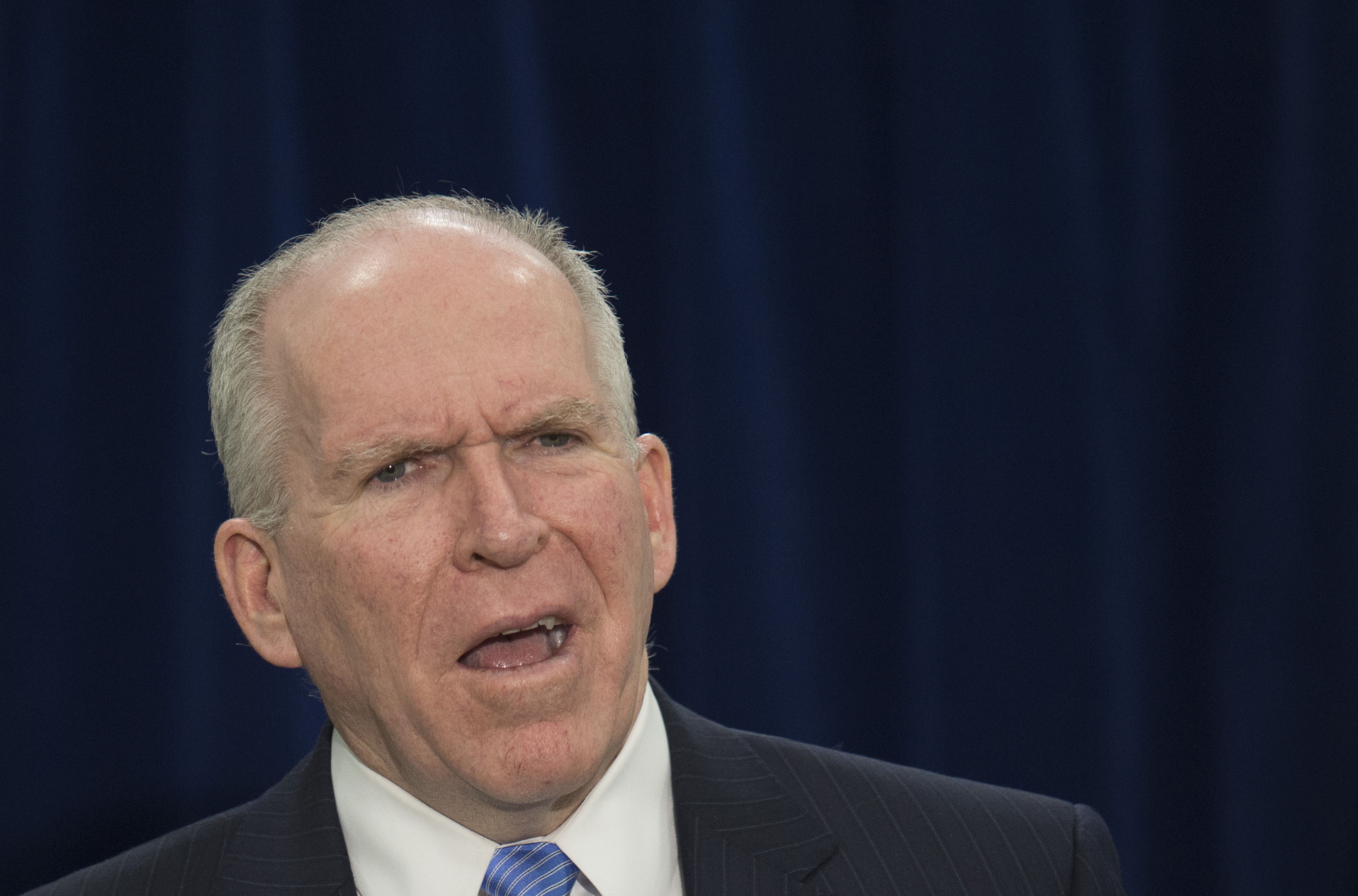
And The CIA Gets Away With It Yet Again

US-TORTURE-INTELLIGENCE-POLITICS-BRENNAN

The agency that committed war crimes on a vast and horrific scale has emerged from the Senate Intelligence Committee report with what it has gotten since the 1970s: total impunity and the option to reinstate torture at any time under a future president. No consequences for torture will follow – on the president’s orders. And it can come back – thanks to the president’s backing of John Brennan who does not rule it out in the future.

But there are consequences for those who violate the CIA code, even if there are none for CIA officials who violate the law. And so the only person actually prosecuted in the entire saga was a whistle-blower. So this is no big surprise either:

The CIA’s internal watchdog will resign at the end of January, a departure that comes just months after his office found that the spy agency had hacked into computers used by Senate staffers to investigate its Bush-era “enhanced interrogation techniques,” the CIA said Monday. David Buckley will leave the agency on Jan. 31 to “pursue an opportunity in the private sector,” the CIA said in a statement.

Buckley proved that John Brennan is a liar, when he denied any such hacking. And so he is now gone. As for those CIA employees who violated basic constitutional norms and hacked into the computers of their Senate over-seers, as discovered by Buckley? What will their punishment be? Well, no surprise there either:

A panel investigating the Central Intelligence Agency’s search of a computer network used by staff members of the Senate Intelligence Committee who were looking into the C.I.A.’s use of torture will recommend against punishing anyone involved in the episode, according to current and former government officials. The panel will make that recommendation after the five C.I.A. officials who were singled out by the agency’s inspector general this year for improperly ordering and carrying out the computer searches staunchly defended their actions, saying that they were lawful and in some cases done at the behest of John O. Brennan, the C.I.A. director.

Their defense is that Brennan told them to do it – and then lied about it, and then had to apologize for the lie. This is no defense. And if true, it surely requires the president to fire Brennan for both subverting the Senate’s constitutional oversight role and also lying about it. And so we end up again at Barack Obama’s desk, where he will quietly put it out with the trash. As war criminals walk the corridors at Langley and the CIA chief who defended every last one of them sails forward with impunity. And the beat goes on.

(Photo: Director of Central Intelligence Agency John Brennan takes questions from reporters during a press conference at CIA headquarters in Langley, Virginia, December 11, 2014.  By Jim Watson/AFP/Getty.)

France Cracks Down On Free Speech

Quelle surprise!

[Dieudonné] was detained for questioning on Wednesday for writing on his Facebook account he felt “Charlie Coulibaly,” a word play combining the widespread “I am Charlie” vigil slogan and the name of one of the three gunmen.

And he isn’t the only one. According to the AP, French authorities said “54 people had been arrested for hate speech and defending terrorism in the last week.” So the French are arresting people for committing acts of free speech just after a massive rally defending those principles.  Dieudonné, for one, claims he is being misunderstood:

What he had meant to say on Facebook, he said, was  that “I am considered like another Amedy Coulibaly when in fact I am no different from Charlie.” His original statement on his Facebook page was as follows:

“After this historic, no legendary, march, a magic moment equal to the Big Bang which created the Universe, or in a smaller (more local) way comparable to the crowning of the (ancient Gaullish king)  Vercingétorix, I am going home. Let me say that this evening, as far as I am concerned, I feel I am Charlie Coulibaly.”

The very idea that one can be arrested for writing such a thing is appalling – but par for the course in much of the West. Josh Lowe provides background on Dieudonné:

Originally called Dieudonné M’Bala M’Bala, the comedian is the son of a French woman and a Cameroonian man. His jokes have frequently got him into trouble, in particular those deemed to be anti-Semitic. Last year, the French government issued a strong recommendation to local authorities across France to cancel his scheduled shows, on the grounds that he had repeatedly violated French laws against inciting racial and religious hatred. In 2003, he appeared on French TV dressed in orthodox Jewish garb, performing a Nazi salute and crying “Israheil!” He makes fun of the Nazi atrocities in a song called Shoananas which mixes the French word for “holocaust” with that for “pineapple.” He began his career in the early 90s as part of a controversial double act with the Jewish comic Elie Semoun. Since the pair went their separate ways, however, Semoun has criticised him, writing (in an open letter to Libération in 2004) that: “You and me, we made fun of everyone, people loved it… but that’s why I feel so betrayed. You are not the same Dieudo.”

Tom Reiss profiled the comedian back in 2007:

“Dieudonné is the spokesman, the godfather, the icon of a new kind of anti-Semitism,” Alain Finkielkraut, the philosopher and memoirist of Jewish identity, told me. “It is an explicitly anti-racist anti-Semitism, which inverts traditional anti-Semitism by asserting that the Nazis today are in fact the Jews. The idiom of anti-Semitism is no longer racism; it is now anti-racism. Dieudonné’s followers say that they don’t hate Jews, they hate Jewish racism. They say that Israel is like Nazism, like apartheid.”

So of course he must be punished! Matt Welch expects the arrest to backfire:

Any speech made criminally taboo will thrive unchallenged in the shadows, rather than be refuted and ridiculed out in the open. If you’re alarmed by Dieudonné’s infamous quenelle gesture, how popular do you think it will get if he’s behind bars?

Très. Greenwald uses the arrest to question the motivations of Charlie supporters:

It is certainly true that many of Dieudonné’s views and statements are noxious, although he and his supporters insist that they are “satire” and all in good humor. In that regard, the controversy they provoke is similar to the now-much-beloved Charlie Hebdo cartoons (one French leftist insists the cartoonists were mocking rather than adopting racism and bigotry, but Olivier Cyran, a former writer at the magazine who resigned in 2001, wrote a powerful 2013 letter with ample documentation condemning Charlie Hebdo for descending in the post-9/11 era into full-scale, obsessive anti-Muslim bigotry).

Despite the obvious threat to free speech posed by this arrest, it is inconceivable that any mainstream western media figures would start tweeting “#JeSuisDieudonné” or would upload photographs of themselves performing his ugly Nazi-evoking arm gesture in “solidarity” with his free speech rights. That’s true even if he were murdered for his ideas rather than “merely” arrested and prosecuted for them. That’s because last week’s celebration of the Hebdo cartoonists (well beyond mourning their horrifically unjust murders) was at least as much about approval for their anti-Muslim messages as it was about the free speech rights that were invoked in their support – at least as much.

Although I find Glenn’s refusal to admit the link between terror and Islam befuddling, I do think he is right to point out the double standards of some of the free speech crowd. Once you establish limits on free speech, the consistency of their application matters. To have different rules of censorship for anti-Semites and anti-Muslims is to deepen the conflict even further. Sullum rightly fears that the criminalizing of speech “teaches people that the use of force is an appropriate response to words and images that offend—a principle that is poisonous to free speech and conducive to violence”:

Since the French government has announced that offending the wrong people by saying the wrong thing in the wrong context can be treated as a crime, it would not be surprising if some people, convinced that their rights had been violated and that they could not count on the courts to vindicate them, resorted to self-help.

Other countries that criminalize “hate speech,” including Germany, the Netherlands, the U.K., Sweden, and Canada, are likewise sending a dangerous message that offending people with words or images is akin to assaulting them with fists or knives. Instead of facilitating censorship by the sensitive, a government truly committed to open debate and freedom of speech would make it clear, in no uncertain terms, that offending Muslims (or any other religious group) is not a crime.

Amen. And particularly religion, which should be open to the most merciless attacks and denunciations and mockery precisely because of the grandeur of its claims and the power of its social authority. A true believer is relieved to see the all-too human institutions of church or mosque or synagogue ridiculed, precisely because those institutions are prone to corruption on a vast scale. And faith should easily survive mockery. Jesus himself encouraged his followers not to be dismayed when they are maligned or disparaged because of their faith. It is not something Christians should avenge; it is something that at times Christians should even seek. But even a spiritual figure like Jesus was ignored for millennia once Christianity got worldly power. When Muhammed himself authorizes a hit on someone who insulted him and Allah, the journey is going to be considerably longer.

“No Basis To Believe That An Incident Occurred”

UvrApe

Phi Kappa Psi, the frat accused of gang rape by Rolling Stone, is no longer suspended:

As the spring semester started at UVA, the school reinstated its chapter of Phi Kappa Psi, saying police have cleared the frat, for now. Charlottesville police Captain Gary Pleasants confirmed that while they’re still investigating the case, “We found no basis to believe that an incident occurred at that fraternity, so there’s no reason to keep them suspended.”

Friedersdorf feels that the frat deserves apologies:

The fact that Phi Kappa Psi’s membership was falsely accused of this crime does not mean that most rape accusations are false–the opposite is true–or that there isn’t a need to reduce the number of rapes and sexual assaults that happen on college campuses, even granting that some activists overstate the number of victims.

It should be possible to push for reforms that would reduce the too-high number of rape victims while advocating against rushes to judgment in individual cases. All credible rape accusations should be investigated. Before the results are in the accuser should have the private support of friends and various resources. But nothing is gained when angry mobs with no particular knowledge of a case gather en masse to shout epithets at people who weren’t even accused as individuals.

Amen, Conor. Erik Wemple points out that the “awful Rolling Stone story continues to drive reforms”:

To diminish the chances that drugs will get dropped into drinks, the changes ban kegs, require “sober brother monitors” at parties and ban “pre-mixed drinks, punches, or any other common source of alcohol.” Examples of actual journalism rarely land with such impact.

But some frats are resisting the new rules:

Alpha Tau Omega and Kappa Alpha have released nearly identical statements refusing to sign U.Va.’s new requirements that fraternities alter their activities following a two-month suspension on social activities. The new rules require a certain number of fraternity brothers to be sober and present and different places around the house and set limits on what kinds of alcohol can be served and in what containers.

I think that’s a  splendid idea. At Burning Man, a highly organized party, each camp had designated sober members every night on watch for trouble or accidents or anything else. If 60,000 partiers in the Nevada desert can organize that, I don’t see why a frat cannot. Eliza Gray wonders if the reforms will do any good:

[I]t appears that UVA may not be doing much to enforce the reforms—a reflection of the tricky nature of governing private organizations on campus. According to ABC News, UVA spokesman Anthony de Bruyn said the university would not provide staff to monitor the fraternities to because they are privately owned. “The University will work closely with Greek leadership to support them in seeking compliance with the new practices by their members,” de Bruyn told Time. “Should violations be brought to the University’s attention, as has been the case it the past, the Dean of Students Office will investigate, and any appropriate next steps would be based upon the details of each case.”

The lack of formal monitoring raises questions as to whether the reforms will have any teeth.

(Cropped photo from a protest against Phi Kappa Psi by Bob Mical.)