Emily Greenhouse wants more attention paid to suicide:
In the United States, suicide rates have risen, particularly among middle-aged people: between 1999 and 2010, the number of Americans between the ages of thirty-five and sixty-four who took their own lives rose by almost thirty per cent. Among young people in the U.S., suicide is the third most common cause of death; among all Americans, suicide claims more lives than car accidents, which were previously the leading cause of injury-related death. …
Alan Berman, the executive director of the American Association of Suicidology and the president of the International Association of Suicide Prevention, has said that in the developed world ninety per cent of those who attempt suicide suffer from psychological ailments. “We have effective treatments for most of these,” Berman said last year. “But the tragedy is, people die from temporary feelings of helplessness—things we can help with.” The relentless intensity of those feelings has always been difficult to convey to those who have not experienced them: William Styron, in his powerful memoir, “Darkness Visible,” lamented the insufficiency of “depression” as a label for “the veritable howling tempest in the brain.” Styron, who checked himself into the affective-illness unit at Yale-New Haven hospital, lived to write an account of his suffering, but many others lack the wherewithal, or the capacity, to seek such help.
Russell Saunders blames anti-vaxxers for the measles outbreak in NYC:
This is not some inconvenience to be laughed off. Measles is a highly-contagious illness caused by a virus. It usually presents with a combination of rash, fevers, cough and runny nose, as well as characteristic spots in the mouth. Most patients recover after an unpleasant but relatively uneventful period of sickness. Unfortunately, about one patient in every 1,000 develops inflammation of the brain, and one to three cases per 1000 in the United States result in death. …
Just over a dozen years ago this illness was considered eliminated in our country, and this year people are being hospitalized for it. All due to the hysteria about a safe, effective vaccine. All based on nothing.
Brian Palmer fears such outbreaks could get more serious:
Falling vaccination rates are now an urgent concern in public health. Measles incidence dropped 99 percent after the vaccine was introduced in 1963. Between 2000 and 2007, the United States saw an average of just 63 measles cases per year, and almost all of those victims brought the disease into the United States from abroad. In 2013, however, the incidence of measles tripled. Unlike in previous years, the majority of the victims contracted the disease here in the United States, meaning that measles outbreaks are now a serious national problem. It could get worse. Vaccination rates in the United States remain at about 90 percent, but in the United Kingdom, where vaccination has fallen below 80 percent, the disease is once again endemic.
I’ve spent almost 20 years of my life studying infectious diseases up-close and personal, not from random websites on Google. I’ve worked with viruses and bacteria in the lab. I respect what germs are capable of. I worry about vaccine-preventable diseases coming back because oflow levels of herd immunity. I cry over stories of babieslost topertussis and other vaccine-preventable diseases. As I’ve noted before, chicken pox has played a role in the deaths of two family members, so I don’t view that as just a “harmless childhood disease.” Vaccines have eradicated or severely reduced many of the deadliest diseases from the past: smallpox, polio, measles, diptheria.
But that’s not the only reason I vaccinate. I vaccinate because I’m all too aware of the nasty diseases out there that still don’t have an effective vaccine. My current work focuses on a germ called methicillin-resistant Staphylococcus aureus (“MRSA”), a “superbug” which kills about 11,000 people every year in the United States. We have no vaccine. I previously worked on two different types of Streptococcus: group A and group B. Group B is mainly a problem for babies, and kills about 2,000 of them every year. It leaves many others with permanent brain damage after infection. We have no vaccine. Group A kills about 1,500 people each year in the U.S. and can cause nasty (and deadly) infections like necrotizing fasciitis (the “flesh-eating disease”). We have no vaccine. These are all despite the fact that we still have antibiotics to treat most of these infections (though untreatable infections are increasing). Infectious diseases still injure and kill, despite our nutritional status, despite appropriate vitamin D levels, despite sanitation improvements, despite breastfeeding, despite handwashing, despite everything we do to keep our kids healthy. This is why protection via vaccination is so important for the diseases where it’s available. If vaccines were available for the diseases I listed above, I’d have my kids get them in a heartbeat.
Last week, John Sides claimed that the youngest millennial voters in 2012 skewed Republican. Daniel Berman casts doubt on this analysis:
When one recognizes that 18 year olds were only 55% white in 2012, that implies either a large shift among younger minorities, or a percentage in excess of 75%-80% among whites.
A more plausible outcome is that the Exit Poll collection method is fundamentally flawed when collecting this data, as its owns creators have claimed, noting their own (ANES) estimate that Obama won 71% of 18-20 year olds. Polls are not collected at all polling stations, but rather at a selection. While efforts are made both to gain representative samples of certain groups, and to weight them accurately, the numbers for groups that were not targeted for representative samples, say 19 year olds, are likely to be off, with margin of errors meaningless.
Obama’s Saturday speech declaring his intention to attack Syria and to request Congressional approval beforehand:
Amy Davidson applauds Obama’s decision to get Congress’s input before attacking Syria:
This may be the first sensible step that Obama has taken in the Syrian crisis, and may prove to be one of the better ones of his Presidency—even if he loses the vote, as could happen. Politically, he may have just saved his second term from being consumed by Benghazi-like recriminations and spared himself Congressional mendacity about what they all might have done.
Fallows is also happy that Congress will get its say:
This is the kind of deliberation, and deliberateness, plus finding ways to get out of a (self-created) corner, that has characterized the best of his decisions. It is a very welcome change, and surprise, from what leaks had implied over the past two weeks.
Larison hopes that Congress will vote against using force:
Presumably, Obama is gambling that he can cow Congress into granting authorization by having publicly committed the U.S. to military action. When presidents have gone to Congress to seek this kind of authorization, they have typically received it and usually by a large margin. I am cautiously hopeful that there are enough members in the House at least that know how deeply unpopular war with Syria is that this will not be the case this time, but I fear that few Democrats will be willing to vote against the White House and too many Republicans will be only too happy to vote yes. If members of Congress judge the proposed attack in terms of U.S. interests or international law, they should definitely reject it. If they judge it in terms of bogus “credibility” arguments or an obsession with wounding Iran, I am less sure that most of them will vote no.
Barro believes that the House might reject Obama’s request for intervention:
Democrats: In the current political environment, they have little reason to think voting against an attack will make them look “soft on terror,” which is what they were most afraid of during the Iraq authorization vote 10 years ago. But they have good reason to fear the Hillary example: voting yes could cost them a primary election if things go wrong.
Republicans: War hawks are a far weaker force in GOP politics than they were 10 years ago. You don’t have to be Ron Paul to defend a skeptical position on intervention anymore. And it’s not that hard to make a case to a Republican primary electorate for why you opposed one of Barack Obama’s initiatives.
Julia Ioffe notes that Obama isn’t rushing the vote:
Obama has clearly learned something from Cameron’s blunder: he’s not rushing this thing. Cameron was dealing with an incomplete Parliament, as some MPs just didn’t bother to come back for the vote. He didn’t spend the time laying out his case, lobbying and whipping the vote in to shape. Obama, by contrast, is not summoning Congress back early. He’s scheduled a second briefing with lawmakers, and there have been reports that he is already personally lobbying the people in his party, like Carl Levin, who have been skeptical of intervention in Syria.
The U.S. Congress is not known for its speed with urgent issues – particularly ones that come during their vacation. It is also not an institution known for compromise or cooperation on issues that are, like this one, daunting, difficult and that have few political upsides. Whether or not you think that off-shore strikes are a good idea, this adds more delays and uncertainty after a week of both. It increases the likelihood, probably already significant, that the Assad regime will see the international community as unable or unwilling to hold him accountable. If strikes are likely to happen anyway, the uncertainty is not good for Syria. And if they don’t happen, Syria would have likely been better off if the U.S. had never signaled otherwise in the first place.
If the administration persuades Congress to support military action, it will be seen as a victory for the president, to be sure. But it may also have given the Assad regime another two or three weeks to redeploy assets and hunker down — so that the kind of limited attack currently envisioned has even more limited consequences.
I am still unconvinced that military action in Syria is a good idea. And there will be those who complain that the President’s request to Congress harms presidential power, or hurts our tactical position vis a vis Syria (because of the delay, etc.), or reflects poor planning, and the like.
The President is indeed still in a pickle. But in light of the constitutional questions, the lack of obvious support in the nation and Congress, and the risks of sparking a broader conflict in the Middle East, and for the other reasons I stated in my post last week, it would have been terrible for the President and the nation if he had engaged in strikes in Syria without seeking congressional approval.
Michael Scherer and Zeke Miller report that Obama may ignore Congress’s decision:
Obama’s aides made clear that the President’s search for affirmation from Congress would not be binding. He might still attack Syria even if Congress issues a rejection.
It’s certainly preferable to have the president seek Congressional approval than not seek it before involving the US in yet another Middle East war of choice, but that’s only true if the vote is deemed to be something more than an empty, symbolic ritual. To declare ahead of time that the debate the President has invited and the Congressional vote he sought are nothing more than non-binding gestures – they will matter only if the outcome is what the President wants it to be – is to display a fairly strong contempt for both democracy and the Constitution.
Drum doubts that Obama would defy the will of Congress:
As for whether or not Obama will go ahead with an attack even if Congress rejects it, I can hardly imagine he would. Am I wrong about that? Is there even the slightest chance he’d go ahead even if Congress votes against it?
Judis is concerned about Congress voting against action:
If he loses, and unlike Cameron, goes ahead anyway, he will increase his troubles at home. Cries of imperial presidency will be heard. But equally important, the military action he undertakes will have less intentional force behind it. One reason why a military strike could deter Syria’s Bashar al Assad from further use of chemical weapons, and perhaps even contribute to a negotiated settlement, is that Assad would have to fear that if he were to escalate in response to the American action, the United States would escalate in kind. But if Obama appears embattled at home, and barely able to act, that threat will not be as credible, and the American action may be less likely to accomplish its objective of deterring Assad.
And Bruce Riedel feels that the “President’s decision to ask for a Congressional mandate should also serve as a precedent for any decision to use force against Iran to halt its nuclear weapons project”:
A war with Iran would be vastly more dangerous and costly than one with Syria, even if both are intended to be limited. Wars always have unintended consequences. If time permits, the people’s representatives should be part of the decision to take on the risks of action. President George H.W. Bush did that before the liberation of Kuwait. As a senior intelligence officer, I spent days explaining the CIA’s estimates of the risks to the Congress. The process sharpened our analysis. There are no good options in Syria. Sliding into the conflict by baby steps and partial measures is the worst approach. Even worse would be to do so without a national debate and Congressional action.
In many workplaces, young women still have to work hard to prove they’re professionals and not coffee-fetching interns or office eye candy, and it seems like office romance would undercut their efforts to be taken seriously. Despite the increasing general acceptance of intra-office romance, research shows women who date a co-worker are more likely than men to be seen as using the relationship to get ahead at work. Then there are classic concerns about weathering a breakup with someone in the next cubicle over. “Every time I’ve been heartbroken, I would not have been able to deal with that at work,” says a friend of mine who shares my no-co-workers rule.
The Van Gogh museum in Amsterdam has developed high-quality 3D reproductions of some of its finest paintings, with what it describes as the most advanced copying technique ever seen. Axel Rüger, the museum’s director, said: “It really is the next generation of reproductions because they go into the third dimension. If you’re a layman, they are pretty indistinguishable [from the originals]. Of course, if you’re a connoisseur and you look more closely, you can see the difference.”
Izabella Kaminska believes that, eventually, “it is highly likely that the naked eye will no longer be able to differentiate between reproductions and originals, and that the only way to know for sure which is which will be to carbon date or test the materials microscopically”:
Value then becomes entirely an eye of the beholder thing. In logical terms the value of the Mona Lisa should collapse, especially so if the clue to authenticity is lost or diluted entirely. If the painting stays valued it’s because a narrative, myth of belief system has been attached to that particular version of the object — much as happens with sacred relics or superstitious charms.
When paintings become worth millions of dollars, it’s not because of some intrinsic aesthetic value.
If it was, then known fakes would be valuable, rather than worthless, and outfits like Artisoo would be serious operations, rather than laughingstocks. We value certain objects because they are handmade; because of whose hand made them; and because they are historically important. This is the unique actual painting that Vincent Van Gogh painted in a certain month in 1890, these are his actual brushstrokes, his actual paint; this is a key part of the oeuvre which changed the course of (art) history. There is only one of this painting, it exists in a certain museum, and if you want, you can do the pilgrimage: get on a plane, and fly to Amsterdam, and visit the museum. Kaminska sneers at “sacred relics”, but the financial and sociological and art historical value in these paintings makes them much closer to being sacred relics than they are to being purely decorative works, admired just for what they look like.
(Image: A detail from a 3D printed painting. Van Gogh Museum Amsterdam.)
Roberts wants more attention paid to the political consequences of climate policies:
If there are limits to how much a public is willing to pay in carbon taxes — and there obviously are, though they will vary from country to country and circumstance to circumstance — then it is important to think about what kinds of policies either increase willingness to pay or reduce the cost of carbon reductions. “Does this policy reduce carbon?” is not the only question. We must also ask, “does this policy create constituencies for further political action?” It is not only a policy’s effect on the economy that matters, but also its effect on political economy. (Jesse Jenkins wrote a great post about this, which you should read.)
He continues:
A real policy, no matter how kludged and compromised, is always more efficacious than a theoretical policy. A carbon tax is the best (and only necessary) climate policy only on a blackboard or in a spreadsheet. In the real world, power and interests matter and anything that alters them in the right direction is desirable. Just as a carbon target means nothing until the policies and capabilities are in place, a carbon tax will only ever be as high as political economy allows.
A new NBC poll finds that an overwhelming majority of Americans think Obama should be required to get approval from Congress before attacking Syria. A chart on the key question:
If President Obama is feeling lonely after the British vote, asking Congress to debate military action would give him excellent cover for either gathering support or backing away from unilateral warmaking — and it would also abide by the Constitution. That’s an approach Barack Obama himself would have approved, not so many years ago.
Larison continues to doubt that Obama will bother to get congressional approval:
If Obama doesn’t think he is legally required to go to Congress, wouldn’t it still make sense politically to involve Congress and get their backing for his attack? It might seem so, but the case for the attack is so weak that it wouldn’t withstand much public scrutiny, much less debate in both houses.
Because the proposed military action is supposed to be brief and limited, Obama probably sees going to Congress as a useless headache and unnecessary complication. Of course, it shouldn’t matter whether he feels like doing it. Unlike Cameron, he is obliged to do this when he plans to initiate hostilities against another state. It is up to members of Congress and the public to make him fulfill that obligation. Unless that happens, Obama will go ahead with the attack as if Congress is irrelevant because it will have proven itself to be exactly that.
The lesson Amy Davidson hopes Obama will take from Cameron:
Obama may take the British vote as proof that he can’t risk putting himself in Cameron’s position. But facing Congress after things don’t go according to plan—if there even is a plan—would be all the more humiliating. Obama can’t win this the way that Cameron lost it: by talking as though he is the only one acting according to principle, and that those who disagree just haven’t seen enough pictures of the effects of chemical weapons. There are principles at work in wondering whether something that feels satisfying but causes more death and disorder is right, too. The real Cameron trap is thinking that a leader can go to war personally and apolitically, without having a good answer when asked what’s supposed to happen after the missiles are fired. Does the President get that?
Gwynn Guilford reports on the latest development in South Korean plastic surgery:
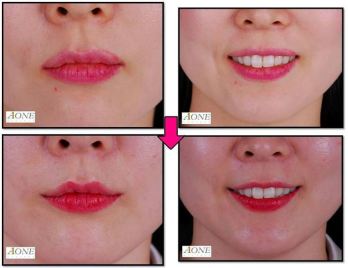
[A] new technique called “Smile Lipt” carves a permanent smile into an otherwise angry face. The procedure, whose name combines “lip” with “lift”—get it?—turns up the corners of the mouth using a technique that’s a milder version of what Scottish hoodlums might call the “Glasgow grin.”
… The procedure is, as KRT reports, increasingly popular among men and women in their 20s and 30s—especially flight attendants, consultants and others in industries aiming to offer service with a smile.
She speculates that, “as with the popularity of other cosmetic procedures in South Korea, which have made it hard for the natural of face to compete for jobs, permanent smiles may too become the norm.” Jonathan Coppage worries about the mainstreaming of this procedure:
If one stays agnostic on the medical ethics of cosmetic surgery, the procedures become a matter of free choice and open markets, where patients and doctors have the freedom to arrange an operation, as long as there is no coercion. But the South Korean example is a very effective demonstration of the ultimate limits of a libertarian paradigm revolving around atomistic free actors. Individuals “with photos of starlets whose face they want to copy,” aggregate to create new norms, because they are part of a social order. And social order inescapably comes with the soft coercive power of conformity.
(Photo: Before lipt surgery on top; after surgery on the bottom)
You are a bad person if you send your children to private school. Not bad like murderer bad—but bad like ruining-one-of-our-nation’s-most-essential-institutions-in-order-to-get-what’s-best-for-your-kid bad. So, pretty bad.
I am not an education policy wonk: I’m just judgmental. But it seems to me that if every single parent sent every single child to public school, public schools would improve. This would not happen immediately. It could take generations. Your children and grandchildren might get mediocre educations in the meantime, but it will be worth it, for the eventual common good.
I think that Benedikt isn’t thinking through what would actually happen if everyone felt a moral obligation to send their kids to public schools. What would actually happen is that Allison Benedikt wouldn’t live in Brooklyn, because New York, like most of the rest of the U.S.’s cities, would have lost all of its affluent families in the 1970s — the ones who stayed largely because private school, and a handful of magnet schools financed by the taxes of people who sent their kids to private school, allowed them to maintain residence without sending their kids into middle- and high-schools that had often become war zones.
Barro points out that a “lot of academics have looked into the question of how private schools affect public schools, and the results are inconclusive”:
In 2002, Professors Clive Belfield and Henry Levin at Columbia University Teachers’ College looked at the existing research and found that “across districts and counties, the effect of private school competition on public school outcomes is mixed.” Of the 12 studies they identified on the topic, 3 found that private competition improved public schools, 3 found that it worsened them, and 6 found no effect.
That’s not terribly surprising, since you’d expect two offsetting effects: private schools might disproportionately attract the best students out of public schools, but competition might force public schools to improve so they can attract students away from privates.
Her argument makes sense if one assumes that current private-school parents would be better able or more motivated to push for improvement than current public-school parents are. To put it another way, it’s not that public schools need more students, but that they need students with a better class of parents. That’s not an unreasonable assumption, but it is an inegalitarian one, which is likely why Benedikt left it unstated.
The issue is less about private vs. public than it is the class privilege that’s tied to geography. Benedikt argues that “We need a moral adjustment, not a legislative one,” and yet no amount of moral shaming is going to change where people live, and the material condition which follow from that. The problem isn’t that the rich person next door has no stake in your child’s education–it’s that the person next door is most likely struggling just as much.
Better that we are all equally ignorant as long as we are all equal. This is what the radical levellers want for us. It is the educational equivalent of Soviet economics. All that matters is that we are united in the state, no matter how stupid, ignorant, and poor it makes us.


 The Dish