The Tweeting Jihadi Expat

by Doug Allen

Omar Hammami, “the most prominent American jihadi left alive,” has established a prolific presence on Twitter under the @abumamerican handle. In an extensive profile of Hammami, Spencer Ackerman describes the development of an unlikely dynamic:

Hammami engages with American security professionals who ask him about his current views on jihad, and he jumps into their discussions of counterterrorism. There’s a notable absence of rancor, and even some constructive criticism, however inadvertent. When Hammami criticized State Department initiatives at confronting extremists like him online, he said those efforts came across as tin-eared. [Extremism analyst J.M.] Berger and Hammami have an extended, public colloquy about the justification and the efficacy of using violence to pursue jihad. All this comes leavened with Star Wars references. Berger wonders if this sort of collegial jihadi-counterterrorist dialogue is “the wave of future, when everyone’s on Twitter.”

Jihadis and their American opposites have engaged each other over the Internet for years, notes Will McCants, a former State Department terrorism adviser. But usually those efforts are tentative and rarely substantial — let alone fun. What’s happening with Hammami is something new.

Little Government, Big Military?

by Doug Allen

Dominic Tierney is confused by conflicting messaging from Republicans:

Consider Marco Rubio. The senator just threatened to filibuster any gun-control legislation because the Second Amendment “speaks to history’s lesson that government cannot be in all places at all times, and history’s warning about the oppression of a government that tries.” The specter of government despotism looms so large our only salvation lies with a nation of armed watchmen.

But curiously, Rubio also strongly supports beefing up government power by creating a vast military establishment. In 2012, he described defense cuts as “catastrophic” because “history has proven that the stronger the U.S. military is, the more peaceful the world becomes.” According to Politico, in a recent speech at the University of Louisville, “Rubio made the case for American military might around the world.”

Wait a sec, won’t American military might mean a government that’s in more places at more times? Isn’t this precisely the terrifying prospect we must arm ourselves against?

The Most Harmful Drug, Ctd

by Doug Allen

Tyler Cowen connects alcohol to the gun control debate:

In part our guns problem is an alcohol problem.  According to Mark Kleiman, half the people in prison were drinking when they did whatever they did. … There are connections between alcohol and wife-beating and numerous other social ills, including health issues of course.

It worries me when people focus on “guns” and do not accord an equivalent or indeed greater status to “alcohol” as a social problem.  Many of those people drink lots of alcohol, and would not hesitate to do so in front of their children, although they might regard owning an AK-47, or showing a pistol to the kids, as repugnant.  I believe they are a mix of hypocritical and unaware, even though many of these same individuals have very high IQs and are well schooled in the social sciences.  Perhaps they do not want to see the parallels.

Previous Dish on alcohol as the most harmful drug here.

The Fracking Divide

By Doug Allen

UKRAINE ECOLOGY-GAS-PROTEST

Kevin Drum thinks the recent Citigroup report that sees natural gas as a major ally for renewable deployment will cause some tension among environmentalists:

If this analysis is correct, it’s going to provide some major heartburn for environmentalists. Fracking, for all its dangers, may turn out to be the least of our various fossil fuel evils.

Jason Mark focuses in on how this issue is dividing green advocates:

[S]ince the fracking boom began in earnest, a larger, anti-fracking grassroots has emerged. … Some homeowners had their wells contaminated with flammable methane. Places like Ohio and Arkansas that weren’t used to seismic activity started to experience earthquakes when underground wastewater injections stimulated geologic faults. Today, the movement against gas fracking has become a cause célèbre (Yoko Ono and Mark Ruffalo have an “Artists Against Fracking” group) and is one of the most invigorating issues among grassroots environmentalists. …

[Ted] Nordhaus and [Michael] Shellenberger [of the Breakthrough Institute] have a nearly opposite worry: that the intensity from [anti-fracking] partisans like [Sandra] Steingraber and [Maura] Stephens has forced some big green groups to retreat from gas. The World Resources Institute, a D.C.-based environmental research organization, is an example of that shift. As recently as early 2012, the organization was expressing qualified enthusiasm for gas as a “potential game changer” that “should be part of America’s low-carbon energy mix.” But when asked recently to comment on the gas controversy, Jennifer Morgan, director of the institute’s climate and energy program, chose her words carefully. “It’s an extremely fraught and tough discussion,” Morgan told me. “I think we recognize both the risks—and the risks are significant—and the potential opportunity.”

I’m pretty firmly in the Nordhaus/Shellenberger camp on this one. Among the resources that can provide the operational support needed for high levels of renewable penetration in our energy mix, I think natural gas strikes the best balance between cost and environmental impact. It would take major advances in energy storage or “clean coal” technologies to convince me otherwise.

This does not mean that we shouldn’t worry about the problems caused by natural gas extraction and transport. There is evidence [pdf] from the Marcellus Shale formation that natural gas wells were contaminating local groundwater resources, but the study’s authors were unable to determine whether the leakage was due to unplanned fractures or leaky well-casings. It seems to me that the latter is solvable through better industry standards and/or regulation, while the former is a more fundamental problem. Studies from Arkansas [pdf] and Wyoming are similarly inconclusive about the link between fracking and water contamination.

The other major uncertainty surrounding the environmental impact of natural gas is the effect of methane leakages, or “fugitive methane emissions” along the delivery chain. These leakages are especially problematic since methane is a much more “powerful” greenhouse gas, with 25 times [pdf] the heat-trapping ability over 100 years of CO2. Michael Obeiter and James Bradbury explain the implications:

At the point of combustion, natural gas is roughly half as carbon-intensive as coal. However, this comparison fails to account for upstream fugitive methane emissions. When used for electric power generation, natural gas is typically much more efficient than coal, but natural gas is not a more energy efficient fuel option for all uses—for example, in the case of vehicles. Also, if fugitive methane emissions exceed 3 percent of total gas production, natural gas’s climate advantage over coal disappears over a 20-year time horizon.

The critical question is: Given the current extent of U.S. natural gas production—and the fact that production is projected to expand by more than 50 percent in the coming decades—are we doing everything we can to ensure that emissions are as low as is technologically and economically feasible? The answer to that question today is clearly “no.”

Clearly, there is more information to be gathered about the environmental impact of extracting natural gas and using it for electricity generation, and I look forward to the conclusion of a currently running EPA study to fill in some of the gaps in our knowledge. Even before the conclusion of this study, however, I would like to see the EPA start looking into ways to eliminate leakages where it is “technologically and economically feasible,” whether below the surface or above. But until I see more convincing evidence indicating that fracking cannot be done safely and cleanly, I think natural gas will continue to be an important part of any long-term strategy to reduce emissions.

(Photo: Alexander Khudoteply/AFP/Getty Images)

The Risks Of Sharing

by Doug Allen

Richard Nieva sees the insurance industry as the biggest threat to the increasingly popular “sharing economy”:

Airbnb ran into issues when some hosts reported guests ransacking and stealing of their property. And Uber, the black car taxi service — the most successful of auto-related sharing companies — made headlines recently when the company’s contracted drivers staged a protest in San Francisco, partly over outrage that Uber doesn’t own a commercial insurance policy, meaning the drivers themselves are liable for any accidents they might get into.

As the sharing economy burrows its way into people’s everyday lives – or at least out from the realm of absurdity – there’s been a familiar refrain echoing throughout the blogosphere and traditional press: City hall has been getting in the way. Indeed, in many cases, government regulators have taken a hard line against the sharing economy companies. … But even with the long laundry list of attacks by city hall, the trickiest obstacle for sharing economy companies – particularly in the car-sharing space – is the arms length relationship they have with the insurance industry. Early adopters — call them the Napster generation — are happy to break the law within reason. Putting their savings at risk by lending an asset that insurance won’t cover (up to a certain point) may be another matter.

Debating Debates

by Doug Allen

Howard Kurtz responds to Stuart Stevens’ call for fewer debates in the primaries:

It’s not surprising that Stuart Stevens wants fewer presidential debates, since his candidate Mitt Romney got beat up in so many of them. But his suggestion, in his debut column for The Daily Beast, that the debates be wrenched away from the networks is way off the mark. Maybe he’s suffering from posttraumatic debate syndrome, but these televised extravaganzas actually give the country a good look at how the candidates perform under pressure. … A strong candidate knows how to hit major-league pitching.

Justin Green counters:

I’ll indulge the sports metaphor: having 18 debates before the first actual vote is like asking a pitcher to throw 300 pitches while warming up in the bullpen.

At a certain point, all you’re doing is wearing down your arm. And after, let’s say, four or five debates, a voter will have all the information he or she needs to make an informed choice. The Michele Bachmann screeds about stealth jihad, the Ron Paul demands for a gold standard and Newt’s rambling about Newt-things quickly reach the point of no longer being helpful to the democratic process. …

[W]as there a single moment from the primary debates that added something substantive to the presidential race? Did we really learn how any of the candidates handled themselves under pressure? Were conservative ideas vigorously debated, with differing viewpoints well-represented? Were conservative voters offered a variety of options that gave them a hand in shaping the future of the Republican Party? Did the debates strengthen the GOP? Did they strengthen the general election?

My answer on all counts: no.

The GOP’s Green Base

by Doug Allen

Fox News may mock renewables:

But they do not speak for all Republicans. Brian Merchant points to a new survey from the Yale Project on Climate Change Communication, which focused on attitudes toward climate change among self-identified Republicans and Republican-leaning independents:

Republicans still love clean energy. I mean, overwhelmingly love the stuff by epic margins.

Some of the report’s findings:

A large majority of [Republican] respondents (77%) support using renewable energy in America much more or somewhat more than it is used today (51% and 26%, respectively). Among those who support expanded use of renewable energy, the most common preferred timing for taking such action is “immediately” (69%).

A slight majority of all respondents (52%) support using fossil fuels in American much less or somewhat less than it is used today (21% and 31%, respectively). Among those who support reduced use of fossil fuels, the most common preferred timing is “immediately” (52%). By a margin of almost 2 to 1 (64% vs. 35%), respondents say America should take action to reduce our fossil fuel use.

Big Bias

by Doug Allen

Kate Crawford warns against believing “that massive data sets and predictive analytics always reflect objective truth”:

Data and data sets are not objective; they are creations of human design. We give numbers their voice, draw inferences from them, and define their meaning through our interpretations. Hidden biases in both the collection and analysis stages present considerable risks, and are as important to the big-data equation as the numbers themselves.

For example, consider the Twitter data generated by Hurricane Sandy, more than 20 million tweets between October 27 and November 1. … The greatest number of tweets about Sandy came from Manhattan. This makes sense given the city’s high level of smartphone ownership and Twitter use, but it creates the illusion that Manhattan was the hub of the disaster. Very few messages originated from more severely affected locations, such as Breezy Point, Coney Island and Rockaway. As extended power blackouts drained batteries and limited cellular access, even fewer tweets came from the worst hit areas. In fact, there was much more going on outside the privileged, urban experience of Sandy that Twitter data failed to convey, especially in aggregate. We can think of this as a “signal problem”: Data are assumed to accurately reflect the social world, but there are significant gaps, with little or no signal coming from particular communities.

I would only add that these problems are not unique to big data, though they are more likely to be ignored with a larger dataset. In any data analysis, it is important to think about not only the data that you have, but also the data that you don’t have.

That Broken Leg, Ctd

by Doug Allen

A reader who teaches student-athletes disagrees with Jon Green on the athlete work ethic:

I teach classes at a MAJOR sports university and have students who are going into the NFL draft. Every one of my student athletes is among my most conscientious, polite, and hardworking students. In fact, if I took my student-athletes of any sport and put them up against the regular student body, I would choose to teach the athletes every day of the week. Sure, they have a support system that keeps them in school, makes them go to class, and offers tutoring, but, um, good? I have problems with the exploitation of student athletes, but I have never had any problems with their in-class conduct. In fact, quite the opposite. I think that a few bad student-athletes get the press and tarnishes all of their reputation, but do you really believe that athletes who are monitored constantly are worse people and/or students than your average frat house? In my experience, the athletes are WAY better.

Another reader lists some of the support she received as a student-athlete:

Every medical expense I ever needed during college, for any reason, was covered by the athletic department. This included birth control, routine eye appointments, contact lenses. For those who had any major injury, surgery was completely paid for. To help with rehab, there were daily visits with personal trainers who tailored programs to your specific injury.

When I became depressed my senior year, the athletic director immediately sent me to a therapist.  I’ll never forget the day she told me, “we will pay for every visit you need, and we will do everything we can to get you better.” They even paid for anti-depressants, and this continued even after my eligibility was up. Did I mention I was a non-revenue-producing women’s soccer player, it was not a sports-related injury, and the grand total of my care over four years must have cost unimaginable sums of money?

While this is by no means every athlete’s experience, I’m guessing most large (football) schools provide their students with similarly extensive care, especially to high-profile athletes in revenue sports. And for those of you getting ready to pick a college, you might want to consider not only where you want to get your degree if you’re severely injured and can’t play again, but also where you’re able to get the best resources to get you better again.

Another distinguishes between the big-money sports and others:

Both football and basketball have high-paying professional leagues that apply exclusionary age rules to their labor pool and rely heavily on college sports for player development.  So an NBA-caliber college freshman – or an NFL-caliber freshman or sophomore – isn’t being treated to a free education enriched by some athletic competition; he’s being screwed out of a chance to get paid in the draft before risking injury in an NCAA season.

Not every NCAA athlete is getting screwed.  Hell, not every football or basketball player is getting screwed.  It’s great that you enjoyed playing sports in college, and it’s great that lots of other people also have their experience enriched by playing on a team. But please, please don’t be so dense as to let that obscure the fact that there are hundreds of kids who play so well at popular sports that their labor would be worth hundreds of thousands or millions on an open market, who are playing college sports for free because there is no open market to sell it on. That’s the trick the NCAA wants to pull, and it isn’t helpful to be credulously repeating it.

It seems to me that this reader has more of a problem with the draft eligibility rules that prevent these athletes from going straight from high school to the pros than with the funding of college athletes. As to the point that “there is no open market to sell it on,” that’s simply untrue for basketball. Current Milwaukee Bucks star Brandon Jennings opted [NYT] to play professional basketball in Italy out of high school rather than attending the University of Arizona, and the NBA Development League (pdf) allows all players over 18.

Another reader questions the relevance of my own experience:

With all due respect to your Ultimate Frisbee career (just a guess, but amirite?), you’re conflating two very different things. No one is suggesting that schools do away with sports that don’t make money, or paying athletes that compete in those sports. We are talking about allowing some of the money generated by a huge enterprise to go to those who make it possible. No one wants to take your experience on a club team away from you, but neither is anyone demanding that you should have been paid for it. This is about relatively simple economics, and I’m not sure that your point has any relevance to the actual discussion.

This reader is right, I played Ultimate in college. But I was not trying to argue that I should have been paid for my experience (I definitely should not have), I was simply pointing out that the opportunity to play a sport at the college level could be considered a reward in and of itself, and that is something to take into account when discussing whether or not student-athletes are being “exploited.” I was willing to pay out-of-pocket for this chance, and this is why you see students trying to walk on to teams even if there isn’t a scholarship available for them: because playing on a team at a competitive level can be fun and rewarding.

I’m not so sure that this is a case of “relatively simple economics,” either. Most of the discussion of student-athletes assume that the benefits flow only one way: scholarship athletes in big-money sports get nothing (except for scholarships, medical care, tutoring, the opportunity to showcase their skills…) while the schools reap all of the rewards. But I think the relationship is more symbiotic than that. College sports teams get the benefits of a built-in fan base. Across all 338 teams in NCAA Division 1 basketball, attendance at each home game averaged over 5,000 fans during 2012 (with schools like Louisville as high as 21,000 per game), while the 16 teams in the NBA’s D-League averaged about 2,800 fans per game in the 2010-2011 season despite an arguably higher level of play. Fans flock to see their favorite programs play, not necessarily the star players.

As I said before, I would like to see more long-term thinking from colleges to help ensure that sports-related injuries like Ware’s don’t force the athlete to leave school for financial reasons. But paying athletes? I’m just not there yet.
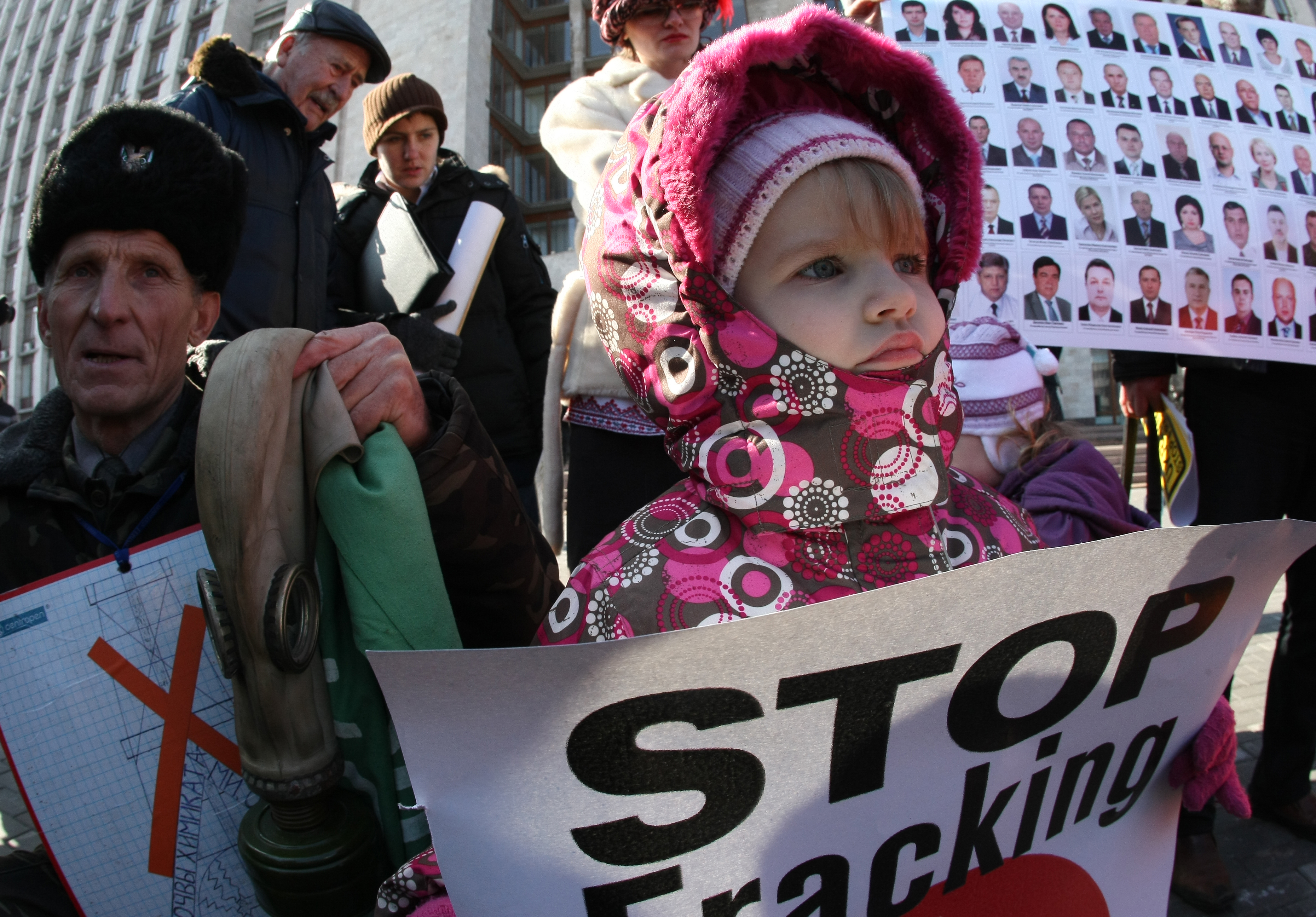
Chart Of The Day

by Doug Allen

sequester

Dave Weigel traces the public’s interest in “sequestration” (in blue) and “the sequester” (in red):

[Y]ou’ll see that interest started to rise at the end of February, that the buzziest news stories were about congressional action, and that search volume exploded on March 1 — the Friday the cuts went into effect. By Monday, search volume had fallen by 63 percent. And it’s never recovered, even as the cuts get implemented and local news outlets diligently file stories on their impact.