How To Treat A Werewolf

by Jessie Roberts

dish_werewolf

Ryan Jacobs explores the history of cultural responses to clinical lycanthropy, an extremely rare disorder characterized by a patient’s conviction that he or she is a werewolf:

France identified a high of 30,000 werewolf cases during the Inquisition “between 1520 and 1630, many of which ended under extremely cruel circumstances at the hands of the Inquisitor’s executioner.” Of course, these strong beliefs increase the chances of conflating actual clinical cases (“a strict clinical diagnosis of clinical lycanthropy hinges on the patient’s verbal report of having turned [or being able to turn] into a wolf”) with misrepresentations due to religious pressures.

But even in the Early and  Middle Ages, however, there’s some evidence that doctors were treating it as a natural disease with a cure, rather than a damning demonic spell. Primitive health care recommended “dietary measures, complex galenical drugs, hot baths, purgation, vomiting, and bloodletting to the point of fainting” and many doctors labeled it “as a type of melancholia (i.e. a disease due to an excess of black bile), whereas Paul of Nicaea classified it as a type of mania.” Surprisingly, the 7th century Greek Byzantine physician Paul of Aegina linked it to brain disorders, “notably epilepsy, humoral pathology and the use of hallucinogenic drugs.” By the 1800s, physicians had finally more broadly and formally defined it “as a delusional belief.”

(Image of a German woodcut of a werewolf, 1722, via Wikimedia Commons)
Nice Weather We’re Having

by Jessie Roberts

Zadie Smith contemplates the ways we talk about climate change:

Although many harsh words are said about the childlike response of the public to the coming emergency, the response doesn’t seem to me very surprising, either. It’s hard to keep apocalypse consistently in mind, especially if you want to get out of bed in the morning. What’s missing from the account is how much of our reaction is emotional. If it weren’t, the whole landscape of debate would be different. We can easily imagine, for example, a world in which the deniers were not deniers at all, but simple ruthless pragmatists, the kind of people who say: “I understand very well what’s coming, but I am not concerned with my grandchildren; I am concerned with myself, my shareholders, and the Chinese competition.” And there are indeed a few who say this, but not as many as it might be reasonable to expect.

Another response that would seem natural aligns a deep religious feeling with environmental concern, for those who consider the land a beauteous gift of the Lord should, surely, rationally, be among the most keen to protect it. There are a few of these knocking around, too, but again, not half as many as I would have assumed. Instead the evidence is to be “believed” or “denied” as if the scientific papers are so many Lutheran creeds pinned to a door. In America, a curious loophole has even been discovered in God’s creation, concerning hierarchy.

It’s argued that because He placed humans above “things”—above animals and plants and the ocean—we can, with a clean conscience, let all those things go to hell. (In England, traditional Christian love of the land has been more easily converted into environmental consciousness, notably among the country aristocrats who own so much of it.)

But I don’t think we have made matters of science into questions of belief out of sheer stupidity. Belief usually has an emotional component; it’s desire, disguised. Of course, on the part of our leaders much of the politicization is cynical bad faith, and economically motivated, but down here on the ground, the desire for innocence is what’s driving us. For both “sides” are full of guilt, full of self-disgust—what Martin Amis once called “species shame”—and we project it outward. This is what fuels the petty fury of our debates, even in the midst of crisis.

Overturning Politics With Art

by Jessie Roberts

Erica R. Hendry spotlights Los Encargados (Those in Charge), a striking 2012 short film by Spanish artists Santiago Sierra and Jorge Galindo:

Their 2012 return [to Madrid] came unannounced mid-day in August in the form of a live performance piece: An unauthorized parade along the Gran Vía, Madrid’s central thoroughfare, of black Mercedes-Benz sedans carrying upended portraits of Juan Carlos I, the sovereign who began Spain’s transition to democracy after the 1975 death of the dictator Francisco Franco, and the country’s six subsequent prime ministers. … Using 12 cameras, the artists captured the procession in black and white as it made its way around the city on unusually empty streets (by chance, there was another demonstration across the city, Gordon says).

The event—which was nearly halted by police, Gordon says—caused a viral sensation after bystanders posted photos and videos online. The beauty of the film—and the editing—is it lets the artists play with perception. In some shots, the portraits, which were created by Galindo, are righted while the cars roll upside down, or backwards, down the streets. In the film, as the procession of cars passed museums, old cinemas and other landmarks, the editors added the populist Polish song “Warszawianka”—the signature anthem of the Spanish Civil War. The screen is split into three as cameras zoom in to the whites of the leaders’ eyes, and an ominous police siren swells and fades as the piece comes to a close.

New Frontiers In Propaganda, Ctd

Emily Greenhouse adds a little reporting to the story of Assad’s Instagram account:

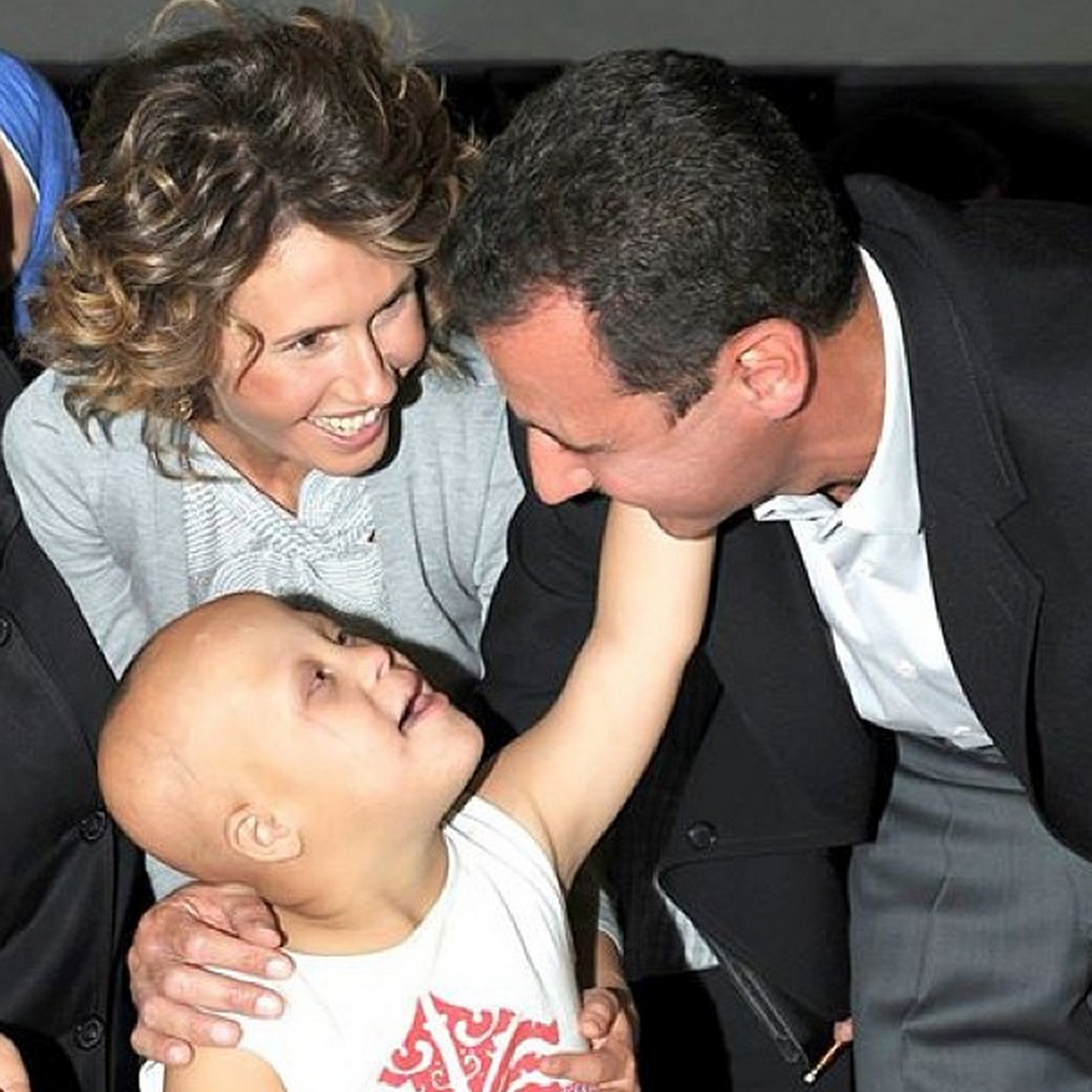
What does a social-media company do when a user known to be attacking civilians is blasting out Screen Shot 2013-11-04 at 7.01.50 PMfeel-good content? I posed this question to Instagram about Assad’s user stream. Alison Schumer, who works on the company’s policy and communications team, told me that she cannot comment on specific accounts, even if the account is a global public figure. But she explained that, generally speaking, if a user created content that promoted violence, Instagram would remove it and possibly disable the user. Schumer stressed the importance of the context of the image in making those calls—a caption might make an image threatening, for instance—but also said that “context” is generally limited to content on the site. What matters, then, is that the picture Assad puts up depicts his wife assisting a disabled child—the caption on that one translates as “In order for the people with special needs to give and create, they must be directed out of the space of pity, charity and compassion The First Lady Asma al Assad #syria#Asma#Assad#handicapped”—rather than whether he is promoting a violent regime. Perhaps if he began to post videos of gassed children, Instagram would take down the account.

Meanwhile:

Groups that support Assad, notably the Syrian Electronic Army, have hacked the Web sites and social-media presences of various news organizations, including the New York Times and the Washington Postflooding their Web sites and Twitter accounts with pro-Assad messages. [Last] week, the group targeted Organizing for America, a project of President Obama’s, by taking over its Twitter account and posting links to its own content, including a video “showing the truth about Syria.” Two and a half years ago, Syrian officials began to demand citizens’ Facebook passwords, sometimes to post conspicuously pro-regime content.

Caption for the above photo, uploaded to Assad’s Instagram on October 31:

من إحدى الزيارات السابقة للسيد الرئيس بشار الأسد والسيدة عقيلتة لذوي الإحتياجات الخاصة. #سورية#بشار#أسماء# a visit by the President and the First Lady to the people with special needs. #syria#Bashar#AssadFollow

The Philosophy Of Bitcoin

by Jessie Roberts

Brett Scott draws on Rousseau and Hobbes to explain Bitcoin:

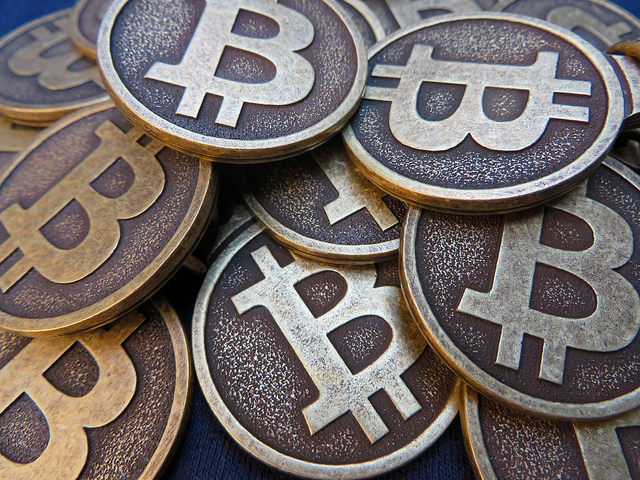
Bitcoin has one very interesting attribute and, to understand it, we should look to the theoretical disagreement between the Enlightenment political philosophers Thomas dish_bitcoin Hobbes and Jean-Jacques Rousseau. Hobbes was a pessimist. In order to escape the ‘war of all against all’ that he believed was the natural state of human existence, he thought that individuals ought to submit to the will of a central sovereign who could act as arbitrator in disputes. We’ve traditionally associated this with political authoritarianism, but it also serves quite well as a description of mainstream money. Most of our money nowadays is electronic, ‘stored’ in an oligopoly of private banks that are themselves connected via a central bank. We rely on these institutions to keep an accurate score of our electronic money. Brett has £97, they say. Trust us, we have it recorded in our IT database.

Rousseau had the radical idea that Hobbes’s arbitrator needn’t be a single dictator or oligarchy. Instead, it could be the collective, or the general will. So it goes with Bitcoin. In place of a centralised, hierarchical group of banks keeping score of the money, a decentralised network of individuals records every transaction on a virtual ledger called the blockchain. Brett has 3.8462 BTC, the network says. We’ve collectively kept score of that. In this scenario, my ‘account balance’ is less like the ruling of a sovereign and more like the result of a popular democratic vote, mediated via a computer network.

(Photo by Flickr user BTC Keychain)

Capitalism Goes To College

by Jessie Roberts

Thomas Frank rails against the role of financial interests in higher education:

What actually will happen to higher ed, when the breaking point comes, will be an extension of what has already happened, what money wants to see happen. Another market-driven disaster will be understood as a disaster of socialism, requiring an ever deeper penetration of the university by market rationality. Trustees and presidents will redouble their efforts to achieve some ineffable “excellence” they associate with tech and architecture and corporate sponsorships. There will be more standardized tests, and more desperate test-prep. The curriculum will be brought into a tighter orbit around the needs of business, just like Thomas Friedman wants it to be. Professors will continue to plummet in status and power, replaced by adjuncts in more and more situations. An all-celebrity system, made possible by online courses or some other scheme, will finally bring about a mass faculty extinction—a cataclysm that will miraculously spare university administrations. And a quality education in the humanities will once again become a rich kid’s prerogative.

And so we end with dystopia, with a race to the free-market bottom. What makes it a tragedy is that President Obama is right about education’s importance. Not because college augments our future earning power, or helps us compete with Bangladesh, but because the pursuit of knowledge is valuable in its own right. This is why every democratic movement from the Civil War to the 1960s aimed to bring higher ed to an ever widening circle, to make it more affordable. Ours is the generation that stood by gawking while a handful of parasites and billionaires smashed it for their own benefit.

(Hat tip: Sue Halpern)

Ware’s World

by Jessie Roberts

Simon Willis profiles Chris Ware, getting to the root of the graphic novelist’s talent:

He has a theory that crystallised on the page in “Jimmy Corrigan“. Comics, he says, are meant to be read and not, like fine-art drawings, looked dish_ware at. He wants his drawings to tell stories, “like typography on a page”. It’s about visual clarity but also emotional clarity. “Jimmy Corrigan” was planned as a short exercise in emotional truth-telling, to see if he could make pictures that meant what they said without “the taint of irony”. And never having met his father, he hoped, as he wrote later, that once the story was finished “I would have ‘prepared’ myself to meet the real man”. That short exercise turned into a 380-page graphic novel which took seven years. …

The book combined emotional subtlety with a complex structure. Ware reduced his characters to simple dots, dashes and smooth lines. At art school he’d been ridiculed by classmates for taking a life-drawing class each semester, but it paid off. With a stroke or two, he could show how emotions disclose themselves on the face or in the sag of a shoulder. Then there was the layout. He worked with a strict grid of squares, varying from a few centimetres to whole pages. “I thought of it musically,” he told me. “I was listening to a lot of Brahms at the time—sorry, this sounds so pretentious, but it’s true—and I remember feeling that I wanted to produce that sensation on the page, with a large image, and then something much more lyrical and textural, and then into a sweeping passage, and then focusing down into a point. I feel that music does that better than anything; it captures that weird sensation of writing one’s thoughts, that course of consciousness.”

(Photo of Ware’s work by Flickr user annulla)

Remembering What We Read

by Jessie Roberts

Nicholas Carr points out the advantages of reading the physical page:

The differences between page and screen go beyond the simple tactile pleasures of good paper stock. To the human mind, a sequence of pages bound together into a physical object is very different from a flat screen that displays only a single “page” of information at a time. The physical presence of the printed pages, and the ability to flip back and forth through them, turns out to be important to the mind’s ability to navigate written works, particularly lengthy and complicated ones. We quickly develop a mental map of the contents of a printed text, as if its argument or story were a voyage unfolding through space. If you’ve ever picked up a book that you read long ago and discovered that your hands were able to locate a particular passage quickly, you’ve experienced this phenomenon. When we hold a physical publication in our hands, we also hold its contents in our mind.

The spatial memories seem to translate into more immersive reading and stronger comprehension. A recent experiment conducted with young readers in Norway found that, with both expository and narrative works, people who read from a printed page understand a text better than those who read the same material on a screen. The findings are consistent with a series of other studies on the process of reading. “We know from empirical and theoretical research that having a good spatial mental representation of the physical layout of the text supports reading comprehension,” wrote the Norwegian researchers. They suggested that the ability of print readers to “see as well as tactilely feel the spatial extension and physical dimensions” of an entire text likely played a role in their superior comprehension.

Previous Dish on reading and e-reading here, here, and here.

How Not To Write About The Balkans

by Jessie Roberts

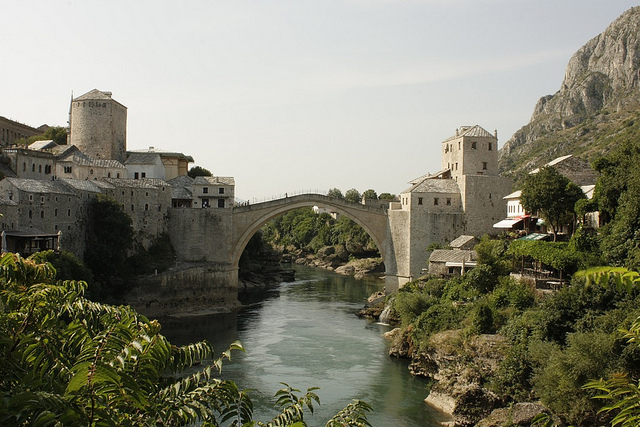
dish_mostar

In the spirit of Granta‘s “How to Write about Africa,” Balkanist presents “How to Write about the Balkans”:

Make sure to place yourself, the Western journalist, at the very center of the story. Include anecdotes about being strapped into the seat of some godforsaken regional airline as it makes a bumpy landing on a narrow strip of runway. Detail the sheer terror you feel in the company of your wild-eyed driver, who careens recklessly around the blind curves of deadly mountain roads. Admit that you find yourself uneasily calculating the age of every local male you meet, nervously wondering if he ever carried a weapon in Bosnia and Herzegovina, Croatia, or Kosovo.

In contrast, the locals will appear fearless and serene, perfectly satisfied in their poverty. At this point, you should describe the smiling peasants offering plastic cups filled with raspberries on the roadside, or the women in headscarves dutifully carrying heavy buckets of sir up the hill to sell at the market. You might describe hospitable villagers who ply you with homemade rakija (“a type of brandy made from distilled fruit”, you’ll explain), or in the cities, enthusiastic university students who, despite the astronomical unemployment rate, enter “secret, smoky clubs” and dance ‘til dawn in a city you might deem “the new Berlin”.

Next, you should mention that this “friendly” and “vibrant” atmosphere makes it difficult to imagine that so much “barbarity” or “bloodshed” was visited upon the region so recently.

(Photo by Flickr user tagacayak)

Novel Isolation

by Jessie Roberts

Diane Mehta describes “reader’s block,” or the inability to read the work of others while she was writing her own book:

It’s difficult to read while immersed in writing a novel. If you’re stuck to your book as purposefully as you’re supposed to be stuck to it, it makes no sense to commit yourself to someone else’s book. It’s distracting. You have your own characters to consider. (At least, that’s what we tell ourselves, glumly.) I became sure of this when I tried Philip Roth and found he just turned my writing into bitterness and dense frenzy, which I liked, but which I quickly realized would harm my sentences. His, so calculated, would strong-arm mine and I would be the loser, with flaccid sentences that tried to be hard. Roth stayed on the shelf.