A clever short that could be retitled “Shit Roommates Say”:
Author: Andrew Sullivan
How Do We Fix Our Police Departments?
Bouie confronts the challenge:
Changing the culture of policing to de-emphasize violence and leave room for ordinary human behavior won’t be easy, but it’s possible. And it doesn’t have to lead to more crime. In Philadelphia this year, police have shot and killed just three people, compared with 12 by this point in 2013 and 16 by this point in 2012. What changed? The culture, and specifically, the department’s approach to the use of force. After a local news story found a spike in officer-involved shootings despite a drop in crime, the police commissioner invited federal officials to examine the department’s practices as part of a “collaborative review.”
The full report isn’t public, but the recommendations included new directives involving the use of force—in which officers state that they “hold the highest regard for the sanctity of human life” and the “application of deadly force is a measure to be employed only in the most extreme circumstances”—and intensive training designed to de-escalate confrontations before they turn deadly. “As the new policies have been phased in,” notes Philly.com, “the total number of shootings to date—fatal and nonfatal—has plummeted from 48 in 2012 to 35 in 2013 and to 18 so far this year, according to the department.”
Rosemarie Ward highlights the successes of Camden, NJ:
As the administration casts about for ways to build trust between police departments and the public, they would do well to look at what is happening in Camden, New Jersey, a poor city that once had the reputation for being America’s most dangerous. Camden disbanded its police department about 18 months ago, installing a new county unit in its place. Crime has since fallen considerably. Murders dropped by 49% to 31 between 2012 and 2014 (January 1st through November 30th). Shootings have been halved, robberies and rape are down by a third, and other violent crimes are down by a fifth. In a population of around 77,000, 35 fewer mothers are now burying their sons each year.
What is Camden’s police force doing right? At the most basic level, the city has returned to old-style policing. Instead of using squad cars, officers now patrol their beats on their feet in pairs (or on bicycles). They knock on doors and introduce themselves, and learn the names of people in a neighbourhood. “Nothing builds trust like human contact,” says Scott Thomson, Camden’s police chief. Locals can be a great source of information about where the problems are, he adds, “but that’s not going to happen without trust.”’
The Alleged Blowback Over The Torture Report
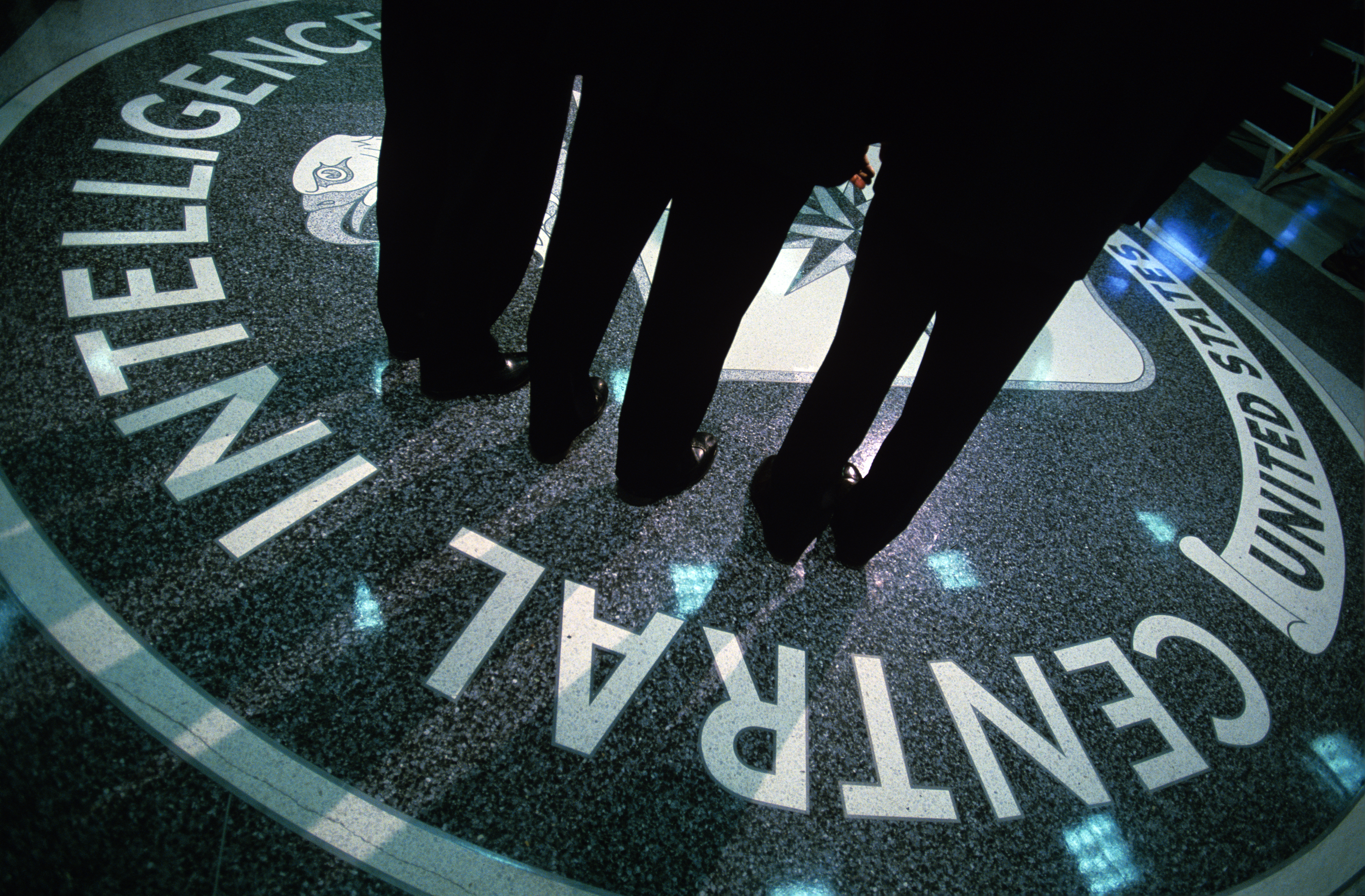
Former CIA director Michael Hayden claims that the torture report “will be used by our enemies to motivate people to attack Americans and American facilities overseas.” Drezner doesn’t buy it:
There is no shortage of US foreign policy actions and inactions in the region to inflame enemies. The Senate report is small potatoes compared to that.
Larison seconds Drezner:
It is extremely convenient for these people to discover the possibility that a report about past U.S. abuses might inspire outrage and even violence in response. There was no such concern among hawks about the foreign policy implications of torturing people when it was being done, and they expressed no similar worries that other U.S. actions would provoke violent responses. If one raises the possibility that aggressive U.S. actions in other parts of the world could have dangerous consequences for Americans later on, that is normally denounced as “blaming” America. Strangely enough, that doesn’t seem to apply when there is a chance of exposing our government’s egregious abuses to public scrutiny and some small measure of accountability for those abuses.
And many of the people crying blowback over this report were the same ones dismissing concerns that keeping Gitmo open would stoke resentment and terrorism in the Middle East. Waldman has it right:
The cynicism necessary to attempt to blame the blowback from their torture program on those who want it exposed is truly a wonder. On one hand, they insist that they did nothing wrong and the program was humane, professional, and legal. On the other they implicitly accept that the truth is so ghastly that if it is released there will be an explosive backlash against America. Then the same officials who said “Freedom isn’t free!” as they sent other people’s children to fight in needless wars claim that the risk of violence against American embassies is too high a price to pay, so the details of what they did must be kept hidden.
On that count, Drum argues that the release of the torture report will save lives:
[O]ur conduct during the early years of the war on terror almost certainly inflamed our enemies, bolstered their recruitment, and prolonged the wars in Afghanistan, Iraq, and elsewhere. This cost thousands of American lives.
President Obama may have banned torture during his administration, but is there any reason to think we’ve now given up torture for good? Not that I can tell, and it will cost many more thousands of American lives if it happens again. So for our own safety, even if for no other reason, we need to do everything we can to reduce the odds of America going on another torture spree.
(Photo by Charles Ommanney/Getty Images)
Did Jackie Lie? Or Misremember?
Maya Inamura defends the alleged UVA rape victim from those who would label her a liar:
While Rolling Stone undoubtedly should not have published an article that had inconsistencies, the fact that Jackie got some details wrong is not reason for the rest of us to throw out her entire story. Victims of trauma often have trouble remembering the exact nature of their assault, including the date on which it occurred, for which my own story of sexual assault should serve as a case in point. This is the nature of trauma: It makes forgetting easy, because forgetting is exactly what a traumatized person wants to do. It’s a coping mechanism.
As I’ve said before, I think it’s highly likely that Jackie was raped – and it’s worth noting that neither Jackie nor her friends have claimed that she was not assaulted. But, to my mind, that could lead to minor inconsistencies, or a mixed up time-line, or lots of details being wrong. But remembering that you were pinned down on a pile of broken glass, referred to as “it” and repeatedly raped with quite precise details filled in leads me to scratch my head. Anne J. Jacobson stresses that Jackie’s memory of that night could have been severely warped by whatever trauma she actually endured:
Ordinary people often enough take the fact that we have memories to show that we have recording devices inside us that somehow secure most of the details of our experiences. There are several reasons why this is false. If nothing else, calling up a memory and then restoring it alters it a bit. And memory follows vision in getting the gist of things better than getting the precise details down. There was a recent NY Times OpEd by two top researcher on memory and its fallibility. Given what we know about memory, we should expect this young woman’s memory to be gappy and to have errors. And even more so considering the trauma of the experience she was reporting. Because an organization was named by her, it may be that a reporter aware of recent memory research should have checked it.
The evidence of some trauma happening to Jackie is strong, as a former roommate explains:
I fully support Jackie, and I believe wholeheartedly that she went through a traumatizing sexual assault. I remember my first semester here, and I remember Jackie’s. Jackie came to UVA bright, happy and bubbly. She was kind, funny, outgoing, friendly, and a pleasant person to be around. That all notably changed by December 2012, and I wasn’t the only one who noticed. Our suite bonded that first semester and talked many times about the new troubles we were facing in college. Jackie never mentioned anything about her assault to us until much later. But I, as well as others, noticed Jackie becoming more and more withdrawn and depressed. …
Sometime that year I remember her letting it slip to me that she had had a terrible experience at a party. I remember her telling me that multiple men had assaulted her at this party. She didn’t say anything more. It seemed that was all she’d allow herself to say. I wish I had done something sooner. I wish I had known how to help. But I applaud Jackie for telling her story, now two years later. It was a story that needed to be told.
But if the story is not true, does it still deserve to be told? And do the people inevitably incriminated by it not have a right to respond?
“Humanely Raised”
I hope you’re able to find five minutes to watch this:
It’s extremely rare for us to see inside the factory farms where living creatures are subjected to endless torture. And it’s extremely rare to see with our own eyes what the USDA rating of “humanely raised” actually means:
Compassion in World Farming isn’t shy about placing some of the onus on the USDA. The government does have a list of labels that must meet certain requirements in order to be used by meat producers on their packaging, such as “organic,” “free range,” and “no antibiotics.” But the terms that Perdue is using, like “humanely raised” and “raised cage free” aren’t regulated by the government in the same way. Instead, they are based on The National Chicken Council’s animal welfare guidelines, an industry-created standard.
The USDA doesn’t approve the label so much as verify that it meets the standards the industry decided it should meet. Samuel Jones, a spokesperson for the USDA, confirmed the process. “Some companies pay the USDA to verify that they’re meeting specific processing points,” he said. “If it’s cage-free, and they want us to verify that they are meeting their set guidelines, that’s what we do.” A lot of this nuance can be lost on consumers, who aren’t aware that labels are often defined by the industry, not by the government.
Take “cage-free”. We think of it as a positive in buying chicken. But almost all chicken designed to be eaten are raised cage-free. It tells us nothing about the way in which they are subjected to conditions and lives no living creature should be forced to endure.
Illiberal Feminism Strikes Again, Ctd
Judith Levine has a must-read on the intellectual climate that prompted some to attack any early skepticism of the Rolling Stone story:
On Jezebel, Anna Merlan expressed her opinion with characteristic Jezebelian eloquence: “‘Is the UVA Rape Story a Gigantic Hoax?’ Asks Idiot” And typically, readers chimed in with gender-baiting: “But never mind Erdely’s months of work. Two guys who have no idea what they’re talking about don’t believe it. Case closed.” “Newsflash: Most libertarians are misogynist/racist white men.”
Lovely, innit? The way in which these individuals use race and gender as ipso facto damning aspects of people’s identities does not seem to jolt them into any self-awareness. These crusaders against bigotry are awfully fond of it when it can be used to dismiss critics. But what I see most acutely is the sense – prevalent on the left these days – that there are no fair-minded people out there, that all men are potential rapists or rape-denialists, that patriarchy is so powerful there’s no chance at all that someone could actually believe, say, that there is a serious rape crisis on many campuses but that the Rolling Stone story is too flawed a piece of journalism to defend:
I will say that even if Erdely had done a more thorough job, none of her doubters would believe her. They’d find some other reason to hate.
— Amanda Marcotte (@AmandaMarcotte) December 3, 2014
Which is to say that these writers are not liberals in any meaningful sense of the word. Deep down, they simply don’t believe people are open to persuasion. Which is why they need to rely on graphic exaggerations, emotional blackmail or endless circles of victimology to make their case. So anyone who might question the specific details of an alleged rape are “rape-denialists” or “rape-truthers” rather than, you know, journalists. And that particularly includes women who may not tow toe the party line:
Vanquished bodies litter the blogosphere. Canadian journalist Anna Duckworth knew CBC radio host Jian Ghomeshi well; he’d been her generous mentor for years. So when accusations began to surface that he had sexually brutalized numerous women, she spoke up. She stressed that she didn’t think his accusers were lying. All she asked was that her friend be assumed innocent until proven guilty.
Duckworth’s attackers “made me feel great shame for coming to Jian’s defense,” she wrote on Huffington Post. “Some went as far as to call people like me misogynists, victim blamers and perpetrators of rape culture.” In a short piece, the word “shame” appeared six times.
Over the years, Cathy Young, a Newsday columnist and contributor to Reason, has written and spoken widely on false accusations of rape and the threats to justice in a kind of overzealous feminist jurisprudence. Young is a feminist who also cherishes individual liberty (you can’t blame her; she grew up in the Soviet Union). Her reporting is meticulous. She never claims that rape is not real, though she is interested in why someone might lie. But Young’s work is repeatedly twisted and she is tarred as, among other things, an “anti-feminist victim blamer.”
I also feel that this climate subtly makes errors like the Rolling Stone story more likely. And Lizzie Crocker fears that culture of victimhood is making it more difficult to find the truth behind stories like Jackie’s:
The problem with valorizing the victim, as a “victim culture” does, is that anything that runs contrary to the victim’s narrative is cast as an attack on that person. Question them, and you are colluding in exacerbating the awful effects of their trauma. Question their actions or motives and you are “victim shaming” and “victim blaming.”
Of course, the flip-side of a victim is a bully, and it is notable that today, everyone rushes to be a victim—the right wing under attack from the left, the left under attack from the right, bigots still seeking to attack gay people, and claiming they cannot voice their bigotry. “Playing the victim” used to be a term of scorn, now it’s a daily modus operandi to score any number of political and cultural points. Question those taking on the mantle of victimhood and you are immediately cast as some kind of aggressive, unfeeling oppressor.
The sad consequence of a culture of victimhood is that it obscures real victims and obscures the genuinely felt experiences of those victims, whatever they have endured.
Couldn’t put it better myself. Previous Dish on illiberal feminism here. Update from a reader, who notes the classy apology from Merlan (which we highlighted last week) and makes some key distinctions:
I appreciate this discussion, I really do. But as a person who has voraciously consumed everything I could find on the UVA story, I feel it important to note that once the Rolling Stone story was retracted, Anna Merlan offered a sincere apology to both Richard Bradley and Robby Soave. I think all of us have gone off half-cocked at some point in our lives, and Merlan showed some class by owning up to her mistake and apologizing.
I will add that that while there has been some of the usual illiberal ranting and raving (see e.g. Marcotte), there has also been a lot of great writing on the RS piece by feminists and liberals at DoubleX, TNR, Feministing, and the New Yorker, among others. It seems that quite a few liberals, leftists, and feminists still care about the truth. That has been an enormous relief and so gratifying to see. I had begun to wonder if the left believed the narrative really was more important than the truth. I’m relieved to see that many people on the left still think the facts are important, and are still dedicated to getting those facts right.
I was one of your first subscribers, and I’ll be the last one to bail. Just keep doing what you’re doing.
So Who The Heck Will The GOP Nominate?
Nicholas Confessore reports that “dozens of the Republican Party’s leading presidential donors and fund-raisers have begun privately discussing how to clear the field for a single establishment candidate to carry the party’s banner in 2016.” Kilgore is fascinated by such maneuvering:
I continue to be amazed at the confidence of GOP elites in the political strength of Bush, Christie and Romney. The first two continue to do relatively poorly in both nominating contest and general election polling; Bush in particular is saddled with problems that will never go away. And Mitt Romney would be the first defeated presidential nominee to attempt an immediate comeback since Hubert Humphrey in 1972. That’s a long time ago.
Chris Cillizza and Aaron Blake consider Rand Paul as the most likely candidate:
People used to roll their eyes when we said Paul had a real chance to be the Republican nominee in 2016. No one rolls their eyes anymore.
Paul has a unique activist and fundraising base thanks to his dad’s two runs for president, and has shown considerable savvy in his outreach efforts to the establishment end of the party over the past few years. Paul still says odd things — his blaming of high cigarette taxes for Eric Garner’s death being the latest — that are going to get him in trouble in the heat of a presidential race. But, Paul is the candidate furthest along in the planning process for president and the one with the most current strength in early states like Iowa, New Hampshire and South Carolina.
Jonathan Bernstein strongly disagrees:
I understand the math: It’s a large field and Paul is more or less guaranteed to get 20 percent of the vote in Iowa and New Hampshire. All he needs then is to exceed his father’s performance by a few thousand voters and he could easily capture those early states against a splintered group of Republicans. That’s an illusion. There probably won’t be a dozen candidates in Iowa; Republicans have efficiently winnowed their field pre-Iowa for several cycles. But it doesn’t matter; even if Paul wins with 25 percent of the vote in Iowa, he’s not going to win the nomination unless he can eventually reach more than 50 percent. And as long as a substantial clot of party actors opposes his candidacy and most of the rest are indifferent at best, he’s not going to get the favorable publicity he needs to do that.
Kilgore thinks Bernstein goes too far:
I’d say it’s always a good idea to show some healthy respect for the unpredictable aspects of politics, especially in intraparty contests. I, too, have a hard time envisioning Rand Paul accepting the GOP presidential nomination in 2016. But his successful maneuvering on foreign policy so far makes it a lot more possible than ever, and I’m sure there were political scientists who laughed and laughed at the idea this loopy dude would beat Mitch McConnell’s hand-picked Senate candidate in 2010.
Allahpundit, meanwhile, ponders Jeb’s chances:
There are enough “somewhat conservative” voters to carry Bush to victory if conservatives are split — and if he doesn’t turn into Huntsman along the way. Huntsman’s problem, though, wasn’t that he lacked “clarity of thought,” it’s that in ways large and small he showed contempt for the base of the party whose nomination he was seeking. Remember when he introduced himself to primary voters with a profile in “Vogue”? Remember when he tweeted during the primary campaign, apropos of nothing, that unlike certain people he believed in evolution and global warming? Remember when one of his consultants, John Weaver, complained that the GOP consisted of “a bunch of cranks”? “Voters don’t necessarily need to like a candidate to vote for him,” wrote Ross Douthat in November 2011, “but they need to think that he likes them.” Jeb Bush’s difficulty right now is that he seems almost eager to run against the party’s base, which is a recipe for disaster in the general election if not the primaries: The nastier things get, the more likely it is that some conservatives will stay home in November 2016 if he’s the nominee. Maybe he can survive the primaries backing Common Core and an amnesty deal with Democrats — Romney survived RomneyCare, didn’t he? — but he can’t get elected if he’s openly disdainful of grassroots righties. It’s not a policy thing, it’s a not-wanting-to-be-represented-by-someone-who-hates-you thing.
Ramesh also analyzes Jeb’s predicament:
As I’ve argued here before, Bush can still win the nomination: Because most of his primary votes would come from the center and left of the party, he doesn’t need to win big among the conservatives most fired up about immigration and Common Core.
But Bush’s stand on Common Core won’t help him much in the general election. For the most part, it isn’t an issue of federal policy. So he has stumbled into a fight with the party base that won’t yield him any long-term political gains. And while his stand on immigration could arguably help his chances in 2016, it doesn’t solve the party’s basic economic problem. The risk is that these stances will exhaust Republicans’ tolerance for heterodoxy, and leave Bush with less room to adopt a new economic platform. A nominee who conservatives viewed as an ideological soul mate might have more leeway.
Waldman’s two cents on Jeb:
[F]aced with this argument between someone like Bush they can’t stomach on one hand, and a candidate like Ted Cruz they know would get blown out on the other hand, they’re going to look for a middle alternative. That could end up being any one of a number of people, but at the moment it’s awfully hard to see Bush building that bridge.
The Torture Defenders Fan Out
Everything the president said above is untrue – and it appears that the looming Senate Intelligence Committee report on the torture program will soon prove it. The US did torture many many people with techniques devised by Nazis and Communists, sometimes in former KGB facilities. The CIA itself admits in its internal documents that none of it worked or gave us any actionable intelligence that wasn’t discovered through legal means. The torture techniques were not implemented by highly-trained professionals, but by goonish amateurs who concealed what they were doing and lied about it to superiors. All the techniques were and are clearly illegal under US and international law.
And we’re told there is some exculpatory evidence in the report, suggesting that Bush and Cheney and even Addington were misled as well – giving the former president some lee-way to explain how he came to create a torture program that will forever taint this country and has already done so much to damage its soft power. Maybe he could tell the truth and say that the extent and nature of the torture was kept from him and that he can now see what went so horribly wrong. But nah:
Some former administration officials privately encouraged the president and his top advisers to use the report to disclaim responsibility for the interrogation program on the grounds that they were not kept fully informed. But Mr. Bush and his inner circle rejected that suggestion. “Even if some officials privately believe they were not given all the facts, they feel it would be immoral and disloyal to throw the C.I.A. to the wolves at this point,” said one former official, who like others did not want to be identified speaking about the report before its release.
The question I posed publicly to the president back in 2009 – whether he could come to terms with the reality of torture and explain how it occurred – has therefore been answered a second time. In his own book, Bush owned the torture and took full responsibility for it. Now, he has decided he will not allow a sliver of daylight to come between him and war crimes. You can chalk this up to admirable loyalty, even to those who lied to him. Or you can simply reflect on a president who cannot admit to being the first in that office to authorize such an assault on core American values and decency. Which means to say he does not have the fortitude or character to deal with reality.
And now, we’re seeing a full-court press for those Bush loyalists who want to permanently suppress the evidence of war crimes under the program. If you want to get a clue about how devastating the forthcoming report might be, just observe the pre-emptive strikes:
The defense of the program has been organized by former C.I.A. leaders like George J. Tenet and Gen. Michael V. Hayden, two former directors, and John E. McLaughlin, a former deputy C.I.A. director who also served as acting director … General Hayden added that the former C.I.A. team objected to the Senate’s characterization of their efforts. “We’re not here to defend torture,” he said by email on Sunday. “We’re here to defend history.” General Hayden appeared earlier on Sunday on “Face the Nation” on CBS News to say that any assertion that the C.I.A. “lied to everyone about a program that wasn’t doing any good, that beggars the imagination.”
Jose A. Rodriguez Jr., who ran the C.I.A. interrogation program, said Sunday that critics now assailing the agency were pressing it after the attacks of Sept. 11, 2001, to do whatever it took to prevent a recurrence. “We did what we were asked to do, we did what we were assured was legal, and we know our actions were effective,” Mr. Rodriguez wrote in The Washington Post.
Rodriguez was so sure that he did nothing wrong that he destroyed the tapes recording the torture sessions! Nothing to see here … so move long. A reader writes:
I just watched the CBS Morning News report on the SSCI report, featuring two persons: Michael Hayden was featured in excerpts from Sunday’s Face the Nation, then “CBS News terrorism consultant” Juan Zarate. Both offered an identical analysis: the release of the report would “fan the flames of violence against America.”
On CNN, Candy Crowley still could not say the t-word, and let Mike Rogers argue that evidence of the gravest crimes by government officials should be suppressed because … they will inflame opinion abroad, and possibly lead to demonstrations and violence. Notice that for Rogers, the fact that the US government committed barbarisms more commonly associated with Nazi Germany or Communist China is of no concern. No one should be prosecuted, because, well, because American officials cannot be subject to the Geneva Conventions, which must be observed by every state actor – except the US. And no evidence of crimes by government officials should be released, for fear of undermining faith in said government. Those arguments belong in a dictatorship, not a democracy.
Then this detail from this morning:
Mr. Bush and his closest advisers decided that “we’re going to want to stand behind these guys,” as one former official put it. Mr. Bush made that clear in an interview broadcast on Sunday. “We’re fortunate to have men and women who work hard at the C.I.A. serving on our behalf,” he told CNN’s Candy Crowley. “These are patriots and whatever the report says, if it diminishes their contributions to our country, it is way off base.” These are “really good people and we’re lucky as a nation to have them,” he said.
“Whatever the report says …”
Denial doesn’t get much clearer than that – and it is of a piece with the reckless disengagement, sickening indifference and grotesque negligence that marked his catastrophic time in the Oval Office. In the wake of the shock of Abu Ghraib, Bush disavowed the atrocities, insisting that they did not represent America, that they were counter to American values, and that he was shocked and disgusted by them. And yet, when a report is imminent outlining acts of torture and abuse far worse than Abu Ghraib, and directly under his own authority, he insists that whatever is detailed in the report, the culprits are heroes and patriots, and “we’re lucky as a nation to have them.”
How does one begin to square that cognitive dissonance? How to explain how a believing Christian can describe brutal torture sessions as things to defend and be proud of? And how can the torture of human beings – and the cover-up of the same – be part of American “patriotism”? This is a man not just without a conscience, but a man proud of it. He had a chance to reflect on what his fateful decision to waive the Geneva Conventions after 9/11 produced; and he has decided to own all of it. And we shall soon see what exactly that is.
Chart Of The Day

Aaron Blake highlights a poll finding “that 60 percent of Americans disagree with the lack of an indictment against officer Daniel Pantaleo”:
Although 40 percent disagree “strongly” with there being no indictment in Garner’s case, just 24 percent say the same about the case in Ferguson. And in Ferguson, there’s majority support — 52 percent — for no indictment. So basically, Americans as a whole favor no indictment in Ferguson. In Garner’s case, they overwhelmingly think there should have been one. And in fact, just one-quarter of Americans agree with the grand jury’s decision not to indict.
This suggests, does it not, that the gloomiest assessments of America’s ability to see through race are too dire. If we were truly racially polarized, we’d see similar responses to similar white-cop-black-victim scenarios. Which means we have some common ground to stand on.
The Closing Of The Back-Of-The-Book
Josh Chafetz mourns it:
[N]o one else in Washington, nor precious few outlets anywhere, does what Leon did with the back of the book. Leon cared about culture and about ideas, not as adornment, but as ends in themselves. And he cared enough to write passionately and to commission passionate pieces about them. In an era of click-bait, the TNR back of the book ran long-form, thoughtful pieces about the arts, about culture, about ideas and their histories. In an era of vanishing book reviews, the TNR back of the book routinely ran lengthy reviews of books one might not otherwise encounter. In an era of laid-off critics, the TNR back of the book had a deep bench of drama, art, music, dance and literature critics. In a city obsessed with “winning” the 24-hour news cycle, the TNR back of the book played a much, much longer game.
Think for a second about what has happened to book reviews. Most newspapers got rid of them years ago. Try finding them on the NYT app. With TNR’s back-of-the-book gone, we’re left with a few pages in The New Yorker, the TLS, the wonderful New York Review of Books (but that institution too seems vulnerable, given its aging leadership), and a bunch of newish cultural outlets that vie for attention when TNR could command it. Everything else is Amazon and stars. But the review section is not just a feature; it’s part of a critical eco-system that sustains a higher culture in a democracy. Losing it can be fatal to a democracy that hopes to rise above mass-cult.
In my time at TNR, I wrote for both the front and the back, and no one seemed to mind. In fact, you were expected to be a reporter or political writer who could always dip your toes into the high culture of the back-of-the-book. I also had the privilege of being the second-in-command at the back of the book for a while. There are too many stories to tell, but I always revered that section and protected it almost as fiercely as Leon did. We became estranged for lots of reasons – and Dishhead will be aware of the long-running feud (another characteristic of TNR-style journalism). But we were and are as one on the role of high culture in our democracy, even if I sometimes felt that TNR’s literary section was sometimes unnecessarily obscurantist and impenetrable on purpose. Alyssa remembers “the publication’s simple confidence that culture was an important subject that required no justification to sell to readers”:
You didn’t have to have a policy hook, or even the draw of Misty Copeland’s rising star, to write about dance there, as Jennifer Homans, the magazine’s dance editor who resigned [Friday], did so beautifully. Culture could provide answers that policy analysis could not, as it did in Rebecca Traister’s marvelous “I Don’t Care If You Like It,” a synthesis that drew on everything from Esquire’s beauty metrics to Amy Poehler’s rebellious, dirty sense of humor, to the criminalization of parenting to explain how women have been kept subject to men’s opinions. I return to that piece at least once a week. I don’t necessarily agree with Jed Perl on the politicization of art, but we are of accord that the fate of art matters even if it shifts no policies.
This is a philosophy that guides a lot of more general-interest publications, including the New Yorker and the New York Review of Books where Daniel Mendelsohn, among my favorite living critics, brings the same attention to Greek poetry and the spasms of “Spider-Man: Turn Off the Dark” on Broadway. But it’s a bit rarer, I think, among Washington publications that think of themselves as policy-oriented, or in sections like op-ed pages where culture yields pride of place to policy and politics.
Damon Linker calls Leon “one of the greatest editors in the history of American letter”:
From 1983, when he took over the back of the book, through the early years of the 2000s, Wieseltier’s pages were just about the only game in town for serious writing about culture. Only The New York Review of Books and the Times Literary Supplement, each with a couple dozen reviews in every issue, came close to matching the cultural heat and light that Wieseltier managed to generate with a handful of essays and reviews, and a modest budget, in nearly every issue of TNR.
Today the cultural landscape is different. Not only are old-media opinion journals (The Nation, for example) publishing much smarter and unpredictable review essays than they used to, but there are a slew of digital outlets covering cultural topics in a variety of interesting ways — The Believer, n+1, The New Inquiry, Tablet Magazine, and many others — as well as old-time (Boston Review) and new-fangled (LA Review of Books) cultural journals whose content can be easily and instantly accessed online.
The question, as always, is whether the increased quantity will match (let alone surpass) the quality Wieseltier managed to achieve in issue after issue of TNR.
Cynthia Haven is pessimistic:
At this point, saving TNR will not be done by will alone. It takes more than ideology and snark to produce something that endures. You cannot buy gravitas, any more than you can buy reputation. What’s missing is what Czesław Miłosz used to call “piety” – a feeling of hierarchy of value in works of art and works of literature – or perhaps what Susan Sontag called “an education of the heart.”
It has less to do with education and more with a certain amount of living, suffering, patience, tenacity, endurance, wisdom, and the willingness to pay, pay, pay (and I don’t mean with cash). My concern is that people such as Hughes and Vidra have no idea what it means to be caretakers of a century-old literary institution.
Or maybe they’ll learn.
 The Dish