A Poem For Saturday

6260653177_d06f64d163_b

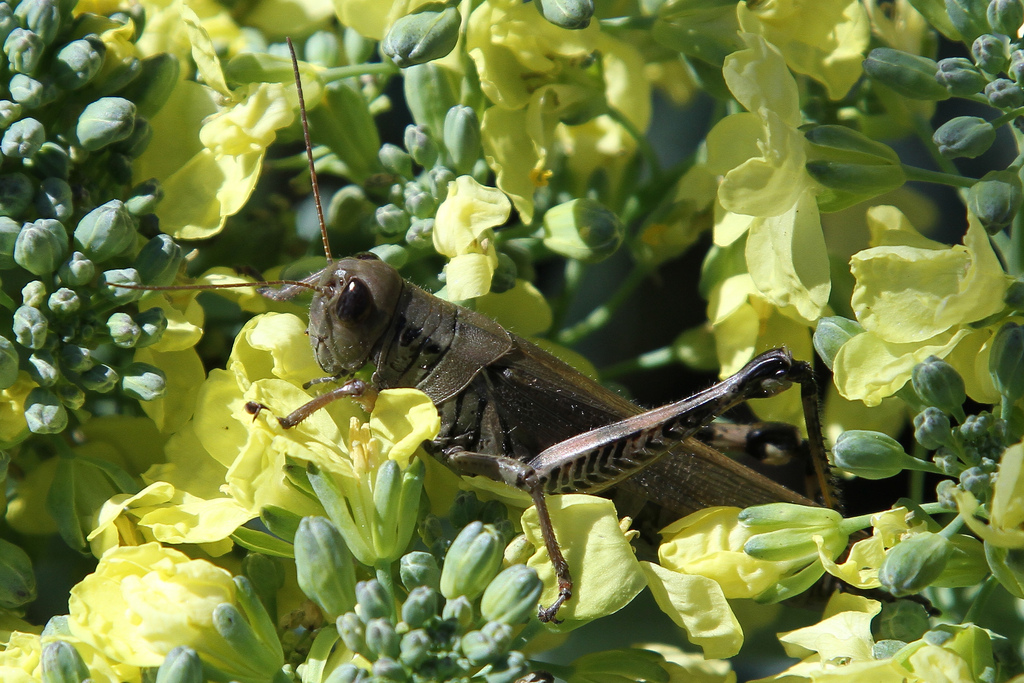
“On the Grasshopper and Cricket” by John Keats (1795-1821): 

The poetry of earth is never dead:
When all the birds are faint with the hot sun,
And hide in cooling trees, a voice will run
From hedge to hedge about the new-mown mead;
That is the Grasshopper’s—he takes the lead
In summer luxury,–he has never done
With his delights; for when tired out with fun
He rests at ease beneath some pleasant weed.
The poetry of earth is ceasing never:
On a lone winter evening, when the frost
Has wrought a silence, from the stove there shrills
The Cricket’s song, in warmth increasing ever,
And seems to one in drowsiness half lost,
The Grasshopper’s among some grassy hills.

(Photo by Jim Capaldi)

A Short Story For Saturday

Given this week’s weather, Tobias Wolff’s “Hunters in the Snow” seemed like a timely selection – though of course the story isn’t really about snow. Here’s how it begins:

Tub had been waiting for an hour in the falling snow. He paced the sidewalk to keep warm and stuck his head out over the curb whenever he saw lights approaching. One driver stopped for him but before Tub could wave the man on he saw the rifle on Tub’s back and hit the gas. The tires spun on the ice. The fall of snow thickened. Tub stood below the overhang of a building. Across the road the clouds whitened just above the rooftops, and the street lights went out. He shifted the rifle strap to his other shoulder. The whiteness seeped up the sky.

A truck slid around the corner, horn blaring, rear end sashaying. Tub moved to the sidewalk and held up his hand. The truck jumped the curb and kept coming, half on the street and half on the sidewalk. It wasn’t slowing down at all. Tub stood for a moment, still holding up his hand, then jumped back. His rifle slipped off his shoulder and clattered on the ice, a sandwich fell out of his pocket. He ran for the steps of the building. Another sandwich and a package of cookies tumbled onto the new snow. He made the steps and looked back.

Read the rest here. More of Wolff’s short fiction can be found in Our Story Begins: New and Selected Stories. Peruse previous SSFSs here. Update from a reader:

I see a none-too-subtle South Park reference in today’s short story. I mean, it’s The Dish and one of the main guys is Kenny. Of course he’s fucked.

A History Divided

The Pakistani novelist Kamila Shamsie tours the National Museum of her native country, noting that “it’s the pre-Islamic parts that most interest me”:

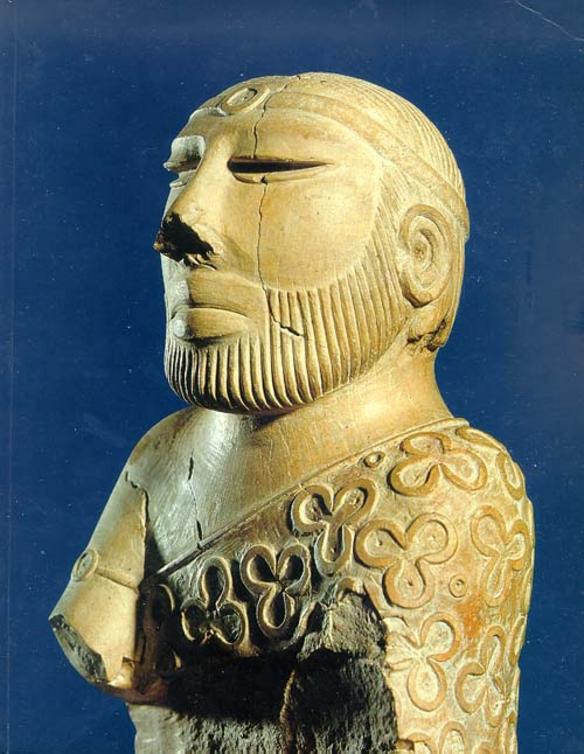
In the centre of the [Late Harappan (or Indus Valley Civilisation) Room], on a podium of his dish_priestkingown, is that most iconic of the Indus Valley Civilisation’s artefacts: the priest-king. Unlike many of the other objects in the museum, there’s an approximate date attached to the soapstone figure: 2500-1500 BC. I look closely at the priest-king’s combed-back hair and cropped beard, his patterned cloak, the circlet at his brow. For years a replica of this figure looked out from one of the bookshelves in my family home, mysterious and distant, and now that I’m standing in front of the original I feel … quite certain it’s another replica.

At this point the director of the museum, Mr Bukhari, walks in and I ask him straight. “The original is kept somewhere,” he says, smiling a little sadly. “It’s a national symbol. We can’t take risks with it.”

With just those few words he transforms my combative attitude.What pressures there must be in running a museum that requires a Koranic inscription at its entrance to try and ward off attacks. The object that should be the centrepiece of the museum—the one Mr Bukhari describes as a “national symbol”—has to be hidden away “somewhere” that can’t be named. …

I look at what is here despite the clear paucity of funding, the external threats, the impossibility of creating a single national narrative for a country as divided about its reason for existing as Pakistan. An elderly relative who was already an adult when Pakistan was created in 1947 often remarks that at the moment of its birth the country had two opposing claims whispered into its ears: “you are a sovereign nation”, and “you are part of the Muslim world”. In this museum, both those claims are given space, and it is for those of us who wander from the Muslim Room to the Gandhara Room to the Hindu Sculpture Room to the Coin Room to the Quran Gallery to see if we can knit a single narrative out of them or if we wish to privilege one over the other. Is a nation bound by geography or ideology? If the National Museum is forcing me to think again about these questions, to which as a novelist I’ve already given so much thought, isn’t that a mark of its success?

(Image of Indus Priest/King Statue on display in the National Museum of Pakistan via Wikimedia Commons)

Tuning In To Diversity


Chenjerai Kumanyika feels that “few of the hosts of popular narrative non-fiction podcasts and public radio programs like This American Life, Invisibilia, RadioLab, Startup, and Strangers are non-white.” He wonders how greater diversity in narrators and hosts would affect the “public voice” of radio:

In August and then again in November 2014, my wife and I traveled to Ferguson, Missouri. When we first got there in August, I remember talking to some young African-American males who lived on the street where Michael Brown was killed. I asked one why he thought that there had been such an uprising in Ferguson. In response, he reminded me that Michael Brown’s body had lain in the street for four hours (he said eight) before being picked up. Of course I had heard this before, but he made me feel it. I sat quietly for over 40 minutes and let him tell his own story his own way. His voice smoldered with conviction as he spoke. The deep resentment and frustration in his steady low tones pushed through any detachment or emotional distance that I might try to maintain. I felt the weight of Michael Brown’s body, and the weight of so many other lives in this young man’s voice. I wasn’t hearing his voice thrown in as a sound bite garnish to another host’s main dish. Instead, he was the narrator, assembling memories, images, emotions, and even speculation into his own multi-modal account. I would like to hear people who speak with voices like this young man’s voice as hosts and narrators on public radio shows and podcasts.

Kumanyika comments on the above audio sample he recorded:

Some of what bothers me is just problems with poor writing choices. At times, I wrote with in a voice that isn’t my own (“Fisherman with Capital F”? What does that even mean?). What bothers me most when I listen to this piece is that I’m acutely conscious of the way I’m adjusting my whole experience/method of inhabiting my personality. My voice sounds too high in pitch, all the rounded corners of my vernacular are awkwardly squared off. I’ve flattened the interesting aspects of my voice.

He re-recorded it with more of his own personality:


When I hear this rerecorded piece, I’m not sure how much more effective it is, but I feel better listening to it. My voice is calmer, but hopefully not boring. In place of “Fisherman with a Capital F,” I allowed myself to get passionate for a moment about my subject’s fishing credentials. Overall, I feel more centered and I sound like myself, rather than sounding like myself pretending to be a public radio host.
The View From Your Window Contest

VFYWC_241

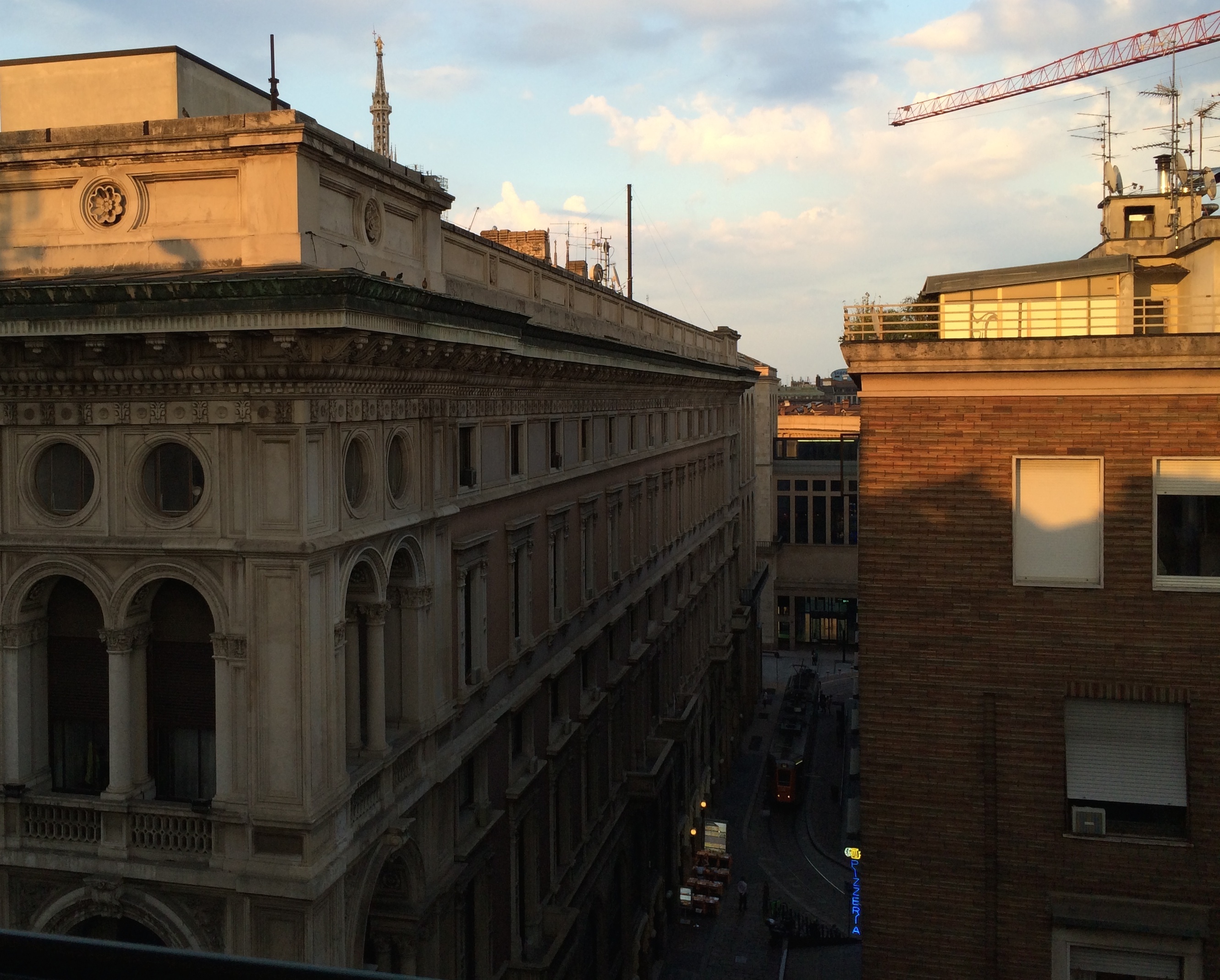
You have until noon on Tuesday to guess it. City and/or state first, then country. Please put the location in the subject heading, along with any description within the email. If no one guesses the exact location, proximity counts.  Be sure to email entries to contest@andrewsullivan.com. Winner gets a free The View From Your Window book or a Dish t-shirt. Have at it.

Recording The Ordinary

Cody Delistraty finds value in it:

Why write down routine conversations, ones we’ve had a million times and will have a million times more? Isn’t it more important to remember extraordinary moments: first steps, graduations, jobs, awards, marriage, retirement, vacations? Yet people seldom realize how fondly they will look back on days spent mundanely: a day spent reading in the bay window, a picnic in the park with friends. These things may not stick out while they are happening, but revisiting them can be a great pleasure.

Ting Zhang’s research backs this up: 

Asked to write down what they were doing on an ordinary day (a few days before Valentine’s Day) and then on an extraordinary day (on Valentine’s Day), participants had more pleasure reading their entry about the ordinary day three months later than their entry about the extraordinary day. The ordinary experience had also been more difficult to remember than the extraordinary one and so its rediscovery felt fresher.

Still, most people Zhang asked didn’t feel like recording their day. Given a choice between writing about their day for five minutes or watching a talk show host interview an author for an equal amount of time, only 27 percent of people chose to document their day and only 28 percent of people—regardless of whether they chose to write or not—thought that they would care later about what they were doing that day. Three months later, 58 percent of people said they regretted choosing the talk show clip over journaling. They were bad at estimating how much they’d value the present once it became the past.

“They choose to forgo opportunities to document experiences in the present,” Zhang writes, “only to find themselves wanting to retrieve those records in the future.”

Making Contact With Students

Jessica Lahey is an advocate for it:

Society’s well-intentioned attempts to shelter children from the possibility of inappropriate touching have deprived teachers of an important teaching tool and children of an essential sensory, educational, and developmental experience. The imposition of an invisible no-touch force field around classrooms is misguided and destructive, according to the National Association for the Education of Young Children. The organization issued a clear policy statement instructing that schools and other organizations “should not institute no-touch policies to reduce the risk of abuse” and stating that “no-touch policies are misguided efforts that fail to recognize the importance of touch to children’s healthy development.”