“How Would You Kill The N-Word?”

Gene Demby explores the question:

Neal Lester, who teaches a course at Arizona State University about the word’s history, says it spread into wider usage during Reconstruction through the early 20th century, when it dotted children’s rhymes and even the names of consumer products. But, he says, “there are ways that the radioactive part was always there.” … Lester makes a common argument: If the word can still be used as a vile epithet, it can’t be considered neutral or harmless in any context.

The black-people-use-it-all-the-time-so-why-can’t-I argument is a popular rejoinder; Dr. Laura Schlessinger made the argument after she was chided for using it on her radio show. But these arguments rest on the idea that the word mutated only recently into its “friend/brother” iteration. But [linguist John] McWhorter says that the reappropriative usage — that is, among blacks to other blacks as a term of endearment — is hardly new, and predates hip-hop by quite a bit. “We’re romanticizing the way the N-word was used in the past,” he says. “You can see 100 years ago that people were using the N-word in the same affectionate way. You can see it in Zora Neale Hurston’s [writing] and not just once.”

In other words, the racially pejorative usage of nigger and the in-group usage of nigger have long existed side by side; the word and our racial dynamics are messy enough for it to simultaneously represent different, disparate ideas.

An answer to Demby’s question:

“Like other strong slurs, the N-word inherits its toxicity from the larger culture,” [professor Geoffrey] Nunberg says. “So long as there are virulent forms of racism around, they’ll continue to infect the word. It will be weakened only when those attitudes are attenuated, in the same way that social acceptance of Irish-Americans has softened the contempt that was implicit in ‘mick’ in the 19th century.”

He pauses a second. “That could take a while,” Nunberg says.

What Can Lolita Teach Us About Love?

2950861719_60649f4791_b

Mary Gaitskill thinks Nabokov’s “madcap orgy of Thanatos” nevertheless speaks to lovers:

Love itself is not selfish, devouring or cruel, but in human beings it suffers a terrible coexistence with those qualities; really, with any other vile thing you might think of. These oppositions sometimes coexist so closely and complexly that the lovers cannot tell them apart. This is not only true of sexual love, but also of the love between parents and children, siblings, and even friends. In most people this contradiction will never take the florid form it takes in Humbert Humbert. But such impossible, infernal combinations are there in all of us, and we know it. That Lolita renders this human condition at such an extreme, so truthfully, and yes, as von Rezzori says, convincingly, is the book’s most shocking quality. It is why it will never be forgotten.

(Photo by Alessandro Bovini)

Keeping Your Drink Safe

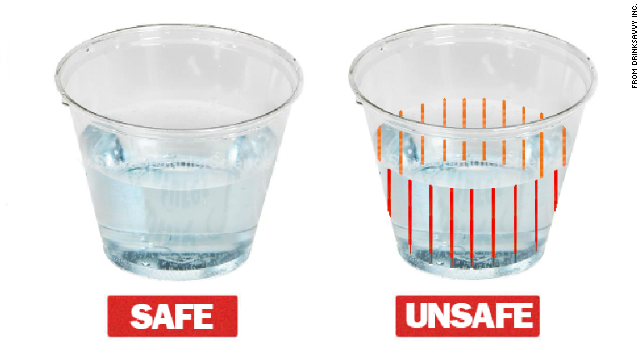
Tara Culp-Ressler praises DrinkSavvy, a company developing cups and straws that change color in the presence of “date rape” drugs Rohypnol, ketamine, and GHB:

[Company founder Mike] Abramson’s product is in contrast to some deeply-ingrained societal attitudes about dish_drinksavvy sexual assault — most notably, the idea that it’s women’s responsibility to avoid “dangerous situations” like going out to bars and drinking too much alcohol — that foster a victim-blaming rape culture. When victims come forward about being raped, whether or not they were drinking alcohol at the time of their assault often comes under scrutiny. Sexual assault prevention programs often suggest that women should just be more careful by going out in groups, making sure they don’t leave their drink unattended, and refusing to accept drinks from strangers.

Refreshingly, a cup that detects date rape drugs removes this dynamic. Rather that expecting women to bear the burden of assuming their decisions will provoke a sexual crime against them, DrinkSavvy simply gives them the power to avoid ingesting sedatives without their consent — no matter who gave them the drink and how long they may have taken their eyes off of it.

Recent Dish on rape here, here, and here.

(Photo by DrinkSavvy)

“Strained Pulp”

A.O. Scott coined the term last year during a review of Steven Soderbergh’s Haywire:

Nowadays everyone must love (or at least pretend to love) pleasures that were supposedly once disdained or taken for granted: dive bars, street food, trashy films. But knowing, sophisticated attempts to replicate those things often traffic in their own kind of snobbery, confusing condescension with authenticity. Movies like ‘The American,’ ‘Drive’ and now ‘Haywire’ offer strained pulp, neither as dumb as we want them to be nor as smart as they think they are and not, in the end, all that much fun.

Scott expands on the definition:

Let me be clear that I’m not talking about what we used to call, back in the ’90s, “irony,” though a better term might have been “insincerity.” There was a time when just about anything — dumb commercial entertainment, ugly clothes, the weird dishes your grandmother used to serve — could be appreciated and appropriated in quotation marks. Strained pulp is not quite that — its celebration of the formerly marginal and disreputable is serious and sincere. The condescension is not overt but is latent in the desire to correct and improve the recipes retrieved from the past, to finish vernacular artifacts with a highbrow glaze. We’re going to make ’em — movies, cocktails, regional dishes, zombie novels, garage-rock anthems — just the way they used to, but a little bit better. This strikes me as a form of snobbery. But then again, maybe I’m the snob.

A Poem For Saturday

oceanpoem

“Sometimes I walk where the deep water dips” by Frederick Goddard Tuckerman (1821-1873):

Sometimes I walk where the deep water dips
Against the land. Or on where fancy drives
I walk and muse aloud, like one who strives
To tell his half-shaped thought with stumbling lips,
And view the ocean sea, the ocean ships,
With joyless heart: still but myself I find
And restless phantoms of my restless mind:
Only the moaning of my wandering words,
Only the wailing of the wheeling plover,
And this high rock beneath whose base the sea
Has wormed long caverns, like my tears in me:
And hard like this I stand, and beaten and blind,
This desolate rock with lichens rusted over,
Hoar with salt-sleet and chalking of the birds.

(Photo by Flickr user Crunchy Footsteps)

“To Be Or Not To Be?” Isn’t The Only Question

Joshua Rothman reviews Simon Critchley and Jamieson Webster’s Stay, Illusion!, a new book about Hamlet that considers the play through the lens of “love and its internal contradictions”:

All humans need too much. That might not be such a bad thing: at least it is a flaw that we share. But Hamlet, according to Critchley and Jamieson, is too ashamed to share. He rejects not just love—and Ophelia—but all of the passions. That’s a mistake. “To be or not to be—is that the question?” the authors ask. “Perhaps not… . Love is an admission of the power of powerlessness that cuts through the binary opposition of being and not being.” The stability and solidity of love might be a kind of illusion, but it’s a mutual one. Its mutuality makes it sustaining.

Is this what “Hamlet” is really about?

Maybe, maybe not. This way of reading the play has one huge advantage: it makes sense of Hamlet’s enraged breakup with Ophelia. Inevitably, it leaves other themes— including the meaning of vengeance, the need for law, the nature of inheritance, the inexorability of death—to the side. One of the difficulties in literary criticism is rhetorical: in order to fully lay out your ideas, you often have to claim that they are satisfying explanations in themselves, when you know that they represent just one of many equal, and perhaps simultaneously true, alternatives.

The ideas in “Stay, Illusion!” can’t explain the whole play, but what ideas can? Jamieson and Critchley illuminate “Hamlet.” They highlight its ghostliness and expand our sense of its eroticism. They suggest that the play has a lot to tell us about the value of illusion in our own lives, and they justify our sense that the tragedy in “Hamlet” isn’t really about the pile of bodies left on stage. Instead, it inheres in Hamlet’s disillusion. Even as we reject it, it’s a feeling we can understand.

Faces Of The Day

dish_monroe

For his series “City of Dreams”, photographer Nguan captured portraits of Hollywood hopefuls:

“The only strategy I had was to walk in the city with my camera and keep walking, in a state of heightened attentiveness,” he said. “It’s hard to say how I ‘cast’ the people in my photographs, as it’s more of an instinct than a skill. In general, I look for faces that can bear the weight of the hopes, anxieties, and narratives that I wish to project on their owners.”

(Photo by Nguan)

The Real Orwell

A new volume of George Orwell’s letters brings the legendary writer down to Earth:

If Peter Davison’s refulgent new volume, George Orwell: A Life in Letters, isn’t dish_orwell altogether de-sanctifying, it is certainly humanizing, a reminder that Orwell the Saint and Seer was also a lowly man named Eric Blair, a man whose fingernails were dirt-crammed from gardening, whose bank account was perennially bereft, and whose health was forever threatened by the tuberculosis that would eventually claim him. It’s always necessary to remember that our heroes are human—Orwell, above all others, would have insisted on that. He witnessed and reported on what blood-wet havoc stems from our maniacal making of heroes, from our masochistic need to be herded and lead. This is the real warning of Nineteen Eighty-Four: the danger comes not from our suppressors but from our ovine willingness to be suppressed.

Jason Diamond agrees that the letters have a humanizing effect, praising Orwell’s often dark sense of humor:

For all the worrying Orwell did about the future, he still had a sense of humor about what might come: “It is just as well to get all this cleared up, what with the atomic bombs etc.” he writes in a letter dated November 2, 1945 — a little over three months after the United States dropped bombs on Hiroshima and Nagasaki. He also had some humorous things to say about literature; in one of his letters to Henry Miller, he explains what he liked about Miller’s controversial book, Tropic of Cancer: “the fact that you dealt with facts well known to everybody but never mentioned it in print ( eg. when the chap is supposed to be making love to the woman but is dying for a piss all the while[.]“

Below is an excerpt from a 1944 letter in which Orwell speaks of his hopes and fears for the British people in the face of totalitarianism:

Whatever the pacifists etc. may say, we have not gone totalitarian yet and this is a very hopeful symptom. I believe very deeply, as I explained in my book The Lion and the Unicorn, in the English people and in their capacity to centralise their economy without destroying freedom in doing so. But one must remember that Britain and the USA haven’t been really tried, they haven’t known defeat or severe suffering, and there are some bad symptoms to balance the good ones. To begin with there is the general indifference to the decay of democracy. Do you realise, for instance, that no one in England under 26 now has a vote and that so far as one can see the great mass of people of that age don’t give a damn for this? Secondly there is the fact that the intellectuals are more totalitarian in outlook than the common people. On the whole the English intelligentsia have opposed Hitler, but only at the price of accepting Stalin. Most of them are perfectly ready for dictatorial methods, secret police, systematic falsification of history etc. so long as they feel that it is on ‘our’ side. Indeed the statement that we haven’t a Fascist movement in England largely means that the young, at this moment, look for their fuhrer elsewhere. One can’t be sure that that won’t change, nor can one be sure that the common people won’t think ten years hence as the intellectuals do now. I hope they won’t, I even trust they won’t, but if so it will be at the cost of a struggle. If one simply proclaims that all is for the best and doesn’t point to the sinister symptoms, one is merely helping to bring totalitarianism nearer.

Previous Dish on Orwell here, here, and here.

Joking About Suicide

Comedian Amy Schumer says that Comedy Central steered her away from making a suicide joke on her TV show:

“I wanted to write a sketch where a guy tried to kill himself and had a failed suicide attempt, but then still had to come to work on Monday,” 32-year-old Schumer revealed in a recent radio interview. “And everyone knew, but he didn’t get his work done and he is like, ‘Well, I didn’t think I was going to be here.’ And we wanted it to be like he was a hipster — like, what would a failed suicide be as a hipster? And I think they were like, ‘that’s too sensitive’ or ‘too personal.’”

This prompts Emma Garman to wonder whether suicide is the last taboo in comedy. But Michelle Dean suspects Schumer’s set-up just wasn’t funny enough:

[I]t’s not that suicide is viewed as beyond comedy. It’s that a comedian who legitimately thinks the best joke about returning to work after a suicide is of the “hehe, I didn’t do my work” variety is probably not really zeroing in on what’s funny about the situation. I’m no comedian, of course, and can’t tell you what a better joke would be. I can only say, in this context, well: try something else. If you’re going to make suicide funny, well: make it funny. It shouldn’t take a genius to see that’s the only real rule of the game.

Garman cites Heathers as an example of a comedy that successfully worked the topic for laughs:

The low-budget movie, a box office flop that became hugely popular on cable, VHS and DVD, is widely considered one of the best high school comedies ever made. Yet the sophistication of the “Heathers” script, and the unremitting blackness of the humor, places it in a category of its own. High school’s toxic cauldron of peer pressure, mindless conformity and amoral superficiality — embodied in the ruling triad of popular girls all named Heather — is scriptwriter Daniel Waters’ primary target.

But he’s also savage on the self-glorifying earnestness brought forth by public tragedy. “Whether or not a teenager decides to kill themselves is the biggest decision of their life,” declares the hippie-ish guidance counselor in a TV broadcast. “With supervision from people like myself, we can help young people make the right decision.” It’s a rare film whose caustic sensibility packs as hard a punch twenty-five years on, but “Heathers” makes today’s teen comedies, even the more daring ones, seem anodyne. That suicide remains a verboten subject — at least in homegrown comedy — only underscores the audacity of Waters and the director, Michael Lehmann.