The View From Your Airplane Window

over northern Kandahar Province Afghanistan

“An older view (about September/October last year) over northern Kandahar Province, Afghanistan. Taken from a small US military aircraft.”

Many more aerial views after the jump:

IMG_5483

Kaieteur Falls, Guyana

255434_10151211420622619_501562561_n

Lisbon, Portugal

IMG_5632

“Tian Shan (aka ‘Celestial’) Mountains in Xinjiang, China, shortly after takeoff from Urumqi airport headed towards Kashgar”

inflight photos 009

“Flight from Sydney to San Francisco. Of course I had the best seat in the house …”

photo (58)

Sioux City, Iowa, 4.51 pm

photo (56)

Swiss Alps, 1.16 pm

IMG_3669

Beach Head and Eastbourne, England, 1.23 pm

between-denver-and-wichita-345pm

Between Denver and Wichita, 3.45 pm

Browse all of the VFYAWs here.

Rental Marriages

Real-estate lawyer Paul Rampell thinks short-term marriage contracts, or “wedleases,” are an idea whose time has come:

Here’s how a marital lease could work: Two people commit themselves to marriage for a period of years – one year, five years, 10 years, whatever term suits them. The marital lease could be renewed at the end of the term however many times a couple likes. It could end up lasting a lifetime if the relationship is good and worth continuing. But if the relationship is bad, the couple could go their separate ways at the end of the term. The messiness of divorce is avoided and the end can be as simple as vacating a rental unit.

Kyle Cupp raises his eyebrows:

Rampell asks why society doesn’t make the legal structure of marriage more congruent to human behavior. The answer to this is simple. One of the purposes of marriage is to direct and compel behavior. People make vows, publicly, and henceforth there is a public expectation that the couple will keep their vows. The legal structure of marriage reenforces this expectation. Marriage sets ideals the couple has to work towards. Hard work? Always. Chance for failure? You bet. Are these challenges good reason for society to stop encouraging married couples to make a lifelong commitment? I suppose that depends on whether you think people treating marriage as a rental unit is a good idea.

How Many Criminals Are Violent?

Corrections By Offense

Keith Humphreys points out that “most state prison inmates today are incarcerated for a violent offense”:

[E]ven assuming the best of all policy worlds in which reducing incarceration continues to be a priority, the U.S. is probably too violent of a society to ever shrink its prison population to a Western Europe level. The proportion of the U.S. population that is serving time for violent crimes is larger than the proportion of the Western European population that is serving time for all offenses combined.

Arrests, on the other hand, are overwhelmingly for non-violent offenses. Balko reviews that latest numbers:

According to the FBI, in 2011 there were 3991.1 arrests for every 100,000 people living in America. That means over the course of a single year, one in 25 Americans was arrested.

The FBI also reports that the arrest rate for violent crime was just 172 per 100,000, and for property crimes, it was 531. That means that in 2011, one in 33 Americans were arrested for crimes that didn’t involve violence against another person, or theft of or damage to property. More people were arrested for drug crimes than any other class of crimes — about one in every 207 of us. One in every 258 of us was arrested for drunk driving. The FBI doesn’t keep track, but presumably the remaining arrests were for crimes like prostitution, vandalism, public intoxication, disorderly conduct, and other consensual crimes and relatively minor offenses.

What The WaPo Could Become

Millman dreams big:

If The Washington Post treated its own newsroom as a premium product to be bundled with a larger package of services that mostly re-purpose third-party-generated content – and long-form investigative journalism in particular is a perfect example of a premium product that is very hard to sell on its own, but which considerably enhances the value of a more comprehensive bundled product – then its scope could be much, much larger than it could ever be on its own. Larger, and more truly national, in fact, than The New York Times is (and the Times has already gone some way in the “parallel internet” direction, but relying on its own prodigious capacity to generate content). …

My own personal hope is that Bezos becomes the first internet media mogul to actually downstream revenue to third-party content providers. I’m sure it wouldn’t be much, but even establishing the principal would be huge. And the opportunity to capture a huge portion of the high-value journalistic internet is enormous. Who wouldn’t rather optimize their blog to integrate with the Washington Post‘s engine than try to sell enough banner ads to keep the lights on? And once that process has begun, the “parallel internet” starts working better than the real thing.

Ken Doctor’s vision is similar:

Netflix Inc. (NFLX) has rounded up movies and TV shows. Apple Inc. (APP)’s iTunes has rationalized the buying of and listening to music. You know the buzzwords of the consumer digital revolution made meaningful: recommendation engines, aggregation and curation, socially mediated discovery, save lists, wish lists and flexible alerts.

All of that would create a boffo news product. The Associated Press offers a 1.0 version of it, in AP Mobile, and Google News and Yahoo News, among others, have long aggregated. Google caused near apoplexy when it pulled the life-support line from Google Reader. Feedly seems to be the replacement flavor of the moment.

Seriously, though, there’s nothing like a Netflix or iTunes experience for heavy news consumers — a place to read, buy, share and be easily informed without heavy lifting.

Should We Boycott The Olympics?

RUSSIA-SOCIAL-GAY-PARADE-PROTEST

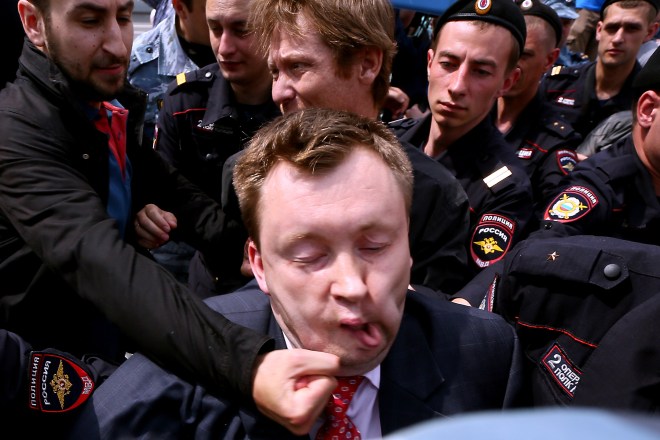
Yesterday the advocacy group All Out delivered a 320,000-signature petition to the International Olympic Committee urging it to condemn Russia’s crackdown on gay people. Stephen Fry released a letter calling for a boycott of the 2014 Sochi Olympics, saying that Putin “is making scapegoats of gay people, just as Hitler did Jews” and comparing the event to the 1936 Olympics in Berlin:

Putin is eerily repeating this insane crime, only this time against LGBT Russians. Beatings, murders and humiliations are ignored by the police. Any defence or sane discussion of homosexuality is against the law. Any statement, for example, that Tchaikovsky was gay and that his art and life reflects this sexuality and are an inspiration to other gay artists would be punishable by imprisonment. It is simply not enough to say that gay Olympians may or may not be safe in their village. The IOC absolutely must take a firm stance on behalf of the shared humanity it is supposed to represent against the barbaric, fascist law that Putin has pushed through the Duma.

LZ Granderson thinks the comparison to the Berlin Games is apt:

In talking about the 1936 Olympics, I do not equate what is happening in Russia to what happened to Jewish people during World War II. I just want to remind you that the Holocaust did not happen overnight. It was subtle. Surgical. In silence. These new anti-gay laws are disturbingly similar to the anti-Semitic Nuremberg laws Hitler passed before the 1936 Olympics. And with the Pew Institute finding 84 percent of Russians believe society should reject gay people, perhaps some saying they object to gays for fear of arrest, the world should question how far Russia intends to go.

Meanwhile, runner Nick Symmonds became the first US. Olympian to publicly criticize Russia’s “gay propaganda” law this week. However, in stark contrast to Fry, Symmonds said he wouldn’t raise the issue in Russia:

I will say now what I said before the 2008 Olympic Games in Beijing, China, when people asked me how I felt competing in a foreign country with questionable human rights standards: The playing field is not a place for politics.

In a world rife with never-ending political battles, let the playing field be where we set aside our differences and compete for national pride and the love of sport.  If I am placed in a race with a Russian athlete, I will shake his hand, thank him for his country’s generous hospitality, and then, after kicking his ass in the race, silently dedicate the win to my gay and lesbian friends back home. Upon my return, I will then continue to fight for their rights in my beloved democratic union.

Meanwhile, ESPN’s Jim Caple thinks a boycott would be counterproductive:

Skipping these upcoming Olympics would only alienate and anger the very people in Russia the boycott supporters are trying to influence. It’s somewhat like Dan Savage’s misguided call to boycott Stolichnaya vodka, which is produced in Latvia, not Russia. The people such a boycott will hurt are not the Russians with anti-gay views but the innocent workers in what was once an oppressed Soviet republic. … If Russian President Vladimir Putin opposes gay rights, let LGBT athletes from every nation go and beat his athletes in competition.

Along similar lines, last week Frida Ghitis urged athletes to show up and “turn the Winter Games into the gayest games in history”:

Let the Russian police, if they want, arrest every athlete, every coach from Europe, North American, Australia and other forward-looking countries – that includes you, Uruguay, Brazil, Mexico and South Africa. The teams should march during the opening ceremonies brandishing rainbow flags, holding hands, proclaiming that every one of them supports equal rights for gay and lesbians — in Russia and everywhere else. Make it an “I am Spartacus” moment for the world. Let Putin arrest them all.

(Photo: Unknown anti-gay activist hits Russia’s gay and LGBT rights activist Nikolai Alexeyev during an unauthorized gay rights activists rally in central Moscow on May 25, 2013. By Andrey Svitailo/AFP/Getty Images)


The Economics Of Wife-Beating

Looking at Europe, Olga Khazan highlights one silver lining to upticks in male unemployment – a significant drop in domestic violence toward females:

The results showed that the 3.7 percentage point increase in male unemployment during the time caused a decline in the incidence of domestic abuse by 12 percent. Meanwhile, the 3 percentage point increase in female unemployment increased domestic violence by 10 percent. The correlation held for all kinds of abuse, but it was stronger for physical violence.

Though it’s not proven, the theory that Jonathan Wadsworth, a University of London economist and study co-author, suggested to explain the phenomenon is that when male unemployment in an area is high, more men — having either lost their jobs or fearing job loss — are likely to try to stick with their partners in order to ensure some semblance of income stability. And to keep their partners from leaving them, those that have abusive tendencies are more likely to abstain from violent behavior. Meanwhile, when female unemployment is high, women might similarly be less likely to leave men who are predisposed to abuse, and so reports of domestic violence would rise.

Meanwhile, Papa Kwaku Osei notes that in the US, the current dip in labor force participation is likely due to millennial women turning toward college.

The Puritanism Of Progressive Parents, Ctd

The thread continues:

Thanks so much for posting my response.  It’s one of the many things I truly appreciate about your site, the airing of both sides. You posted an update from another reader immediately Fourpetal_St._Johns-wort_(Hypericum_tetrapetalum)_(8460154764)after mine:

True, some herbs have medicinal properties, but unless one has run a double-blind test, then you truly don’t know if the herbs do anything beyond the placebo effect. The US government has spent over a billion dollars trying to prove non-Western medical claims, and guess what? The herbs and other items very rarely do anything positive, occasionally show mild effects, and often have undocumented side effects.

I have to take issue with this comment as well.  I happen to work in the dietary supplement industry, specifically selling botanical extracts in raw material form to dietary supplement manufacturers and contract manufacturers.  I’ve worked for some of the largest German Botanical Extract companies that are at the forefront of research for botanical medicines.

I’m all for running double-blind tests, but the design of the study is incredibly important.  I’ll give you an example: St. John’s Wort.

You may recall in the late 1990’s that St. John’s Wort was discussed as an exciting way to treat depression and anxiety.  Historically it’s been used to treat various nerve conditions and disorders, as well as mild to moderate depression.  There was a huge explosion of sales of St. John’s Wort after Barbara Walters did a 20/20 special on the herbal extract that aired in early July of 1997.

Naturally the NIH decided to do it’s own double-blind placebo controlled study, but they decided in spite of little evidence, to research St. John’s Wort for treatment of moderate to severe depression.  However, most materia medica’s and botanical monographs for St. John’s Wort suggest it for mild to moderate depression.  So the study moved forward, and guess what? The results showed that it gave little to no effect for treating severe depression.  This was no shock to those of us in the industry but the general public and media response to the news was that yet another herbal medicine was proven to be ineffective.

Another great example is to think of the deaths we have in the U.S. each year by those who forage for wild mushrooms.  You inevitably hear about someone who picked and ate the wrong species and dies from liver toxicity.  In Germany they use an IV treatment of milk thistle extract, which is kept stocked in hospitals, and their outcomes are much better.  There have been a few instances of doctors in the U.S. using the IV therapy with promising results and there have been discussions with the FDA to approve the use of this therapy.

I’d be much more inclined to listen to studies on botanicals that come out of Europe because they actually use botanical medicine in their medical system much more than we do in the U.S., and their herbal therapies are often treated as drugs requiring a prescription.  They also integrate herbal therapy into their medical schools so medical doctors know how to properly use them and treat their patients.

Here’s the thing.  Botanical/herbal medicines are a great when used preventatively, or as a first line of defense against common illnesses and ailments, if you know how to use them properly and use them at the required dose.  If they don’t do the trick, you bring out the big guns, prescription medicines and more invasive surgical interventions.  I’m starting to sound like a broken record, but to take the either/or approach is to ignore centuries of successful historical use for botanical/herbal therapies.

(Photo of St. John’s Wort via Wikimedia Commons)

Quote For The Day

“Dogs are minor angels, and I don’t mean that facetiously. They love unconditionally, forgive immediately, are the truest of friends, willing to do anything that makes us happy, etcetera. If we attributed some of those qualities to a person we would say they are special. If they had all of them, we would call them angelic. But because it’s ‘only’ a dog, we dismiss them as sweet or funny but little more. However when you think about it, what are the things that we most like in another human being? Many times those qualities are seen in our dogs every single day — we’re just so used to them that we pay no attention,” – Jonathan Carroll.

The Most Faked Type Of Art

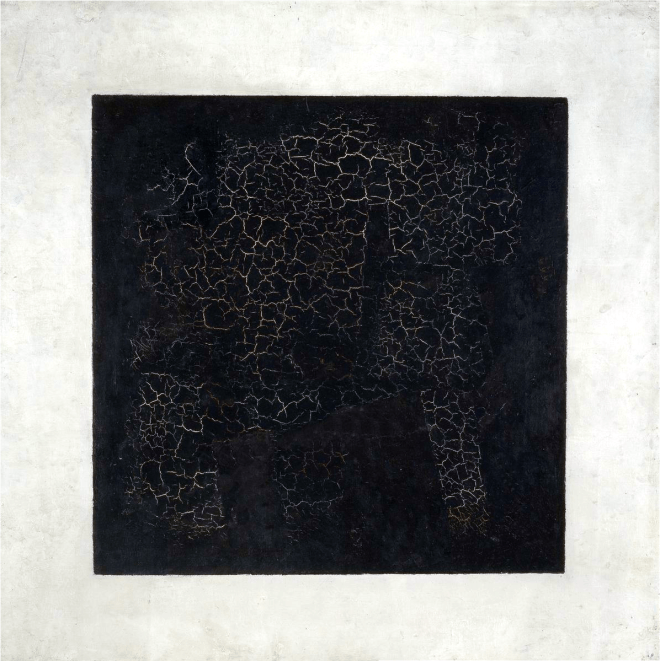
Чёрный_супрематический_квадрат._1915._ГТГ

Daniel Estrin says it’s Russian modernist painting:

Art works of the Russian avant-garde, the transition period between Imperial Russia and the Soviet Union which gave birth to painters like Kandinsky and Malevich (some also group Chagall into the genre), are the hottest category of paintings on the international forgery circuit. Lists of painters’ works are incomplete, and a number of lost paintings from the period have resurfaced, making it easy to claim you’ve found a Kandinsky in your grandmother’s attic. What’s more, it turns out it’s easier to mimic the squiggly lines of Russian avant-garde works than to copy the Mona Lisa. And it’s still possible to buy the same exact canvas and paints that Russian avant-garde artists used.

Another reason for the forgeries: demand for Russian modernists has skyrocketed since the fall of the USSR, according to Amar Toor:

When Joseph Stalin came into power in the mid-1920s, he cracked down on Malevich and other artists, excoriating their work as “bourgeois” and confiscating many paintings. Once Russia liberalized its economy in the 1990s, Malevich and his contemporaries assumed a more lofty status among Moscow’s ultra-rich oligarchs, and prices shot skyward. By [auction house director William] MacDougall’s estimates, prices for avant garde works have increased by “800 or 900 percent” over the past 20 years.

(Photo: Kasimir Malveich’s “Black Square on a White Ground”)

Obsess For Success

Joshua Kendell views obsessive-compulsive behavior as a productive trait held by many of America’s iconic innovators:

Many people will say, “Oh, I have to clean up my kitchen now because I have a little OCD.” But by “obsessive,” I don’t mean people who have obsessive-compulsive disorder (OCD). OCD can be incapacitating, and those who suffer from this disorder are unlikely to start Apple or fly across the Atlantic on a piece of wood like Charles Lindbergh. These people are haunted by thoughts that just won’t go away; someone with OCD might be constantly worried that the house will burn down; as a result, he or she might be afraid to go out even after checking a thousand times that the burner on the stove is off.

The icons covered in my book are saddled (or blessed) with a related condition called obsessive-compulsive personality disorder (OCPD). While the obsessions and compulsions in both disorders can revolve around the same things—such as cleanliness or order—OCD is an anxiety disorder and OCPD is a character disorder. Rather being impaired by their intrusive thoughts, those with OCPD celebrate them. Like Steve Jobs, Henry Heinz prided himself on his company’s clean factory; for decades, his plant in Pittsburgh was a must-see destination for tourists. My icons were productive obsessives; they found a way to channel that which they couldn’t stop thinking about into some spectacular achievement. As a boy, Ted Williams thought of nothing else but hitting. As he once said, “When I wasn’t eating or sleeping, I was practicing my swing.”