Chewing Over Executive Action On Immigration, Ctd

A reader provides “some perspective from a Midwestern family”:

Our college age son is expecting a baby and his 19-year-old girlfriend is undocumented. She has lived in the USA since she was four and is a high school graduate. She’s bright, mature, goal oriented, and resilient – but has had little opportunity to advance economically or attend post secondary school due both to her undocumented legal status and the fear that has prompted her parents to limit their overall assimilation. Being undocumented, neither she nor her parents have ever held jobs providing health insurance or had bank accounts. She’s grown up moving continually as her parents follow work.

Being undocumented, she can not obtain even unsubsidized health insurance through the ACA. Being undocumented she can not obtain a drivers license/state ID or credit. Should she live in our home state of Indiana, she is ineligible for any Medicaid coverage for prenatal or post natal medical care. In California, her home state, where my son now lives, MediCal provides basic prenatal care but only for 30 days at a time – so, our son takes a day off of work (unpaid) every month to escort her to a social service department so she is approved for the next 30 days of prenatal care. She is eligible for WIC but her family can not apply for food stamps.

Both my husband and I have always believed that we live in a big country with room for everyone, and morally we believe this teenager has the right to this nation’s opportunities just as our ancestors did – but it’s been an abstract position until now, and our position was never the norm in our Midwestern suburban community.

Now we’re terrified to think that this lovely girl could be deported pregnant with our son’s child, or that as a parent, she could be consigned to living on the scraps of a menial labor force. The issue is no longer abstract, as I’ve spent the last several weeks researching immigration law and the benefits of President Obama’s 2012 executive orders affecting Dreamers. We’re facilitating and paying for our son’s girlfriend’s DACA application (not an inexpensive or easily documented endeavor), and after the baby arrives, we will retain an immigration attorney to initiate the long and uncertain process for her to perhaps acquire ultimate residency.

My husband I have been slapped by the realization of what being undocumented means to our family. In the last few months, we’ve frequently wondered how many American babies will be born to mothers without access to reasonable prenatal care? How much will state Medicaid programs spend on NICU support for unnecessarily premature infants? How much will school systems spend for special education programs to support children born with preventable learning or developmental disabilities? How many Dreamers grow up in the U.S. without memory of their home countries but are denied access to state tuition at public universities, or just simply can’t be hired for jobs that provide a basically livable wage and dignified entry onto the labor force? How much of a contribution to social security and Medicare would an additional 10 million wage earners provide today? In 20 years as their often large families exponentially hit the payrolls?

I suspect that our family represents the precipice (at least in our corner of the cornfield) of what will eventually impact many Americans who are currently hostile to immigration reform. Because their kids, like our kids, are meeting, marrying, and socializing with a hugely diverse generation of peers. And when things hit home and people open whatever closet door they’ve forced others into, light seeps in.

Another reader:

I am a native-born American.  Over the years as a pastor, I’ve worked with any number of immigrants from several different countries. Republican rhetoric is always about securing the border and what to do about the “illegals.” They seem not to realize the immigration system is SO MUCH MORE than border security and people in the US without permission.  And our entire immigration system is badly broken. Refugees are immigrants.  International students are immigrants.  International business persons are immigrants.  Foreign-born spouses of US citizens are immigrants.  Foreign-born family members of US citizens are immigrants.

A member of my church is married to a French national.  They were married in the US.  He wants to represent his father’s business in the US.  It will take two years and hundreds of dollars in fees for them to be considered for a visa for him.  Her parents are working on it from this end and they are so frustrated.

As I understand it, a significant percentage of “illegals” are students and tourists who have overstayed their visa.  Could we not establish a readable card issued upon arrival or at a consulate?  Set up card readers in post offices, libraries, public buildings.  Once a week you have to swipe your card.  The reader reports your location to a regional or national monitoring center.  It also tells you how many days you have left, or gives instructions about contacting INS/ICE.  This is not difficult. But as long as immigration is a way to scare people and raise money for your campaign, we won’t have a solution.

My favorite immigration story is from a friend in Belgium.  He met a man in Oregon over a social network website and they fell in love.  My Belgian friend visited the US to see his love once a quarter and stayed for a month.  On the third trip in a year, the immigration officer at the airport began to question him.  It appeared to the officer that my friend was coming to conduct business on a tourist visa.  My friend was concerned that if he revealed that it was a male-male relationship, he would not be allowed in.  He tried two or three not-quite-false-but-not-full-disclosure explanations.  They were not working.  Finally he told the officer he had fallen in love with a man in Oregon.  All these trips were to see him and make plans for him to move to Belgium where they could get married.  He waited.  The officer stamped his passport, handed it back, and said “Good luck to you both.”

They are now married and living in Brussels.  My Belgian friend simply cannot move his business to the US, even if they wanted to.  The immigration hurdles are simply too high.

Another lends his expert input:

I’m an immigration attorney. We’ve all been discussing much of what POTUS may do. Here are my two cents:

(1) Whatever Obama does, it will necessarily be very very limited. In essence, all he can do for the undocumented is formally state that he’ll defer acting to remove a certain class of such individuals.  He is free to change his mind, or a future president is free to reverse that order.  That’s not much in the way of legal protection, especially since to benefit from this decision, an undocumented immigrant must present themselves to the government.  Imagine if the Mayor of New York said “for a period of two years, we’ll not prosecute anyone who engages in casual acts of prostitution, provided this person comes forward and registers with us.”

(2) If the GOP truly is outraged at Obama on the grounds that he is abusing his authority and should be enforcing the law much more, there is an “easy” fix.  Just pass a bill which (a) details the enforcement they want and (b) appropriates the money for it.  Then Obama has no more discretion. But I’m not holding my breath …

My complicated views on the matter here and here. Blogger input here.

Trapped By Trash, Ctd

4-8-nrc-evaluates-nasas-orbital-debris-programs

Boer Deng updates us:

Fretting over space junk is universal among people who care about satellites or space travel. Even partisans in Congress agree that it is a problem. “The scientists who predicted climate change started the same way I did,” [space-junk expert and astrophysicist Don] Kessler muses. “They were thinking about what would happen if we keep dumping things into the air around us. I was thinking about what happens if we do it in space.”

Yet space pollution talks have not been poisoned by political division.

Rep. Dana Rohrabacher, a Republican from California and a climate change skeptic (“CO­2 is not a pollutant,” he has opined), has grimly warned that space pollution is “getting to a point of saturation now, where either we deal with it or we will suffer the consequences.” Donna Edwards, his Democratic colleague from Maryland, thinks Congress should devote more money to tracking the detritus.

A plan to clean up space is held back by different kind of political paralysis than partisanship. In the United States, three separate agencies handle licensing for various aspects of a commercial satellite launch. Another set of rules governs military activities, with yet another for civilian government research. Who has authority to enforce rules or mete out punishment is murky. Moreover, some Defense Department satellite orbits are classified, as is the reason the department deployed an anti-satellite weapon of its own in 2008 after China’s test the previous year. Any discussion about space regulation, such as one held during a meeting of the House Committee on Science, Space, and Technology in May, is filled with bureaucratic verbs that end in -ize (legitimize,compartmentalize, theorize). Too much remained unknown, lawmakers concluded, so they weren’t “ready to legislate yet.”

Previous Dish on space junk here.

(Image by NASA)

Is Screen-Time Bad For Babies?

Lisa Guernsey reads through a guide on the subject:

For years, the [American Academy of Pediatrics] has told parents to avoid using screens with children younger than 2. It’s a recommendation based on an understandable concern that parents will substitute screen-watching for the warm, real-world interactions children need. But it doesn’t allow for the possibility that cuddle moments might be possible with a screen on the lap.

Worse, the “no screens” dictates have led to confusion.

As a journalist who has spent a decade reviewing research on screentime and young children, I have spoken with families across the country about how they use technology with their children. Parents have told me about exhausting maneuvers they have attempted to keep their baby’s head turned away from screens when their older children are watching. One mother in Portland, Ore., was visibly upset when she approached me after a public forum on the subject. She and her 1-year-old had been Skyping with her mother in China, and she desperately wanted to keep doing so because they all loved the interactions, but she worried that something emanating from the screen would harm her baby. In fact, a 2013 study in the research journal Child Development shows the opposite: Webcam-like interactions with loved ones can help young children form bonds and learn new words.

The Best Of The Dish Today

And so the branding begins …

Meanwhile, a quip from the in-tray about this post:

So, in 2014, it’s “lumbersexual” and “bears”. In 1991, when I was in Montana, it was just called “Missoula”.

And another reader who, I think, may be onto something:

Do you feel like we’re in the midst of something big, and potentially ugly, in the ‘gender wars’ you referenced in today’s post?

I do.

The video made by FckH8 with little girls screaming the F-word, the video of the woman getting harassed in New York, #GamerGate, and now, a scientist’s loud bowling shirt — this has all gone viral in the past month. Add in the California rape laws and the fact that the midterms gave us an enormous gender discrepancy between the parties, with the problems Republicans are having with women perhaps getting overshadowed by the problems Democrats are having with men, and I feel like something big is brewing.

To my eyes, I think the ‘gender wars’ are heating up primarily because women have outpaced men in the economic recovery following the 2008 meltdown. Many men don’t want to be told they are systematically oppressing women when they see women doing so much better than men in school and the workplace.

Among millennials in particular I feel like men have had it with the message that they are oppressors in a patriarchal society, which is a message they have heard in one form or another since their first day of kindergarten, only to reach adulthood and find the women all around them better equipped to deal with the modern world. They push back, and that angers the feminists who have had the language of victimhood all to themselves for decades now.

I foresee these ‘gender wars’ only getting hotter, perhaps even becoming a defining feature of the second decade of the 21st century.

Which means some, er, lively Dish in the years to come.

Today, I gave some air to the arguments that Obama’s possible deferral of deportations is indeed unprecedented and we offered a snapshot of the debate as it now stands; suggested some common ground in the gender wars; and declared the arrival of lumbersexuals as the triumph of the bears. We took stock of Obamacare’s continuing success; posted some “bad kids jokes“; and appreciated the horniness of the Victorians.

The most popular post of the day was Gruberism and Our Democracy, Ctd, followed by my post on lumbersexuality.

Many of today’s posts were updated with your emails – read them all here.  You can always leave your unfiltered comments at our Facebook page and @sullydish. 23 more readers became subscribers today. You can join them here – and get access to all the readons and Deep Dish – for a little as $1.99 month. One long-time holdout writes:

Just wanted to drop a note and say the guilt finally got the better of me; I’ve paid my 25.00 and can sleep easy at night now. Thank you for doing what you do, and I hope you keep doing it for years to come.

See you in the morning.

Male Culture In The 21st Century

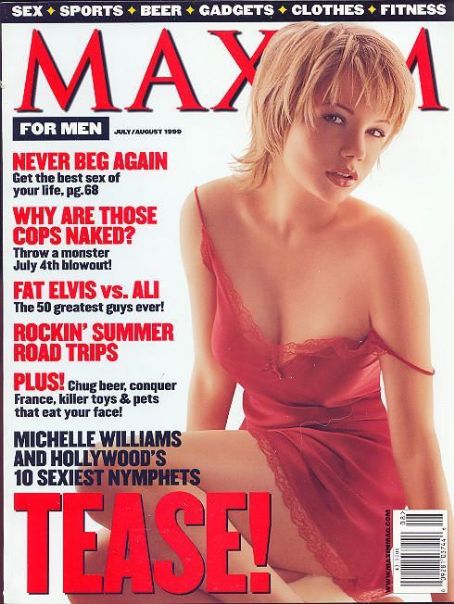
Perhaps not coincidentally this week, in the wake of gamergate, The New Republic, as part of its 100th anniversary, has republished my June 2000 essay, “Male Culture Should Be More Than Beer, Sex, and Cars”. After bemoaning the often sexist tropes promoted in glossy men’s magazines, I argue:

The notion of the “gentleman,” or indeed any notion of masculinity attached to gentility, has almost vanished from the cultural air. What happened, one wonders, and why?

I guess you could start by observing that many areas of life that were once “gentlemanly” have teasesimply been opened to women and thus effectively demasculinized. A college education, for one thing, along with all the journals, books, and conversations that go along with it, is now thoroughlyand rightlyintegrated. Education is no longer a function of becoming a man but a function of becoming a nongendered citizen. There are whole swaths of public lifebusiness, politics, sports, and so forththat once inculcated a form of refined masculinity but are now unsexed. Even military schools and seminaries, once the ultimate male bastions, have thrown open their doors to women.

I’m not going to quibble with this. Why should I? Greater opportunity for women is probably the most significant gain for human freedom in the last century. But with this gain has come a somewhat unexpected problem: How do we restore a sense of masculinity that is vaguely civilized? Take their exclusive vocations away, remove their institutions, de-gender their clubs and schools and workplaces, and you leave men with more than a little cultural bewilderment. The only things left that are predominantly malesex with women, beer, gadgets, sex with women, cars, beer, and more gadgets, to judge from men’s magazinestend to be, shall we say, lacking in elevation.

A certain type of feminism is, I think, part of the problem.

By denying any deep biological or psychological difference between the sexes, some influential feminists refuse to countenance any special treatment for men and boys. They see even the ethic of the gentleman as sexist and regard the excrescences of the current male pop culture as a function of willful hostility to women rather than the clumsy attempt to find somethinganythingthat men still have in common. So, while women are allowed an autonomous culture and seem to have little problem making it civilized, men are left to their own devices, with increasingly worrying results.

Take a look at education. American boys are now far behind girls in high school. As [Christina Hoff] Sommers points out in her book [The War Against Boys], the Department of Education reports that “the gap in reading proficiency between males and females is roughly equivalent to about one and a half years of schooling.” The gender gap in American colleges is now ten percentage points55 percent of students are women and 45 percent are menand growing fast. Yet any attempts to address this problem with single-sex classes or schools for boys, for example, meet with ferocious opposition and more often than not get struck down in the courts. The more extreme examples of this ideology come in the ludicrous attempts to police gender stereotypes as early as kindergarten, even when those “stereotypes” conform to the way little boys and little girls have naturally interacted, or not interacted, for millennia.

You can understand how we got here, of course. For far too long, girls and women were second-class citizens, marginalized, frustrated, punished, and denied the possibility of advancement. But a visit to any American college campus today will show how far we have come from those pernicious days. Instead, we are arguably at the beginning of a different crisisa crisis of the American male. Until we find a way for men to chart a course that is not dependent on the subjugation of women and yet is unmistakably their own, that crisis will continue.

And the beat goes on …

Yglesias Award Nominee

“The current climate of McCarthyism within some segments of feminism and the left is so ingrained and toxic that there are active attempts to outlaw some views because they cause offense. Petitions against individuals appear to be a recent substitute for political action towards the root causes of misogyny and other social ills … The “ban this sick filth” approach is starting to look more like censorship than progressive politics. Political protest and heated debate has been replaced with a witch-hunt mentality …

It is hugely important to hold abusive men to account, but we feminist campaigners have learned that the state allows men to perpetrate individual crimes, and have therefore tended to focus on making root and branch change. Lately we appear to have gone backwards. It is as though we have lost the strength and confidence to effectively challenge institutions.

Moral superiority and “call out” culture has trumped political activism. Feminists have a proud history of taking state institutions and corporations to task. It would seem this is being lost in a sea of vitriol. We built this movement on a desire and willingness to question and challenge old assumptions and truisms. We are in danger of becoming autocrats who would rather organise a pile-on than try to change systems. The life blood of feminism is in danger of becoming bile,” – Julie Bindel, The Guardian.

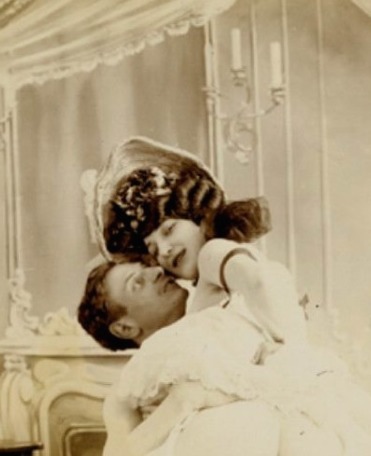
Those Victorians Weren’t So Prudish

Historian Fern Ridell would have you know that they enjoyed rather spirited sex lives:

A book called The Art to Begetting Handsome Children, published in 1860, contains a tumblr_mtomnfqdja1qzi9tbo1_500detailed passage on foreplay, and shows us that, for the Victorians, sex, pleasure and love were concepts that were universally tied together. In A Guide To Marriage, published in 1865 by the aptly named Albert Sidebottom, the advice to young couples exploring their relationship for the first time is that “All love between the sexes is based upon sexual passion”. This is something I’ve come across time and again in researching Victorian attitudes to sex: sexual pleasure, and especially female sexual pleasure, really mattered. But we seem incapable of seeing women in the Victorian period as anything other than sexually passive, a gender so disconnected from their bodies that they had to be stimulated by the inventions of men. This just isn’t true. From the erotic life of courtesan Cora Pearl, to the romantic female relationships of Mary Benson, wife of the Archbishop of Canterbury, Victorian female sexuality was just as expressive and expansive as it is today.

(Cropped image of Victorian porn, via the very NSFW tumblr “Those Naughty Victorians“)

There But For Fortune Go You Or I …

William McPherson describes how he became impoverished and what it’s like:

If you’re poor, what might have been a minor annoyance, or even a major inconvenience, becomes something of a disaster. Your hard drive crashes? Who’s going to pay for the recovery of its data, not to mention the new computer? I’m not playing solitaire on this machine; the hard drive holds my work, virtually my life. It is not a luxury for me but a necessity. I need dental work. Anybody got $10,000? Dentists are not a luxury. Dental disease can make you seriously ill. Lose your cellphone? What may be a luxury to some is a necessity to me. Without that telephone and that computer, my life as I have known it would cease to exist. Not long after, so would I. I am not eager for that to happen. Need to go to a funeral hundreds of miles away? Who pays for the plane ticket? In the case of the funeral, my nephew paid for the plane ticket. My daughter and son-in-law paid for the dental work.

Sometimes, I find it deeply humiliating that I am dependent on such kindnesses when I would prefer that the kindnesses flow the other way. Most of the time, though, I am just extremely grateful for the help of family and friends. It’s not so much humiliating as it is humbling, which is a good thing.

I am ashamed to have gotten myself into this situation. Unlike many who are born, live, and die in poverty, I got where I am today through my own efforts. I can’t blame anyone else. Perhaps, it should be humiliating to reveal myself like this to the eyes of any passing stranger or friend; more humiliating to friends, actually, some of whom knew me in another life. Most of my friends probably don’t realize or would rather not realize just how parlous my situation is. Just as well. We’d both be embarrassed.

Dreher sympathizes:

As McPherson concedes, he didn’t take as seriously as he ought to have done the importance of saving, investing wisely, and living conservatively. Though he was never rich, the key factor here seems to be his inability in the past to imagine what poverty would be like, and that it would be a possibility for someone like him.

I think this is me. I mean, I have been guided by a good financial planner for the past seven or eight years, and through conservative investing and saving, have built up a decent amount of financial security. But I live in fear that I’m missing something, and through my own extravagance — hey, why not buy those expensive pork chops for that French dish you want to cook this weekend? — I will have left the gates of the city open at night, and the enemy will come in. I read that piece by William McPherson and think: yep, that could easily be me one day.

Grubergate Still Going Strong

Fox News continues to cover the ACA architect’s controversial remarks:

Gruber Mentions

Cillizza tries to understand Republicans’ obsession with Gruber:

Nothing makes conservatives more angry than the belief, which they think is widespread among liberals, that they are stupid. That if only conservatives read as much as the left or had the intellectual capacity of the left, they would see things the way the left sees them.

Jonathan Cohn insists that the wool wasn’t pulled over Americans’ eyes:

Did the Obama Administration engage in some creative salesmanship of its own?

Of course it did. And in one very regrettable instance, it misled the public about how the plan would work out. Obama repeatedly told people, without qualification, that they could keep their insurance if they liked it. In fact, many people who bought insurance their own and held plans that didn’t live up to the new law’s standards would have to give them up.

Most ended up learning this in the worst possible way: When a cancellation notice from an insurance company arrived in the mail last fall, and without a working Obamacare website to check out their new options. These people constituted a small number of people, relative to the whole population, and it’s still not clear how many lost plans because insurers seized the moment to drop less profitable products in the market. Had Obama merely said “most people” could keep their plans, or “if you have a good plan already, you can keep it,” he would have been fine. He didn’t.

But accusations that Obama and his allies systematically misrepresented the law in other important waysor hid its key features from the publicdon’t gibe with the historical record. The official debate over its provisions lasted approximately a year, the unofficial debate stretched back even farther than that, and during that time analysts pored over details and partisans on both sides argued over virtually every aspect.

Ezra adds that Gruber “was really, really frustrated by Washington’s games”:

He was really annoyed at politicians framing things and writing legislative language to support their press releases rather than the final law. As involved as he’s been in the policymaking process, Gruber is, first and foremost, an MIT economist. And he’s got little patience for Washington’s tendency to take clean, straightforward policies and complicate them in the name of politics. ….

But Gruber did something stupid here: he tried to look knowing and clever to his audience by dismissing the intelligence of voters. His actual point there is ridiculous. The idea that most voters were paying close attention to subtle framing decisions around risk pooling or excise taxes or even mandates is absurd. Voters aren’t dumb. They just don’t follow politics closely. When Washington tries to trick people, it’s almost always trying to trick itself.

On the other side of the debate, Peter Suderman uses the administration’s spin against it:

Responding over the weekend to questions about Gruber’s statements, President Obama pushed back on Gruber’s role, labeling him “some adviser who was never on our staff.” Gruber’s remarks, Obama said, were “not a reflection on the actual process that was run” when crafting and passing Obamacare.

These reactions from Obama and others were, for the most part, technically true—but nonetheless misleading about Gruber’s influence on the law. At a minimum, they were not fully transparent about his role. In attempting to downplay Gruber’s remarks, Obamacare’s supporters had instead proved him right.

Earlier Dish on the story here and here.