The Data Behind Radicalization

Amelia Thomson-DeVeaux passes along an effort to better understand the roots of extremism:

They’ve amassed a data set of more than 1,500 people radicalized to violent and non-violent extremism in the United States since World War II and put them into three categories: Islamist, Far Right, and Far Left. The database — which hasn’t been released publicly — has detailed information about the terrorists’ lives and backgrounds, including criminal records, social networks and histories of abuse. The researchers believe it’s among the first of its kind.

The results:

The preliminary findings of the study already have yielded some basic demographic patterns about which extremists in the U.S. are most likely to resort to violence.

Compared to violent domestic terrorists on the Far Left and Far Right, Islamists stand out. They’re more likely to be young (between 18 and 28 years old), unmarried and unassimilated into American society. They are also more likely to be actively recruited to an extremist group.

But in other important ways, Islamist extremists in the U.S. as a whole — violent and nonviolent — are not so different from other extremists. People in the three groups were equally likely to have become radicalized while serving time in prison — complicating the narrative that Muslim prisoners are unusually likely to commit to extremism from behind bars — and to be composed of individuals who have psychological issues, are loners, or have recently experienced “a loss of social standing.”

“Social networks are incredibly important to radicalization, but that’s not unique to Islamists at all,” [researcher Patrick] James said. “There’s almost always a facilitator — a personal relationship with a friend or family member who’s already made that leap.”

Throwing More Money At Students Won’t Help, Ctd

School Spending

Or at least not much, according to McArdle: 

That black bar represents total spending, and as you can see, we spend more on education than most of our peers, not less. To be sure, that is partly driven by our very high spending on tertiary education, aka college. But we spend more than most of our peers at most levels, not just on college.

She admits that “there is obviously an inequality problem in our schools”:

Should we fix the issues with those schools? Absolutely – and doing so might mean spending more money. But that doesn’t mean that we need to increase the overall level of educational funding. It means that we need to identify ways to improve those underperforming schools, then find out how much more it would cost to implement those programs. It is just as likely that improvements will come from changing methods and reallocating resources as that they will require us to pour more money into failing institutions.

However, Max Ehrenfreund flags new research indicating that more funding does make a significant difference:

Beginning 40 years ago, a series of court rulings forced states to reallocate money for education, giving more to schools in poor neighborhoods with less in the way of local resources.  … A new study on those who went to school during the school-finance cases a few decades ago found that those who attended districts that were affected by the rulings were more likely to stay in school through high school and college and are making more money today.

The authors, Kirabo Jackson and Claudia Persico of Northwestern University and Rucker Johnson of the University of California, Berkeley, released a revised draft of their as-yet-unpublished paper this week. The benefits were most obvious for students from poor families. They found that a 10 percent increase in the money available for each low-income student resulted in a 9.5 percent increase in students’ earnings as adults. A public investment in schools, they wrote, returned 8.9 percent annually for a typical pupil who started kindergarten in 1980.

Previous Dish on the subject here.

How Netanyahu Is Harming Israel

Michael Koplow spells it out:

It’s one thing to blame Netanyahu for bad relations with a president who will be out of office in two years; one can argue that this is a problem that will resolve itself with no residual effects. But if you view Netanyahu’s machinations in a larger context, by constantly and openly favoring the Republican Party – either himself or through Ron Dermer’s actions in Washington – he is putting Israel itself at long term risk by helping make it a wedge issue in American politics.

I constantly argue that Israel’s primacy of place in the U.S. is due to popular opinion, but the caveat there is that this only works when it is bipartisan popular opinion. Netanyahu’s actions, where he sides with the Republicans in a very exaggerated manner, are having a serious effect and eroding traditional cross-spectrum popular support for Israel, and once that passes a point of no return, Israel is going to have serious problems. I don’t place the blame for wavering support in the Democratic Party for Israel solely at Netanyahu’s feet by any means, but he is a big part of the problem and has stoked the fires at many points. The GOP has an obvious political interest in making Israel a full-fledged wedge issue and using it as a cudgel to hammer the Democrats as often as it can. The burning question for me is why Netanyahu is so willing to allow himself to be used in furthering this outcome when it is so obviously not in Israel’s interests.

What The Hell Is Happening In Yemen, Ctd

[youtube https://www.youtube.com/watch?v=IbU2rW37zKU&start=6&end=132]

Yesterday the Yemeni government resigned after essentially being under siege by the Houthi rebel group. Jamie Dettmer catches us up:

The straw that broke the camel’s back was the rebels’ failure to hand over one of the president’s senior aides, who had been snatched over the weekend and whose release was a key provision in the deal. The collective resignation came after days of turmoil in the Yemeni capital, Sana’a, where rebels stormed the presidential palace and then bombarded and surrounded the house [President Abdu Rabu Mansour] Hadi had taken refuge in. …

The stage now seems set for the outbreak of full-fledged sectarian civil war, one that al Qaeda in the Arabian Peninsula, the terror network’s most dangerous and capable affiliate, is likely to exploit for its advantage.

Adam Baron delves further into the chaos:

In the formerly independent South, longstanding calls for secession have grown even louder. Across the country, frustration seems mounting – both at the country’s power brokers and at the international actors that, until recently, had hailed the country’s political process as a model transition to democracy.

The next few days will unquestionably be crucial.  At writing time, Houthi fighters reportedly have the homes of many members of the now-resigned cabinet under siege. All eyes are set on Sunday’s meeting of the two houses of the Yemeni parliament, which could very well reject the president’s resignation, sending the country into further uncertainty. Indeed, little remains clear at the moment, except for the fact that the country is likely facing its most crucial juncture since the overthrow of the Mutawakkilite Monarchy on 26 September, 1962.

Nader Udowski points at Iran:

[I]t is not clear if the Huthis can be regarded as an Iranian proxy in the same way as Shia militias in Iraq and Syria. But they now depend on Iran to solidify their position in the country’s capital.

Events in Sanaa could most likely send the country into a full-fledged civil war, threatening a Syria-like disintegration of Yemen with different sects, tribes and groups fighting each other. The Zaydis, now in power in Sanaa, constitute only a third of Yemen’s population of 24 million, which is majority Sunni Muslim, in a predominantly tribal society. The Quds Force is expected to implement its successful Syrian and Iraqi tactics in Yemen: significant arms shipment; financial assistance; deployment of advisers and senior officers; providing training and strategic planning; and transforming some 50,000-strong Huthi fighting force into semi-official Shia militia to take the lead in military and security operations in the coming civil war.

But Bruce Riedel points out “the Zaydis are not Iranian pawns nor partners like Hezbollah. They are an independent force”, and Jeremy Scahill and Casey L. Coombs remind that Iran is a routine boogeyman in the region:

For years, the Yemeni government attempted to inflate Iran’s influence over the Houthis in the hopes of winning U.S. permission to use counterterrorism funds and assistance to fight the Houthis. According to diplomatic cables released by WikiLeaks, senior Bush administration officials consistently rebuffed such requests from the Yemeni government, saying the U.S. government saw the battle against the Houthis as a domestic issue.

Complicating things further, Adam Taylor argues that the conflict isn’t so easily defined along sectarian lines:

Analysts say that the popular appeal of the Houthi insurgency can’t entirely be put down to sectarian factors. In a 2010 RAND Corporation report, the authors noted that “it is a conflict in which local material discontent and Zaydi identity claims have intersected with the state center’s methods of rule and self-legitimation.” That analysis was echoed by Silvana Toska, a Middle East researcher, last year, who noted that the Houthis were supported by “vast numbers of Yemenis who view them as a real opposition to the elites that is untainted by corruption.”

Unsurprisingly, Max Boot believes Obama should have done more to prevent the crisis:

The administration’s policy can be characterized as general lethargy and disengagement punctuated by periodic outbursts of carefully targeted violence. This is a policy that cannot possibly work, and it hasn’t. The administration hasn’t created the chaos that is gripping the Middle East — chaos that is a Petri dish for extremism — but it certainly hasn’t done much to stop it.

But Barbara Slavin reports the US might already be adapting:

[Senior US intelligence official Michael] Vickers, in response to a question from Al-Monitor, stated, “The Houthis are anti al-Qaeda, and we’ve been able to continue some of our counterterrorism operations against al-Qaeda in the past months.” Asked after the public event whether that included lines of intelligence ​to the Houthis, Vickers said, “That’s a safe assumption.”

She also spoke with Yemen expert Charles Schmitz, who elaborated on the potential for US-Houthi cooperation:

Many observers of the Houthis have been taken aback by their Iranian-style anti-US and anti-Israel slogans, which Schmitz rattled off: “Death to America, Death to Israel, Curse the Jews and Long Live Islam.” He said the slogans as voiced by the Houthis date to the 2003 US invasion of Iraq and their efforts to embarrass then-President Saleh by tarring him as an agent of the United States and Saudi Arabia. In fact, Schmitz said, the Houthis have generally not attacked Americans, although State Department spokeswoman Jen Psaki confirmed reports that Houthi gunmen at a checkpoint in Sanaa had fired on a US diplomatic vehicle Jan. 19. There were no injuries, she said.

“They are not terrorists,” Schmitz said. He called the Houthis’ backing of US attacks on AQAP “an alliance of convenience.”

On Swearing, Ctd

Prospero peruses the subject:

Taboo words can survive underlying social change. Church attendance has plummeted over the past few decades in Quebec, but a distinctive clutch of swear-words in the local variety of French are still some of the roughest words in the language: chalice (calisse!) and “host” (hosti), for example. The words remain powerfully charged partly because they are simply learnt as taboo words, and serve a special function divorced from their original context.

Swearing activates a bit of the brain that is used for other kinds of emotional responses like shouting and crying. The reason it is so hard not to swear in front of a child when you stub your toe is that you haven’t consciously processed the words through the same part of the language engine that you would use to explain a maths problem. Studies have even shown that swearing makes physical pain more bearable. …

A last class of words, though not quite as powerful, fill out the picture.

Retarded in America, and spastic in Britain, once respectable medical words, are now unutterable in polite company. Throw in complaints against gay and lame as all-purpose negative adjectives, and the picture is complete. Taboo words have moved from the religious through the sexual and excretory. But in the modern West, the last truly shocking words are those that refer to disadvantaged groups: women, gays, members of racial minorities and those with disabilities. Those liberal newspaper editors who proudly reprinted offensive Muhammad cartoons from Charlie Hebdo out of solidarity with the slain cartoonists would never dream of using the words that slur people from Muslim countries: towelhead, camel jockey, Paki or (take a slow breath) sand nigger. Western taboos now respect neither god nor sex, but they do respect individuals. And this is as it should be.

Except for barbra streisand:

Previous Dish on swearing here and here. Update from a reader:

Prospero didn’t mention Quebec’s finest churchly swear word, Tabarnac (Tabernacle). It has the virtue that it can be drawn out into three long syllables, in the same manner as Muuuu tha fuk. Read all about swearing in the Distinct Society at Wikipedia.

How We Got Sweet On Candy

Reviewing Samira Kawash’s Candy: A Century of Panic and Pleasure, Virginia Postrel traces how the US came around to sweet treats:

In an industrializing America that, like contemporary China, was rife with often-valid fears of adulterated foods, “poison candy” was a favorite story dish_babyruthad of the sensationalist press. … The tales captured the imagination of a public convinced that “when control of food was given over to the factories and machines and chemists, what came out was candy: fake food, deceitful and deadly.”

Candy’s reputation improved after World War I, when lemon drops, peppermints, and chocolate bars were standard military rations. “By the time the war was over,” writes Kawash, “candy was universally embraced as real food, fit for men, women, and children alike.” Aviators, boxing champions, and long-distance runners extolled candy’s virtues as performance food. Early nutrition science equated calories with “food value,” and wrapped candy bars made that value cheap and portable—the perfect lunch for busy people on a budget. By the 1930s, a trade magazine editor recalled in a 1976 interview, “a quarter pound of Baby Ruth and a glass of milk was considered a very substantial, nourishing meal.” (A standard Baby Ruth bar today weighs half as much.)

(Image of vintage ad for Baby Ruth via Samira Kawash)

The Eurozone Battles Deflation

Matt O’Brien describes the European Central Bank’s new $1.3 trillion quantitative easing program:

[T]he ECB will buy €60 billion, or $69 billion, of assets a month—including government, institutional and private sector bonds—and will do so until at least September 2016, or until there’s a “sustained adjustment in the path of inflation” toward their close-to-but-below 2 percent goal. To give you an idea how far away that is, prices are actually falling in Europe—a seriously worrisome sign—with euro-zone inflation currently at -0.2 percent. It’s no wonder that Europe’s economy still has 11.5 percent unemployment and is growing so slowly that it’s not clear whether it’s even gotten out of its last recession.

Cassidy has FAQ on the plan. Why it might not work:

Pessimists say that the E.C.B. has waited too long and allowed the deflationary mindset to become too heavily entrenched. They also point out that interest rates in Europe are already very low, and that, even with the E.C.B. spending sixty billion euros a month on bond purchases, there isn’t much room for rates to drop lower. Given these problems, some analysts think that even Q.E. infinity won’t have much impact. Speaking in Davos on Thursday, Larry Summers, the former Treasury Secretary, said, “It is a mistake to suppose that Q.E. is a panacea in Europe, or that it will be sufficient.”

But he still supports this action:

In the past few months, investors were predicting this move, and they bid down the value of the euro. On Thursday, it dipped under $1.15, and it is likely to fall further. Parity with the dollar is perfectly conceivable. The fall will raise prices inside Europe, which is what is needed when deflation has taken hold, and it will give a boost to European exports, which should help stimulate growth.

Raoul Ruparel doesn’t think it’ll be enough:

The ECB has now used the last tool in its toolbox. For all intents and purposes it has limited wiggle room. There is likely to be some pick up inflation over the next two years – maybe 0.5% to 0.7% (bringing overall inflation to around 1% annually), though some of this was due anyway. But to a large extent the QE programme will do little to boost growth in the Eurozone and may not help those countries most in need of it. The ball is firmly back in the court of Eurozone leaders to implement the serious reform as well as the institutional changes which the eurozone has always needed.

And Paul Wallace has concerns about the way this QE is being implemented:

The council’s decision on QE reflects a compromise. The scale of the programme is bigger than expected. But the trade-off for that is an important breach in the ECB’s usual risk-sharing arrangements, which creates within the very heart of the monetary union the fragmentation it has been seeking to fight. That is a worrying augury for a programme on which so many economic hopes now rest.

Mark Gilbert applauds the ECB’s actions. But he worries that “the initiative risks delivering too little, too late”:

[I]t’s been six long years since the Federal Reserve started QE in the U.S., and almost as long since the Bank of England hooked the U.K. onto life support. Those economies (and their consumers) are only now seeing the benefits. Euro voters may yet live to regret the ECB’s delays.

Why, Exactly, Is Rubio Running?

Rubio is assembling a campaign. Larison fails to see the logic of his candidacy:

I still think there is no room for him in the nomination contest, and it doesn’t make much sense for him to launch a bid that has no realistic chance of succeeding. But just as a Romney candidacy would siphon off support from Bush, a Rubio candidacy would also pull away some votes from Bush, because they appeal to the same kinds of voters and donors. All of that makes it more likely that an insurgent candidate may be able to sneak through and win the nomination, and it further splits the hawkish vote.

Jazz Shaw confesses “to being a least a little surprised by this”:

The longer Rubio waited, the more I thought he might just decide to give this a pass. He’ll be all of 45 years old when the next president is sworn in, and even if it’s a Republican who serves two terms, he’ll still be in his early fifties for the 2024 election. He would have plenty of time to season himself and let the current crop of heavy hitters beat each other up.

Waldman thinks Rubio is running for VP:

[W]hat if the whole idea is for Rubio to be this election’s John Edwards? He runs a respectable presidential campaign, being careful not to be too mean to the guy who wins, and then he gets chosen as that person’s running mate. After all, he must know that he’d be a terrific VP pick. Youthful, Hispanic, from a key swing state—it’s hard to think of a Republican who checks more boxes. So while he may have only a 20 percent chance of getting the nomination, he’s probably got a 50 percent chance of being the running mate.

Cillizza declares that “a near-certainty that the 2016 field will be the biggest in modern history of Republican nominating fights”:

The biggest impact will be on fundraising. A race with Jeb, Romney, Christie, Walker and Rubio would put enormous pressure on the party’s major donor class to choose sides among candidates they know and like. And, although the party establishment and its major donors have lots and lots of money — it’s by far the biggest money pot on the GOP side — it’s hard to see all five of those candidates being able to raise the $75 million or more each probably needs to run a serious campaign in Iowa, New Hampshire, South Carolina and beyond.

Jennifer Rubin, who takes Rubio seriously, admits that “the race may become a multi-car pileup in which candidates pilfer each other’s donors and bases of support”:

In any event, the race will be engrossing and unpredictable. Execution — the candidates’ ability to raise money, avoid errors, project gravitas and stand out in a cluttered field — is likely to decide the race. Wow, what a battle we are about to witness.

Book Club: Should Even Heroin Be Legal? Ctd

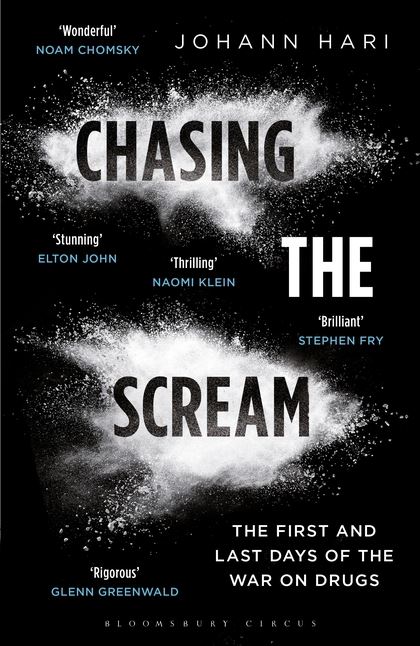
Head here if you missed our big roundup of commentary on Johann Hari’s excellent new book, Chasing the Scream: The First and Last Days of the War on Drugs, which the Dish will be discussing and debating for our Book Club next month. You can join by buying the hardcover here or e-version here and emailing your thoughts to bookclub@andrewsullivan.com.

In a mega-viral HuffPo post, Johann describes one of more fascinating discoveries from his book:

If you had asked me what causes drug addiction at the start, I would have looked at you as if you were an idiot, and said: “Drugs. Duh.” It’s not difficult to grasp. I thought I had seen it in my own life. We can all explain it. Imagine if you and I and the next twenty people to pass us on the street take a really potent drug for twenty days. There are strong chemical hooks in these drugs, so if we stopped on day twenty-one, our bodies would need the chemical. We would have a ferocious craving. We would be addicted. That’s what addiction means.

One of the ways this theory was first established is chasing-screamthrough rat experiments — ones that were injected into the American psyche in the 1980s, in a famous advert by the Partnership for a Drug-Free America [seen above]. You may remember it. The experiment is simple. Put a rat in a cage, alone, with two water bottles. One is just water. The other is water laced with heroin or cocaine. Almost every time you run this experiment, the rat will become obsessed with the drugged water, and keep coming back for more and more, until it kills itself. The advert explains: “Only one drug is so addictive, nine out of ten laboratory rats will use it. And use it. And use it. Until dead. It’s called cocaine. And it can do the same thing to you.”

But in the 1970s, a professor of Psychology in Vancouver called Bruce Alexander noticed something odd about this experiment.

The rat is put in the cage all alone. It has nothing to do but take the drugs. What would happen, he wondered, if we tried this differently? So Professor Alexander built Rat Park. It is a lush cage where the rats would have colored balls and the best rat-food and tunnels to scamper down and plenty of friends: everything a rat about town could want. What, Alexander wanted to know, will happen then?

In Rat Park, all the rats obviously tried both water bottles, because they didn’t know what was in them. But what happened next was startling. The rats with good lives didn’t like the drugged water. They mostly shunned it, consuming less than a quarter of the drugs the isolated rats used. None of them died. While all the rats who were alone and unhappy became heavy users, none of the rats who had a happy environment did.

At first, I thought this was merely a quirk of rats, until I discovered that there was — at the same time as the Rat Park experiment — a helpful human equivalent taking place. It was called the Vietnam War. Time magazine reported using heroin was “as common as chewing gum” among U.S. soldiers, and there is solid evidence to back this up: some 20 percent of U.S. soldiers had become addicted to heroin there, according to a study published in the Archives of General Psychiatry. Many people were understandably terrified; they believed a huge number of addicts were about to head home when the war ended.

But in fact some 95 percent of the addicted soldiers — according to the same study — simply stopped. Very few had rehab. They shifted from a terrifying cage back to a pleasant one, so didn’t want the drug any more. Professor Alexander argues this discovery is a profound challenge both to the right-wing view that addiction is a moral failing caused by too much hedonistic partying, and the liberal view that addiction is a disease taking place in a chemically hijacked brain. In fact, he argues, addiction is an adaptation. It’s not you. It’s your cage.

A reminder that Johann will be in DC talking about his book at Politics and Prose on January 29, then in NYC at the 92nd Street Y on the 30th, then in Baltimore at Red Emma’s on the 4th of February. If you can’t hear him in person, this is a great interview he just did. He also chatted with Russell Brand about addiction:

So Who Exactly Is For New Sanctions Against Iran?

The Mossad believes that enacting AIPAC’s sanctions would be like throwing a grenade into the negotiating process. The British prime minister and all the big powers negotiating with Iran want to keep the talks going and believe new sanctions would bring about their collapse. The Iranian public overwhelmingly wants to retain a nuclear power program:

A near-unanimous majority (94%) of Iranians say that it is essential for Iran to make peaceful use of nuclear energy. Large majorities would oppose dismantling half of Iran’s centrifuge capability (70%) or accepting limits on nuclear research (75%). We found no significant difference depending on political preferences. In fact, those respondents who were more highly educated were more negative towards measures that would treat Iran differently from other NPT members that have promised not to develop nuclear weapons.

Our own foreign policy heavyweights want to have the talks run their course:

“[New sanctions] will break the talks,” said Brent Scowcroft, who served as national security adviser under Republican Presidents Gerald Ford and George H.W. Bush. “I think we should see them out and not take steps which would destroy the negotiations.” “I have a similar perspective,” said Zbigniew Brzezinski, who served as national security adviser under Democratic President Jimmy Carter. “Iran is beginning to evolve.”

More to the point, if a sanctions bill were passed and it did break the talks, what then? Iran will have every incentive to intensify its nuclear weapon program, the forces for reform and democracy in that country will be dealt a huge blow, the sanctions regime that has worked so far would disintegrate … and the US would be blamed and the Iranians left off the hook. The alternative at that point is war, forced upon an unwilling president and a very jittery public, war against a de facto ally in the attempt to contain ISIS.

So who wants to break the talks and go to war? Bibi Netanyahu, Ron Dermer, AIPAC and the bulk of the GOP, but especially the neocons. They want another war in the Middle East, know they can’t persuade the public, and so are trying to force it by wrecking the talks with Iran. It seems perfectly obvious to me that if these talks break down, it must be because the Iranians finally balked. Not the Americans. We still have some months to go. Let this process play itself out. And leave a so-far-successful strategy toward Iran alone.