All the grotesque punishments for men and women are because of violations of extreme Islamic purity. More images of Jihadist barbarism via The Daily Beast via Twitter, seen below:
And a scene from the Bible, of a woman being stoned to death. This is a culture that, far from reconciling itself with modernity, is going to try to recreate its own fantasy of the 7th Century in the 21st. I fear it will have to implode or be destroyed by other Muslim powers and forces before it retreats into the dustbin of history. Our task is to preserve what’s left of civilization and hope we can outlast it, without becoming something more like it.
The Times’ job postings on the career website LinkedIn show there are at least seven new positions on the market—ranging from finance editor to social analytics manager—for T Brand Studio, a business-side operation that produces advertiser content in storytelling form. The other new positions up for grabs are business editor, technology editor, associate editor, social media associate and, on the tech side, UX designer. T Brand Studio launched roughly a year ago in conjunction with the Times‘ native advertising platform, Paid Posts.
Asked about the hiring spree, Times spokeswoman Linda Zebian said the studio did more than 40 campaigns, for companies ranging from Netflix to Shell, during its inaugural 2014 run and “we are ramping up our headcount in every way.”
The NYT has gone from dismissing the whole idea as inappropriate for the Times to embracing it full-throttle and hiring “brand journalists” to write ad copy disguised as articles. Freddie worries about the obvious next step: private corporations just buying magazines – and turning them into propaganda sheets for their interests:
Via Gawker, a private equity firm that is massively invested in for-profit colleges has purchased a controlling stake in Inside Higher Ed, a publication that covers colleges and universities. That’s about as direct a conflict of interest as you can get.
1. Inside Higher Ed should not be trusted as a source of legitimate news about for-profit colleges and universities any longer, and perhaps not trusted as a legitimate source of news, period. Treat anything published by it about for-profit colleges like PR or advertising, because that’s essentially what it’ll be.
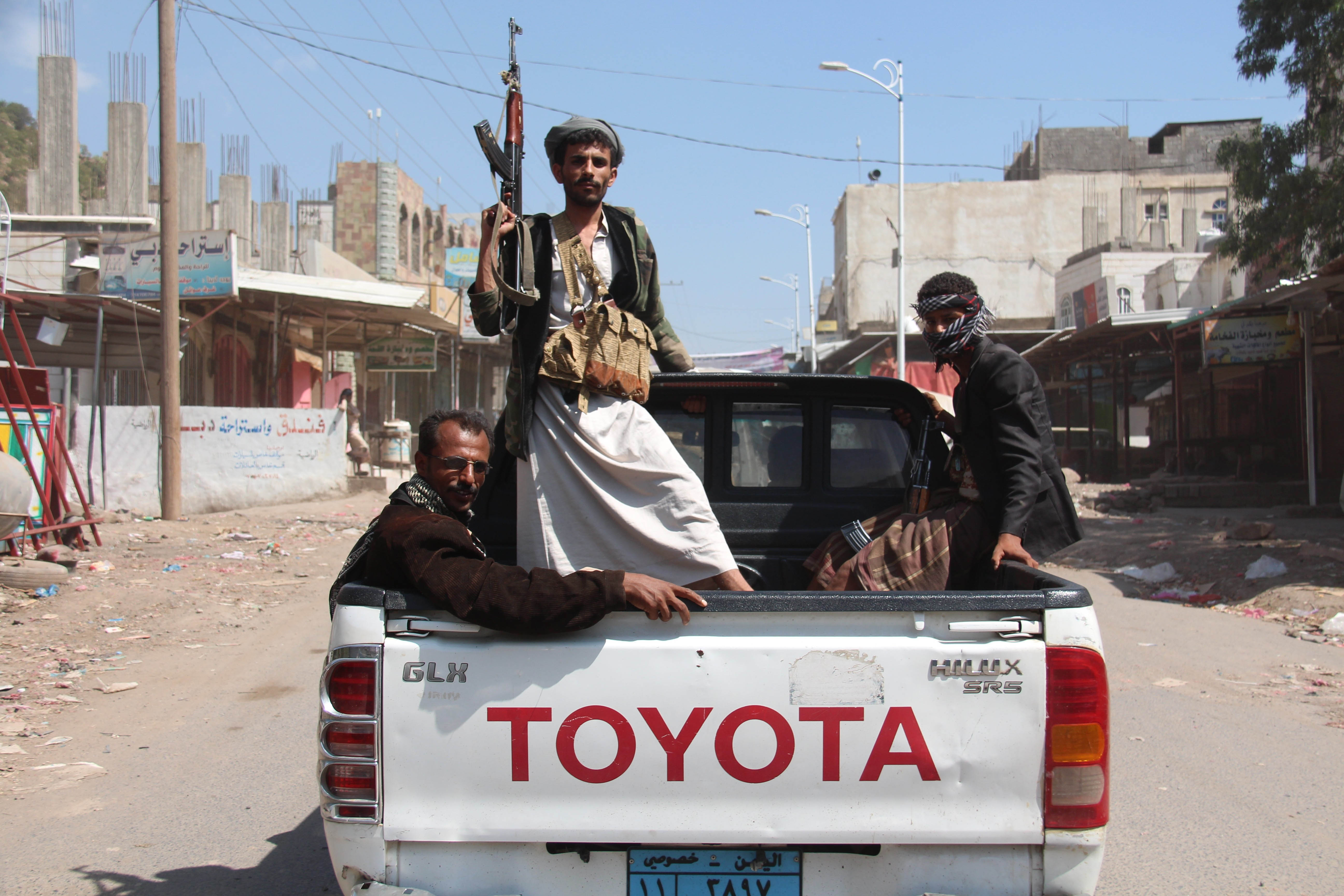
It looks like the government may soon be overthrown, as US-backed President Abed Rabbo Mansour Hadi is reportedly being held “captive” in his home by Shiite Houthis rebels. Hakim Almasmari and Martin Chulov put the development in context:
The influence of the Houthis has expanded drastically since they stormed into Sana’a last September, rattling a nascent new order that was trying to find its feet three years after a revolt ousted veteran leader Ali Abdullah Saleh. In the five months since, Hadi had struggled to impose his government’s will. Besieged and unable to control key sections of Yemen’s military, he now seems to have few options and officials in Sana’a were on Tuesday speculating that military rule could soon be imposed across the country. The Houthi push was a death knell to a 2011 political transition backed by the Gulf states, which had removed Saleh from power after 40 years. A key selling point of the change had been to introduce broad social reforms that would transform the poorest state in the Arab world. Instead, Yemen remained beset by poverty and political torpor.
[T]he government and aligned tribes have been battling the Houthis in the north on-and-off for more than a decade; [al Qaeda in the Arabian Peninsula] is active in Yemen’s south, provoking regular US drone strikes; a southern secessionist movement has been gaining strength … According to the UN Office for Coordination of Humanitarian Affairs (OCHA), close to 16 million people in Yemen – more than half the population – will need humanitarian aid in 2015, of whom eight million are children. More than 330,000 Yemenis are already displaced within the country due to pockets of conflict in both the north and south.
Adam Taylor notes that US policy in the country, which Obama has heralded in the past, will now surely have to change. He points out that “if the broader U.S. policy goal in Yemen is stability, it doesn’t look like a success at all right now”:
It’s important to note that it’s not [AQAP] that is posing the threat to Hadi right now. Instead, it’s members of the Houthi rebel faction, who are believed to be backed by Shiite regional power Iran and who argue that they are oppressed by Yemen’s Sunni majority. It’s also unclear whether the Houthis want to actually force Hadi out, or just use their military success to pressure the government.
The fight against AQAP seems likely to take a hit, however: While the Houthis have battled against al-Qaeda forces before, wider chaos in the country could well help AQAP. The Houthis are also unlikely to be a willing partner for the United States, which they have accused of meddling in Yemen’s affairs in the past.
Christopher Swift, a Yemen expert at Georgetown University, says U.S. efforts in Yemen have been lackluster. “Our relationships, whether they’re political or military, don’t extend beyond the capital,” he says. “The bad guys are out in the field, far away from the national capital, and to the extent we claim to have relationships out in the bush, they’re based on third-party sources or overhead surveillance.”
U.S. goals in Yemen have always been tempered. “We’ve been playing for very limited, very modest objectives in Yemen,” Swift says. “Yemen is still a place where people who want inspiration, or training, or a place to hide can go. AQAP isn’t going away. The Yemenis are not in a position to make it go away, and we’re not willing to help them defeat AQAP decisively.” Between 2011 and 2014, the U.S. pumped $343 million into Yemen, largely to fight AQAP. The U.S. is slated to provide Yemen with $125 million in arms and military training in 2015, in addition to $75 million in humanitarian aid, according to the nonprofit Security Assistance Monitor website.
Jamie Dettmer warns of a coming backlash from the Sunnis, who view the Houthis as an Iranian proxy:
At the weekend, Sunni leaders from southern provinces reacted angrily to the seizing by Houthis of the president’s chief of staff, Ahmed Awad bin Mubarak, giving them 24 hours to free him and warning they would turn off oil pumps unless he was released. Instead, the fighting escalated. Even before this de facto coup the sectarian power struggle was playing havoc with the government’s battle against AQAP, which is more in the spotlight than ever following the group’s claim of responsibility for the January 7 terror attack in Paris on the French satirical newspaper Charlie Hebdo. On Tuesday, as the presidential palace was being stormed, al Qaeda fighters came close to assassinating a top Yemen Army commander in the south, killing five of his guards in the attack, military officials said.
The extremists are issuing new threats against the West as well, and Bruce Riedel adds that a Houthis victory will further strengthen AQAP’s hand by positioning it as the protector of Sunni rights:
Yemen doesn’t feature often in American foreign policy discussions so it’s no surprise that President Obama didn’t mention it in his State of the Union speech. This is all the more true when one realizes we have very little leverage to influence the outcome in Yemen. Hadi was our best bet. But it is indicative of the complex challenges America faces in the Islamic world and the urgent need for a smarter strategy to deal with it.
The president rightly said America needs a smarter strategy to fight terror that avoids drawing us into quagmires like Iraq. He is right to say we need local partners to fight extremism. He’s right to say sending lots of American boots into civil wars is a mistake. Yemen was supposed to be a role model for this smarter approach of building local capacity and getting our allies to do more. It’s a sobering reality that it’s not working.
(Photo: The militants of a Shiite Ansarullah group, known as Houthis, settle in al-Udayn district of Ibb governorate in Yemen after taking control of the city following clashes with Ansar al-Sharia, an alias for Al-Qaeda in Yemen, on November 07, 2014. By Stringer/Anadolu Agency/Getty Images)
It’s easy to understand why Obama blew by the subject so quickly. For seven years, his State of the Union speeches have portrayed a nation moving from danger to safety, war to peace. And now, in his final year in office, he’s not only stopped telling Americans they are safer. He’s declaring war.
It’s not surprising that Obama devoted so much of the foreign-policy section of his speech to Cuba. He clearly hoped that by this point in his presidency he’d be taking a victory lap not only for the recession he overcame but for the wars he brought to a close. Now, instead of ending hot wars, he has to be content ending a cold one.
It’s true, as he proclaimed, that American leadership and air power are “stopping” the advances of ISIS jihadists in Iraq and Syria, and that’s no small achievement. But his ultimate aim in those countries (“the broader strategy” that he said he’s pursuing “for a safer, more prosperous world”) is baffling.
Again, this is no surprise: He’s battling the extremists of ISIS, while advocating the ouster of Syrian President Bashar al-Assad, who’s also battling ISIS; he also says he’s “supporting a moderate opposition in Syria,” while standing by as Assad mows down its fledgling fighters. There is no clear strategy here, only a holding action. And his “broad coalition, including Arab nations,” is faltering because the interests of some of those Arab nations differ so markedly from our own.
Obama had the gall to say this: “The American people expect us to only go to war as a last resort, and I intend to stay true to that wisdom.” The trouble I have with this is that it is very clearly not how Obama has governed so far. I assume that he won’t launch a preventive war against Iran at this point, but Obama’s record hardly inspires confidence on this score. The U.S. didn’t go to war in Libya as a last resort. Nor has the war against ISIS been waged as a last resort. Nor would airstrikes on Syria in 2013 have been launched as a last resort.
I think Obama’s pragmatism obscures his real failures on unilateral, executive branch war-making (with disastrous consequences), on basic accountability for war crimes, on closing GTMO, and empowering JSOC and the CIA to new heights of power and independence. He can’t admit that the war on ISIL was indeed a war of choice that once again inserted the US into a sectarian civil war best left to those directly threatened.
Last week, under pressure from Christianist Franklin Graham and vague, anonymous threats of violence, Duke University withdrew a plan to let a student group broadcast the Muslim call to prayer from the the chapel tower once a week. Saletan shakes his head:
Administrators should have thought through the tower idea more carefully before proposing it. Their failure to do so puts them in a position of reducing Muslim use of public space, exactly the opposite of what they intended. By retreating under pressure, they’ve also empowered Graham and his ilk. They’ve sent the wrong message.
Duke was founded as a Methodist university (that’s no longer the case, although it retains a Christian influence, and a Christian divinity school). Its chapel is clearly a church. Some will point out, correctly, that Christians have the right to ask members of other faiths not to use their facilities.
The university is clearly a pluralistic place, though. And Duke’s Muslims have been praying in the chapel basement for years. “The chapel to Duke students is a symbol of Duke, not just a symbol of Christianity,” said Ting Chen, a sophomore who attended the call-to-prayer in solidarity.
It’s a truly sad spectacle to see Duke beat this ignominious retreat. Pluralism matters. David A. Graham adds context to Duke’s dubious decision to cancel the prayer:
[O]ne might argue that while Duke’s [original gesture to allow the amplified call to prayer] was well-intentioned, the timing was wrong—why rile people up at a moment when nerves are already on edge about Islam? But I think it’s the other way around. There’s no time when it is as essential to stand on the side of a minority as when that group is under fire. …
[And it’s] a particularly bitter irony that this would happen at Duke. Abdullah Antepli, the original Muslim chaplain (he’s since moved into a broader role), has worked hard to build ties with other faith communities at Duke, especially Jewish groups. When pundits demand that moderate Muslims speak up and condemn terrorism, they’re talking about people like Antepli, who has done sorepeatedly.
When Duke originally announced the plan to broadcast the prayer, Associate Dean Christy Lohr Sapp indicated the move was in part to show “a strikingly different face of Islam than is seen on the nightly news.” Comparing the plight of America’s Muslims to that of Catholics, Eboo Patel hopes history will repeat itself :
The Catholic story in America has a happy ending. Overt anti-Catholic prejudice has largely dissipated. Catholics sit in six of the nine seats on the Supreme Court and hold high political office without anyone raising Kennedy-era fears of a lackey of the pope occupying the White House. [Frankin’s father] Billy Graham was an important player in this change. Not long after Kennedy’s election, Graham was pictured bowing his head next to the new president at a prayer breakfast, he openly welcomed the ecumenical documents emerging from Vatican II, and proudly repeated what Pope John Paul II told him in a private meeting: “We are brothers.”
People change. Religions and interfaith relationships change. Countries change. On the question of the Catholic presence in America, Billy Graham certainly did, and America is stronger for it.
Robbie George notes that Francis “has no special knowledge, insight, or teaching authority pertaining to matters of empirical fact of the sort investigated by, for example, physicists and biologists,” Robbie is mincing words. He can not mention chemists here, because Pope Francis is one. And it’s chemists who got the last Nobel (science) prize for climate change (Al Gore got the Peace Prize). In 1995, the prize was awarded for “work in atmospheric chemistry, particularly concerning the formation and decomposition of ozone”.
Another gives some props to the previous Pope:
Those who are dismayed by Francis’ impending encyclical on climate change would do well to read the following report on global climate change: “Fate of Mountain Glaciers in the Anthropocene” [pdf]. They would note that it was commissioned by the Pontifical Academy of Science during the papacy of Benedict VI. In fact, it was Benedict who had solar panels added to the Vatican. He also wrote the following in Caritas in veritate:
It is likewise incumbent upon the competent authorities to make every effort to ensure that the economic and social costs of using up shared environmental resources are recognized with transparency and fully borne by those who incur them, not by other peoples or future generations: the protection of the environment, of resources and of the climate obliges all international leaders to act jointly and to show a readiness to work in good faith, respecting the law and promoting solidarity with the weakest regions of the planet” (#50).
The President wasn’t merely upbeat. He was self-assured, glib, and, at times, bordering on bumptious. “Well, we’ve been warned,” Karl Rove complained on Twitter. “POTUS will spend rest of year campaigning.” … As the President is well aware, his ambition of transcending partisanship has been frustrated. In fact, he now seems quite comfortable with embracing partisanship and economic populism. Until the end of the speech, when Obama circa 2004 put in a cameo appearance, he had provided a welcome glance of the Obama whom many Democrats believed they had elected in 2008: progressive, impassioned, and persuasive. “Where was this economic Obama in 2009?” the documentary filmmaker Alex Gibney asked on Twitter. That’s a question that historians will certainly ponder. Last night, though, the President showed up and staged a successful occupation of Capitol Hill.
McArdle felt that “the specifics were rather light, particularly on his extensive array of tax proposals”
There’s a reason for that. Americans like to hear that rich people are going to be forced to pay their “fair share.” They would probably be considerably less excited to hear that Obama wants to tax the earnings on educational savings accounts, or that any assets they inherit from their parents would be subject to a capital gains tax.
To be fair, there are generous exemptions. But there are a lot of affluent-but-hardly-wealthy folks in blue states who would be very unhappy to hear that that nice Westchester home Mom and Dad bought for $15,000 in 1952 is going to be subject to a capital gains tax — at the same time as they’re suddenly paying income taxes on the capital gains and dividends in little Sally’s college account.
Yuval Levin understood the speech as “not an agenda he can work on with this Congress but an agenda that a future Democrat could plausibly attempt to offer the public”:
That the president could offer so little policy substance to back up this superficial change of emphasis is a sign of just how bare the Democrats’ cupboard is now. But that he has recognized that the change is needed is a sign that at least some in the party may be aware of the problem they have.
In this sense, the speech offers a model that Republicans can learn from. They, too, need to recognize that there will not be very much they can achieve in the next two years, since the president isn’t particularly interested in proving that Republicans “can govern.” They should certainly look for opportunities to make meaningful rightward progress where they can, but there won’t be many of those, and for the most part they too should use what power they now have to put forward an agenda that will speak to the public’s concerns and priorities.
Tomasky doubts that the GOP will be able to come up with such an agenda:
[Y]ou can’t get people to think about longer-term economic goals when they’re out of a job, or underemployed. But once that’s turned, you can. That is what’s turning now—not turned, but turning. And that is what is about to make our political conversation be about this new one thing: sharing the prosperity. The speech was not a great speech, a speech for the ages; but it did understand that, and it did tap into that. People are now willing to start thinking about longer-term economic goals. A quickie CNN poll found that the speech was extremely well-received: 51 percent very positive, 30 percent somewhat positive, only 18 percent negative.
That really should worry Republicans, no matter how many seats they have in Congress. Our politics is becoming about one big thing on which the Republicans have nothing to say. Actually, they do have something to say, and it’s “No!”
Byron York, on the other hand, thought Obama sounded “disconnected from reality”:
After a “vicious recession … tonight, we turn the page,” Obama said. “With a growing economy, shrinking deficits, bustling industry, booming energy production, we have risen from recession.” For some Americans, that is the case, although even for them, “bustling” might be a bit much. For other Americans, the news is still pretty bad. When a recent Fox News poll asked, “For you and your family, does it feel like the recession is over, or does it feel like the country is still in a recession?” 64 percent of respondents said it feels like there is still a recession. Indeed, it’s widely conceded that part of the reason the unemployment rate has fallen is because a core of discouraged workers dropped out of the job search altogether. So for many listeners, Obama’s “turn the page” declaration will seem as out of touch as his claim that Islamic State’s advance has been stopped.
Finally, Bouie points out that, even “if Congress adopted all of Obama’s economic proposals, it would put just a small dent in the towering inequality that defines modern American life.” He wonders whether future Democrats will go further:
Policies that would unambiguously boost incomes—broader and higher subsidies in the Affordable Care Act, direct wage assistance, an expanded Social Security program for retirees—haven’t reached the mainstream of the Democratic Party.
But it’s now clear, from this State of the Union to statements from key party elites, that inequality will stand as the main agenda item of the post-Obama Democratic Party. The questions now, and the ones Democrats will fight over in the coming presidential primaries, are of ambition. Are the modest policies of the late Obama administration enough? Or do we need something more drastic to bring our economy back into balance?
Eric Holthaus points out that 2014’s heat record was based on ocean heat, not land heat, which was only the fourth hottest:
Here’s the basic physics: It’s very hard for Earth’s climate system to store heat year-to-year on land. That’s because the oceans can store energy much more easily than land and circulate it through the entire climate system. The global oceans act as giant heat reservoirs and add inertia to the steadily escalating push from human greenhouse gases.
He concludes that “it’s much less likely that this year’s global heat record was a one-off fluke – and that the extra ocean heat is probably here to stay.” Amy Davidson asserts that the denialists are running out of material:
The new numbers are so striking that they surprised even climate scientists; 2014 was, in science parlance, “an El Niño neutral year.”
El Niño is one of those “natural” forces that climate deniers say can account for fluctuations and for warming the ocean up; a reply might be that man-made climate-change may come to affect even the oceans’ currents. (It already appears to have affected their level of acidification; add to that a new report warning of impending mass oceanic extinctions.) But that point doesn’t even need to be made. This past year was hot without any room for disingenuous excuses.
The year 1998 was an outlier, an unusually warm year. If you choose this as your starting point, the next decade will look pretty uneventful. You can do the same thing with lots of other decade-long periods. For example, 1969-85 looks pretty flat, and so does 1981-94. This is typical of noisy data. Planetary warming isn’t a smooth upward curve every year. It spikes up and down, and that allows people to play games with the data over short periods. Add to that the fact that warming really does appear to pause a bit now and again, and it’s easy for charlatans to fool the rubes with misleading charts.
But in the end, physics and chemistry will do their thing regardless. Earth is warming up, as any honest look at the data makes clear.
And there was another report out last week from 18 scientists working to determine how far the Earth can pushed:
The paper contends that we have already crossed four “planetary boundaries.” They are the extinction rate; deforestation; the level of carbon dioxide in the atmosphere; and the flow of nitrogen and phosphorous (used on land as fertilizer) into the ocean. … These are not future problems, but rather urgent matters, according to [lead author Will] Steffen, who said that the economic boom since 1950 and the globalized economy have accelerated the transgression of the boundaries. No one knows exactly when push will come to shove, but he said the possible destabilization of the “Earth System” as a whole could occur in a time frame of “decades out to a century.”
They warn against tech complacency as well:
Technology can potentially provide solutions, but innovations often come with unforeseen consequences. “The trends are toward layering on more and more technology so that we are more and more dependent on our technological systems to live outside these boundaries,” “[Earth systems expert Ray] Pierrehumbert said. “. . . It becomes more and more like living on a spaceship than living on a planet.”
Canine athletes would take exception to that expression:
Ben Richmond reads throughJulie Hecht’s “great article over at Scientific American about dog athletes and how often they end up injured”:
Although all but the mellowest of pooches seem to enjoy a good wrestle with each other every now and again, it’s not like these athlete dogs are playing contact sports. While new dog sports like dock jumping and flyball are catching on, the most popular dog sport is the agility contest: running an obstacle course with only the vocal commands of their trainer to guide them. (The sport was just added to the Westminster Kennel Club Dog Show last year; a seven-year-old border collie named Kelso won.)
While they obviously aren’t injury free, I was surprised to find that dog athletes that are doing the agility course are generally healthier than their human counterparts.
Hecht cited two studies that appeared in Veterinary and Comparative Orthopaedics and Traumatology and Journal of the American Veterinary Medical Association which surveyed dog trainers and found that slightly less than one third of dog athletes develop some sort of agility injury. The most dangerous parts of the dog-agility course are the A-frame, where dogs have to run over a small pointy hill, and jumping over bars. The most common issues were sprains and strains, followed by injuries to their furry little shoulders, backs, necks, and phalanges. Slightly over the half of the injuries are considered mild, and don’t take more than a month to come back from.
Being brainy doesn’t appear to be a great help when handling the agility course obstacles, as border collies were the likeliest breed to be injured in competition, something the study attributes to how fast they are. Commenting on the research, the veterinarian Dr. Nancy Kay wrote in a blog post that, “I suspect this susceptibility to injury has more to do with the breed’s insanely intense work ethic than it does any inherent musculoskeletal weakness.”
According to many doctors I spoke with, there is also a severe lack of training for mental health professionals—not only on how to deal with suicidal patients, but how to process a patient’s death. Dr. Paul Quinett, a professor in the department of psychiatry and behavioral science at the University of Washington School of Medicine, is heavily involved in teaching clinicians how to do both. “I think most of us believe that when we hire a licensed mental-health professional, that they’ve had training in how to assess and manage suicidal patients, when in fact, the majority do not,” he says.
I mention a survey where a group of doctors and nurses were asked if they think it’s possible to prevent someone from committing suicide. More than half answered that they didn’t think it was. “Well, I don’t believe that,” he says firmly. “I believe that’s a convenient myth … but so many clinicians are not well-prepared for that outcome. There are lots of clinicians who lose patients to suicide in the course of their career … in a way it’s almost an occupational hazard. That’s why people need the very best training they can get, to learn how to work effectively with people considering ending their own lives.”



 The Dish