Hailing The Space Taxi

This week, NASA announced that it would award a combined $6.8 billion “space taxi” contract to Boeing and Elon Musk’s SpaceX:

Essentially, Boeing’s CST-100 Space Capsule and SpaceX’s Dragon will each send a test flight to the International Space Station to demonstrate their space taxi capabilities. Each team will fly to the ISS with a NASA crew member and cargo, show that they can dock to the station, and return to Earth safely. Astronauts could be taking a ride on the space taxi pilot program as soon as 2017.

Christian Davenport explains what makes the move so significant:

The announcement of the “commercial crew” awards is a big step toward allowing the U.S. to end its reliance on Russia, which has been ferrying American astronauts to the space station since the retirement of the space shuttle three years ago. The arrangement hasn’t been cheap: the Russians currently charge $71 million per seat, and NASA has in a single year sent more than $400 million to Russia for these taxi rides. If the schedule doesn’t slip, and Boeing and SpaceX prove their vehicles are safe, NASA should see its astronauts launched on U.S. soil with American rockets by as early as 2017.

The awards represent a significant shift for NASA, which has long owned and operated its own rockets. Instead of going to space on government-owned vehicles, NASA’s astronauts would essentially rent space on ships provided by Boeing and SpaceX.

Meanwhile, Adam Minter praises the way NASA put the project together:

NASA’s decision to fund a competition — known as Commercial Crew– to develop rockets for manned space flights has been one of the agency’s biggest successes in decades. Just three years ago, upon the retirement of the Space Shuttle, NASA didn’t have any way to transport U.S. astronauts other than by hitching expensive rides on Russian spacecraft. Today the agency was able to choose between three viable spacecraft designs, all of which will be ready to fly in 2017, according to their manufacturers. The three were developed for less than $2 billion cumulatively. It’s been a welcome change from NASA’s history of program delays, cost-overruns, all-too-cozy contractor relationships and missions driven by patronage.
Animals Can Be Useless, And That’s OK

Richard Conniff rejects conservationist arguments that imply “animals matter only because they benefit humans, or because just possibly, at some unknowable point in the future, they might benefit humans”:

I understand the logic, or at least the desperation, that drives conservationists to this horrible idea. It may seem like the only way to keep what’s left of the natural world from being plowed under by unstoppable human expansion and by our insatiable appetite for what appears to be useful.

But usefulness is precisely the argument other people put forward to justify destroying or displacing wildlife, and they generally bring a larger and more persuasive kind of green to the argument. Nothing you can say about 100 acres in the New Jersey Meadowlands will ever add up for a politician who thinks a new shopping mall will mean more jobs for local voters (and contributions to his campaign war chest). Nothing you can say about the value of rhinos for ecotourism in South Africa will ever matter to a wildlife trafficker who can sell their horns for $30,000 a pound in Vietnam.

Finally, there is the unavoidable problem that most wildlife species – honey badgers, blobfish, blue-footed boobies, red-tailed hawks, monarch butterflies, hellbenders – are always going to be “useless,” or occasionally annoying, from a human perspective. And even when they do turn out, by some quirk, to be useful, that’s typically incidental to what makes them interesting.

Live-Tweeting The Scotland Vote

Originally posted at 8.49 EST. Scroll down for the latest updates, in rough chronological order:

Face Of The Day

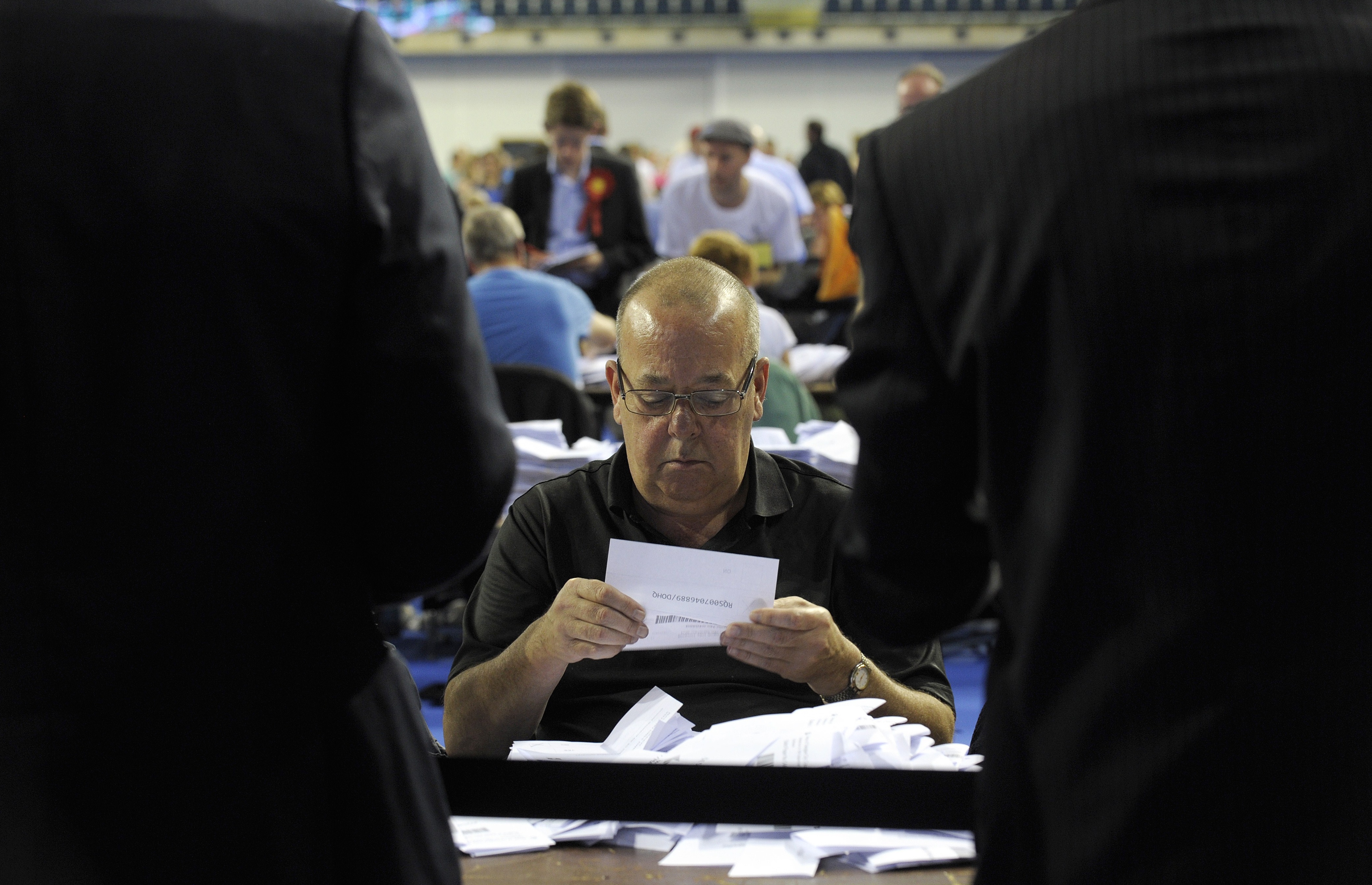
BRITAIN-SCOTLAND-INDEPENDENCE-VOTE

Ballots are counted at the Emirates Sports Arena in Glasgow on September 18, 2014, after the polls close in the referendum on Scotland’s independence. The question for voters at Scotland’s more than 5,000 polling stations is “Should Scotland be an independent country?” and they are asked to mark either “Yes” or “No”. The result is expected in the early hours of Friday. By Andy Buchanan/AFP/Getty Images.

Defaulting On Venezuelans

This article by Ricardo Hausmann and Miguel Angel Santos is getting attention from Venezuela-watchers (and President Maduro, who hated it – so you know they’re on to something). The pair argue that the country should default on its sovereign debt, because the government’s commitment to paying its creditors effectively means it’s defaulting on its citizens:

Severe shortages of life-saving drugs in Venezuela are the result of the government’s default on a $3.5 billion bill for pharmaceutical imports. A similar situation prevails throughout the rest of the economy. Payment arrears on food imports amount to $2.4 billion, leading to a substantial shortage of staple goods. In the automobile sector, the default exceeds $3 billion, leading to a collapse in transport services as a result of a lack of spare parts. Airline companies are owed $3.7 billion, causing many to suspend activities and overall service to fall by half.

In Venezuela, importers must wait six months after goods have cleared customs to buy previously authorized dollars. But the government has opted to default on these obligations, too, leaving importers with a lot of useless local currency. For a while, credit from foreign suppliers and headquarters made up for the lack of access to foreign currency; but, given mounting arrears and massive devaluations, credit has dried up.

Felix Salmon likes their way of thinking about defaults, which squares with his own formulation of last year’s US sequester:

America eventually cured its default, and never graduated to defaulting on Treasury bonds. But Venezuela’s problems are harder to fix. And at some point, it simply won’t make sense to spend desperately-needed billions on foreign bondholders any more.

Indeed, if you ask Ricardo Hausmann, he’ll tell you that not only is Venezuela there already, but that even the technocrats IMF would recommend a sovereign bond default at this point. For all that it’s embarrassing and politically perilous for any government to default on its sovereign debt, then, I suspect that a fully-fledged default in Venezuela is now only a matter of time. Right now bondholders are probably safe, or safe-ish. But if and when Citgo is sold, alongside Venezuela’s other foreign holdings, I can’t imagine that the country will continue to pay its coupons in full. Indeed, Venezuela owes it to its citizens not to.

Harold Trinkunas considers the political implications:

Venezuela’s economic crisis has led to speculation that the 2015 legislative elections will be the next flashpoint in its ongoing domestic political conflict. Support for the government in Venezuela tracks closely with economic performance and domestic consumption (PPT), both of which have tanked in the past year. In fact, the Venezuelan government was only able to reverse negative public opinion trends before the December 2013 elections through a forced-sale of private inventories of consumer electronics and home appliances. Former planning minister Jorge Giordani admitted that the government had spent vast amounts in 2011 and 2012 to ensure the re-election of Hugo Chavez in 2013. Current economic indicators do not bode well for the regime’s electoral prospects, and the Maduro administration lacks the financial reserves to use public spending to increase domestic consumption next year. Importantly, this is not a regime that has reacted well to losing elections in the past.

And Juan Nagel zooms in on the country’s collapsing healthcare system:

Venezuela imports most of its medicines. There is a local drug manufacturing industry, but they do little research and simply manufacture medicine using imported raw material. The country’s cash shortage is throwing a wrench in that process. As one drug manufacturer explained, “I have a backlog of requests for currency that have not been approved, and without [currency] I cannot import the raw material I need. When I manage to get a shipment of medicine out, much of it ends up in the black market.” The Central Bank said in March of this year that 50 percent of drugs are missing from the shelves. It has since stopped publishing the data.

Due to the country’s overbearing price controls, there is a thriving black market for Venezuelan drugs. A fraction of the country’s drugs ends up in neighboring countries, where they fetch market prices. Unsurprisingly, Venezuelans have started bartering drugs on Twitter and other social media.

Sleep Is For The Rich

Screen Shot 2014-09-16 at 9.55.44 AM

Olga Khazan explains:

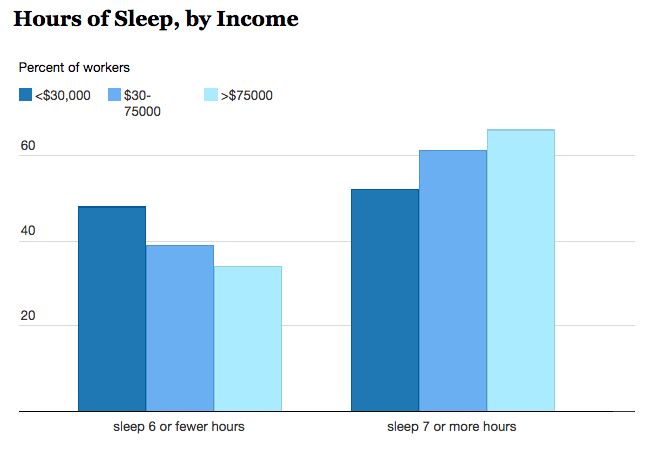
Though Americans across the economic spectrum are sleeping less these days, people in the lowest income quintile, and people who never finished high school, are far more likely to get less than seven hours of shut-eye per night. About half of people in households making less than $30,000 sleep six or fewer hours per night, while only a third of those making $75,000 or more do.

Unsurprisingly, shift workers face the greatest risk of sleep deprivation; they get two to four hours less sleep than average. The consequences can be dire:

Exposure to bright light when it’s time to sleep makes it harder for the body to produce melatonin, a sleep hormone. Over time, this sleep deprivation translates to an increased risk for heart disease, gastrointestinal problems, and reproductive issues. … For some, a sleep shortfall can lead to narcolepsy-like symptoms. One study found that 53 percent of night-shift workers report falling asleep accidentally on the job.

A Poem For Thursday

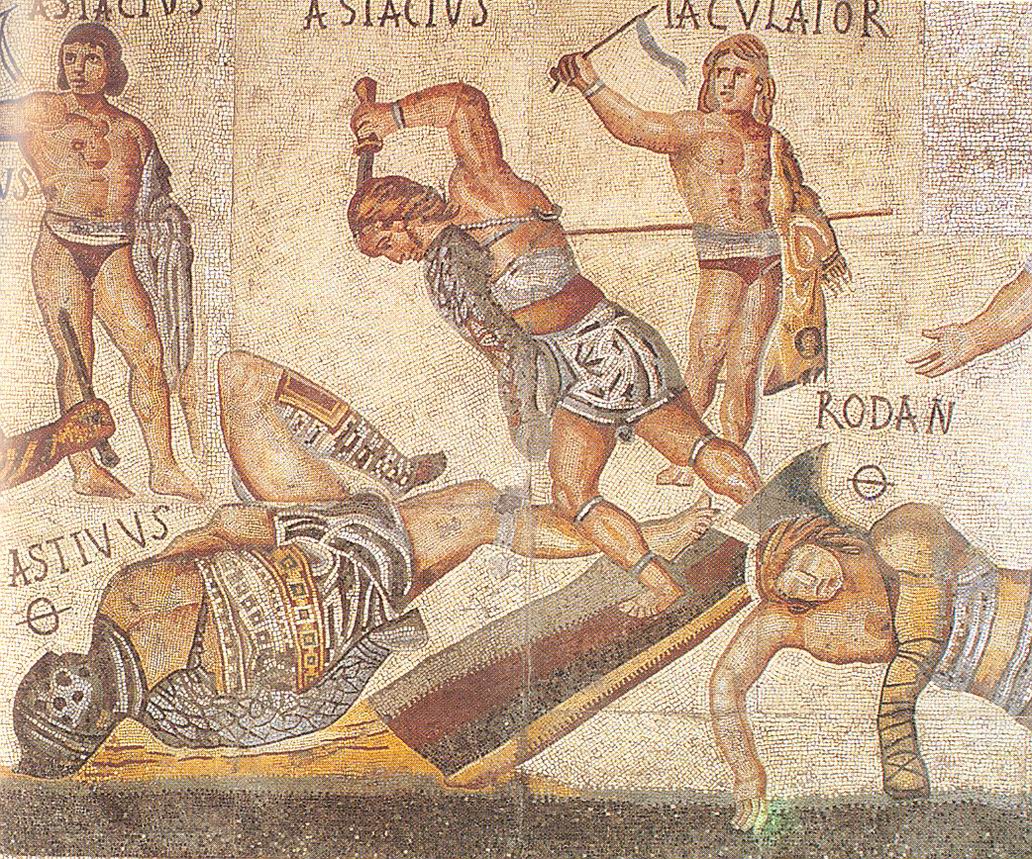
Retiarius_vs_secutor_from_Borghese_mosaic

“Colosseum” by Jericho Brown:

I don’t remember how I hurt myself,
The pain mine
Long enough for me
To lose the wound that invented it
As none of us knows the beauty
Of our own eyes
Until a man tells us they are
Why God made brown. Then
That same man says he lives to touch
The smoothest parts, suggesting our
Surface area can be understood
By degrees of satin. Him I will
Follow until I am as rough outside
As I am within. I cannot locate the origin
Of slaughter, but I know
How my own feels, that I live with it
And sometimes use it
To get the living done,
Because I am what gladiators call
A man in love—love
Being any reminder we survived.

Previous poems from Brown here and here.

(From The New Testament © 2014 by Jericho Brown. Used by permission of Copper Canyon Press. Detail of the Gladiator Mosaic, 4th century CE, via Wikimedia Commons)

The Other American Expansionism

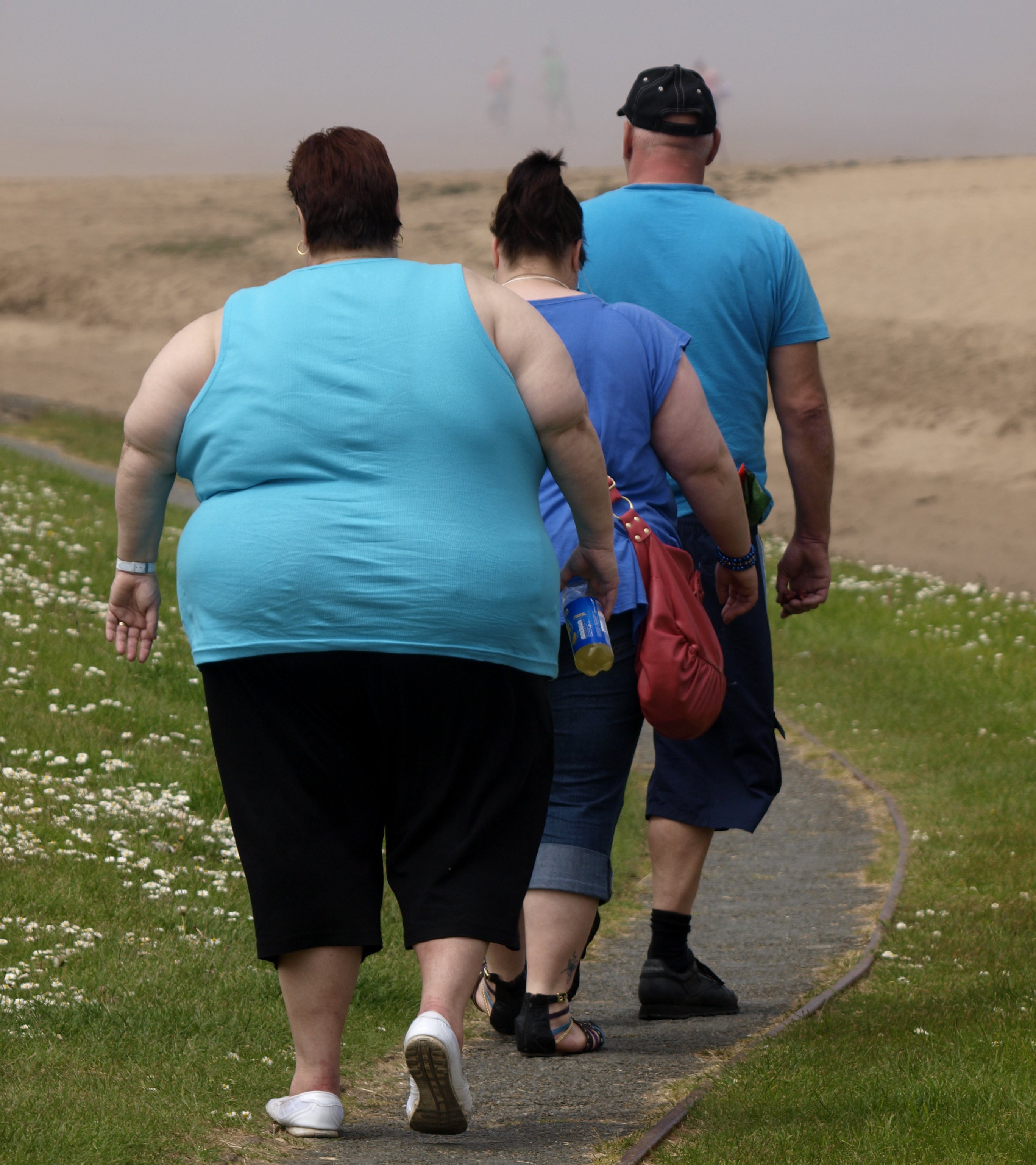
Julia Belluz flags new research showing that American waistlines continue to grow:

Overweight peopleResearchers looked at waist circumference measurements taken from over 32,000 adults in 1999 and 2012. During that period, participants’ waists grew nearly a whole pants size, from 37.6 inches to 38.8 inches. Some groups gained an even more significant amount of abdominal girth. White women, aged 40 to 49, experienced a 2.6-inch expansion; the waists of black men, aged 30 to 39, got padded with 3.2 extra inches; Mexican-American men, aged 20 to 29, added 3.4 inches to their frames; Mexican-American women over the age of 70 packed on 4.4 inches; and black women between the ages of 30 to 39 increased their waists by 4.6 inches. (Abdominal obesity was defined as a waist circumference greater than 40 inches in men and 35 inches in women.) That racial minorities are experiencing greater gains maps on to the fact that they’re also disproportionately struggling with obesity compared to white people in the US.

Interestingly, Americans’ average body mass index has held relatively steady over the past decade. Or as Alison Bruzek puts it, “People haven’t been getting fatter, but their waistlines are still increasing”:

“We’re a little bit puzzled for explanations,” Dr. Earl Ford, a medical epidemiologist at the Centers for Disease Control and Prevention and lead author of the study, tells Shots. The two measures are closely related: While body mass index or BMI measures fat overall, waist circumference helps measure fat distribution. Stress, hormonal imbalances, environmental pollutants, poor sleep or medications that help pack on abdominal weight are possible causes, health and nutrition researchers speculate. And older adults typically lose muscle as they age, while fat continues to increase.

(Photo by myLoupe/Universal Images Group via Getty Images)

When Cannabis Is No Longer A Crime

Sam Kamin and Joel Warner expect that, “as marijuana prohibitions continue to weaken and an increasing number of states reconsider stringent drug sentencing rules, people could begin to lobby to remove more serious pot convictions from their rap sheets or even get out of prison”:

However, if either the courts or clemency boards take up the work of reviewing past marijuana convictions, they will have to tackle a very thorny issue: Convictions don’t always match the crime that was committed. Many of the low-level offenders who might seek clemency struck plea deals with prosecutors, and those negotiations can obscure the underlying crimes. UCLA drug policy expert Mark Kleiman offers an example: “It’s entirely possible that a guy was charged with possession with intent to distribute cocaine and cannabis, and the plea bargain he pled to was just the cannabis charge.” So how do you determine, sometimes many years later, whether a given conviction actually corresponds to a defendant’s true criminal culpability? And even if a marijuana conviction does in fact correspond to a marijuana offense, are all marijuana offenses created equal? Should it matter whether the 12 ounces of pot someone was busted with came from small-scale farms in Humboldt County, California, or were imported from Mexico by drug cartels?

Fascinating. At some point in the future, if and when cannabis is seen as the simple plant and medicine that it is, those behind bars – some for life – for non-violent offenses involving cannabis are going to seem awful victims of a regime long since discredited. Some relief will surely have to be granted – but I can sure see the complexities.