The Nightmare Scenario

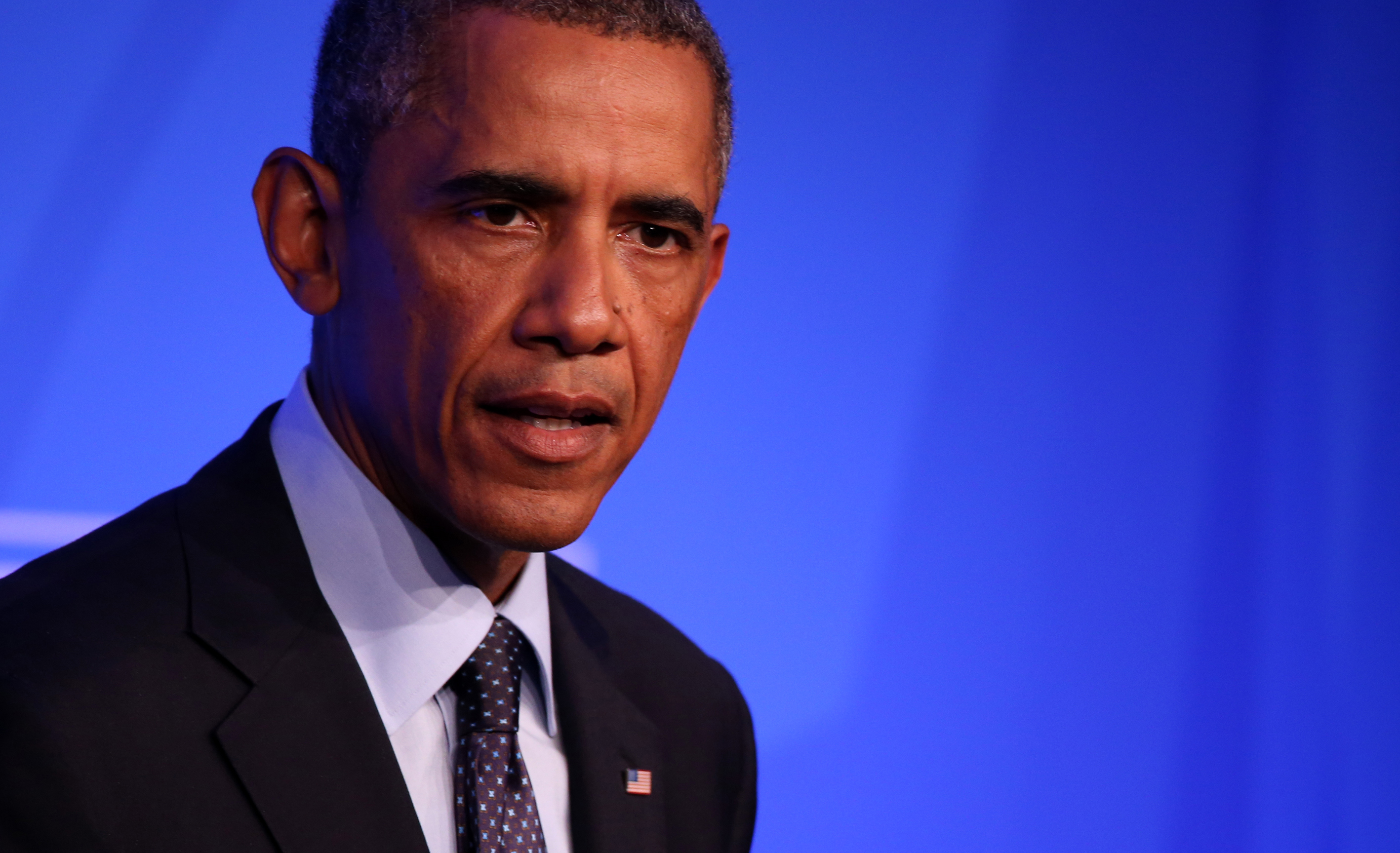
US President Barack Obama holds press conference in Newport

As the president launches a new war against an elusive, asymmetrical opponent, with as yet no solid regional allies, fueled by pure emotion, I have to wonder who it was we elected. I’m going to listen carefully tonight – but so far, this strikes me quite simply an an almost text-book case of what someone once called “a dumb war”.

First off, the public support for war is almost entirely a function of the powerful imagery of two beheadings. It is not a sober reflection on how best to defend ourselves from Salafist terror and theocracy. It is based on little but fear and panic and hysteria:

47% of Americans believe the country is less safe now than before the Sept. 11, 2001, terrorist attacks. That’s a significant increase from even a year after the twin towers fell when in September 2002 just 20% of the country said the nation was less safe. The level of fear across America also is up substantially from last year when 28% felt the same way.

This is not a rational conclusion. The change came almost entirely from last month:

A whopping 94 percent of Americans say they have heard about the news of the beheaded journalists – higher than any other news event the NBC/WSJ poll has measured over the past five years. That includes the 2011 debt-ceiling debate (77 percent), the 2012 health-care decision by the U.S. Supreme Court (78 percent), Syria’s reported use of chemical weapons in 2013 (79 percent) and this year’s botched execution in Oklahoma (68 percent).

That is the biggest media coup for the Salafists since the Towers fell. Americans have shown themselves to be terrified beyond measure by a group of religious fanatics controlling an area about the size of Maryland – so terrified, in fact, that they want to make Syria’s and Iraq’s civil wars our war, to own them and their outcome. George Friedman makes the sane and obvious point:

The Islamic State – engaged in war with everyone around it – is much less dangerous to the United States than a small group with time on its hands, planning an attack. In any event, if the Islamic State did not exist, the threat to the United States from jihadist groups in Yemen or Libya or somewhere inside the United States would remain.

The key thing is to have a sensible grip on what the actual threat really is, rather than reacting like scared school-children in a horror movie. And the threat is primarily to ISIS’s neighbors. How scared are they – and how determined are they to fight? Well, the Iraqis themselves still haven’t filled out a cabinet that can reconcile both Sunnis and Shi’a and Kurds in a unified push against the latest insurgency. Turkey is more concerned, it appears, with the fate of 49 hostages now held by ISIS. Saudi Arabia? Twiddling its thumbs when it isn’t fueling Salafist fanaticism. Iran? Sure, they can and will help – but only in a way likely to inflame Sunni paranoia and fuel sectarian divisions. Assad? Well, this is the scenario he long predicted, isn’t it?

The obvious response of the US should be to coax and goad and guide a regional coalition against ISIS without direct intervention. And the core of that coalition must be Sunni, or this will devolve into one more ripple in the Shiite-Sunni ocean of mutual hatred and conflict. Friedman again:

The point is that there is a tactic that will fail: American re-involvement. There is a tactic that will succeed: the United States making it clear that while it might aid the pacification in some way, the responsibility is on regional powers. The inevitable outcome will be a regional competition that the United States can manage far better than the current chaos.

But that does not seem to be Obama’s idea right now. We are declaring our commitment to destroying ISIS before the regional actors have fully declared theirs. Now the Turks and the Iraqis and the Saudis can sit back and have the US do their work for them, turning the Salafist terror away from themselves and toward the West. Having the hegemon solve their problems is win-win for them, even as we will get no thanks, and no friends, and many more enemies … if we succeed.

One reason why I oppose this new Iraq War, in other words, is that I fear that it could well increase the threat to the US, rather than reduce it. Our panicked response to two executions in a distant desert could actually lead to a far greater wave of Jihadist terror than would otherwise be the case. They’ll now be aiming for New York as much as Baghdad. We’ve all but dared them.

Then there is the domestic part – and the most depressing. Obama – despite what he did with Syria, and despite his campaign pledges – wants to launch a new war in Iraq and Syria on his own presidential authority. At a time when we desperately need a careful consideration of a war’s potential unintended consequences, a deliberative debate in the Senate on the pros and cons of this new adventure in Arabia, Obama only wants a rubber stamp for a war already underway. The Republicans, moreover, in ever more cynical fashion, will be quite happy to let Obama take all the responsibility and all of the blame for the next Middle East nightmare, while taking no responsibility for the war themselves. That way, they can blame Obama for failure, and claim credit for success, while never playing the essential constitutional role they are supposed to play.

To recap: we are going to war with no clear exit plan; we are doing so before the regional allies have been forced to take a stand; Obama is shouldering all of the responsibility himself, based on a hysterical public mood that could evaporate in a month’s time. To argue that this is a reneging of everything Obama ran on is an understatement. Even Bush went to Congress for a vote before the Iraq War. And the legitimization of panic and fear and hysteria undoes so much of what Obama had previously achieved in amending US foreign policy.

I will listen carefully tonight. I will give him a chance to persuade me. But this is such a bitter pill to swallow.

(Photo: US President Barack Obama speaks during a press conference on day two of the 2014 NATO Summit at the Celtic Manor Resort in Newport, Wales, on September 5, 2014. By Yunus Kaymaz/Anadolu Agency/Getty Images.)

#WhyIStayed, Ctd

The powerful response to video footage of Ray Rice’s attack continues. An anonymous Daily Beast contributor tells her story:

Later, I took a photo of my eye with my cellphone, the skin around it still swollen, the whites streaked with popped red veins. “Never forget,” I said to myself as I snapped the shot. And I didn’t. I knew at that point I’d leave him someday, and that I’d know when the time was right. But it wasn’t then.

For months, I did my best to carry on while no therapy appointments were made, no grand apologetic gestures were offered. The memory of that night surfaced in our almost daily arguments. They escalated to yelling and name-calling, but never over the edge he’d crossed that one night. “It was a weird side effect of the cold medicine,” he told me once. “If you hadn’t pushed me…” he said another time. “Abusive husband?!” he’d laugh.

With the distance of time, I slowly lost my power, the gravity of the event getting lighter and lighter until it didn’t seem like a big deal even to me. But I felt like a phony; on the outside, a strong woman raising strong daughters, and yet secretly married to a man who I’d castrate with my own bare hands if my girls ended up with anyone like him.

Ex-NFL player Kyle Turley wants commissioner Roger Goodell gone:

Football players deserve a league that will do better than aiding and abetting violence against women. Nobody in the NFL likes to see domestic violence. Nobody wants it around. Everybody — I think even guys like Ray Rice — if they saw it happening, would stand up for women.

Unfortunately, NFL commissioner Roger Goodell and his brass chose not to stand up. Instead, they decided to deal with this situation behind closed doors. They hoped they wouldn’t be exposed. Without this video, even though we knew exactly what Ray Rice had done, the NFL never would have changed its ruling on his suspension, nor would he have been kicked off his team.

Andrew Sharp agrees:

If owners don’t really care about the NFL setting some grand standard for the rest of society, that’s totally fine. But Monday should scare them. If the NFL ever really loses supremacy in sports and culture, Monday is a good preview of what that looks like. The league will become such a mess that nobody can bring themselves to care about the actual games.

It may not be Goodell’s job to solve domestic violence, but it’s definitely his job to make sure that scenario doesn’t happen. At some point, shouldn’t it matter that he’s failing miserably?

Stacia L. Brown argues that “making an example of Ray Rice isn’t enough”:

The league should take this opportunity to implement accountability programs that work in concert with counseling professionals, team owners, coaches, fellow players, and the fans. Since viral video has changed the stakes and made it impossible to keep the community out of off-field scandals, why not find ways to involve us more? Less is known about domestic abuse prevention programs, aimed to treat and educate abusers, than about intimate partner violence protection centers for victims. The CDC’s Domestic Violence Prevention Enhancement and Leadership Alliances (DELTA) describes its treatment model as one that addresses “the complex interplay between individual, relationship, community, and societal factors, and allows [facilitators] to address risk and protective factors from multiple domains.”

DELTA programs emphasize that engagement with communities — rather than isolation from them — play a critical role in reducing instances of physical aggression … It may be too late for Ray Rice to serve as study participant in an NFL-facilitated program patterned at DELTA’s, but the league would do well to consider making its future approaches to “example-making” more symbiotic and less singular.

The End Of Britain? Ctd

This ad by Scotland’s Yes campaign packs an emotional punch:

But Alex Massie isn’t swayed by such appeals. He doesn’t think “independence a daft notion or some kind of fatuous affectation.” Yet he will be voting no:

[I]f we’re to vote on independence it should be done on the basis of a moderately honest prospectus. No such prospectus has been offered by the Scottish government. A lot of people are voting on the basis of a deeply cynical and meretricious set of promises that simply cannot, not even when assisted by great dollops of wishful thinking, be delivered. It is not possible to spend more, borrow less and tax the same.

That, however, is what the SNP propose. Lower borrowing rates, 3% annual increases in public spending and no changes to the overall level of taxation. It is incredible. It supposes that voters must be glaikit and easily gulled ninnies who can be persuaded to swallow anything, no matter how fanciful it must be. A nonsense wrapped in a distortion inside a whopping great lie.

But Mark Blyth believes that this vote isn’t about economics:

Raised in a country where the policy choice of the past 30 years has been neoliberalism with airbags (New Labour under Prime Ministers Tony Blair and Gordon Brown) or neoliberalism on steroids (under the Tories), and faced with falling real wages and diminished opportunity, young people in Scotland want another choice. This is perhaps why nationalism retains the capacity to surprise. It’s not about costs, risks, or uncertainties; it’s about the idea that a different future is possible.

Daniel Berman compares Scotland’s upcoming vote to Quebec’s failed 1995 independence referendum:

Regardless of my skepticism of YouGov’s finding that the YES campaign is ahead, I think that it is clear that the polling has closed across the board. In historical context this is not a surprise. While there tends to be a bias toward the status quo in most referendums compared with the final polls, that bias tends to manifest after a surge for the YES side in the final weeks.  …

This was evident in the closest precedent for the current Scottish Referendum, the 1995 vote in Quebec on the province’s status. As can be seen, the NO campaign enjoyed a large lead until the final two weeks when YES seemed to surge to a substantial lead, despite an intervention by American President Bill Clinton and a large Unity rally. Then, in something of a surprise, NO prevailed 51-49.

Neil Irwin considers the trade-offs of independence:

In big countries, businesses can get all the benefits of scale, selling within giant markets that all use the same currency with the same legal system. In geopolitics, large countries can strike hard bargains to get access to one another’s markets, while trouncing smaller rivals at the negotiating table. … If Scotland chooses to go independent, it will shed the advantages that come from being part of a relatively large global power (Britain’s population: about 64 million. Scotland’s population: about 5 million) for the chance to be governed by people with whom they share a deeper cultural affinity.

Noah Millman complicates the debate over Scotland’s currency:

Keeping the pound, at least initially, is much cheaper than ditching it. And the prospect of ditching it in the future would mean higher borrowing costs today. Why, after all, would you want to ditch a solid, respectable currency unless you planned to devalue? And if you wanted to tie the hands of a new government that might otherwise open the spigot a bit too wide, what better way than to force them to borrow in a foreign currency?

Precious few seceding states in recent years have adopted a truly independent monetary policy. Many have ditched their own newly-minted currencies entirely. Slovakia adopted the Euro before the Czech Republic has. Montenegro and Kosovo adopted it unilaterally. The Baltic states have rushed to adopt it as swiftly as possible. Croatia is hammering at the door to get in, notwithstanding all the nastiness of the past five years. Countries also continue to adopt the dollar as either their official currency (e.g. Ecuador, El Salvador) or as legal tender alongside a pegged local currency.

[Gordon] Brown probably has a genuine belief in Scotland being part of the United Kingdom, but there’s a more personal motive for him too: Without Scottish voters, the British left wing party he represented, Labor, loses a substantial chunk of its support. For example, there are currently 40 MPs in Westminster representing Scotland from the Labor Party, and just one from the dominant Conservative Party. Earlier this year, the Financial Times reasoned that Labor would need another 250,000 votes from the rest of the U.K. to compensate if Scotland left.  “We can’t even contemplate what might happen to the party if Scotland went,” one Labor source told the newspaper. “This is nightmare territory for us.”

Robert Kuttner made a similar observation earlier this week:

As cynics have pointed out, Tory Prime Minister David Cameron doesn’t want to be remembered as the British leader who presided over the dissolution of the United Kingdom. On the other hand, if relatively left-wing Scotland were to quit the U.K., the remainder of Britain would be quite solidly Tory.

But Cameron appears genuinely troubled about Scotland going its own way:

“I would be heartbroken … if this family of nations is torn apart,” Cameron told an invited audience at the Edinburgh headquarters of the Scottish Widows insurance firm. … Cameron acknowledged his unpopularity, but said the vote was not about giving “the effing Tories” a kicking. “This is not a decision about the next five years. This is a decision about the next century,” Cameron said.

Whatever happens, Bill Coles expects the vote to leave a mark on Scotland:

After most elections, the losers go off to lick their wounds, and then a little while later they come back to fight another day.

Not this time, though. This time it’s for keeps – with either the independence question kicked out of bounds for at least a generation or Scotland going it alone. The referendum has been thrilling and yet utterly divisive. Whatever the result, the wounds are going to be deep, and they will take a long, long time to heal.

“Declaring A War On The War On Drugs”

Jon Walker heralds an important new report:

On Tuesday a broad coalition of international statesmen including former UN secretary general Kofi Annan and former Presidents from Mexico, Switzerland, Brazil, Portugal, Chile and Poland called for the world to move towards a new approach on drug policy. Their vision would end the criminalization of drug use and instead focus on health, harm reduction, and the legal regulation of drugs. The plan is laid out in a new report Taking Control: Pathways to Drug Policies that Work from the Global Commission on Drug Policy.

Friedersdorf gives the document a close read:

I can’t help but conclude that what they’re doing–in the accepted parlance of our political discourse–is declaring a war on the war on drugs. The attacks on drug warriors start right in the summary.

“Powerful and established drug control bureaucracies, both national and international, staunchly defend status quo policies,” the report states. “They seldom question whether their involvement and tactics in enforcing drug policy are doing more harm than good.” The zingers keep coming: “Meanwhile, there is often a tendency to sensationalize each new ‘drug scare’ in the media,” the report continues. “And politicians regularly subscribe to the appealing rhetoric of ‘zero tolerance’ and creating ‘drug free’ societies rather than pursuing an informed approach based on evidence of what works. Popular associations of illicit drugs with ethnic and racial minorities stir fear and inspire harsh legislation. And enlightened reform advocates are routinely attacked as ‘soft on crime’ or even ‘pro-drug.'”

Sullum is less enthusiastic:

The report says governments should seek the sweet spot between the “unregulated criminal market” and the “unregulated legal market”: the point where “social and health harms” are minimized.

That aspiration, which does not seem to take into account the pleasure that people get from drugs, is apt to encourage much heavier regulation than libertarians would like. The commissioners take for granted “the need to better regulate alcohol and tobacco,” and they call for “maintaining prohibitions on the most potent and risky drugs or drug preparations” (which will mean different things to different legislators), forgetting their own point that drugs should be legal “precisely because they can be dangerous and pose serious risks.” Still, Annan et al.’s “responsible legal regulation” beats the violent crusade for an unattainable (and undesirable) “drug-free society” by a mile.

New Additions To The Apple Ecosystem

Apple Unveils iPhone 6

Mat Honan puts Apple’s latest offerings in context:

The biggest thing Apple showed off Tuesday wasn’t a product, or even a product line. It was the way all of Apple’s products—and thousands more from other developers, manufacturers and services—now mesh together. It is like a huge ubiquitous computer now, all around us, all the time. The interface is the very world we live in.

Leonid Bershidsky argues that Apple has “established itself as the world’s biggest fashion company by releasing a smartwatch that is more about beauty and variety than about technology”:

The Apple Watch isn’t a tech miracle. It requires a phone to work, creating an Occam’s-razor moment for the consumer: Do I need another device if I still have to carry my phone around with me everywhere? Samsung has overcome this by offering a smartwatch that doesn’t need a phone.

The Apple Watch’s functionality isn’t market-beating. It’s a basic fitness tracker that can count steps, measure the heart rate and prompt the wearer to be more active. The device can handle messaging the way its competitors do. The Siri voice assistant makes an expected appearance. Though Apple Chief Executive Officer Tim Cook seemed enthusiastic about the watch’s useful features, they are too boring to discuss – particularly in comparison to the Apple Watch’s beauty as an object.

Vauhini Vara is skeptical about smartwatch demand:

That people are turned off by the high price of smartwatches shouldn’t be particularly worrisome for the companies that make them; production costs and prices are bound to fall over time. What’s notable is the percentage of people who don’t see what makes a smartwatch particularly useful. While MP3 players could be marketed as a replacement for CD players, and smartphones could be sold as better cell phones, smartwatches have nothing to displace. Companies have to persuade people to add a device to their lives. And given that, people aren’t going to buy smartwatches unless they do something that existing devices, like smartphones or fitness trackers, don’t do—or, in any case, unless they do it better.

So far, no smartwatch has accomplished this.

Even if the watches sell well, Yglesias highly doubts they will be the kind of success the iPhone has been:

Apple announced a new smartwatch on Tuesday afternoon, which is naturally big news both to the world of gadget fans and the business press. But the sad reality for Apple’s public relations department is that no matter how well the company does on the product front, it is essentially doomed to disappoint the somewhat-crazed world of the stock market.

That’s not because of any shortcomings in the Apple Watch — it looks pretty cool — but because the iPhone is simply an insanely great business, the likes of which no company may ever see again. It manages to generate over half the revenue of the most valuable company in the world, completely dwarfing the Mac, the iPad, or the iPod. This is a special kind of business success. It’s not just that iPhones are good phones (though they are), but that they sit at the intersection of a complicated web of factors that makes their success essentially impossible to replicate in any other product.

Andrew Cunningham raises questions about the watch’s capabilities:

The things we really need to know about the Apple Watch are things we can’t know until it’s actually out: what does it do, and how does it work? The Apple Watch looks like a more credible fitness gadget than any Android Wear (or Samsung Gear) smartwatch we’ve seen yet. Tim Cook hinted at some additional capabilities—controlling his Apple TV, using the watches as walkie-talkies—beyond the simple notifications-on-your-wrist thing that the presentation focused much of its attention on. The addition of the crown makes navigation a little more interesting, though a lot of the interactions seem to require the same swiping and tapping that Android Wear devices require. But until we see it in real life, we don’t know how any of that stuff will actually play out.

Alexis Madrigal wonders about battery life:

Apple left one big, huge thing out of its Apple Watch announcement today: how long its battery will last. What we do know is that it’s designed to be worn “all day,” and to be easy to charge at night. How will that hope that translate into real performance? No one is quite sure. But the fact that Apple completely declined to talk about the battery may be a bad sign. Even having to charge a wearable device every night seems like a hassle. While batteries have improved a lot in the last 20 years, they are not on the kind of trajectory that processing speed or storage space have been.

Nicholas Carr has other concerns:

[S]trapping a technological companion and monitor onto your wrist can alter, in ways that are hard to foresee, life’s textures and rhythms. And never before have we had a tool that promises to be so intimate a companion and so diligent a monitor as the Apple Watch.

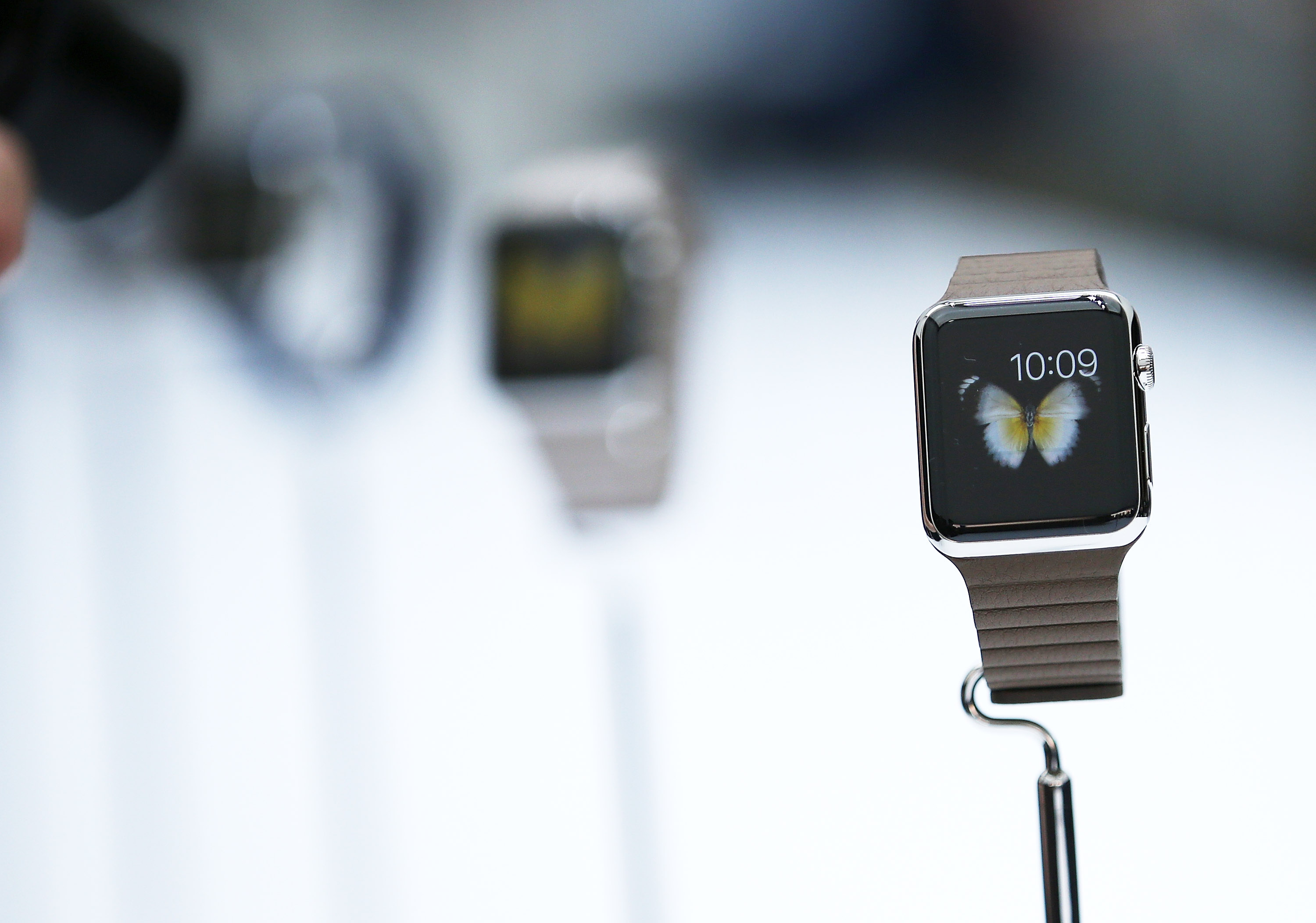
(Photo: The new Apple Watch is displayed during an Apple special event at the Flint Center for the Performing Arts on September 9, 2014 in Cupertino, California. By Justin Sullivan/Getty Images)

No, Don’t Ally With Assad

The Syrian president isn’t as strong as he claims to be, Liz Sly remarks, and he needs us far more than we need him:

After three years of fighting, the army is depleted and tired. Assad is indebted to local militias trained and funded by Iran, and to Lebanon’s Hezbollah, for his government’s most important victories. Many of the Iraqi Shiite militias who also helped have gone home to fight the Sunni extremists on their own turf. The government sustains its efforts to repress the rebellion by bombing communities that oppose it from afar, further fueling the grievances that enabled extremism to thrive.

Even if the United States wanted to partner with Assad to defeat the extremists, “it’s not clear what he would bring to the table,” said Jeff White of the Washington Institute of Near East [Policy]. “What we’re seeing is the overall, uneven degradation of the regular military forces,” he said. “They’re becoming less and less capable over time.” That is partly why Syria is so eager to join forces with America in the international coalition President Obama is seeking to build against the Islamic State

He’s also been known to screw over his partners:

There has long been a clear pattern to Syrian statecraft: Syria’s leaders accommodate their opponents just enough to keep them at bay without ever surrendering the ability to do harm to the same said opponents.  It is smart and it has proven successful, which makes one wonder why anyone would ever believe that they could get something done with the Assads.

Examples of Syrian duplicity in which Damascus is discreetly helpful in one area, but causes trouble—most often death and destruction—in another abound.  Where to start?  How about the entire occupation of Lebanon?  Syrian forces put an end to the Lebanese civil war, but this was hardly a function of altruism.  Lebanon has paid a steep price and will continue to pay for Syria’s occupation for generations.  Then there is the way in which the Syrians have scrupulously maintained the armistice on the Golan Heights, but nevertheless enabled Hezbollah in southern Lebanon.  Of course, Hezbollah was a response to Israel’s invasion and occupation of Lebanon, but it was also through the group that the Syrians sought to inflict pain on the Israelis, spilling mostly Lebanese blood in the process.

Museum Of Modern Snapchat?

Zachary Fine worries that “even art – that precious category of aesthetics coveted for its ability to draw our eye and focus – finds itself potentially imperiled by the company’s growing orbit”:

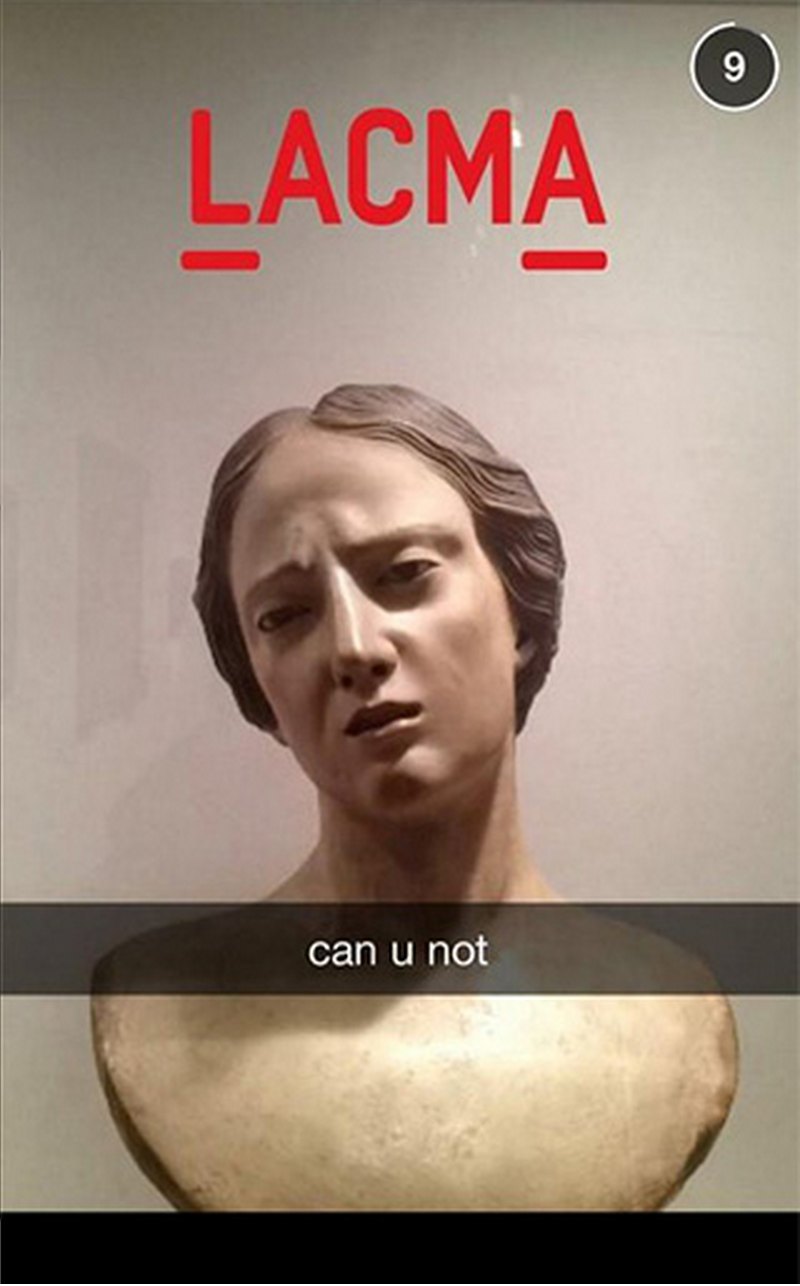
The renowned Los Angeles County Museum of Contemporary Art (LACMA) justScreen Shot 2014-09-04 at 3.58.12 PM joined the app as a user, and almost immediately gathered a following with its witty snaps. Now careening along after their forward-thinking competitor, the Blanton Museum of Art in Austin, the Georgia Museum of Art, and the Museum of Contemporary Art Chicago have followed suit.

While it remains to be seen what kind of future this bodes for habits of viewing inside museums and beyond, the prospects seem grim. Unfortunately, Snapchat rewards those very practices of rapid looking and reading that have so impaired our attention spans and hermeneutic dexterity in the Internet age. It not only convinces us that we have become good at seeing quickly, but that such practices are sufficient for the thoughtful interpretation of challenging and information-dense images. If users are determined to keep Snapchat in their lives, let them routinely resort to the under-employed screenshot—assuming fingers can scramble in time.

(Image from LACMA’s Snapchat channel via Hrag Vartanian)

A Rand vs Hillary Match-Up

Linker sincerely hopes it happens:

[T]he only scenario that promises to deliver a genuine contest and spark a serious, important debate is one that involves an electoral smackdown between Clinton and Rand Paul. That is the presidential match-up America needs.

Let me be clear: I am not a libertarian. It’s very unlikely I will cast a vote for Paul or any other Republican in 2016. I anticipate supporting Clinton in the general election.

But I nonetheless believe that American democracy would benefit from a contest that forces the establishment candidate (Clinton) to defend herself and her positions against a challenger who presents a genuine alternative — and one that confounds at least some of the pieties that have gripped the GOP through the last several election cycles.

The Best Of The Dish Today

photo-11

I’ve been enjoying the to-and-fro on Slate about the “end of gay culture” between June Thomas and a young, out lesbian living in Tennessee, Vanessa Vitiello Urquhart. I’ve always had mixed feelings on this issue, but tend to be more on Vanessa’s side of the argument (yes, I know, while living in uber-gay Ptown all summer).

The truth is: I’ve never really felt totally comfortable identifying with a whole lot of what’s called gay culture, which led one wag to note once that I love gay sex and can’t stand gay men. That’s not true, but it isn’t entirely untrue either.  So, for example, I have a bit of a visceral reaction when watching this other Slate video about why the “gay community” loves Joan Rivers. Check it out:

This embed is invalid


I know many gay men do; I know there is a diva worship in many parts of gay culture; I don’t begrudge it an iota; but I really don’t share it, and when it’s presented with the words: “Today we pause to honor a single figure of particular importance to the gay community—the late, great Joan Rivers;” or “Joan was always one of our favorites;” I tend to have this response: Why you say “our”, homo? But then my first reaction upon seeing Mommy Dearest was to be horrified by child abuse – rather than titillated by the camp of it all.

I’ve learned gay culture over the years the way I once learned algebra. I kinda get it, but most of the time, I’m faking it.

I’m not the only one – and I guess one reason I’m happy that we are so much more integrated than in the past is that we increasingly cannot be lumped together as one BLT glob of stereotypes and clichés, or forced into some lockstep lefty orthodoxy if we don’t happen to share it. I have no issue with anyone being gay however they want. But the point of the gay rights movement is not to help people be gayer, but to help them be themselves. Vanessa is walking that walk in the South, where it matters. Best of luck to her.

Today, I coughed up some guilty indifference to Scottish independence – and realized I predicted this fifteen years ago. I worried about the rush to a new war in Iraq (as did Greenwald), and noted new Republican outreach to gays and to women. We aired the question of why women stay with men who abuse them; and announced the new Book Club selection – Sam Harris’ just published “Waking Up: A Guide to Spirituality Without Religion“. Buy it here and join the discussion! Oh, and we “grazed some dicks”. If you need more elaboration of that, click here. Oh, and a Dish day would not be complete without a whack at an unreconstructed neocon. Enjoy!

The most popular post of the day remained Are We Being Baited?, followed by The Scots and the English: Some Guilty Thoughts.

Many of today’s posts were updated with your emails – read them all here.  You can always leave your unfiltered comments at our Facebook page and @sullydish. 24 more readers became subscribers today. You can join them here – and get access to all the readons and Deep Dish – for a little as $1.99 month. Gift subscriptions are available here. Dish t-shirts and polos are for sale here. A reader writes:

I am glad you are back with us! You remarked that traffic was high while you were gone, but in my case that was simply out of a sort of loyalty to you. In truth, if you had not come back, I would no longer subscribe! The blog began to slowly become a kind of melange – tasty, yet lacking the essential ingredient that gives it a focus: you!

So I do not think the blog would thrive without you (and I hope you are not thinking it should become some kind of institution, or that you would just become some sort of detached figurehead). As a Buddhist, I say, embrace impermanence! And while long may you live and flourish! May you live a hundred years or more! When you are gone, I hope you let the blog be gone too. It quite frankly IS you, regardless of how your team writes and works under your guidance (and they do so brilliantly).

I loved the way you were so reticent about Burning Man, by the way, with only those two lovely stories to give us a clue. Bacon and ukeleles. In the dust and under the stars. Probably would take a poet to write about all that.

My reader is too kind.

See you in the morning.

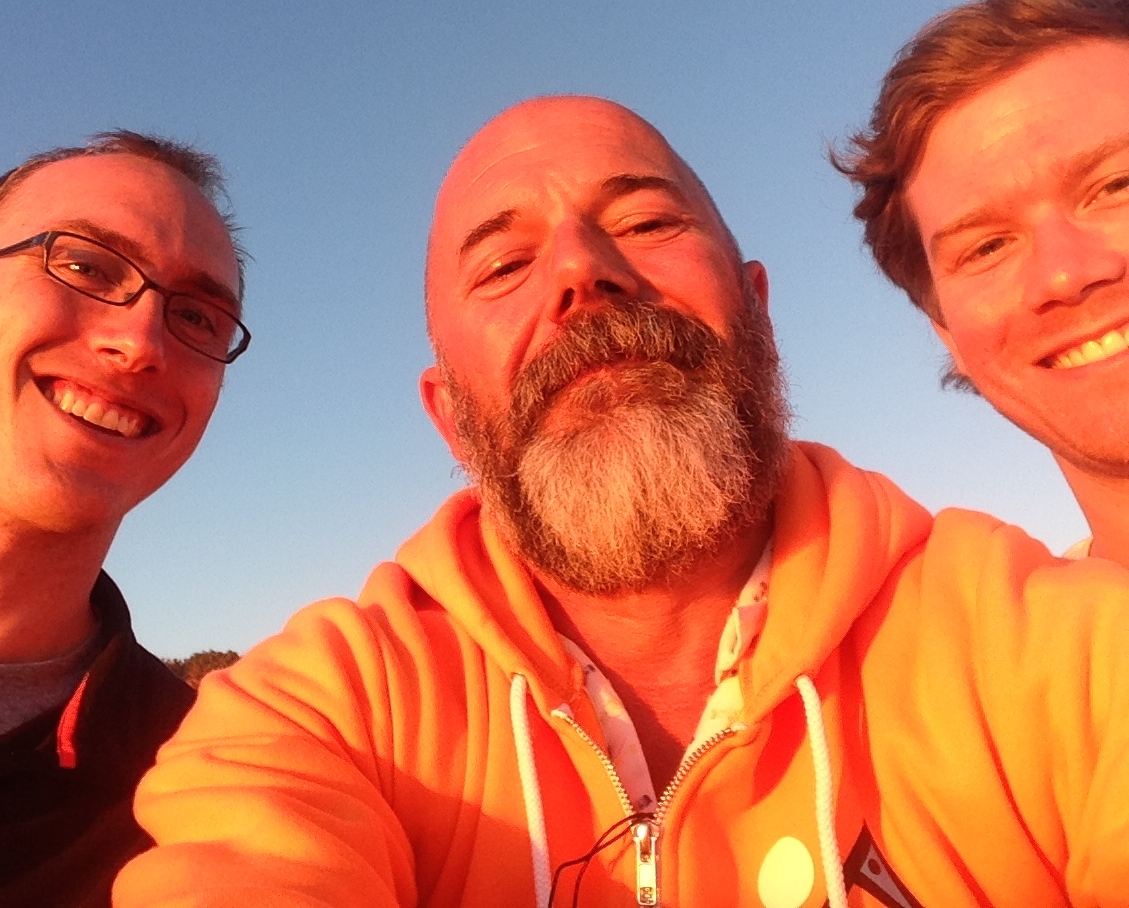
(Photo: me, and Chris and Patrick in the evening Cape Cod sun this past weekend.)