A Short Story For Saturday

This weekend’s short story is Joyce Carol Oates’ “Where Are You Going, Where Have You Been?“, first published in 1966. Its opening paragraphs:

Her name was Connie. She was fifteen and she had a quick, nervous giggling habit of craning her neck to glance into mirrors or checking other people’s faces to make sure her own was all right. Her mother, who noticed everything and knew everything and who hadn’t much reason any longer to look at her own face, always scolded Connie about it. “Stop gawking at yourself. Who are you? You think you’re so pretty?” she would say. Connie would raise her eyebrows at these familiar old complaints and look right through her mother, into a shadowy vision of herself as she was right at that moment: she knew she was pretty and that was everything. Her mother had been pretty once too, if you could believe those old snapshots in the album, but now her looks were gone and that was why she was always after Connie.

“Why don’t you keep your room clean like your sister? How’ve you got your hair fixed—what the hell stinks? Hair spray? You don’t see your sister using that junk.”

Her sister June was twenty-four and still lived at home. She was a secretary in the high school Connie attended, and if that wasn’t bad enough—with her in the same building—she was so plain and chunky and steady that Connie had to hear her praised all the time by her mother and her mother’s sisters. June did this, June did that, she saved money and helped clean the house and cookedand Connie couldn’t do a thing, her mind was all filled with trashy daydreams. Their father was away at work most of the time and when he came home he wanted supper and he read the newspaper at supper and after supper he went to bed. He didn’t bother talking much to them, but around his bent head Connie’s mother kept picking at her until Connie wished her mother was dead and she herself was dead and it was all over. “She makes me want to throw up sometimes,” she complained to her friends. She had a high, breathless, amused voice that made everything she said sound a little forced, whether it was sincere or not.

Read the rest here. For more of Joyce Carol Oates’ short fiction, check out her High Lonesome: New and Selected Stories 1966-2006. Previous SSFSs here.
Face Of The Day

Screen Shot 2014-05-29 at 11.17.04 AM

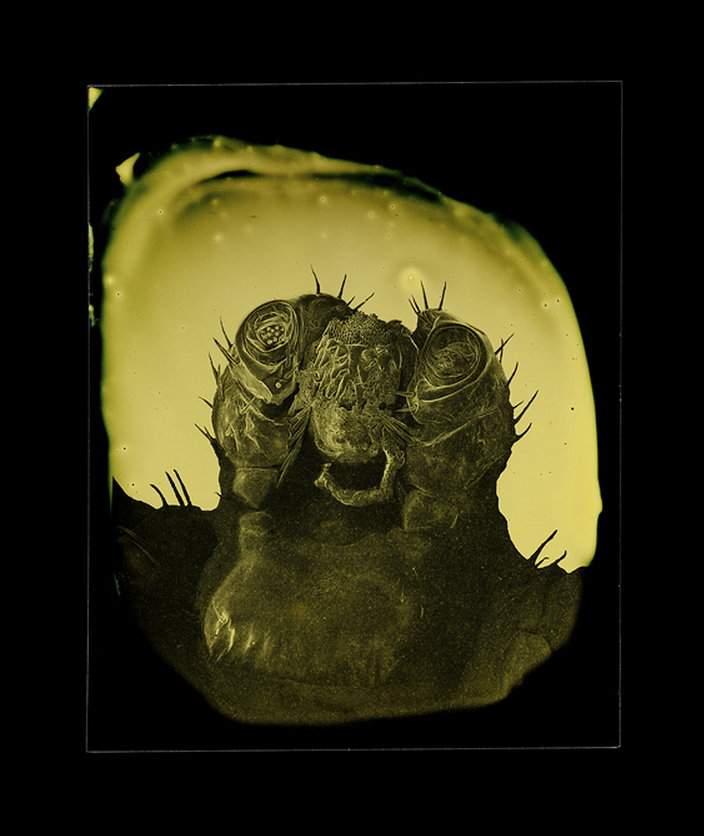
Photographer Marcus DeSieno captures microscopic parasites:

It is fair to assume that while most of us know that our world, our living spaces, and even our bodies are covered with microscopic organisms, we do like to not be reminded of it. Photography student Marcus DeSieno’s recent photoseries begs to differ, offering a beautiful yet disturbingly close look at our microscopic natural surroundings. Parasites is an ongoing project “investigating a history of scientific exploration through images of parasitic animals.” Taken with a Scanning Electron Microscope and then exposed onto dry plate gelatin ferrotype plates, a process which combines classical and cutting-edge photographic techniques. The final images are archival pigment prints from the scanned ferrotype plates and printed larger for these abject animals to confront the viewer at a one-on-one scale.

See more of DeSieno’s work here.

Márquez The Reporter

Jessica Sequeria considers Gabriel Garcia Márquez’s considerable influence on Colombian journalism:

Apart from the linguistic pleasures it provides, García Márquez’s nonfiction plays a vital role in the cultural history of Colombia. Not just in its style – these works have an ironic sense of humor, conversational tone, and attractive snark often lacking in his novels – but also in its influence, both on the way journalism has been written and on the formation of a national cinema. For a long time, Colombian journalism operated under G.G.M.’s shadow. As Gilard put it, writing in 1993, “Until the end of the ’70s, all Colombian reportage followed García Márquez’s pattern, imitated just as much in journalism as in literature. His at times suffocating omnipresence didn’t show itself only in narrative; it was as real, and perhaps stronger, in news writing.”

Previous Dish on GGM here and here. We recently featured one of his short stories here.

A Lonely Elegy

In an interview earlier this year, Lonely Christopher described his debut poetry collection Death & Disaster Series (see above trailer):

It’s a collection of poetry that I wrote while my mother was battling late stage cancer and after she died. It was a very necessary thing for me to write—the only way I knew how to react to what was happening, which seemed so much larger than anything I had heretofore directly experienced. It’s an angry book screaming out for redemption.

Felix Bernstein appreciates how Christopher “depicts a prickly, dangerous, upsetting world that somehow reveals the unthinkably awful without making it palatable”:

Series is a prolonged elegy to Christopher’s mother, who died in August 2011, and was written from the time of his mother’s decline (“Poems in June” chronicling June 2011) to only about a year after her death. This “Death and Disaster Series” does the opposite of the “death and disaster” artworks provided us by Warhol and [Kenneth] Goldsmith: this is not a work that appropriates the banal in order to render it sublime. Rather, this is a work that draws from personal experience in order to make precarious beauties that lack any sort of monumentality in the face of darkness. In that way, his work can be seen to follow the neglected tracks of [John] Wieners, who called what he wrote obsessional, not confessional, poetry.

If Wieners obsessively tried to write the most embarrassing thing he could think of, Christopher betters him with even more guttural honesty:

“My boyfriend fucked me tonight without a condom / or lubricant; my anal wall started bleeding and / he cut open his dick before he came / and I shit blood.” But even within the goriest of passages, there is often a delicate treasuring of the poet’s personal glimpses of beauty.

In another recent rave review, Joyelle McSweeney also picked up on the contradictions in Christopher’s verse:

The lushness of Lonely Christopher is a contradictory flora, both decorated and plain, but always intensely voiced, dramatic, forceful, and red-hued. This is a poet who can write “I love a boy’s cock/it make me think of AIDS/it gets me off.” and who can end a volume by writing, simply, of his dead mother, “I love you, Susan”, while in the same volume producing ruffles and flourishes and lacings (and lashings) of language, of decadent aesthetic pleasure. My favorite poems in the volume are the ones which do both, deploying an admirable directness and a delectable oddness….


What’s The Difference Between Chick Lit And “Real” Literature?

Jennifer Weiner argues that some of it is “straight-up packaging”:

If you’re writing for FSG or Knopf it’s like it cannot, by definition, possibly be something as degraded as chick lit, because they don’t publish that stuff! If your book has a cover that’s just typography and color, it’s literature, but if there’s a female body part, it’s chick lit. If you’re smiling in your (color) author photo, it’s chick lit. If you’re smirking, or giving a stern, thin-lipped stare in your black-and-white picture, and if you go out of your way in every interview to talk about how “unserious books do not deserve serious attention,” then it’s literature. (Or, more likely, it was literature all along but you just want to make quadruply sure that absolutely no one is mistaken about your serious intentions and gets you confused with one of this icky pink girls who have cooties.)

Eliza Berman pushes back against Weiner’s observation about authors’ book-jacket photos:

I compared the photos for the top 20 best-selling female authors in [Amazon’s] “Women’s Fiction” [category] with the same group in “Literary Fiction.” If they didn’t have a photo, I skipped them and moved on to the next one. If they appeared twice within the top 20, I only counted them once.

On the first count, smiling versus unsmiling, Weiner was right. Sort of. Seventy-five percent of “Women’s Lit” authors were smiling, compared to 55 percent of “Literary Fiction” authors. But if you look at not just whether someone’s smiling, but with how much gusto, of the shiny, happy writers, 60 percent of chick lit authors bared their pearly whites, while more than 70 percent of the literary writers did. The chick lit writers smiled more often, but when the literary writers smiled, they did it with abandon.

The View From Your Window Contest

VFYWC-211

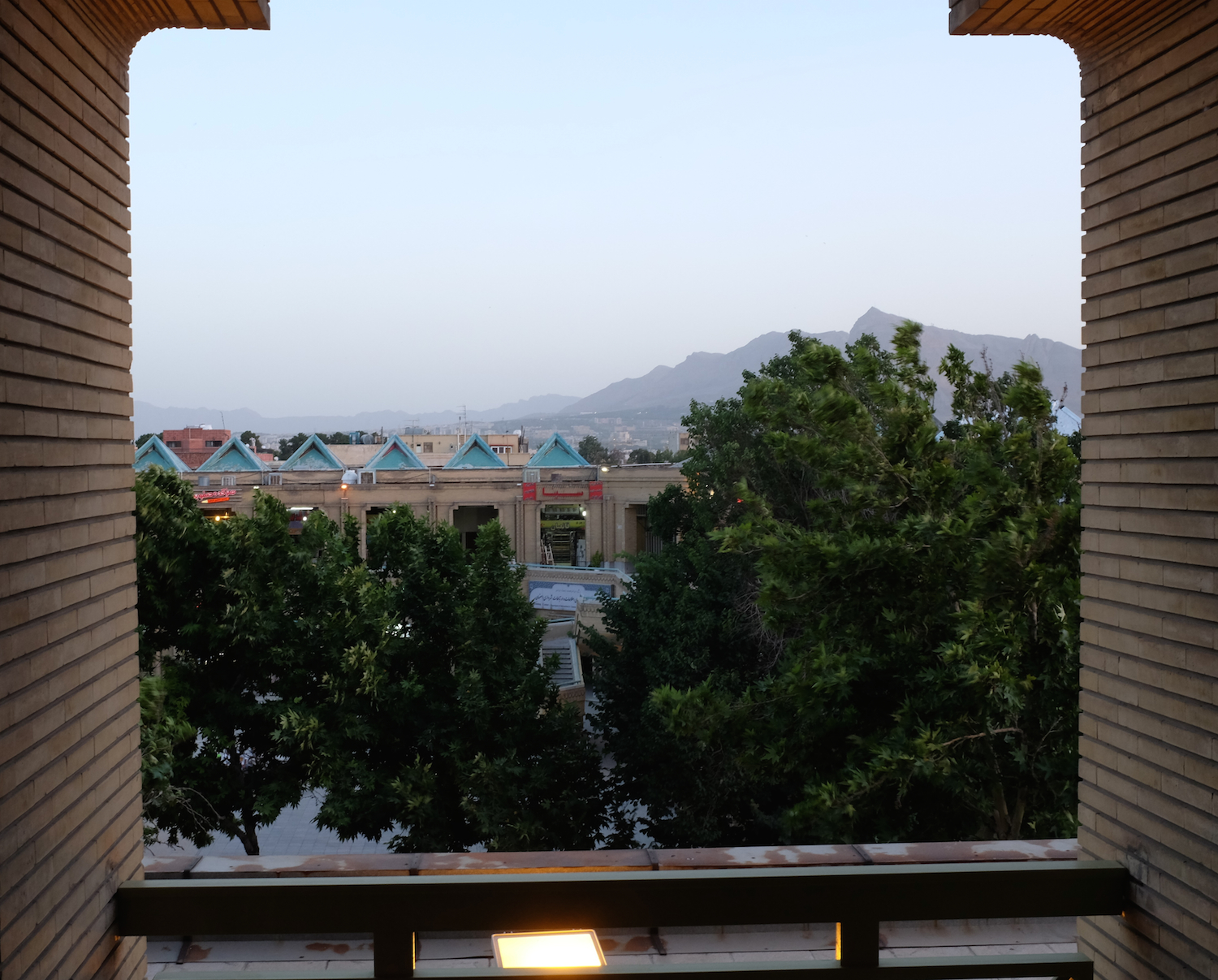
You have until noon on Tuesday to guess it. City and/or state first, then country. Please put the location in the subject heading, along with any description within the email. If no one guesses the exact location, proximity counts.  Be sure to email entries to contest@andrewsullivan.com. Winner gets a free The View From Your Window book or two free gift subscriptions to the Dish. Have at it.

Print vs Screen

Julian Baggini brings some perspective to the reader’s dilemma:

[D]ebates over whether print beats screen are hopelessly simplistic, not least because reading on a computer, with endless distractions a click away, is very different from reading on a dedicated e-reader. Much depends on what you’re reading and why. In a Taiwanese study led by Szu-Yuan Sun, the results suggested that reading linear texts in the manner of traditional paper books was “better for middle-aged readers’ literal text comprehension” but reading on computers with hyperlinks “is beneficial to their inferential text comprehension”. In other words, the joined-up environment of the web encourages people to make connections and work things out, while straightforward reading encourages them to take in what’s on the page in front of them. Hence the prevalence of hyperlinks and multiple windows on computers could be seen as creating either unwelcome distraction or more opportunities for active learning.

Where research has suggested that comprehension is diminished by screen reading, it is hard to know if this is an artefact of the particular piece of technology and people’s familiarity with it. “Having a device that requires a lot of attention to simply operate could essentially steal working memory resources,” says [researcher Sara] Margolin. That did not appear to be the case in her own research, which she suggests was probably because “the device we used was fairly easy to manipulate and my participants were familiar with technology”.

This is a nice example of how hard it is to know whether the preferences we have for one type of reading device over another are rooted in the essentials of cognition or are simply cultural. As another researcher, Simone Benedetto, points out: “The fact that the large majority of the population is still trained to the use of paper since early childhood has a major influence on the preference for paper.”

A Poem For Saturday

6220041571_d1b8b8c485_o

Dish poetry editor Alice Quinn writes:

Last week we posted a beautiful poem by John Clare, born in 1793 in Helpston, England, which he described as “a gloomy village in Northamptonshire, on the brink of the Lincolnshire fens.” Clare was schooled locally in his village but often forced to abandon school when times were hard to work as a child thresher, a ploughboy, or a potboy at a local inn. In 1820, he fell in love with James Thomson’s poem The Seasons and set about writing poetry himself. His Poems, Descriptive of Rural Life and Scenery, published when he was 26, brought him fame, patronage, and the acquaintance of London literary figures such as Charles Lamb and William Hazlitt. In the 20th century, poets as various as Robert Graves, John Ashbery, and Seamus Heaney wrote sweetly of their love for his poems.

Clare married and fathered six children, five of whom died before him. He suffered his first episode of major depression from 1823-25 and another from 1830-32. Five years after that, his condition complicated by hallucinations and aberrant behavior, he was certified insane and confined until his death in 1864 in various institutions although free to roam about during the day in the woods he found so entrancing. (From “Memories of Childhood”: “Ah what a paradise begins with life & what a wilderness the knowledge of the world discloses. . .”)

Today and in the days ahead, we’ll post poems written while Clare was an inmate at the places that sheltered him. At the last, the Northampton General Lunatic Asylum, one of the stewards, William Knight, transcribed and preserved many of the more than three and a half thousand poems of his. Jonathan Bate’s biography, John Clare, is superb. He is also the editor of the most recent edition of Clare’s Selected Poetry.

“How Can I Forget” by John Clare (1793-1864) :

That farewell voice of love is never heard again,
Yet I remember it and think on it with pain:
I see the place she spoke when passing by,
The flowers were blooming as her form drew nigh,
That voice is gone, with every pleasing tone—
Loved but one moment and the next alone.
“Farewell” the winds repeated as she went
Walking in silence through the grassy bent;
The wild flowers—they ne’er looked so sweet before—
Bowed in farewells to her they’ll see no more.
In this same spot the wild flowers bloom the same
In scent and hue and shape, ay, even name.
’Twas here she said farewell and no one yet
Has so sweet spoken—How can I forget?

(From “I Am”: The Selected Poetry of John Clare, edited by Jonathan Bate © 2003 by Jonathan Bate. Reprinted by permission of Farrar, Straus & Giroux. Photo by Andrew Hill)

The Secret To Selling Cool

Gillian Tett marvels at the success of Starbucks’ “secret menu” – which includes the Cotton Candy Frap(puccino), Grasshopper Frap, and Rolo Frap – among teens and tweens:

As a piece of marketing strategy, this is pure genius. It is also a striking symbol of dish_cottoncandyfrap our age. Until the early years of the 20th century, the concept of a teen – let alone a tween – was unknown; in western society people were classified either as adults or children. The concept of the teenager sprang to life as consumer companies discovered a new market for their goods. They realised that the key to selling things in this demographic was to make teen brands different from parental brands, and a little subversive too.

Until recently, Starbucks did not seem keen – or able – to tap into the teen demographic. Coffee bars are generally branded as grown-up places where young professionals hang out; coffee drinkers are, on average, relatively old. But Howard Schultz, Starbucks’ CEO, knows that if he wants to keep expanding, he has to get creative. Since the 1970s coffee consumption has been flat or falling; today Americans “only” consume 23 gallons of coffee a year, half the level of 50 years ago. But Starbucks is convinced that it can use the 13,000 outlets that dot the US today to sell something else. Hence the secret menu campaign, which is now cropping up in other places too: Chipotle, Jamba Juice and even McDonald’s are playing with the concept.

(Photo of Cotton Candy Frap(pucino) by Elizabeth Faith via Pinterest)

Fecal Matters

Our ancestors might have been less carnivorous than we think – or so suggests new research that examined the oldest known piece of hominid poop:

The poop comes from five separate soil samples taken from a known Neanderthal site in El Salt, Spain, and is believed to date back roughly 50,000 years. The find puts to shame the previous oldest hominid poop discovered in the Western Hemisphere, a 14,000-year-old piece of shit found in an Oregon cave (that particular fecal find is in dispute).

Some brave souls from MIT and the University of La Laguna (“samples were collected by hand,” the researchers said) analyzed the makeup of the samples and found that Neanderthals ate a diet dominated by meat, but definitely ate some plants, as well.

That’s because lead researcher Ainara Sistiaga and his team were able to identify, for the first time, the presence of metabolites such as 5B-stigmastanol and 5B-epistigmastanol, which are created when the body digests plant matter. The existence of those metabolites “unambiguously record the ingestion of plants,” Sistiaga writes…

But it’s possible Neanderthals didn’t eat their veggies directly:

Sistiaga said it was possible, though unlikely, that the fecal biomarkers she and her colleagues found were solely the result of Neanderthals eating the stomach contents of their prey. “In any case, this would represent another way to eat plants,” she said.

A few updates from readers:

This may be pedantic but please don’t refer to Neanderthals as our ancestors. We did not descend from Neanderthals. We share a common ancestor with them, and there is evidence for breeding between Homo Sapiens and Neanderthals, but that is different from calling Neanderthals our ancestors. With that line of thought, though, the diet of Neanderthals, a physically distinct and not-ancestral hominid, would not really have any pertinence towards what I ought to eat.

Another:

I need to correct that earlier comment from one of your other readers. Neanderthals are in your ancestral tree if you happen to have European or Asian ancestry. There was some interbreeding of Neanderthals with the populations of H. sapiens who left Africa. Between 1 and 4 percent of European and Asian genomes is Neanderthal. So, yes, they were our ancestors, unless you happen to of African origin with no European or Asian in your family tree …

Another attests:

According to my 23&me genetic profile, I’m 3.2% Neanderthal.