
New Braunfels, Texas, 4.24 pm
New Braunfels, Texas, 4.24 pm
Larison compares Gary Johnson's record on abortion to Rudy Giuliani's:
As governor, Johnson signed parental consent and partial-birth abortion ban legislation. At least by the standards of most national Republicans, that makes him as “operationally pro-life” as anyone, and he managed to do those things without engaging in a lot of absurd pandering by telling phony conversion stories. It makes a difference that Johnson has signed pro-life legislation. That is as much as most of his likely competitors in 2012 have done on this issue, and in some cases it goes beyond what other probable candidates did while in office. Giuliani’s claims that he would satisfy pro-life voters once in office were based on nothing in his record, so there was no reason to accept what he was saying.
Hitch attacks the tea partiers and those who enabled them:
[T]he people who really curl my lip are the ones who willingly accept such supporters for the sake of a Republican victory, and then try to write them off as not all that important, or not all that extreme, or not all that insane in wanting to repeal several amendments to a Constitution that they also think is unalterable because it’s divine!
It may be true that the Tea Party’s role in November’s vote was less than some people feared, and it’s certainly true that several of the movement’s elected representatives will very soon learn the arts of compromise and the pork barrel. But then what happens at the next downturn? A large, volatile constituency has been created that believes darkly in betrayal and conspiracy. A mass “literature” has been disseminated, to push the mad ideas of exploded crackpots and bigots. It would be no surprise if those who now adore Beck and his acolytes were to call them sellouts and traitors a few years from now. But, alas, they would not be the only victims of the poisonous propaganda that’s been uncorked. Some of the gun brandishing next time might be for real. There was no need for this offense to come, but woe all the same to those by whom it came, and woe above all to those who whitewashed and rationalized it.
K-Thug says the tax cut compromise will hurt Obama's re-election chances because of lower growth in 2012. But Ryan Avent has already pointed out the following:
Take Mr Krugman's own example of the election of 1984, in which Ronald Reagan triumphed. Real GDP growth in that cycle actually peaked in the second quarter of 1983—more than a year before the election—after which it steadily slowed. From that 9.3% performance, growth tumbled to 3.3% by the fourth quarter of 1984, when voters actually went to the polls.
Now for the knock-out blow. David Leonhardt asks Zandi what he thinks about Krugman's alleged trade-off:
[S]tronger growth in 2011 (particularly in the first half of 2011) will ensure that the recovery achieves escape velocity. That is, enough G.D.P. growth to generate enough job growth to bring down unemployment and propel the recovery into a self-sustaining expansion. This is a necessary condition for addressing our long-term fiscal problems. Without this additional boost, unemployment would continue to hover near 10 percent throughout 2011 and the recovery would remain very vulnerable to anything that might go wrong. The objective of the Recovery Act was to end the Great Recession and jump-start a recovery. It succeeded. The objective of this package is to ensure the recovery evolves into a self-reinforcing expansion. I’m confident it will do that.
Juan Cole mounts the evidence:
From 2005 through 2006, Iran appeared to be on the retreat in the eastern Mediterranean. Pro-Western Sunnis and Christians took over in Beirut. Syria was expelled from Lebanon and there was talk of detaching it from Iran. The powerful generals of Turkey, a NATO member and ally of Israel, were reliably anti-Iranian. Now, Hariri is a supplicant in Tehran, Syria is again influential in Beirut, and a Turkey newly comfortable with Islam has emerged as a regional power and a force for economic and diplomatic integration of Iran and Syria into the Middle East. Iran’s political breakthroughs in the region have dealt a perhaps irreparable blow to the hopes of the United States and Israel for a new anti-Iranian axis in the region that would align Iran’s Arab and other neighbors with Tel Aviv.
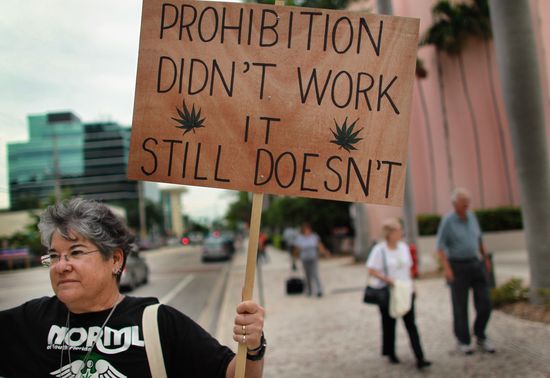
Sasha Abramsky checks in on California's marijuana trade:
Following the demise of Prop 19, it's likely that the pot economy in California will settle back into the odd but familiar equilibrium of the gray market. Despite Richard Lee's optimism that a Prop 19–like initiative will pass in 2012—and despite a poll released immediately after the election that found that 31 percent of those who had voted no on Prop 19 favored some form of legalization or reduced penalties but didn't like specific language in the measure—the defeat suggests that, absent a change of heart at the federal level, full legalization may not be on the immediate horizon. Yet that doesn't mean the drug is being pushed back into the closet. In the wake of Prop 19, growers will return not to the darkness of the underground but to the dim lights of the shadows—still vulnerable, in theory at least, to federal raids but increasingly tolerated and even wooed by local and state politicians. The market is in place, and no one in California is talking seriously about tearing it down.
(Photo: Joe Raedle/Getty)
That's the impression of Jay Newton-Small, who just did a cover-story for Time on her:
She certainly is sounding more and more bullish on a run. From when I began talking with her about a story more than three months ago till two days ago when I last exchanged e-mails with her, she has sounded increasingly interested in running. And if she doesn't she's going to be awfully bored next year: her speaking engagements have tapered off (as with other potential candidates, like New Gingrich, the Washington Speakers Bureau warns clients that these speakers may not be able to fulfill their contracts if they decide to run); her book tour has ended; her TLC series is ending soon. Palin plans a foreign trip early next year, tentatively planned to England and Israel amongst other countries – a must for presidential wannabes. But after that, her schedule, thus far, is clear.
A reader writes:
I got a chuckle out of seeing that you used the Brehon Pub to illustrate your post on "authentic" Chicago bars. Brehon (which means judge or lawyer in Gaelic) actually had the least authentic of origins.
It was started in the '80s by federal and state authorities as a sham business (under the name "the Mirage"). Its sole purpose was to catch City of Chicago building and liquor inspectors soliciting bribes from taverns. Those friendly bartenders were all FBI agents and undercover cops. A bunch of people went to jail. When the scandal was over, the place remained a bar under a new name. Not exactly the beginning you'd expect for a cozy neighborhood Irish watering hole.
And one more thing about Chicago pubs. Historically the rule in Chicago was as long as you paid city officials their smallish brides, pretty much anyone could open a bar. That meant, unlike other cities, the early gay bar scene in Chicago was not dominated by the Mafia (Mayor Daley's men would never have let another organization horn in on the bribery income stream). The US's first gay leather bar (Gold Coast) was established in Chicago in the 1950s – a couple of decades before such things were tolerated in other cities. In the late '70s, when federal authorities raided a gay bar named Carol's, the owner (Richard Farnam aka "Mother Carol") led a protest march of 5,000 people on City Hall.
We may not be the most progressive of cities politically, but don't touch our bars.
Howard Kurtz reports on a controversial Fox News Channel memo that directed news personnel on how they should refer to a provision of President Obama's health care bill. Jack Shafer – surprise! – defends the indefensible:
The call to refer to the program as the government option instead of the public option came from Republican pollster Frank Luntz, Media Matters and Kurtz report. But this shouldn't disqualify the new term from the Fox News stylebook. Government option is superior to public option in that it emphasizes that the government—and thus the taxpayers—will be footing the bill. As a modifier, public has many nongovernmental uses, as in public appearance, public figure, public display, public-key cryptography, public editor, public enemy, public storage, and public opinion.
But when government is used as an adjective, there is no such confusion. Does that make Fox News' semantic solution superior? I've always thought that Social Security should be renamed Government Ponzi Scheme. I'd also like the Export-Import Bank to be renamed the Government Subsidy Depot—but that's another column.
That Sammon issued a memo directing Fox News reporters to use a phrase he considers more accurate hardly constitutes "spin," as the headline to Kurtz's piece has it. If government option is spin, isn't public option spin, too?
Chait disagrees:
I suppose that might be a reasonable defense in a world where news organizations scrutinize every phrase for maximal accuracy. That, however, is not the practice at Fox News, or anywhere. Standard news practice is to simply keep using terms that have come into the public discourse and gained wide usage even if it is not the most technically accurate or neutral term. If you had a left-wing news network that decided it can no longer refer to military spending as "defense" because that presumes it is never used in an aggressive way, that would be an act of bias, regardless of the philosophical merits.
Daniel Sarewitz notes that 6% of scientists are Republicans while 55% are Democrats. Matt Steinglass wonders why:
I can think of three testable hypotheses they might look into. The first is that scientists are hostile towards Republicans, which scares young Republicans away from careers in science. The second is that Republicans are hostile towards science, and don't want to go into careers in science. The third is that young people who go into the sciences tend to end up becoming Democrats, due to factors inherent in the practice of science or to peer-group identification with other scientists. In the absence of data, I leave it to you to decide which you find most plausible. But by all means, social scientists should look into this.
 The Dish