This Mr G will make you cry, but this Mr G …
Author: Andrew Sullivan
An Unmanned Journey Down A Slippery Slope
The Stimson Center, a security think tank, released a report (pdf) yesterday on America’s drone policy, prepared by a ten-member task force of defense and legal experts. The co-chairs of the panel, former Army General John Abizaid and Georgetown law professor Rosa Brooks, warn in a WaPo op-ed that this policy is making the world more dangerous:
The United States’ drone policies damage its credibility, undermine the rule of law and create a potentially destabilizing international precedent — one that repressive regimes around the globe will undoubtedly exploit. As lethal drones proliferate, the future imagined above is becoming all too likely.
Recent events remind us that the threat posed by terrorist organizations is very real, and U.S. drone strikes have achieved significant tactical successes in certain regions, but the scope, number and lethality of terrorist attacks worldwide suggest that these successes are not producing enduring strategic gains. On the contrary: Overreliance on targeted strikes away from so-called “hot” battlefields creates a substantial risk of backlash and reinvigorated terrorist recruiting and may create a slippery slope leading to continual or wider conflict.
Zack discusses the report’s findings in greater detail:
The Stimson task force identifies a number of specific problems within the larger problem of a future of constant drone strikes. First, ease of drone strikes makes it easy to avoid thinking strategically about whether they’re doing more harm than good. “To the best of our knowledge,” the task force concludes “the US executive branch has yet to engage in a serious cost-benefit analysis of targeted UAV strikes as a routine counterterrorism tool.”
This is hugely troubling, for a number of reasons the report raises. Do constant drone strikes help terrorist recruiting more than they degrade the groups? Do limited drone strikes risk escalating to wider wars? Can this kind of war meaningfully be regulated by Congress? The Stimson authors thinks there’s real concern in each of these areas — and that the US government isn’t paying enough attention.
Jeffrey Smith and John Bellinger, who served on the task force, stress the importance of developing a sound legal framework for drone use before other countries start emulating our bad example:
The traditional rules of war and for use of force do not address the complexities of modern conflicts between states and non-state terrorist groups. We believe the United States has acted responsibly in conducting drone strikes but unless our country clarifies the rules and practices it is following, other states with less justifiable motives can easily point to the U.S. program as grounds to conduct lethal drone strikes that are not remotely responsible. For example, on what legal grounds could we object to Russian lethal drone strikes on Ukrainian “terrorists” in Eastern Ukraine?
But Waldman isn’t sure he buys that logic:
Reading the report, I was struck by the general presumption that other nations are going to be taking their cues from us, both in positive and negative ways. For instance, members of the task force write, “US practices set a dangerous precedent that may be seized upon by other states—not all of which are likely to behave as scrupulously as US officials.” If those nations are unscrupulous, then why would they care how responsible we’re being?
This is important because pretty much every country with a military either already has drones or will be getting them soon (most of those are for surveillance and not yet weaponized, but they will be eventually). We can impose all kinds of checks and balances on our drone policy, but no matter how thoughtfully they might be developed, that doesn’t mean that China or Russia, not to mention smaller states, would do the same.
The Dish previously covered drone proliferation here. Adi Robertson, meanwhile, explores the panel’s claim that drones are not a bad tool in and of themselves:
The report, interestingly, refuted what the ACLU has called the “PlayStation mentality,” the idea that remote operation makes killing easy. “UAVs permit killing from a safe distance — but so do cruise missiles and snipers’ guns,” they wrote. “Ironically, the men and women who remotely operate lethal UAVs have a far more ‘up close and personal’ view of the damage they inflict than the pilots of manned aircraft.” They cited a 2011 study in which nearly half of drone operators reported high levels of stress, a finding that was backed up in 2013 by the Department of Defense. The report’s claim that this is because they “watch their targets for weeks or even months … before one day watching onscreen as they are obliterated,” though, may not be totally accurate. The 2011 study’s authors attributed the stress levels to long hours as drone use steadily increased; they were surprised to find that relatively little stress was a result of watching targets.
When Celebrities Rape Children And Molest the Dead
Americans will have a hard time understanding the role Jimmy Savile played in British popular culture for decades. A weird, counter-cultural host for the legendary pop music show, Top Of The Pops, he was a constant presence in the 1970s and on. Think Mr Rogers Meets Liberace Meets Ozzie Osbourne. His flamboyant strangeness then turned into something like holiness as he went on to do relentless charity work, hosting a classic show called “Jim’ll Fix It” – a “Make A Wish” format which was about fulfilling the dying wishes of terminally ill children. He was a friend to almost everyone in the British Establishment of both parties and even a confidant of Princess Diana and Prince Charles, as their marriage unraveled.
But he was also, we now know, a rapist, and molester of unimaginable proportions:
A joint statement by National Health Service executives said there had been “truly awful” episodes dating to 1960, when Mr. Savile began volunteering at the Leeds hospital in northeastern England. Research by the National Society for the Prevention of Cruelty to Children found that, all told, he abused at least 500 victims, the youngest of them 2 years old … “For some, although the abuse took place decades ago, their experience endures as a painful and upsetting memory that still has an effect on them today,” said Sue Proctor, who headed the inquiry. She called Mr. Savile’s professed interest in the dead “pretty unwholesome,” quoting an unidentified student nurse as saying the entertainer had boasted of performing acts of a sexual nature on corpses.
Yes, he abused the dead as well, and in one of the more troubling incidents in his life, he kept his beloved mother’s corpse in his home for several days, sleeping next to her:
We hadn’t put her away yet and there she was lying around so to me they were good times, they were not the best times. I’d much rather that she hadn’t died but it was inevitable therefore it had to be. Once upon a time I had to share her with a lot of people. We had marvellous times but when she was dead she was all mine, for me. So therefore it finished up right, you understand, and then we buried her.
Savile was reared apparently with little affection by his mother; and he had no long-last relationships. If you want to watch a searing and now chilling long interview with him by Andrew Neil, it’s here. Money section: 6:00 to 9:00. Now we see it all much more plainly. His obsession with secrecy, with never “grassing” on “ladies”, clearly indicated something more than just a desire for some privacy in a man as public as any human in Britain. And then we also have a transcript from a long radio interview he did with a psychiatrist, Anthony Clare. Money quote from that:
The tough thing in life is ultimate freedom, that’s when the battle starts. Ultimate freedom is what it’s all about, because you’ve got to be very strong to stand for ultimate freedom. Ultimate freedom is the big challenge, now I’ve got it, and I can tell you there’s not many of us that have got ultimate freedom. I’ve got some considerable clout as well, all over. That is where the battle, the personal battle starts now. I’ve managed to handle complete and ultimate utter freedom. It’s marvelous but it’s dangerous. It would be easy to be corrupted by many things, when you’ve got ultimate freedom, especially when you’ve got clout. I could be corrupted.
Then you see further public near-confessions like this one:
In retrospect, it’s sitting there in plain sight. What blinded everyone to it? Two things, I’d suggest. He was such an aggressive and relentless do-gooder it seemed almost churlish to question his real intentions. That’s precisely the cover that so many priests had. A regular person who is suspected of malfeasance might be investigated more quickly than someone who has a reputation for good works or morality (Savile was a prominent and practicing Roman Catholic as well as being a charity-booster). It’s the moral authority of such people that paradoxically allows them to get away with evil. Which is why, I suspect, many pedophiles sought refuge in clerical garb.
And then there’s the unchecked cultural power of celebrity itself. It was particularly overwhelming in the era of untrammeled network dominance in television. In Britain, in the era when Savile became famous, there were only three and then four television channels. And television was a national obsession. A figure like Savile had a level of media saturation that turned him effectively into a secular god. His large-than-life persona almost demanded a jocular or fawning attitude toward him – and he garnered countless endorsements from the British Establishment – from Tory grandees to Roman Catholic bishops – that he was able to exploit mercilessly with respect to the vulnerable.
We can get depressed about the state of our fragmented culture today, the collapse of institutional authority and trust. And all these represent real losses, to be sure. But our raucous, multi-faceted de-centralized media does do something to help reduce gigantic figures like Savile down to size; and the deference has mercifully disappeared, rendering a man like him less able to hide his predations. Wider and deeper understanding of sex abuse and its horrors has also made all of us less complacent when faced with the Sanduskys and Saviles that prey on the vulnerable and intimidated.
These are all gains, as my shrink puts it. Even as they scarcely manage to counterbalance the vast and incalculable losses that Savile – and his countless enablers – perpetrated and celebrated for so long.
From The Annals Of Chutzpah

As the country literally falls apart, Iraq is spending $1 billion on a new complex for its parliament:
The well-known London-based, Iraqi-born architect Zaha Hadid has been tapped to design a 2.7-million-square-foot building on the 49-acre site, even though her proposal—which remains secret—came in third in the international architecture competition.
The secretary general of Iraq’s parliament, Ayad Namik Majid, told the Architect’s Journal that the insurgency had caused “no problems” to plans for the complex, despite the fact that many other major developments across the country—including hospitals in Basra, a master plan in Najaf, and an oncology center and a library in the capital—have been put on hold. The site of the future parliamentary complex is near the abandoned Al Muthana airport, and it still has the remains of a colossal mosque that was being constructed at the time of the 2003 US invasion.
(Image: British architecture firm Assemblage’s proposal for the Iraqi parliament, shown here, won the international competition but the parliament decided to go with Hadid’s design instead)
The View From Your Window

Bethlehem, West Bank, 12 pm
Lede Of The Day
Via CBC:
A young bear fell through an Alaska couple’s skylight while they were preparing to celebrate their child’s birthday, sending the humans scurrying out the room while he feasted on cupcakes.
Which brings to mind this classic tumblr.
(Hat tip: Laura Nahmias)
Up Close And It’s So Personal
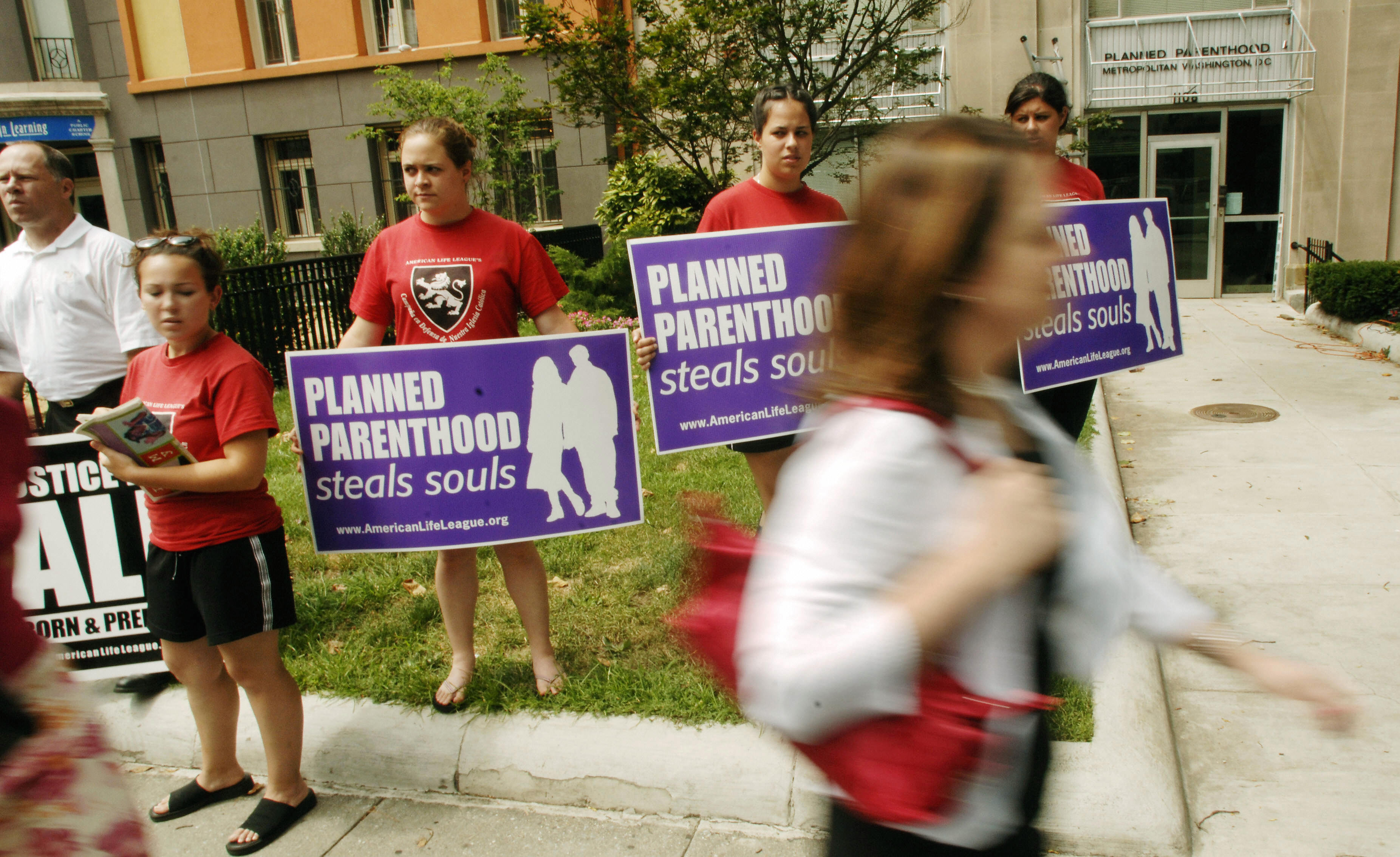
From a recap of yesterday’s ruling in McCullen v. Coakley:
The US Supreme Court on Thursday unanimously struck down a Massachusetts law that banned protesters within 35 feet of abortion clinics, ruling that the law infringed upon the First Amendment rights of antiabortion activists. The decision effectively overturns about 10 fixed-buffer-zone laws across the country, from San Francisco to Portland, Maine, but offers a framework for more limited restrictions around clinic demonstrations, legal experts said.
The justices’ reasoning:
The court ruled 9-0 that the state law was a violation of the First Amendment, but the justices were split on why, with Chief Justice John Roberts appearing to be the swing vote. He joined the court’s liberal block, Justices Ruth Bader Ginsburg, Stephen Breyer, Sonia Sotomayor and Elena Kagan, in saying that the law’s limits on speech were too broad. … In its majority ruling, the court did not establish what distance would be acceptable but made a veiled suggestion that a smaller space would be legal in Massachusetts. … The other justices, the court’s four conservatives, said the law was unfairly aimed at anti-abortion speech because it restricted protesters but not clinic employees.
A seething Dahlia Lithwick notes that SCOTUS maintains a buffer zone around its own building. Kliff predicts that the ruling “will likely have a ripple effect into other states”:
Massachusetts was one of three states with a buffer zone law, according to the Guttmacher Institute, the others being Colorado and and Montana. Massachusetts began moving towards its law to restrict access to the space around clinics in 1994, when there was a national wave of violence against abortion providers. It’s likely that Colorado and Montana will have to re-evaluate their own restrictions in the wake of the Supreme Court decision.
But Morrissey warns against overstating the impact of the case:
It this may not be a big win for abortion opponents in the end, because the Court appears to have upheld the notion of buffer zones in principle:
… According to NBC, the ruling does not affect an earlier ruling upholding an eight-foot “bubble zone” around people entering the clinics. Interestingly and critically, the decision also didn’t rule that the fixed zones were content nor viewpoint based, even though the only obvious outcome was to hinder the pro-life message from being freely disseminated in that zone.
Sally Kohn elaborates:
The McCullen decision strikes down the Massachusetts law because it includes public streets and sidewalks. … Presumably under this ruling, clinic buffer zones that are more tightly drawn and do not include public sidewalks and streets are still completely permissible under the Constitution. (There is some debate about how this will affect clinics that abut sidewalks or public streets.)
Still, Marcotte fears the worst:
Supreme Court decisions are about more than just the law and what it does and does not allow. They also help set social expectations. While anti-choicers continue to believe that they own women’s uteruses, their sense that they are also entitled to control women’s movements has declined since the ’90s, at the height of clinic blockades and violence. This decision may be limited legally, but could very well be taken by the anti-choice movement as “permission” to reassert themselves and their physical presence. If past is any indicator, the frustration of being up close and personal with a woman who is about to have an abortion but being unable to actually stop her can sometimes spiral out of control.
David Harsanyi objects to that line of argument:
The genuine purpose of these buffers is to shelter people from feelings of unease, guilt or embarrassment when they are confronted. How this makes the abortion more “dangerous” for women, as supporters claim, is confusing. It is against the law to impede a person wishing to enter an establishment. It is against the law to physically assault someone (other than a fetus that is). It is against the law to damage private property. It is against the law to harass someone – and by “harass” I am referring to the legal definition not the definition offered by abortion clinics, which is often simply “inconvenience.”
It is not yet against the law to remind them what they are doing, or convince them not to enter or to posit that a doctor inside is in the process of ending human life.
On that point, Kate Pickert examines the data:
Academics who study the effects of anti-abortion protestors on women’s decision-making say it’s difficult to collect data on women who may change their minds as a result of protestors. These women may never have contact with abortion providers or researchers studying the topic. But on a related subject—the effect of protestors on women’s states of mind—there is more data.
A 2013 study published in the journal Contraception found that protestors affect the emotional state of women entering abortion clinics. The study, by researchers at the Bixby Center for Reproductive Health at the University of California, San Francisco, included interviews with almost 1,000 women who had abortions and were asked whether contact with protestors affected them emotionally. Of the women who saw protestors outside clinics, 41% reported feeling upset because of it. In addition, the more contact women had with protestors, the more upset they felt.
But asked if the protestors impacted their feelings about actually having abortions, the women reported their feelings were the same regardless.
To get a sense of women’s feelings when confronting a late-term abortion, check out the “It’s So Personal” series of first-hand accounts from Dish readers.
(Photo: Anti-abortion activists protest outside of a Planned Parenthood health clinic in Washington, DC on July 28, 2005. The group had walked from Maine to protest at pro-choice health clinics along the way. By Mandel Ngan/AFP/Getty Images)
The Hands-Off President?
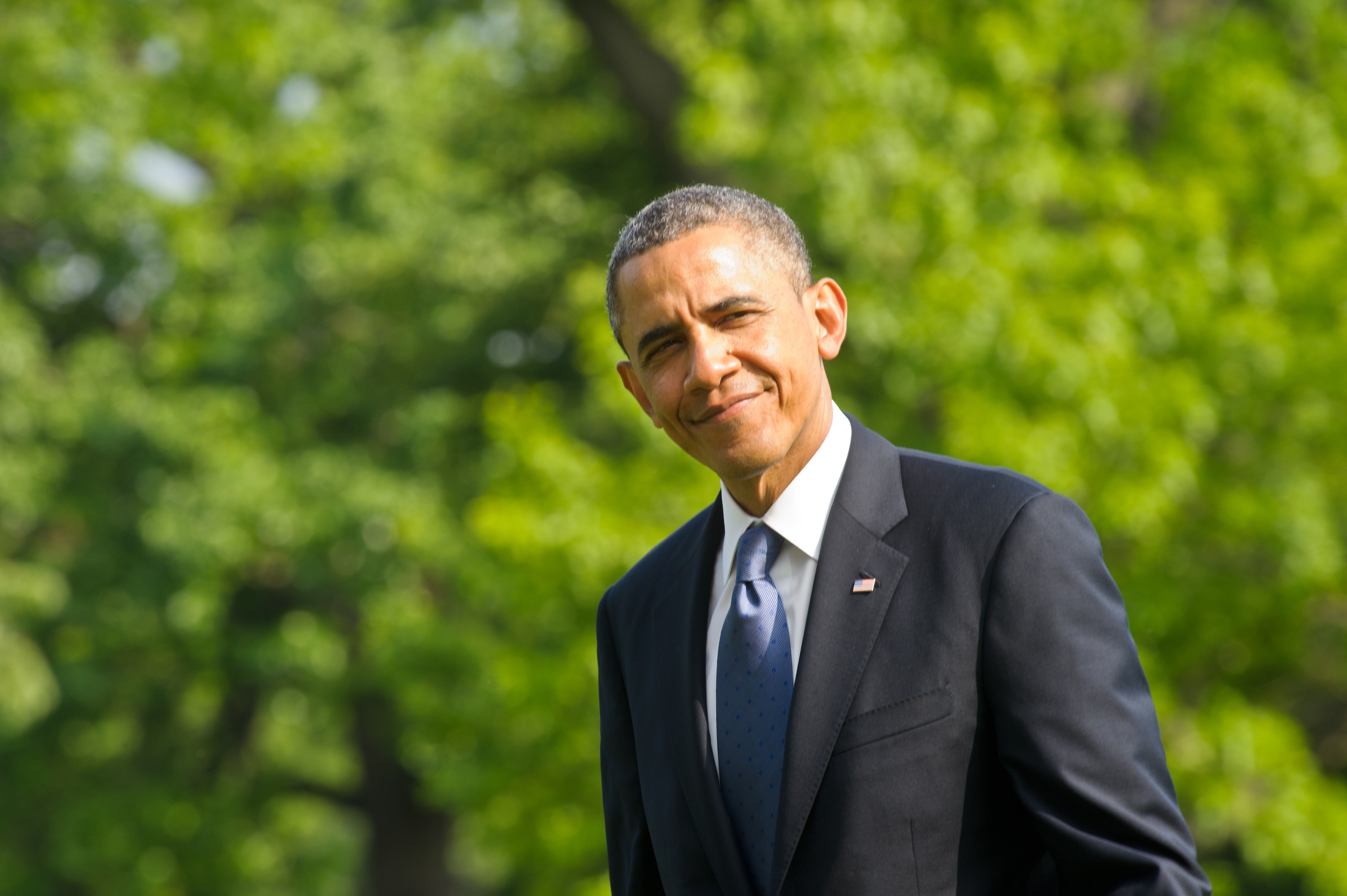
David Bromwich, no right-wing hack, indicts Obama for seeming “far from the scene” during crisis after crisis, from the roll-out of his health care plan to the VA scandal to the turmoil in the Ukraine. Bromwich finds his response to the Newtown shooting emblematic of the problems that would beset Obama as he entered his second term:
After the mass killing of schoolchildren in Newtown, Connecticut in December 2012, he vowed to pass a stringent new measure to strengthen gun control. For anyone who has been watching him, it was the most deeply felt moment of his presidency, and the largest risk he had taken on any issue. The time to publicise the outlines of such a bill was during those December days when the grief of the parents overwhelmed the country. Obama’s solution was characteristic. He announced that Joe Biden would explore the legislative possibilities and report back in a month. As the weeks passed, various weapons bans were drawn up and canvassed in public, but the National Rifle Association had been given time to rally and the moment passed. Much the same happened with the pledge in January 2009 to close Guantánamo. Obama left the room and asked his advisers to call him when they had solved it. A prudential pause was lengthened and became so clearly a sign of unconcern that the issue lost all urgency.
Obama is adept at conveying benevolent feelings that his listeners want to share, feelings that could lead to benevolent actions.
He has seemed in his element in the several grief-counselling speeches given in the wake of mass killings, not only in Newtown but in Aurora, at Fort Hood, in Tucson, in Boston after the marathon bombing; and in his meetings with bereft homeowners and local officials who were granted disaster funds in the aftermath of recent hurricanes. This president delivers compassion with a kind face and from a decorous and understated height. And that seems to be the role he prefers to play in the world too. It was doubtless the posture from which he would have liked to address the Arab Spring, and for that matter the civil war in Syria, if only Assad had obeyed when Obama said he must go. Obama has a larger-spirited wish to help people than any of his predecessors since Jimmy Carter; though caution bordering on timidity has kept him from speaking with Carter even once in the last five years. Obama roots for the good cause but often ends up endorsing the acceptable evil on which the political class or the satisfied classes in society have agreed. He watches the world as its most important spectator.
I have to say that I don’t find this as big of a problem as Bromwich does. From the very beginning, Obama has been a presider rather than a decider. His modus operandi is to marshal existing political forces toward a particular, prgmatic set of goals. When those forces have been ascendant – as with the stimulus, healthcare, marijuana prohibition, ending the Iraq War, and gay rights – he has achieved some profound and truly durable changes in American society and policy. When the actual forces he is trying to use are not as strong as the opposition – and, please, the NRA’s clout is no surprise – he’ll cut his losses after a while. As any politician would.
Yes, he’s as compassionate as Carter; but he has always had a cold, realist streak in him – which is what attracted me to his candidacy. He has a dry conservative view of government even as he wants to use it to advance the general welfare. And the only way to properly judge this, I’d say, is by results. So, to take gay rights, I was venting along Bronwich lines for quite a while – just check out the archive along the theme of “The Fierce Urgency Of Whenever“. But the results have been more spectacular than anything I could have hoped for in 2008.
Or on healthcare reform, where he let the Congressional game play out far longer than it might have – and nearly lost it all at several points. But the law that has resulted – again more successful than many thought possible even a year ago – is road-tested, SCOTUS-approved, and slowly seeping into the core administrative structure of the US. On torture and GTMO, you can fault Obama all you want – but he cannot overrule Congress, and they are still acting like scaredy cats. But the Senate Intelligence report is imminent; torture has ended; and we may see the beginning of a process of truth and accountability. Has he been maddeningly passive at times? Sure. But the direction we’re headed in – as long as pro-torture Republican does not become president in 2017 – is clear. Ditto marijuana prohibition. He has quietly taken the feds off the field in countering state innovations, the support has waxed, and the federal classification may soon change.
If you long for a man on a white horse to lead us on various crusades, Obama is not your man. But that’s not why Obama was elected, or re-elected. And, in my view, it’s not what this country – or the world – needs right now. And I have a feeling that looking back, we’ll be more than a little impressed by how much he still managed to get accomplished. And how durable those accomplishments will be.
(Photo: Nicholas Kamm/AFP/Getty)
Objectify Away!
Amanda Hess is totally cool with ogling male athletes during the World Cup:
For some, the World Cup field looks like the pinnacle of international soccer competition. But for others, it’s an explosion at the mancandy factory. From Jezebel to Elle, in Queerty and in Out, images of the World Cup’s sweat-drenched, thick-thighed contestants are being converted into masturbation material at an alarming pace. For years, Jezebel’s long-running thighlights series has inspired its female gawkers to admire the hamstrings, adductors, and quadriceps of the players on the pitch. But this season, BuzzFeed is making a bid to become the sport’s Most Valuable Ogler by drawing out the sexual objectification of male soccer players into so many drool-stained listicles that they have now inspired their own listicle compiling the site’s efforts.
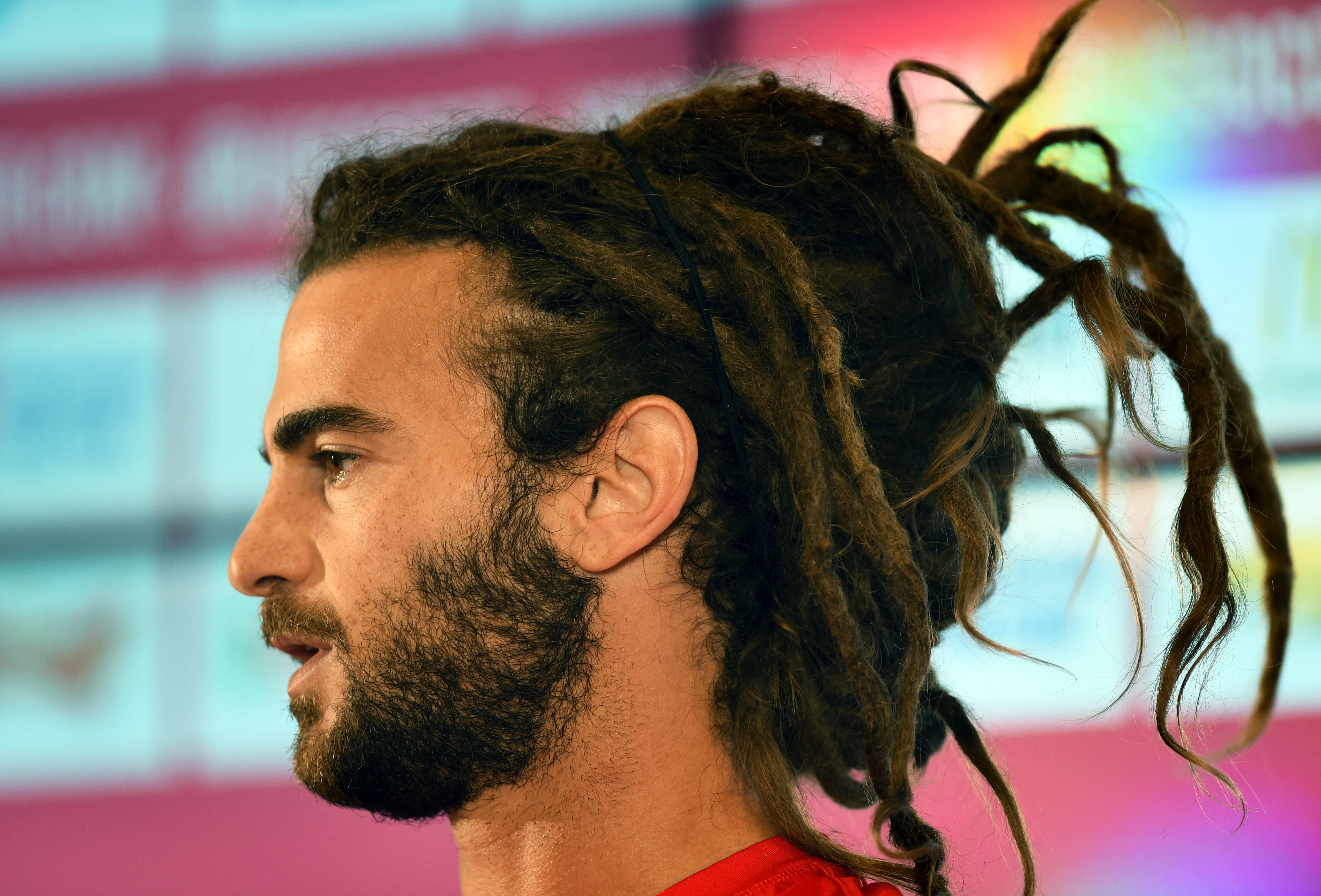
Buzzfeed’s list of the 30 hottest World Cup “beards” was pretty pathetic – but evidently the sport just doesn’t attract many pogonophiles. And who needs beards when you have got white boy dreadlocks? Allison P Davis can’t get enough of Kyle Beckerman, seen above:
One afternoon spent fully succumbing to fantasy and Google-searching returned a treasure trove. Here are Beckerman’s engagement photos, prominently featuring his famed dreads, his then-fiancée (now-wife) Kate, a canoe, and a ridiculous mountain-man hat. Still into it? Me too. What voodoo do you do, Beckerman, that suddenly makes me approve of both tribal tattoos and canoes as romantic settings?
Hess has a broader point:
These days, clicking through a slideshow of the world’s hottest female soccer players makes you look like a bit of a creep. But admiring the abdominals of male footballers? That just means you have a pulse. On first (uncomfortably lingering) glance, it appears that we’ve swapped one sexual double standard for another. But the trade-off isn’t actually so clear-cut. “We know that commenting on women’s bodies is fraught in a way that content appreciating male … assets … isn’t,” BuzzFeed Deputy Editor-in-Chief Shani Hilton said in an email. “No one assumes a male athlete is only noteworthy because of the way he looks.”
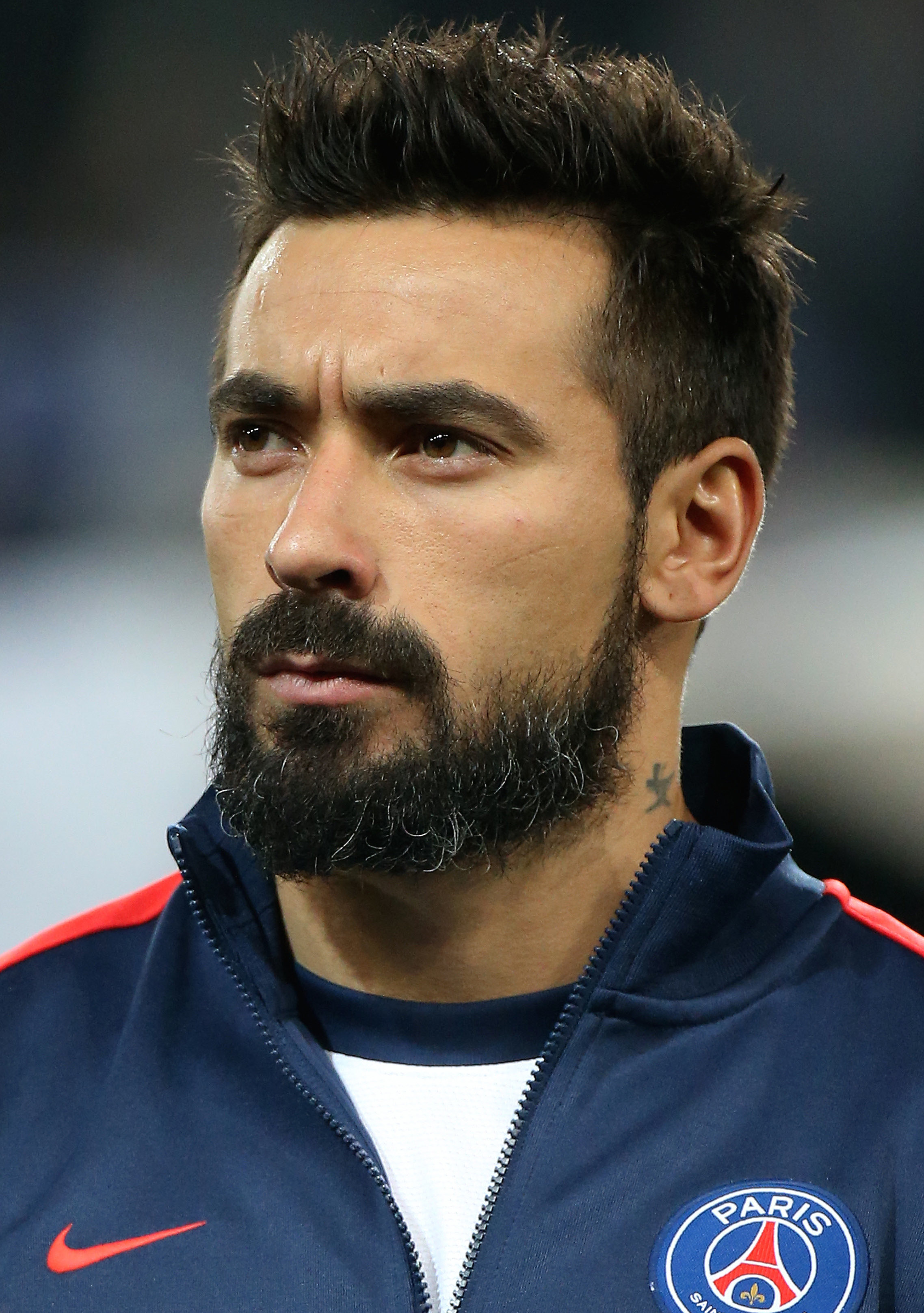
Well, let’s just say “no one” is a bit of an understatement. Legions of gay men would beg to differ.
(Photos: US midfielder Kyle Beckerman speaks during a press conference at the Centro Tecnico Frederico Germano Menzen training ground in Sao Paulo on June 19, 2014 during the 2014 FIFA World Cup football tournament. By Behrouz Mehri/AFP/Getty Images; Ezequiel Lavezzi of PSG poses prior to the UEFA Champions League Round of 16 match between Paris Saint-Germain FC and Bayer Leverkusen in Paris, France on March 12, 2014 . By Jean Catuffe/Getty Images)
Uh-Oh …
President Obama – in a huge and epic U-turn – wants $500 million to train “moderate” Syrian rebels:
Previously, US aid to the Syrian opposition that is fighting dictator Bashar al-Assad focused on non-lethal provisioning, while the Central Intelligence Agency focused on sending small arms and missiles to what the US calls the “vetted” Syrian moderates. Yet the Gulf Arab states have established an arms pipeline giving a substantive military edge to jihadist groups fighting Assad and one another. … US military training for the Syrians, three-and-a-half years into a conflict that has killed more than 150,000 people and recast the boundaries of the Middle East, is likely to take place in Jordan, where the US military already trains its Iraqi counterparts. It is also in line with Obama’s desired template for counterterrorism, as unveiled at West Point, in which the US trains foreign security forces to assault terrorists themselves.
Lisa Lundquist reviews why this is a terrible idea:
At this point, it is not entirely clear which vetted elements of the Syrian opposition can be relied upon to keep the arms out of the hands of the jihadists groups who dominate the battlefield, including the Islamic State of Iraq and the Sham (ISIS), and al Qaeda’s branch in Syria, the Al Nusrah Front.
As The Long War Journal has documented over the past year at least, in numerous instances previous US efforts to equip ‘moderate’ Syrian rebels have been compromised by the frequent partnering of ‘moderate’ and Islamist forces, as well as by the sheer power of the Islamist forces themselves. [See Threat Matrix report, Arming the ‘moderate’ rebels in the Syrian south.]
It is difficult to see how throwing another $500 million into the Syrian morass will effect a positive outcome. Jihadist forces currently control virtually all of the border crossings into Syria from Turkey and Jordan (not to mention Iraq) through which Western aid would flow. It is a well-known fact that these jihadists determine the distribution of such supplies once they come into Syria.
Also, the FSA’s leadership was apparently just sacked. Aren’t these the ones we’d theoretically be helping? Or maybe it was a precondition:
Syria’s opposition government sacked the military command of the rebel Free Syrian Army late Thursday over corruption allegations, as the White House asked lawmakers for $500 million for moderate insurgents. A statement by the opposition government said its chief Ahmad Tohme “decided to disband the Supreme Military Council and refer its members to the government’s financial and administration committee for investigation”.
The decision came amid widespread reports of corruption within the ranks of the FSA, which is backed by Western and Arab governments in its battle to overthrow the regime of President Bashar al-Assad. The government in exile said it was also sacking FSA chief of staff Brigadier General Abdelilah al-Bashir.
There’s one silver lining. The initiative, as neocon Gary Schmitt argues, “has all the appearances of being a strategy for appearing to do something without actually doing much of anything”:
Five hundred million is a pittance when it comes to these kinds of operations. Much like the one billion for new defense initiatives in Eastern Europe in the wake of the Russian invasion of Ukraine, it amounts to a smidgen here, and a smidgen there.
The truth of the matter is that the Obama team has let things get so out of hand in Syria that they have little interest now in actually removing Assad from power. Indeed, with ISIS on the move in Iraq, Assad, along with Iran, has in effect become an ally in that conflict. At best, this new effort is a campaign to keep the killing going so that no one group is finally successful. But of course conflicts are not like backfires, in which a fire is deliberately set in the path of an oncoming fire with a goal of having the oncoming fire burn itself out. These kinds of “fires” will jump that line and typically increase the conflagration—as we have already seen in the case of Syria over the past three years as the conflict has spread to Lebanon, Iraq and perhaps soon, Jordan.
Schmitt sees that as a bad thing, of course. But then he can write phrases like “the Obama team has let things get so out of hand in Syria” as if this entire crisis is simply a function of whatever America decides – or doesn’t decide – to do. Maybe Obama’s initiative is a way to fob off the hyper-ventilating hegemonists and buy some time. I sure hope so. The last thing we should want is for this kind of meddling to be in any way impactful.
 The Dish