Cigarettes Will Go The Way Of Spitoons?

Anna Blundy interviews P J O’Rourke. One of her questions prompts a rant on government interference:

My grandmother was able to keep people from smoking indoors with one cold stare. Why would laws and parliaments and police powers and courts and all sorts of annoying and ugly signs everywhere be necessary? All this expense and exercise of power of one group of people over another – why is all this needed to achieve what my grandmother could achieve with one cold stare?

He offers the counterexample of spittons:

[U]p until some time in the 1920s or so, virtually every American male chewed tobacco and spat constantly. It went away because women put their foot down and said: ‘That’s disgusting!’ I suppose that all had to do with the changing role of women but there didn’t have to be any politician around to think of taking the credit for that, though I’m sure they would have been glad to.

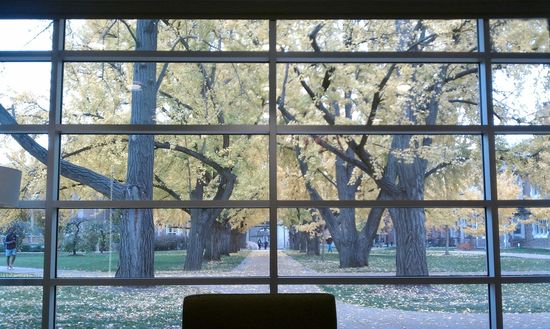
A Poem For Saturday

3019854047_495d044e1d_b

"The Sound of Trees " by Robert Frost appeared in The Atlantic in August of 1915:

I wonder about the trees:
Why do we wish to bear
Forever the noise of these
More than another noise
So close to our dwelling place?
We suffer them by the day
Till we lose all measure of pace
And fixity in our joys,
And acquire a listening air.
They are that that talks of going
But never gets away;
And that talks no less for knowing,
As it grows wiser and older,
That now it means to stay.
My feet tug at the floor
And my head sways to my shoulder
Sometimes when I watch trees sway
From the window or the door.
I shall set forth for somewhere,
I shall make the reckless choice,
Some day when they are in voice
And tossing so as to scare
The white clouds over them on.
I shall have less to say,
But I shall be gone.

(Image by Flickr user lambertwm)

Is The Pill To Blame For Declining Fertility? Ctd

Amanda Marcotte joins the chorus and lets loose on New York Mag's piece on the pill by Vanessa Grigoriadis:

Grigoriadis doesn't veer from the formula one bit. Implying that women are too stupid to realize that delaying pregnancy until your 30s raises your chances of infertility? Check. Implying that infertility is a much bigger problem than it actually is in a country that has a relatively high birth rate for an industrialized nation? Check. Focusing on the complaints of side effects without checking the actual scientific studies on the prevalence? Check. Characterizing the entire female population as being exactly like your free-wheeling fun time friends in their 20s who are the kind of girls who match their pill cases to their shoes, without considering that mothers, the fiercely monogamous, and the totally unfashionable also have a need for the pill? Check. And above all, freaking out about how "unnatural" it is, as if it's somehow more unnatural than every other drug on the market, not to mention air conditioning, latex, television sets, and the wearing of shoes? Check.

The Purpose of Copyright

Cory Doctorow states his preference:

In my world, copyright’s purpose is to encourage the widest participation in culture that we can manage – that is, it should be a system that encourages the most diverse set of creators, creating the most diverse set of works, to reach the most diverse audiences as is practical…

Diversity of participation matters because participation in the arts is a form of expression and, here in the west’s liberal democracies, we take it as read that the state should limit expression as little as possible and encourage it as much as possible. It seems silly to have to say this, but it’s worth noting here because when we talk about copyright, we’re not just talking about who pays how much to get access to which art, we’re talking about a regulation that has the power to midwife, or strangle, enormous amounts of expressive speech.

Those Who Can Write Will Teach

Chad Harbach rants against the rise of MFAs:

It was announced recently that Zadie Smith—one of the few writers equipped by fame to do otherwise—has accepted a tenured position at NYU, presumably for the health insurance; perhaps this marks the beginning of the end, a sign that in the future there will be no NYC writers at all, just a handful of writers accomplished enough to teach in NYC. New York will have become—as it has long been becoming—a place where some writers go for a wanderjahr or two between the completion of their MFAs and the commencement of their teaching careers.

The View From Your Window Contest

Vfyw-contest_12-4

You have until noon on Tuesday to guess it. City and/or state first, then country. Please put the location in the subject heading, along with any description within the email. If no one guesses the exact location, proximity counts.  Be sure to email entries to VFYWcontest@theatlantic.com. Winner gets a free The View From Your Window book, courtesy of Blurb. Have at it.

Op-Eds For The iPad

Gabriel Sherman takes stock of the future opinion pages of Rupert Murdoch's new iPad-only newspaper:

In stark contrast to those of Murdoch’s existing American papers, The Daily’s politics will be centrist and pragmatic—Bloobergian, if you prefer—according to people close to the project. … If you know his record, it’s not surprising that Murdoch would be this ideologically pliant. Throughout his career, he has moved to align his media interests with the shifting winds; in the U.K., for example, his papers took a favorable view of Margaret Thatcher, then pivoted to do the same for Tony Blair. Yes, this is the same Rupert Murdoch who gave $1 million to the Republican Governors Association and has Sarah Palin and Glenn Beck on the payroll. But he’s sinking at least $30 million into The Daily, and he’s a businessman first.

In Defense Of Sex, Even If It’s Bad

This week Rowan Somerville won Literary Review's Bad Sex in Fiction Award for his second novel, The Shape of Her, and for sentences such as this:

Like a lepidopterist mounting a tough-skinned insect with a too blunt pin he screwed himself into her.

In response, Laura Miller stands up for fiction that can arouse us:

The presenters of the Bad Sex in Fiction Award gleefully seize upon their targets' most outlandish metaphors; Somerville compared a nipple to the "nose of the loveliest nocturnal animal, sniffing in the night." Yet perfectly serviceable, if disreputable, four-letter words risk turning a scene, in the words of one commentator, into something "perilously close to erotica, with its cheapening effect of sexual arousal." And we can't have that, can we?

Well, why can't we? Is there any reason why the literature that makes us laugh, cry and rage shouldn't also, occasionally, turn us on?

Why Getting Lyrics Wrong Matters

Paul Devlin continues his quest to correct the record of bad transcriptions in the new Anthology of Rap. Devlin spoke with Adam Mansbach, a member of the anthology's advisory board who was disappointed with the collection:

[T]his is a book that seeks to establish the relevance and artistry of hip-hop lyricism, and instead it's made many of the world's best MCs look downright incoherent by misrepresenting their words.

When Ice Cube says "your plan against the ghetto backfired," and it gets turned into "you're playing against the ghetto black fly," more has happened than just a simple error in transcription; you've made an important song perplexing and impenetrable—while staking a claim, backed by institutional power and market presence, that your version is canonical.

Over at The Nervous Breakdown, Art Edwards admits his own history of misheard lyrics and debates whether he likes his own versions better.