“I kiss slower to feel more, here, longer.”

An anonymous illegal immigrant senior at Harvard mourns the DREAM Act. She has been in the country since kindergarten:

Will these next seven months be the last I spend in the United States? It is November and I have already lost the ability to think in the future tense, as if my heart had anesthetized my mind in preparation for the possible disappointments of the next several months. I sleep without setting any alarm clocks. I speak faster in hopes that I might get more English words in. I kiss slower to feel more, here, longer. I’m at a road that bifurcates into continents and I am terrified because I know I might once again have to live with a decision that is not mine to make. It would hurt to be forced to leave, but it hurts to stay the way I’m staying now. I belong to this place but I also want it to belong to me.

Debating Wikileaks

A riveting BBC debate on the matter between Carne Ross, a former British diplomat, and Bill Keller of the NYT. I must say I find Ross's passion in getting to the truth of what is done by democratic governments in our name seemed much more in line with the spirit of journalism than Bill Keller's defensive qualifications. Meanwhile, Shep Smith once again shines (along with Andrew Napolitano):

Poseur Alert

"Homans’s accomplishment is akin to setting the most delicate and beautiful of all the imperial Fabergé eggs into a fissure high on Mount Rushmore and tracking its unlikely survival. And the question of ballet’s survival lies at the core of Homans’s moving story. “Ballets,” Théophile Gau­tier wrote, “are the dreams of poets taken seriously.” The tale of the tutu is indeed the story of a bunch of crazy dreamers, dancers, warriors of anatomy who have worked ludicrously hard to formulate, shape and perfect the highest form of the human physique, and the result is a glorious paradox: the manifestation of morality in muscle, truly Whitman’s body electric. What a noble and superb cause! What folly in the face of guaranteed evanescence!" – Toni Bentley, NYT.

An Electric Car For Urban Life, Ctd

A reader writes:

I'm all in favor of bikes and didn't buy a car till I had my first child.  But Drum's description of the useful niche for Volt strikes me as right on target, in the light of several significant advantages of a car over a bike:

1. Cargo capacity.  In particular, carrying items for repair or dry cleaning, and being able to leave your purchases in the trunk of your vehicle while you go on to another store, instead of having to carry everything with you.  This is really significant.

2. Shelter from the elements: rain, snow, tropical heat.

3. More wardrobe flexibility. The ability to go places without getting sweaty and without having to choose between wearing skin tight expensive cycling gear versus having one's clothing drag one down in the wind, get caught in the frame, get greasy from the chain, etc.

4. Ability to climb steep hills

5. Superior safety after dark. And for us aging boomers, safety in general; the sort of injuries one gets in falls from a bicycle start to be a significantly more serious hazard even for healthy, fit, active individuals after 65 or so than they are for younger folks.

Another:

You can't take a date out on a bike. If this wasn't a cultural fact, I think bike use would be much more prevalent.

Prop 8 Update, Ctd

Orin Kerr isn't sure that drawing Judge Stephen Reinhardt, "the most-reversed Court of Appeals judge in the land," is especially good news for supporters of marriage equality:

It goes without saying that Reinhardt will vote the liberal way, and he’ll likely have Hawkins with him. But the word “Reinhardt” is radioactive at 1 First Street. Reinhardt writes like there is no Supreme Court, and as a result his opinions have a remarkable ability to annoy the Justices. In return, the Supreme Court loves to reverse Reinhardt. They love to reverse opinions he signs, and they love to reverse opinions he participates in. So the fact that he’ll likely be involved in the panel decision probably hurts opponents of Prop 8 in the long run.

(Hat tip: Box Turtle Bulletin)

The Leak And The Coming Flood

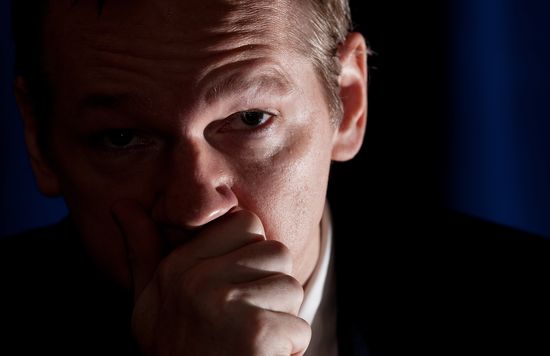
ASSANGELeonNeal:Getty

Andy Greenberg's Forbes cover story on Wikileaks is making the rounds:

Admire Assange or revile him, he is the prophet of a coming age of involuntary transparency. Having exposed military misconduct on a grand scale, he is now gunning for corporate America. Does Assange have unpublished, damaging documents on pharmaceutical companies? Yes, he says. Finance? Yes, many more than the single bank scandal we’ve been discussing. Energy? Plenty, on everything from BP to an Albanian oil firm that he says attempted to sabotage its competitors’ wells. Like informational IEDs, these damaging revelations can be detonated at will.

My sense is that we have crossed a Rubicon, and there is close to nothing we can do about it. It is inherent in the kind of communication technology we now all use. Anything can easily be leaked; there is no real limit on the amount of private or secret data that can be widely disseminated within minutes; it only takes one or two individuals to break faith and spill every bean. We live increasingly in a world with no curtains or even veils. This is true personally – ask Brett Favre or Christine O'Donnell – and collectively – ask Don Rumsfeld after Abu Ghraib. The era of secrecy is over. What we need to do is adjust, not simply regret or attack.

There's an additional interview with WikiLeaks founder Julian Assange:

As we’ve gotten more successful, there’s a gap between the speed of our publishing pipeline and the speed of our receiving submissions pipeline. Our pipeline of leaks has been increasing exponentially as our profile rises, and our ability to publish is increasing linearly.

This puts into relief the dilemma that the US government faces when combating Wikileaks. Trying to crack down on the organization would only give it more publicity, which would allow it to attract more leaks. Going after Assange directly – an idea various congressmen are toying with – would backfire spectacularly. Even if Wikileaks were brought down, its death would launch a thousand imitators.

Remember what happened when Napster was shuttered?

(Photo of Assange by Leon Neal/Getty.)

One More Thing On Goldblog

We're colleagues and friends but we fight hard intellectually. This can be a rough game at times, and sometimes an elbow can need stitches in one's lip. But I do think I can say one thing we agree on very very clearly that is sometimes obscured in our jockeying over how to deal with Iran.

There is no daylight between us on the foul, deeply dangerous and disgusting regime in Tehran. I don't need to document this. Many of you will remember our coverage of the Green Revolution. We covered it that way not because we wanted to gain more readers, or traffic or kudos – but because we cared passionately about the Iranian people, their astonishing dignity and endurance, their vitality and culture, their right to be free of these thugs and torturers who oppress them. I know Jeffrey feels exactly the same way.

It is a function of the debate that you will often find me criticizing Israel's government a lot in this fight without criticizing Tehran. I want to reiterate that however frustrating Netanyahu is, he is in a different universe from Ahmadinejad and Khamenei. If we had had a regime change last year, much of this debate would be moot. I want to see Ahmadi in jail for crimes against humanity. I want to see Netanyahu as the prime minister of a secure Israel, side by side with the most promising prospect for Arab democracy in the region – something that would do more to isolate Hamas and Tehran than any sanctions and any sabre-rattling.

President Palin? Ctd

Much of this polling is silly at this point, but for what it's worth:

There's a small but meaningful group of Republicans who are very hesitant to commit to supporting Gingrich or Palin even if they end up with the party nomination. There's also a wide divide with independents depending on whether the GOP nominee is Palin or one of the others. Obama ties Romney with them and leads Huckabee and Gingrich by only 2 and 3 points respectively with them, but against Palin his advantage expands to 12 points.