The Odd Lies Of Sarah Palin XCVIII: Grocery Inflation, Ctd

A reader writes:

Hard as it is to believe, you're being too easy on Sarah Palin in today's installment of Odd Lies. Here was her post:

The article noted that “an inflationary tide is beginning to ripple through America’s supermarkets and restaurants … Prices of staples including milk, beef, coffee, cocoa and sugar have risen sharply in recent months.”

Notice that ellipsis? What was in it? Well, she deleted the exact phrase that proves her lie (and which you cite in your post later). The full sentence is:

"An inflationary tide is beginning to ripple through America’s supermarkets and restaurants, threatening to end the tamest year of food pricing in nearly two decades."

So it wasn't just that the article contradicted Palin's claim, it's that it did so in the very same sentence Palin quoted.

She consciously deleted the the part of the sentence proving her wrong, and hid it in an ellipsis. Not just an Odd Lie. An aggressive one.

Ed Morrissey, as usual, twists Palin's words to make it sound like she was making a more nuanced argument. CJR's Ryan Chittum merely sighs.

The Big Lie, Ctd

A reader writes:

You’ve got it with this post. I’m not a fan of the mythological language of the Bible, but in the New Testament Satan is called the Father of lies. That sums it up. Start believing one lie, because it makes you feel good, and then another, because it vindicates you in that never-ending argument that is going on in your head, and pretty soon the whole ground has shifted beneath your feet and you can’t tell any longer what’s what. Instructive: those who lie with the most vehemence do so in the name of the God their action of lying betrays. At least philosophically considered, God has always been the “ground” of truth.

Another writes:

It is not Republicans’ fault for telling these lies. It is their job to make the opposition look bad and win elections. It is the rest of the non-Fox media (if there is any left) for not telling the truth.

Another:

It seems to me your post on the “big lies” of Republican candidates and pundits demonstrates much of what is wrong with American politics. Do you really think that Charles Krauthammer, the entire staff of National Review, and a large percentage of the Republican Congressional delegation really do not believe what they are saying, but are spouting untruths for political advantage? Now they may be wrong, mistaken, deluded, whatever — but liars? Calling those with whom you disagree names is just the sort of thing which has become all too prominent in American politics in the last twenty years.

Another:

It’s incredible that such plain and obvious insights seem, in light of today’s prevailing narratives, so outrageously daring. Thank you for struggling on everyone’s behalf to show us what is right in front of our noses.

Another:

You know, I want to offer Republican friends the benefit of the doubt.

I want to conclude that the genesis of this hyperventilating against our very capable president isn’t because of his race or his party or his success in life.  I want to conclude they have seriously paid attention to Obama’s accomplishments, weighed the value of them, taken into consideration the dire circumstances our country faced as the Bush era was winding down, and then reasoned out thoughtful ideas in opposition or credible arguments for other actions that would have worked as well to help our country heal.  However, it appears to me that they, like sinners on a death bed, are, with suspicious suddenness, “concerned about deficit spending” and scared for their grandchildrens’ tax burden.  These are the same friends who, up until almost the night of Obama’s election, were happily chanting Cheney’s refrain, “Deficits don’t matter!”  But now they’ve got religion about balanced budgets as soon as a Democratic black man walks into the doors of the White House.

What I truly don’t understand is how my Republican friends, who are all middle class and generally college educated and able to read the newspaper or grasp tricky concepts and discuss them intelligently, are suddenly feeling threatened for millionaires, for Wall Street banks and execs, and for monolith health insurance companies, who are screwing them.  My friends act like they either don’t know this is happening or don’t mind one bit and suddenly, Obama is a villain taking away their freedom to be screwed by these heartless mega-corporations.  What’s up with that?

My Republican friends are also children of immigrants in the not too distant past.  Yet, they are currently reacting with increasing bigotry towards immigrants newer than themselves and people of color or of different tradition or religion, just since a Democratic black man became president.  How does this happen?  Suddenly, Obama’s policies, his sanity, his humanity, his energy, his intellect, his reasonableness, his nerve–none of that matters to my Republican friends.  His value is not even seen by them.  They won’t look at him.  They just listen to lies from the Media Lie Machine and brand him a socialist, while covering their bigotry with unspecified fluff, “I disagree with his policies.”  Or, “I believe he’s leading America down the wrong road.” 

Maybe Jon Stewart is right about our media being our immune system and how its defense of our country is broken and now everybody has excema.  Or maybe, it’s because a Democratic black man won the White House and my Republican friends can no longer hide their unresolved fear of people of color in positions of power.

The Cannabis Closet: Christmas Dinner

A reader writes:

I was raised in a pot smoking family, and my parents looked at pot the same way they did other adult "vices"; they taught me to be careful, responsible, and respectful of other peoples' boundaries.  I went to college, got a BA and two advanced degrees, and now I'm successful in my career (although as an educator, my career would be destroyed by an arrest for possession).  My biggest struggles with substance abuse are with wine. 

My parents are retired from long careers in public service and, yes, they still smoke pot.  At Christmas this year, I will make a lovely dinner, my mother will open a few bottles of Burgundy, and my Dad will fill up a couple of balloons from the vaporiser.  We will laugh and talk and eat.  I look forward to the day when  my son will be able to keep up with the conversation, take a hit, and make a toast and join in the family celebration as an adult.

Nukes, India, and Iran

Larison reacts to news that Obama endorsed India's bid to get a permanent seat on the UN Security Council:

Washington isn’t likely to abandon its fixation on Iran’s nuclear program, but it should give the administration some pause that it has just publicly endorsed permanent Security Council status for what is, in fact, one of the chief “rogue” nuclear states in the world. This is not a criticism of the administration’s engagement of India. On the contrary, the administration’s correct dealing with India stands as a rebuke to the administration’s Iran policy. Further, the favorable treatment shown to nuclear-armed India confirms that states that never join and flatly ignore the requirements of the NPT and go on to build and test nuclear weapons are not censured or isolated in the least. Instead, they are rewarded with good relations and high status. More to the point, if the administration had what it wanted and India were on the Security Council as a permanent member with veto powers, how much weaker would U.N. sanctions against Iran have had to be to satisfy India?

The View From Your Window Contest: Winner #23

Vfywcontest_11-6

A reader writes:

What a beautiful setting!  This is too dry and scrubby to be tropical, so most Pacific islands are out.  I see roof water tanks and clotheslines, indicating it’s not a particularly affluent location.  I think those are crop tarps in the background, but I can’t be sure, and even if so, I have no idea what they might be growing. Overall, I’m thinking Baja.  Loreto, perhaps?

Another writes:

The first thing that struck me was obviously the desert coastal environment. What appears to be a newish Ford pickup would seem to put it somewhere in North America. And the general view and topography reminded me a lot of the area around Cabo San Lucas, where we had a not-so-pleasant vacation way back in 2004. Also, the nearness of the mountain range across the water would have to be some sort of bay or island, as the Gulf of California is way too wide to be that visible from the opposite shore.

So a bit of Google Earthing led me to the area east of La Paz, where there’s some lightly developed vacation areas, looking across the water to Isla Cerralvo. There’s a lot of options along that short stretch of coast, but it appears that the most developed is La Ventana, so I’ll go with that as my final answer.

Another:

When I stayed in La Ventana, I slept in a tent in a hurricane-washed-out arroyo (nowhere near as nice as this cute little porch), but the island across the water looks to be the same one toward which I headed out on countless tacks while windsurfing in winter 2007-08.

Another:

I have no idea where it is, but I want to move there.

Another:

My initial reaction was it had to be Baja California. But I have not been there for over 40 years, so I cannot locate the specific site the photo was taken. It brings back many memories of my late father, who dove in this area for a month at a time on several occasions in the late 1950s with two diving friends from San Diego. Back when scuba diving was in its infancy, he and his “Bottom Scratcher” friends developed their own regulators, compressors, diving equipment and spear guns to enter this amazing underwater world. He died while scuba diving with me near La Paz in August of 1959, doing what he loved to do the most.

Another:

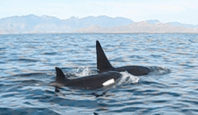
Screen shot 2010-11-09 at 12.05.10 PM This looks to me like a view of Isla Danzante in the Sea of Cortez as seen from Danzante, Baja California Sur, Mexico. On the back side of that island feed are waters that blue and other whales migrate to in the winter. We spent a week there one winter, and traveled by small fishing boat (panga) to the back side of that pictured island every day to see the largest Screen shot 2010-11-09 at 12.04.35 PMvertebrates that have ever existed. On our first boat outing, we were disappointed because we could not find any of them after searching for hours. Then we found out why – a pod a blue whale predators, orcas.
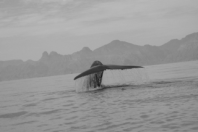
But not to worry; after a few hours the orcas scattered, and we saw many blue whales lifting their flukes high above the water.

Another:

At first I thought this was somewhere in the Mountain West, like Nevada or Utah.  But the railing, the little road, the wires, and the water tank on the building below all said this is not North America.  Also the truck on the street below doesn’t look like a recent North American model, but does resemble a Toyota Hilux sold in Argentina. And I was at Lago Argentino last year.  It’s really blue!  So that’s my answer – El Calafate, Santa Cruz Province, Argentina.

Another:

Good lord, this could be anywhere from California to Australia to the Mediterranean.  For no good reason I am torn between Baja California and South Africa. Since I’ve been to South Africa, I’ll say False Bay, South Africa.

Another:

This reminds me a lot of the view of the mountains in western Jordan from across the Dead Sea.  This might be a view from the town of Ein Gedi, which I seem to remember being up an incline, perhaps near the youth hostel.

Another:

This VYFW contest looks Mediterranean. The mountains across the water could be one side of the Dead Sea, but there are too many trees in the picture, so I assume that’s not it. So I’m thinking the water is the Nile River, as Google Image searches come up with similar mountains in the background.

I’m pretty sure it is in Luxor, Egypt. I could be wrong (and it could be the other side of the Nile), but I spent too much time trying to find the exact address to no avail.

Another:

I’m going to guess Lisbon, Portugal.  I’m not nearly as savvy as your readers who recognize and google the different types of plants that grow in the area, but this looks really similar to the scenes and sights I took in when I visited a friend in Lisbon a couple years ago.  This scene just makes me think of the pretty cafes in Lisbon, where I’d chill out, drink vinho verde, and gaze at the scenery.  I’m sure I’m a continent off, but here’s hoping.

Right continent. Another:

This looks remarkably similar to the view from a hotel we stayed at in 2003 between Mesokampos and Psili Ammos on the Greek isle of Samos. If so, the hills you can see across the incredibly blue water are in Turkey. (I wouldn’t recommend trying to swim it though; it’s a lot further than it looks. Plus you might have some problems with Turkish immigration.)

Right country. Another:

A Greek colleague suggested Thermopylae (and will be awarded the book if she’s correct).  She thinks the mountain range across the water could belong to the island of Evia (Euboea).

Closer. Another:

My guess is the island of Mykonos, Greece. That view looks a lot like an area in the Agean Sea that we spent our honeymoon at.

Almost there. Another:

Unless I am completely wrong, that picture is taken just to the east of Kissamos, Crete looking east toward the Rodopos peninsula.   I have failed miserably with the previous pictures, though I feel decently confident about this one only because of my ancestry.  My grandparents are from this island, and I have been there multiple times.

The photo was taken from Kalyviani village in Crete, but Kissamos is close enough for a free Blurb book. Congrats to the winner! And thanks to everyone for another round of great guesses.

The Odd Lies Of Sarah Palin XCVIII: Grocery Inflation

I've long been curious about Sarah Palin's views on quantitative easing.  Haven't you? It's not the easiest of subjects to understand, requires deep knowledge of how the financial system works, and might not be easily grasped by your average person. Palin, however, is no average anything. So in her latest rhetorical sortie, Palin grasped the core point:

All this pump priming will come at a serious price. And I mean that literally: everyone who ever goes out shopping for groceries knows that prices have risen significantly over the past year or so. Pump priming would push them even higher.

The underlying argument about whether quantitative easing will indeed lead to inflation is not what's at issue here. What's at issue is her factual assertion that grocery prices have risen significantly over the past year. When you read the speech, it seems to me that this might actually contributed by Palin herself (I have no idea who wrote the rest). But, as sometimes used to happen in American journalism, she was subsequently challenged on this assertion by the Wall Street Journal's Sudeep Reddy, who went so far as to describe this – grab your pearls – as "hyperbole":

Grocery prices haven’t risen all that significantly, in fact. The consumer price index’s measure of food and beverages for the first nine months of this year showed average annual inflation of less than 0.6%, the slowest pace on record (since the Labor Department started keeping this measure in 1968). Even if you pick a single snapshot — say, September’s year-over-year increase in prices — that was just 1.4%, far better than the 6% annual increase for food prices recorded in September 2008.

Palin couldn't handle this. Her stated position was revealed as empirically false. Most people when presented with such data – not about future inflation but recent grocery inflation – correct themselves. Not Palin, who rushed to Facebook to cite a recent WSJ story to pit against its own blogger, under the sarcastic headline "Do Wall Street Journal Reporters Read the Wall Street Journal?":

The article noted that “an inflationary tide is beginning to ripple through America’s supermarkets and restaurants…Prices of staples including milk, beef, coffee, cocoa and sugar have risen sharply in recent months.” Now I realize I’m just a former governor and current housewife from Alaska, but even humble folks like me can read the newspaper. I’m surprised a prestigious reporter for the Wall Street Journal doesn’t.

You will note that even in the sentence Palin cites, the story says that inflation is "beginning" to ripple through the food industry. That does not mean it has already happened. In fact, the article Palin cites to back her up actually states that last year was "the tamest year of food pricing in nearly two decades." Now, it's true that, for example, ground chuck beef is up 4.8 percent over the last year, as Reddy notes in his response. But it's also true that bananas have dropped by 5.3 percent. The overall inflation rate for food and beverages – the only meaningful statistic for "grocery shopping" – is currently the lowest on record. Reddy:

A broad measure of food prices from the Labor Department shows prices rose at an average annual rate of less than 0.6% in the first nine months of the year. September’s increase in food prices — 1.4% for food and beverages at an annual rate — was low by historical standards.(In fact, the lowest average annual inflation rate on record was 1.4%, in 1992.) Commerce Department inflation data show a similarly slow year-over-year increase for food prices, 1.3%.

Again, compare the 0.6 percent price increase in the first nine months of 2010 with September 2008 when grocery prices were rising at 6 percent. This is reality. Palin cannot handle it when it contradicts her. And notice, you could still make the point that you oppose quantiative easing because it could lead to future inflation, while conceding the fact that food prices have been very weak recently. But Palin simply cannot acknowledge error. If reality contradicts her imagined version of it, reality has to concede. 

This is the core truth about Palin: she is a delusional fantasist. She makes anything and everything up. So about that motor home trip

Reversing Hawks And Doves?

Peter Beinart analyzes Obama's trip to Asia:

The interesting thing about looking at American foreign policy through an Asia-centric, rather than Middle East-centric, lens is that it is suddenly no longer so clear who the hawks and doves are. President Obama began his dealings with Beijing in a conciliatory vein, but almost two years in, his policy is more hawkish than President Bush’s.

He’s angered human rights types by restoring military ties to the Indonesian Special Forces and, according to The Economist, may cut a nuclear deal with Vietnam that allows it to enrich uranium outside of the nuclear Non-Proliferation Treaty. And if Obama is more hawkish than Bush, the Democrats are, in some ways, more hawkish than the GOP. In September, when the House passed a resolution aimed at pressuring China to revalue its currency, Democrats supported it almost unanimously while Republicans were split. Paul Krugman regularly excoriates China for its currency policies. Nancy Pelosi has long excoriated it over human rights; in 2008 she urged Bush to boycott the Beijing Olympics.

The Big Lie

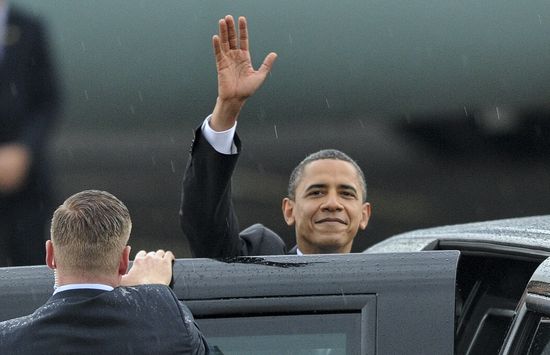
OBAMARAINRoslanRahman:Getty It seems to me that the last year or so in America’s political culture has represented the triumph of untruth. And the untruth was propagated by a deliberate, simple and systemic campaign to kill Obama’s presidency in its crib. Emergency measures in a near-unprecedented economic collapse – the bank bailout, the auto-bailout, the stimulus – were described by the right as ideological moves of choice, when they were, in fact, pragmatic moves of necessity. The increasingly effective isolation of Iran’s regime – and destruction of its legitimacy from within – was portrayed as a function of Obama’s weakness, rather than his strength. The health insurance reform – almost identical to Romney’s, to the right of the Clintons in 1993, costed to reduce the deficit, without a public option, and with millions more customers for the insurance and drug companies – was turned into a socialist government take-over. Every one of these moves could be criticized in many ways. What cannot be done honestly, in my view, is to create a narrative from all of them to describe Obama as an anti-American hyper-leftist, spending the US into oblivion. But since this seems to be the only shred of thinking left on the right (exacerbated by the justified flight of the educated classes from a party that is now openly contemptuous of learning), it became a familiar refrain – pummeled into our heads day and night by talk radio and Fox. If you think I’m exaggerating, try the following thought experiment. If a black Republican president had come in, helped turn around the banking and auto industries (at a small profit!), insured millions through the private sector while cutting Medicare, overseen a sharp decline in illegal immigration, ramped up the war in Afghanistan, reinstituted pay-as-you go in the Congress, set up a debt commission to offer hard choices for future debt reduction, and seen private sector job growth outstrip the public sector’s in a slow but dogged recovery, somehow I don’t think that Republican would be regarded as a socialist. This is the era of the Big Lie, in other words, and it translates into a lot of little lies – “death panels,” “out-of-control” spending, “apologies for America” etc. – designed to concoct a false narrative so simple and so familiar it actually succeeded in getting into people’s minds in the midst of a brutal recession. And integral to this process have been conservative “intellectuals” who should and do know better, but have long since sacrificed intellectual honesty for the cheap thrills of enabling power-grabs. And few lies represent this intellectual cooptation of talk radio/FNC propaganda better than the lie that Obama has publicly rebutted the idea of American exceptionalism. Where does one start? Where one always starts with these things – Jonah Goldberg:

Last year, when asked if he believed in American exceptionalism, President Obama responded, “I believe in American exceptionalism, just as I suspect that the Brits believe in British exceptionalism and the Greeks believe in Greek exceptionalism.”

This reminded me of the wonderful scene in Pixar‘s “The Incredibles,” in which the mom says “everyone’s special” and her son replies, “Which is another way of saying no one is.” But at least the president made room for the sentiment that America is a special place, even if he chalked it up to a kind of benign provincialism.

Oh really?

Here is the full Obama quote:

I believe in American exceptionalism, just as I suspect that the Brits believe in British exceptionalism and the Greeks believe in Greek exceptionalism. I’m enormously proud of my country and its role and history in the world. If you think about the site of this summit and what it means, I don’t think America should be embarrassed to see evidence of the sacrifices of our troops, the enormous amount of resources that were put into Europe postwar, and our leadership in crafting an Alliance that ultimately led to the unification of Europe. We should take great pride in that.

And if you think of our current situation, the United States remains the largest economy in the world. We have unmatched military capability. And I think that we have a core set of values that are enshrined in our Constitution, in our body of law, in our democratic practices, in our belief in free speech and equality, that, though imperfect, are exceptional.

Now, the fact that I am very proud of my country and I think that we’ve got a whole lot to offer the world does not lessen my interest in recognizing the value and wonderful qualities of other countries, or recognizing that we’re not always going to be right, or that other people may have good ideas, or that in order for us to work collectively, all parties have to compromise and that includes us.

And so I see no contradiction between believing that America has a continued extraordinary role in leading the world towards peace and prosperity and recognizing that that leadership is incumbent, depends on, our ability to create partnerships because we create partnerships because we can’t solve these problems alone.

In other words, Obama emphatically doesn’t reduce the idea of American exceptionalism to “benign provincialism.” Quite the contrary: he explicitly asserts that the values enshrined in the Constitution are exceptional, and defends them and the US’s history in front of a foreign audience. It’s worth pointing out this factual error at such length because everyone in the conservative movement has already made it.

And that’s hardly an exaggeration. Here are Ramesh Ponnuru and Rich Lowry:

…while acknowledging that America has been a force for good, he has all but denied the idea that America is an exceptional nation. Asked whether he believed in American exceptionalism during a European trip last spring, Obama said, “I believe in American exceptionalism, just as I suspect that the Brits believe in British exceptionalism and the Greeks believe in Greek exception­alism.” (Is it just a coincidence that he reached for examples of former hegemons?)

They acknowledge here that the full quote should have run (though the original piece remains uncorrected). Said Dinesh D’Souza in his infamous Forbes piece:

This is known as American exceptionalism. But when asked at a 2009 press conference whether he believed in this ideal, Obama said no. America, he suggested, is no more unique or exceptional than Britain or Greece or any other country.

No surprise that the magazine didn’t catch that error during its post-publication fact check – another one of its authors made the same mistake here. Monica Crowley in The Washington Times:

During his public life, Barack Obama has often referred to his biracial background and itinerant childhood and has said, “In no other country on Earth is my story even possible.” True.

But earlier this year, while attending the European summit of the Group of 20 major economic countries, the president was asked if he believed in American exceptionalism. He replied, “I believe in American exceptionalism, just as I suspect that the Brits believe in British exceptionalism, and the Greeks believe in Greek exceptionalism.”

Here’s Victor Davis Hanson: “After all, Obama has rejected in explicit language the notion of American exceptionalism.” And Michael Barone:

“I believe in American exceptionalism,” Obama said on one of his trips to Europe, “just as I suspect that Brits believe in British exceptionalism and the Greeks believe in Greek exceptionalism.” In other words, not at all. One cannot imagine Presidents Roosevelt, Truman or Kennedy, Eisenhower or Reagan, uttering such sentiments.

Here’s video of Charles Krauthammer making the same mistake. Ken Blackwell at Townhall:

When asked if he believes in American exceptionalism, President Obama said yes, but he was sure that the British and the Belgians also believed in their countries’ exceptionalism.

President Obama’s version of American exceptionalism is Lake Woebegon’s children: they’re all above average. Or perhaps, he’d be more at home in Alice in Wonderland’s Caucus Race, where everyone runs and everyone gets prizes.

What’s especially remarkable about this hackery – and there are numerous other examples – is that these conservative authors don’t just egregiously misrepresent the president’s actual position. It’s that all of them actually cite, as evidence, an out of context line from the very speech that proves their analysis is wrong.

You can call this truthiness if you like. Better, the Dish believes, to call it what it is. A deliberate campaign of misinformation. A Big Lie.

(Photo: US President Barack Obama waves to the media as he enters his presidential car upon arrival at the Halim Perdana Kusuma airport in Jakarta on November 9, 2010. By Roslan Rahman/AFP/Getty.)