Rick’s Left; My Right, Ctd

A reader writes:

I couldn't disagree more with your reader. When did African Americans become truly free? Was it when they were liberated from slavery and given their own land – 40 acres and mule? Or was it when, in the 1960s, they finally gained a truly equal chance to vote?

Another writes:

I think the reader who wrote that "free enterprise comes before voting" misses Rick's point.

No one is arguing that the current capitalist system doesn't create the wealth that the government relies to tax and spends on public works. But capitalism can't run without government, something that many of your friends have written about over at the American Conservative. Whether or not that government is democratic or not is not the point. A central public regulatory body is necessary for free enterprise to properly function: think of the role of the Federal Reserve in regulating interest rates, printing money, controlling inflation, etc. Regulatory bodies and legislation are responsible for preventing insider trading and fraud. Free markets need government to properly function. Otherwise capitalist economies would descend into chaos.

People like Hertzberg (and me) also believe that private property and free enterprise are incredibly adept at generating wealth, but we also believe that governments are often required to ensure protect the public from the singular aim of the profit motive. That's why you have government bodies test local water supplies; that's why you have the FDA and the EPA; that's why you have a minimum wage and worker safety regulations; that's why you have even the minimum amount of a social safety net. These things are actually good for economic growth, as they mitigate the effect a recession or depression can have on the economy, especially with regard to consumer spending, foreclosures, etc. Taking care of families in poverty, giving them a means to education, lifting them up to the middle class so that they can buy products and pay more taxes to pay down the debt; that can't be bad for capitalism, can it?

There is no such thing as "pure" capitalism (show me a capitalism without need for government and I'll show a country with a government and no need for an economy). The two need each other. I think you and Rick are pretty close on this and most things – the difference I would say is only one of degree.

What I would say is that economic liberty and political liberty are very closely intertwined, and being vigilant against excessive government is as vital as being vigilant about negligent government. But as an historical fact, Anglo-American political freedom emerged from the rise of the economic freedom and power, i.e. wealth, of the aristocracy versus the monarchy, then the bourgeoisie vs the aristocracy, then the working classes in an industrial society. And a high-taxation state that reduces its citizens to economic dependents on its beneficence saps the independence and self-interest vital to political freedom.
The View From Your CPAP, Ctd

92553250

A reader writes:

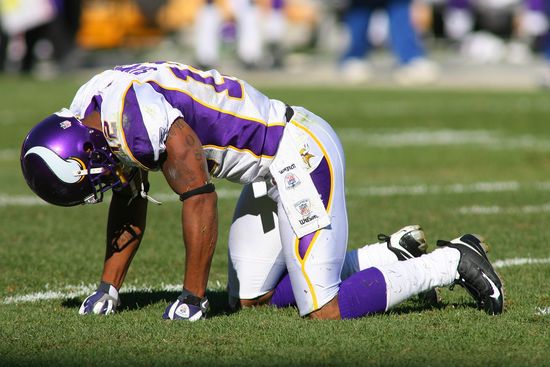
Here's one example of someone who is a lean, muscular, fit apnea patient: Percy Harvin of the Minnesota Vikings.  Mr. Harvin apparently was suffering from severe migraines that affected his ability to perform on the field.  He's listed at 5-11, 184 lbs. and is one of the fastest players in the NFL. I have no doubt that weight can contribute to sleep apnea.  However, as Mr. Harvin's experience demonstrates, there are plenty of other causes.

Another writes:

One reader commented that surely diet and exercise would be the most effective way to treat sleep apnea, since it is so often caused by obesity. Not true on several counts.

A fairly overweight aquaintance of mine was diagnosed with sleep apnea after she put on even more weight. Her lack of sleep caused her not only to gain weight, but her perpetual exhaustion prompted more eating, in the hopes that food would give her more energy to get through the day. Such a recursive loop of exhausting/eating/weight gain/exhaustion would not be effectively treated by "losing weight." And anyway, when has losing weight through diet and exercise ever been easy? I would posit that a CPAP would potentially make it easier.

Another:

A reader asserted: DSC00610

Ok, I'm thinking sleep apnea is another self inflicted wound of fat America. If readers differ, please send pictures of skinny apnea patients wearing masks.

You dissented.

Just to back you up, here I am.  I have a 22.4 BMI, a normal-width neck, large-ish tonsils (not near large enough for it to be the cause), and no diabetes.  Of course those things (and age) are risk factors.  Sometimes it just happens!

Another:

I don't have a photo of myself with the mask on, but I'm 5' 10" and weigh 160 lb. I'm in my late twenties, eat a low-fat diet, and get 40-60 minutes of exercise 5-6 times each week. I also have sleep apnea and a CPAP. The most important benefit of my CPAP is that I have the energy to work out regularly and cook healthy food at home, which creates a virtuous cycle making it easier for me to stay fit and sleep well.

When I send my CPAP through the airport scanner, the TSA usually asks someone in front of me or behind me who is older or heavier if my machine can be swabbed for explosives. And they sometimes look surprised when I tell them it's my device. So not everybody with sleep apnea is fat or old, but enough people are that the TSA engages in a little profiling to speed things along.

I agree with your reader that America is too fat. But if I had not gotten the CPAP at 23, I might have gotten fat in middle age and been diagnosed at 53. It would have been fat caused by the *lack of* treatment, and not treatment necessitated by fat. Data is not the plural of anecdote, but correlation isn't causation, either.

Another:

I'm really finding this thread interesting. Part of the reason it took me so long to get checked out for a CPAP was that I, like your reader, thought apnea was mainly an affliction of the overweight. I'm 5-11, 190 lbs, and although that puts me at sort of a high BMI, I run 40-50 miles a week and just finished my third marathon in about a year. My body fat is somewhere around 15%. So I wouldn't send in a photo of myself as a skinny CPAP user, but I'm not a fat one, either.

(Photo: Percy Harvin #12 of the Minnesota Vikings hangs his head during a break in NFL game action against the Pittsburgh Steelers at Heinz Field on October 25, 2009 in Pittsburgh, Pennsylvania. By Rick Stewart/Getty Images)

Some Police Officers Should Chill

USA Today quotes the head of the Fraternal Order of Police:

The proliferation of cheap video equipment is presenting a whole new dynamic for law enforcement. It has had a chilling effect on some officers who are now afraid to act for fear of retribution by video. This has become a serious safety issue. I’m afraid something terrible will happen.

Balko reacts:

Over the last year I’ve received email and heard from a number of police officers on radio call-in shows who’ve said that citizen-shot video vindicated them in cases where they had been accused of misconduct. If video has been edited or manipulated, that’s pretty easy to discern should it become a key piece of evidence against a police officer.

We want cops second-guessing decisions that are second-guessable. If an abundance of video cameras helps that to happen, all the better.

But there’s no reason citizen video should make a good cop think twice before using appropriate force to apprehend someone who presents a threat to others. As noted above, he should welcome it, in case the suspect later claims the force was unwarranted.

Ideally police would be recorded all the time. And they'd prefer it that way.

“Constitutionalism” As Slogans, Ctd

A reader writes:

It's certainly true that as a senatorial candidate, Christine O'Donnell has often appeared appallingly ignorant of a great many subjects, and I appreciate Larison's criticism of her in this regard.  However, I must take issue with the following statement of his: "The establishment clause has been wildly and mistakenly misinterpreted so that a restriction created solely to prevent the federal government from imposing a religion on the states has been turned into a general imperative for all levels of government."

With all due respect to Larison, the original purpose of the 1st Amendment has been modified by the 14th Amendment, making it applicable to every level of government, all the way down to school boards. 

It is true that the amendments to the US Constitution listed in the Bill of Rights, as they were originally written, were meant to apply to the federal government only.  However, the Constitution has undergone subsequent amendment.  Namely, the 14th Amendment's Due Process Clause is specifically applied to the states themselves.  The long-standing doctrine of Incorporation has applied "fundamental freedoms" found in the Bill of Rights to the states through that clause. 

This legal doctrine has not seen any sort of serious opposition from either political wing in this country in a long time; in fact the right-wing faction of the Supreme Court of the US recently utilized the doctrine of Incorporation to hold that the gun rights enshrined in the 2nd Amendment are a "fundamental freedom" in McDonald v. Chicago, curtailing states' abilities to restrict gun ownership.  Incorporation doctrine has been employed to apply the 1st, 2nd, 4th, 5th, 6th, and 8th Amendments to the states.  It's neither a new nor a controversial legal doctrine, nor does it require new (mis)interpretations of the amendments themselves, merely that they apply to state governments.

A TPM reader delves into a different part of history to highlight Jefferson's understanding of the First Amendment along church-state lines.

“You Don’t Own A City”

Megan just bought a house in a gentrifying neighborhood:

Yesterday, I rode the bus for the first time from the stop near my house, and ended up chatting with a lifelong neighborhood resident who has just moved to Arizona, and was back visiting family.  We talked about the vagaries of the city bus system, and then after a pause, he said, “You know, you may have heard us talking about you people, how we don’t want you here.  A lot of people are saying you all are taking the city from us.  Way I feel is, you don’t own a city.”  He paused and looked around the admittedly somewhat seedy street corner.  “Besides, look what we did with it.  We had it for forty years, and look what we did with it!”

I didn’t know quite what to say.  It’s true that for a variety of historical reasons–most prominently, the 1968 riots that devastated large swathes of historically black DC–our neighborhood has more in the way of abandoned buildings than retail.  And I’m hardly going to endorse the gang violence about which he presently discoursed at length.  But the reason we moved into our neighborhood is that we want to live in a place that’s affordable, and economically and racially mixed.  We don’t want to take the city from them; we just want to live there too.  Perhaps I should have said that.

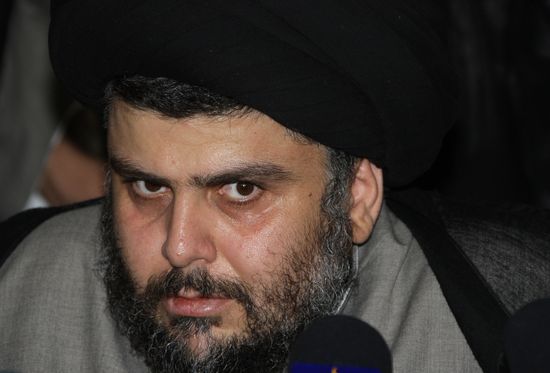
Advantage: Al-Sadr

MOQTADALouaiBeshara:AFP:Getty

Joel Wing studies the game of chess being played in Iraq:

Iraq is still probably weeks and even months away from forming a new government. Sadr’s decision to come out for Maliki was one of the first major changes in the stalemate that has been going on since the March 2010 election. Tehran had a leading role in Sadr’s choice organizing Syria, Hezbollah, and Ayatollah Haeri to all lobby him. That shows Iran’s ability to shape events in the country. This set off a chain reaction both within and … [outside] Iraq. The U.S. is now alarmed that the anti-American Sadr will have a leading role in any new government, while Maliki is on a regional tour to drum up support. That just increases Sadr’s influence, since he can rightly believe that all this activity is due to his actions.

He’s likely to get most of what he wants in a new government, since not only did he drag out talks with other parties to maximize his position, he also has a political movement and a militia that can exert his will after all the talks are over. It’s just the latest example of Sadr being a political survivor after many had discounted him when his movement fractured, Maliki went after his followers in 2008, he disbanded the Mahdi Army, and then his candidates didn’t fare as well as expected in the 2009 provincial vote. At the same time, he was in almost the exact same spot in 2006 when he put Maliki into office the first time. That relationship didn’t last, so it’s wrong to think that Moqtada has suddenly reached a new apex. Iraq’s politics are like a soap opera with drawn out relationships, backstabbing, and plenty of drama, so what’s happening now, can always change dramatically in the future.

(Photo:LouaiBeshara/AFP/Getty)

Refuse To Go Away

That's the advice Yglesias has for politicians embroiled in scandal:

When a reasonably popular public official is hit with a scandal of a personal nature, the natural immediate first reaction of his same-party colleagues is to want to get rid of him. After all, no reason this guy should be a millstone around all of our necks. That leads to an initial torrent of criticism from friendly-ish sources and a wave of pressure to resign. But if you resist that first wave, apologizing for your conduct but refusing to apologize for your years of public service and highlighting the pernicious special interests who’d love to see you brought low, you basically flip the dynamic. Now you’re definitely going to be a millstone around everyone’s necks so the question becomes how heavy a stone?

Suddenly all your same-party colleagues have an incentive to defend you and to attack your enemies.

He uses Bill Clinton as an example of someone who refused to resign and Elliot Spitzer as someone who folded under pressure.