What Should Be

John Horgan takes another whack at Sam Harris' argument that science is a moral guidepost:

Neuroscience can't even tell me how I can know the big, black, hairy thing on my couch is my dog Merlin. And we're going to trust neuroscience to tell us how we should resolve debates over the morality of abortion, euthanasia and armed intervention in other nations' affairs? …

Zakaria On Blair

A brilliant, insightful assessment of how the man's "messiah complex" overwhelmed his modern pragmatism. Money quote:

In a strange sense, Blair on terrorism recalls nothing so much as the Labour Party ideologues he used to make fun of as they loudly declaimed about the nationalization of industry, unilateral disarmament and workers’ communes. They were obsessed by an ideology, contemptuous of complicating facts on the ground, fed up with a public that didn’t see the light and supremely convinced that history, ultimately, would vindicate them. What do you know. Tony Blair has turned out to be Old Labour after all.

Seeing Red

Terry Teachout explores the resurgence of interest in autochrome, and wonders what seeing the world in black and white did to our sensibilities:

[My] thirteen-year-old nephew, has taken to turning up his nose at black-and-white movies, a form of youthful snobbery that I'd heard about but never previously encountered. Not for him the clean, crisp surreality of the monochrome image: he wants color or nothing. No doubt blood looks better when it's really red. ….

The world was simpler then, simpler and more reassuring and–yes–less honest. Much was being swept under the rug in 1960, much suffering and much folly, far too much for our collective good. And now? We get color or nothing, with more than enough blood to go around. But while I suppose I'm glad to know what I know about the world, luridly and garishly vivid though it may be, I don't think I would have wanted to know very much of it when I was young–and I'm not at all sure it's a good thing that my nephew already knows some of it.

“For The Sake Of A Single Poem”

Jackie Wang quotes The Notebooks of Malte Laurids Brigge by Rainer Maria Rilke, on the eternal debate between being out in the world and writing about the world:

For the sake of a single poem, you must see many cities, many people and Things, you must understand animals, must feel how birds fly, and know the gesture which small flowers make when they open in the morning. You must be able to think back to streets in unknown neighborhoods, to unexpected encounters, and to partings you had long seen coming; to days of childhood whose mystery is still unexplained, to parents whom you had to hurt when they brought in a joy and you didn’t pick it up (it was a joy meant for somebody else); to childhood illnesses that began so strangely with so many profound and difficult transformations, to days in quiet restrained rooms and to mornings by the sea, to the sea itself, to seas, but it is still not enough to be able to think of all that.

You must have memories of many nights of love, each one different from all the others, memories of women screaming in labor, and of light, pale, sleeping girls who have just given birth and are closing again. But you must also have been beside the dying, must have sat beside the dead in the room with the open windows and the scattered noises.

And it is not yet enough to have memories. You must be able to forget them when they are many, and you must have the immense patience to wait until they return. For the memories themselves are not important. Only when they have changed into our very blood, into glance and gesture, and are nameless, no longer to be distinguished from ourselves only then can it happen that in some very rare hour the first word of a poem arises in their midst and goes forth from them.
Many Truths In One Faith

Kyle Cupp decodes the contradictory elements of many religious symbols:

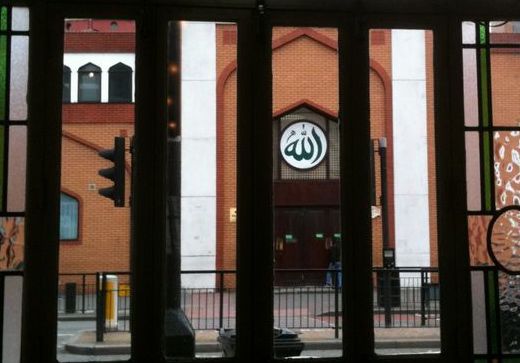
[T]he Christian conception of evil as a stain or blemish that the cleansing waters of baptism remove envisions evil as a kind of thing, as something with being, and yet, in the same tradition, evil is also considered as a privation, as a lack of a good that ought to be there, as not a thing at all, as not having any being. These two conceptions of evil aren’t entirely compatible, and yet both are very much at home in the same faith tradition. …

Ultimately what we know about evil, or anything else that we use figurative language to conceptualize, cannot be made into a single, coherent, all-encompassing conception.  Its truth is not one, but many, at least in so far as we have its truth figuratively in mind.

Pure Nonsense?

James Ley disparages (pdf) the "undergraduate bull session" observations of Terry Eagleton's most recent book, On Evil:

Eagleton’s notion of absolute evil disappears into its own vacuity. Like his definition of God, it purchases metaphysical purity at the cost of irrelevance. As a category it is analytically useless, not simply because it ultimately describes nothing, but because it also explains nothing.

“How Bare And Strange A Tree Can Be For Me”

Jenny Hendrix reviews Fragments: Poems, Intimate Notes, Letters, a collection of Marilyn Monroe’s writings:

One of the more remarkable things “Fragments” does is give us Marilyn Monroe the way we’ve always wanted her: as someone, finally, have-able. This is both satisfying and, ultimately, disturbing. In one entry, Monroe recounts a dream in which she is being operated on by Strasberg and her analyst. When they cut her open, Monroe writes, “there is absolutely nothing there … devoid of every human living feeling thing.” This book feels a little like this sort of cutting open, only in addition to this fear of emptiness there are many other “living feeling things” inside.