
Hocking Hills, Ohio, 12 pm
Hocking Hills, Ohio, 12 pm
by Zoe Pollock
Azziz Poonawalla over at Belief Net has his final word on the Park 51 mosque, after conceding that "part of the problem is how few Muslim American voices there are in the debate:"
American Muslims are mostly an optimistic bunch. We can concede there are prejudices at work against us here, but that's part of the mix I described above. We have to be pragmatic and remember that every group before us, the Jews, the Catholics, etc had to face pretty much the same gauntlet prior to acceptance. I think the danger is that American Muslims will perceive unequal treatment and withdraw from civic engagement. The question isn't why we are facing this hostility but rather whether that hostility makes our attempts at assimilation moot. That's a debate we don't want to be having, but is being forced upon us. I hope that as a community of communities, Muslim Americans don't become disheartened and lose that essential optimism that really makes us American. Unfortunately, with precisely half of the American political landscape opposed to us, it's going to be a tough fight ahead to stay optimistic.
Today on the Dish, new polling on the misperceptions of Obama's religion dominated the slow news cycle. More evidence of widespread bigotry against Muslims here and here. Malkin award here and a reader's thoughts here. Conor engaged Reihan and Ross on broadening the Cordoba debate to issues of assimilation and discourse. Laura Freschi, Daniyual Mueenuddin, and Dreher drew attention to the devastating floods in Pakistan.
In assorted coverage, Howard Gleckman looked at the latest deficit numbers, Felix Salmon worried about 401(k)s, James Downie laid out Obama's record on marriage equality, Reihan ruminated over low-skilled labor, Peter Neufeld warned us about the dangers of witness testimony, TNC reported on an innovative new teaching program in NYC, Bernstein jumped into the Gary Johnson debate, and Graeme Wood reviewed a new book on the Green Revolution.
A reader sliced into Ross' position on marriage equality, another countered Kaminer on the nature of coercion, and another defended Islam against Hirsi Ali. A wrap of the week-long tenure thread here. Conor's discussion of talk radio received feedback from readers here and here, while host/ibex Mark Levin sneered at him again.
Colbert bait here and here. Antoine Dodson hit the big time, Facebook continued its imperial march, and China dominated beer consumption. Hathos alert here. Creepy ad here. MHB here, VFYW here, and FOTD here.
— C.B.
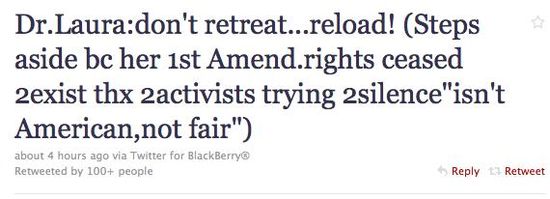
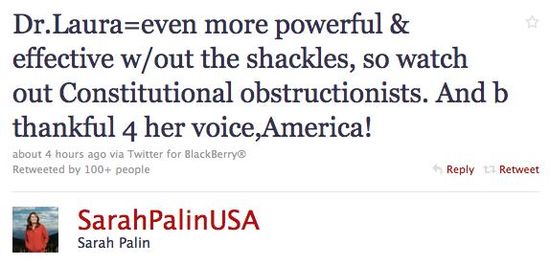
Thursday on the Dish, Palin had chutzpah (or something else entirely) on the First Amendment, and then got schooled by Linda Holmes. Ross responded to Andrew, and Patrick parried with the heart of a Sullivan response until his return.
On the Mosque, Conor accounted for both sides of Imam Rauf while Goldblog continued to bat for him. Conor tallied up post-9/11 Muslim backlashes; Dreher acknowledged we have trouble talking about controversial issues and Bush evaded comment entirely. Steinglass responded to Ezra; Wendy Kaminer warned liberals about criticizing Dr. Laura and the critics of the Mosque; and this reader flipped the 9/11 porn hawkers merch on them.
Conor countered McCain on combat operations ending, again, in Iraq; Patrick argued Dems dominate domestic issues while the GOP focuses on foreign policy. NASA showed us Pakistan, before and after the floods, and some parts of Mexico weren't racked by violence. Conor reflected on the nature of political leanings (towards libertarianism) and he wished Dr. Laura well in the future, while pointing out her mistakes. David Post questioned copyright; and Matt Lewis rounded up the right's responses to Coulter at Homocon.
The Internet may be dead but Reihan glimpsed a future of coordinated clothing and devices. Buses got a boost, and another wordy wonder here. Tracy Clark-Flory asked if sex is a fundamental right (for a disabled man on the taxpayers' dime) and Jonah taught us popularity leads to power and then power leads to some unpopular tendencies. A cop threatened rape, unemployment ticked up; librarians fought back over tenure and made this reader's day. Quotes for the day here and here, charts of the day here and here, cool ad watch here, MHB here, Yglesias award here, VFYW here,and FOTD here.
Readers let the dogs out over Cesar Millan; we guessed over dog or sex toys; and this butterfly was very, very lucky.
Wednesday on the Dish, on the Mosque front, Conor weighed in on assimilation and intolerance, Balko tracked the success of Muslims in America, Will Wilkinson disagreed about the intentions of the GOP, and Imam Rauf engaged with the other side. We grappled with Holocaust analogies, disparaged hawkers of 9/11 porn, remembered the Dubai Ports controversy, and Peter Feaver begged us all to focus on the floods in Pakistan.
Pat Tillman's story kept an R rating because of his last words, China developed a "Spider Man complex," and Yglesias debated amateur barbers. Patrick rallied with a reader over the dissent of the day; Conor countered the cult of the presidency, and we got your read on middle class privileges. Conor defended talk radio listeners here and here and Sugrue, in for TNC, reinvigorated the race and education thread. Your Yglesias award nominee here, Malkin award nominees here and here, quote for the day here, VFYW here, MHB here,and FOTD here.
Pirates ate turtles, commuting killed (kinda), North Korea twittered, and librarians were tenured. We argued about burger prices across the country, health care jobs were growing, and even Ann Coulter and Glenn Beck were punished for getting too close to marriage equality, while the economic equalities of divorce remained crystal clear.
We featured the last batch of first kisses, and this reader put Cesar Millan in the doghouse.

Irbid, Jordan, 6.38 am
Tuesday on the Dish, we asked how hallowed the ground around 9/11 really is. A reader questioned the automatic power given to 9/11 families, we assessed Imam Rauf and Mitt Romney; and Bernstein and Klein agreed the entire controversy doesn't matter.
We looked deeper into the middle class milieu, argued about affirmative action, and the race debate kept reeling. Conor responded to Thomas Sowell on Obama overstepping his bounds by pointing out it has everything to do with war and nothing to do with illegal immigrants, and Eliot Abrams got the Atlantic pile-on for his comments on bombing Iran.
Conor appealed to Republican voters for substance instead of culture wars, Patrick asked who we trust, and Chris railed against CNN for giving airtime to Bryan "Ban All Mosques" Fischer. Kiera Butler responded to Dish readers about emails polluting the earth, hard times were harder for those susceptible to suicide, and convicts could walk the streets like Canadians, according to Graeme Wood. Palin's custody clause may be par for the course, circumcisions in the U.S. were on the decline, Matt Stopera compiled Maggie Gallagher's dumbest quotes, and the Great Zucchini was the subject of today's entry into the long form journalism Hall of Fame.
Ray Bradbury had enough of the Internets, there was more blowback on tenure from Beam, and the government gained license to steal. We collected the pot or profits debate, and this reader boiled 44 months of heavy use down to a likely cause: college. We marveled at the Depression in color, and awed at stories of your first kisses here and here. Cool ad watch here, FOTD here, VFYW here, MHB here, app of the day here, and the sailor who nailed the VFYW contest #11 here.
Ta-Nehisi went to the woods, dogs made us better workers, and one reader informed us that TED can't be Harvard until it can get too drunk to undress itself.
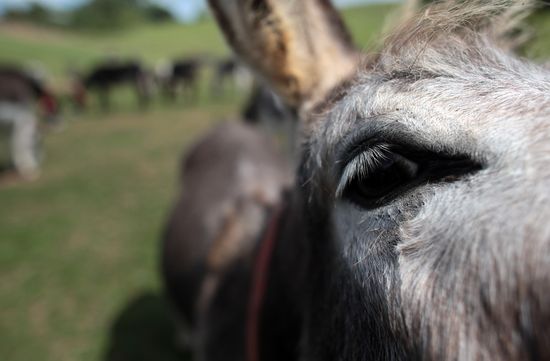
By Matt Cardy/Getty Images
Monday on the Dish, Andrew was away, so we got to assess the fray. On the mosque, Halperin urged Republicans to avoid hubris; Reid crumpled; and Douthat, Bouie and Bernstein butted heads. Conor hit upon an apt analogy by imagining a Catholic prayer group scenario instead. There's a history of the entire controversy here; and Reihan on Ross and his own Muslim parents here.
Debbie Riddle pulled a Palin on Anderson Cooper; Palin pulled a Palin on Levi's custody agreement; and Levi talked to Kimmel. Conor got excited over a Salon profile of the could-be-perfect 2012 Republican candidate who no Tea Partier has ever heard of, and Palin came in 4th in an early Iowa poll. Goldblog was asked to clarify "going nuclear;" Conor invited examples of when analysts have been wrong about their predictions before and Mexico's narco-censorship was on the rise.
Patrick responded to Bazelon on Prop 8; he picked at an America where even the rich claim to be middle class, and he pushed against Kleiman's 'grow your own' cannabis policy. Obama was grouped under the same TARP as Bush, and readers responsed to race, poverty, gangs and education in America here, here, here, and here.
Chris catalogued the current cultural imperialism of Facebook on the web, via French rap; and song lyric riddles went the way of Google maps. Creepy ad watch here, MHB mash-up here, FOTD here, and VFYW here. Hewitt award here, Moore award here, and Yglesias award here.
Conor was curious about your first kiss, goaded Obama on his global war on terror, and had his mind blown by this piece of long form journalism.
— Z.P.
by Conor Friedersdorf
That's what worries James Poulos, who says maturity is the real dividing line between the two Americas. He's reacting to that New York Times piece that begins by asking, "Why are so many people in their twenties taking so long to grow up?" My guess is that changing social mores — that is to say, fear of divorce, higher rates of college attendance, and an ability to have sex before marriage sans stigma — are causing people to get married later. As a result, they're having kids later, thereby delaying the time when they're forced to reorient their priorities to reflect the fact that they're responsible for a helpless young life. This helps explain why young adults are moving back in with their parents more often. So does the increased cost of education and attendant rise in student debt, the increased cost of housing, family homes that are larger than they were a generation ago, and Baby Boomer parents who are much easier to live with than their WWII Generation parents would've been.
I am skeptical of the idea that kids today are less mature.

A Maori haka is performed at the coronation ceremony for the fourth year of rule of Maori King Tuheitia Paki at the Turangawaewae Marae on August 20, 2010 in Ngaruawahia, New Zealand. Paki succeeded his mother, Dame Te Atairangikaahu, following her death in August 2006, and was crowned and made successor the same day as his mother's funeral. By Hannah Johnston/Getty Images.
by Patrick Appel
Daniyual Mueenuddin's article on the flooding in Pakistan in yesterday's NYT is well worth a read:
This disaster is not like an earthquake or a tsunami. In the 2005 earthquake in northern Pakistan, 80,000 people died more or less at one blow; whereas the immediate death toll from this flood is likely to be in the low thousands. The loss of property, however, is catastrophic. It is as if a neutron bomb exploded overhead, but instead of killing the people and leaving their houses intact, it piled trees upon the houses and swept away the villages and crops and animals, leaving the people alive.
Steve Coll chews over the politics of the situation. Dreher wonders about Islamic understandings of theodicy:
I see no intrinsic reason why great suffering should destroy one's faith in God, or why it should strengthen it. I think it all depends on the individual, and on the cultural context. The Black Death struck Europe in the 14th century, and killed far more people … but religious faith survived, and likely helped the survivors find hope amid the ruins. The 1755 disaster struck a very different Europe, as did the singular man-made catastrophe of World War I, with tragic results. In the case of modern Pakistan, I don't know enough about Islam as it's believed and practiced there, or the culture of the local people, to predict.
by Zoe Pollock
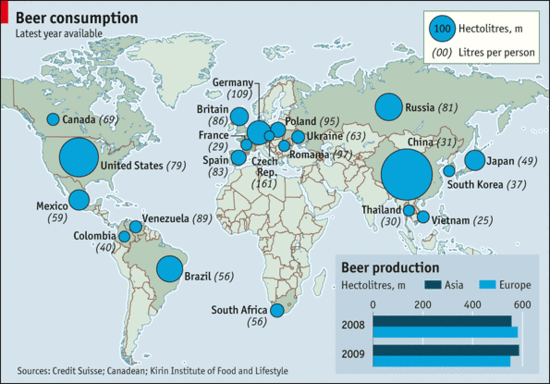
The Economist reports China is now the world's biggest beer market, grossly surpassing the United States. Let the international power hour begin.
by Patrick Appel
A reader writes:
This reader seems to confuse the terms bourgeoisie and middle class. Regardless of the origins of middle class, it's not used in a modern sense as a synonym for bourgeois. Even in a strictly Marxist use, the equivalent would be petite bourgeoisie, not the ruling capitalist class. And it wasn't often that even the haute bourgeoisie out-earned the aristocracy, but rather a trend from the rise of mercantilism and the industrial revolution that eventually toppled the system of formal nobility as the primary factor in social class.
by Patrick Appel
Bernstein weighs in on the Friedersdorf-Ambinder exchange:
The point is that Gary Johnson isn't a hopeless case because he's not good on TV; he's a hopeless case because his issue positions make him unacceptable to the most important groups within the Republican Party, and he doesn't bring anything to compensate for that. Which no doubt stinks if you want a different GOP than the one that actually exists in 2010. Now, it may be that Johnson can mobilize new groups to enter the Republican Party and start to change it…that sort of thing happens to American political parties all the time, in presidential and lower-level nomination battles. But as of now, I'd say that the nomination process does a fairly good job of allowing parties to work together to nominate candidates who are responsive to who those parties are, and the problems that Johnson faces have to do with substance, not process.
This is true, but in order to become a standard-bearer for a cause it can be wise to advocate for a position before it is politically popular. I'm not a Ron Paul supporter, but his 2008 boomlet required a long bout of virtual invisibility. Paul preached the same sermon for decades and it only struck a nerve in 2008. His base of support wasn't large enough for him to win the nomination, but he proved a more viable candidate than almost anyone projected.
Ratatat – Drugs from Blink on Vimeo.
by Patrick Appel
Aaron Kohn reviews the work of video director Carl Burgess:
Composed solely of stock footage typically reserved for the likes of corny law firm or pharmaceutical commercials, Burgess points to the absurdity of these kinds of images. Editing strategically distorting them at moments (with effects familiar to anyone who's ever used Apple's Photobooth) suggest how quickly the mundane turns sinister—well, at least in the eyes of the drugged.
 The Dish