Who We Are

by Patrick Appel

While agreeing with Yglesias about Park 51, Noah Millman frames the debate differently:

I’m wary of the argument that we should be especially supportive of the Cordoba House because it’s being run by the right kind of Muslims – and, more generally, that we need to be actively engaged in promoting “moderate” Islam and opposing “radical” Islam. I have no idea whether “allowing” Cordoba House to be built sends a positive or a negative “signal” to the Muslim world – and, in general, I question our ability to signal effectively at all. The absolutely craziest things go totally viral all the time, and we can’t stop them, and facts about which there is an absolutely universal consensus among anybody with any knowledge at all – say, that the Holocaust happened, or that the universe is billions of years old – remain stubbornly controversial despite our best efforts. Any debate should be about who we are, not about who they are or what we want them to think of us.

Beinart is also worth reading:

Until a month or so ago, I genuinely believed that the American right had become a religiously ecumenical place. Right-wing Baptists loved right-wing Catholics and they both loved right-wing Orthodox Jews. All you had to do to join the big tent was denounce feminists, Hollywood, and gays. But when push came to shove, Sarah Palin didn’t care about Imam Feisal Abdul Rauf’s position on gay marriage. In today’s GOP, even bigotry doesn’t spare you from bigotry. I wonder what Mitt Romney was thinking, as he added his voice to the anti-Muslim chorus. He surely knows that absent the religious right’s hostility to Mormons, he’d likely have been the GOP’s 2008 presidential nominee. I look forward to his paeans to religious freedom when anti-Mormonism rears its head again in 2012.

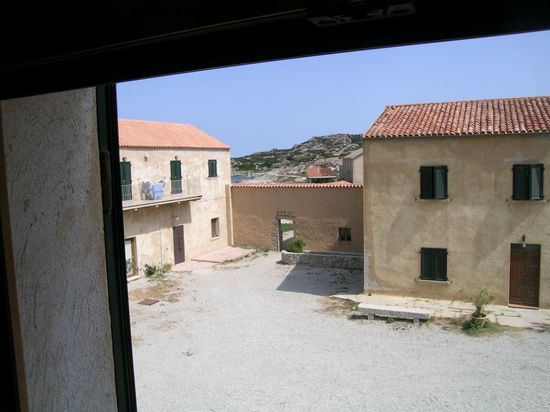
The View From Your Window Contest: Winner #11

Vfyw-contest_8-14_

by Chris Bodenner

This week’s puzzle was the least participated yet, likely due to the August lull, Andrew’s absence, and the level of difficulty. A reader writes:

Not an easy one, is it? The roofs and shutters suggest southern France, or possibly northern Spain. I am gonna go with southern France, and just to make a guess: Languedoc region, possibly Corbieres mountains.  Lezignan?

Another writes:

Now, we’re talking.  I’m still waiting for an image of such obscurity that no one possibly could imagine what it is.  This is close, but there are clues…

The blue sky, shingles on roof, water in the background, and well-made wood doors indicate Mediterranean origin.  I was tempted to choose a Greek island, given the blue laundry hanging in the background that matches their flag.  (Europeans do not like displaying flags after the wars, but perhaps there is a subliminal draw to the color.)  But I’ll have to choose Spain.  The wood doors and black shudders look old-Spanish.  Low vegetation in the background would seem to indicate one of the Balearic Islands.  For an English readership of the Dish, I’d have to lean towards Eivissa.

Another:

I have no fuckin’ clue. Although, I will say the thing that came into my mind first was the courtyard/rescue seen from the In-Laws with Peter Falk and Alan Arkin. I think they were in Honduras … so I’m going with Honduras for this very valid reason. Wikipedia tells me the capital is Tegucigalpa, so that will be my city.

Another:

This is a tough one for sure. My gut feeling is that this photo was taken on a Greek island.  There is a hint of water in the background, indicating a rocky shoreline.  The place is obviously arid, hot and sunny, with scrubby vegetation.  It could be any number of places along the Mediterranean, but Greece seems most likely.  However, with some 9,000+ miles of coastline, I don’t even know where to start. So I’m just going to throw Crete out there as my final answer.

Another:

I wasn’t far off on Sarajevo. I had Savannah within a few blocks. But when I looked today, I had no blessed idea where to start. My husband leaned over, took one look at my screen and said, “Sicily.”  So hey – I’ll go with that.

Another:

Architecture and landscape suggest Italy. There’s a beach in the background, and based on the shadows, I’m going to guess that the beach is on a northern coast. The hills don’t match the southern Adriatic coast, and the architecture lacks the Venetian influence of the northern Adriatic. That leaves Sicily or one of the smaller islands nearby (just doesn’t feel like Sardinia). When I went into Google Earth, I couldn’t find any towns on Sicily that quite matched the orientation of the beach shown in the picture. But I found one on Isola Lipari, so I’m going to take a stab at this and say Acquacalda, Italy.

Another:

It looks just like a building from a spaghetti western, so I’m going to guess suburban Granada, Spain.

Another:

Mallorca, Spain? The un-whitewashed shallow-sloping buildings look like solidly southern European farmhouses, or at least buildings that have been constructed in an old farmhouse style. The landscape – rocky, arid and treeless – looks more like Spain, and I think the complete lack of trees suggests one of the Ballearic islands. I found a few pictures using Google, of similar buildings in Mallorca. Even if I am right, I don’t have the local knowledge or the fortitude to really dive deep and identify the exact location using Google satellite view, so will leave that to someone else!

Another:

This is the hardest yet!

Perhaps I’m missing some locality specific clues?  Stucco and red tile roofs; dry summer weather but not tropical vegetation. Compound is raised a little above a bay.  Where do they have such compounds these days?  That’s not clear.  The housing seems rudimentary though it has modern electricity.  But old buildings and water trough.  Is that a laundry cart on the balcony on the left?  A hostel or inn at some Mediterranean beach – but the grounds aren’t very well kept.  I spent at least ten hours touring what seems like every bit of the coastline of the Med with Google Earth – as well as the close-by islands (and Mexico!). Since Google Earth is insufficient in some areas to identify specific house types, I know I didn’t cover everything.

In the end I found little evidence of compounds like this and it seems to me that the modest beach buildings of yore in Europe have given way to relatively upscale housing.  At some point, my mother, who has been getting quite involved with these contests, called to say she had seen a travelogue of Madeira and it reminded her of this picture – the same types of houses, hills, etc.  Unfortunately, the travelogue was probably from the ’50s.  So, even though I did not see this site on my several trips around the island, I’m going for the island of Madeira, which belongs to Portugal.

I hope “ten hours” was hyperbole. Another:

Very typical Corsican shutters and red tiled roofs. Rough Mediterranean terrain is from the northwest part of the island. I’m going with Calvi, Corsica, France.

Getting warmer. Another:

Sardinia!  Buildings look Italian, roof tiles look Italian, shutters, windows and doors look Italian, hinges look Italian. Landscape in the distance looks like rocky, low lying green brush, thorny, sun-drenched Mediterranean. Angle of photo could be looking north, which would put us on the west coast because of the slightest sliver of water to the right, which clearly puts us smack dab…

WAIT! Suddenly, Sardinia seems too wealthy for this photo. Something about that shack in the center middle-ground says Sicily instead of Sardinia. And the windows on the two foreground buildings – a little more worn, a little more closed up, a little more weary of life… But something about the portal in the courtyard wall seems more Roman that Sicilian? Google maps along the southwestern coast of Italy are too poor to conclusively pinpoint the location.

So I’m heading back to Sardinia. And since I have to get back to work, I’ll say Buggerru.

Oh so close. Another:

Such a sad little courtyard! I hope the potted plant on the right makes it through the summer. I’ve toyed with a few island and coastal locales along the Mediterranean, but I’m going to have to go with Sardinia, Italy, near Alghero.  I know, I know, I’m a zillion miles off!

About 80, actually. Another:

I am a sailor in the U.S. Navy, and I lived in La Maddalena, Sardinia for 11 years, from 1995 to 2006. I was stationed aboard the submarine tenders USS Simon Lake (AS 33) and USS Emory S. Land (AS 39). (The Navy no longer has a presence there, as everything was shut down and the ship sent back to the States in 2007.) La Maddalena is a small island in the Maddalena Archipelago located at the northeast tip of Sardinia; the largest town on the island is also called La Maddalena. The sub tenders were actually located on another small island, Santo Stefano, which is less than a kilometer from La Madd.

Anyway, as soon as I saw this week’s window, I felt homesick. The terrain in the image is identical to La Madd’s, and the building looked familiar, like one I used to pass while walking to the beach. After some googling and Google Earthing (which made me even more homesick), I believe the view is from Residenza Cala Francese, 07024 La Maddalena, Sardinia, Italy, looking north-northeast. Some better pictures of it can be found here.

I feel pretty confident about this one.

As you should – congrats!  We’ll get a Blurb book out to you shortly.

For a while now, I’ve been meaning to find a good way to display everyone’s guesses, particularly in a dynamic way, but I haven’t had the time or know-how yet.  If any readers have suggestions, please email them to VFYWcontest@theatlantic.com. Here is what I whipped up with Google Maps (“A” marks the answer):

Vfyw-map_sardinia

Money zoom:

Vfyw-map_sardinia-zoom

See you Saturday for the next installment.
A Way Forward With Drugs, Ctd

by Patrick Appel

E.D. Kain finds Kleiman's case against commercial cannabis unpersuasive. As does Pete Guither:

it is possible to regulate commercial advertising. Second, those who are likely to have problems with abusing drugs are likely to find them regardless of the marketing. Third, any advertising that promotes marijuana is likely to end up getting some people to consume pot rather than some more harmful drug.

Reihan is less brash:

Kleiman is a frank paternalist, and his arguments are potentially discomfiting for those of us of a libertarian bent. But as a prudential first step, I think he’s right to prefer non-commercial legalization.

Serwer is torn:

I'm not quite sure where I stand on the choice between legalization and criminalization, I do think that marijuana abuse is a relatively minor problem. I'd like to preserve that status quo while eliminating the draconian penalties and absurd amount of law-enforcement resources devoted to preventing people from toking. But I think Kain is being a bit to dismissive in arguing that there would be no adverse consequences from the mass marketing of marijuana. It seems entirely possible to me that commercializing the drug could create a problem where none really exists — businesses have to make a profit; someone growing their own doesn't. A world where a smaller, less profitable illicit market that continues to exist looks a lot like our own without the outsize penalties and adverse consequences of over-enforcement. I'm not sure what a world with a fully commercialized marijuana industry that profits from turning people into potheads looks like, but it makes me nervous.

Sound and Fury Signifying Nothing

by Conor Friedersdorf

This post is directed at Republican voters, especially if you're antagonistic toward the established order in Washington DC, and sympathetic to the Tea Party movement. You've long been upset about the size of government, the national debt, and the budget deficit. In the 2010 midterms and the 2012 general election, you're hoping to elect representatives who'll resist further expansion of federal power, or even shrink government.

What I'd like you to do is to reflect upon the sudden controversy over the construction of a mosque and community center near Ground Zero. Forget about the merits of the issue. Is it good for your agenda that this is suddenly the most controversial matter in America? Doesn't it worry you when the public conversation shifts into culture war territory, where right-of-center politicians can garner votes and support without having to address the issues you ostensibly care about most? A campaign about the bank bailouts, health care reform, and deficit reduction might be more difficult to win, but victory would give the GOP a mandate to reverse the worst excesses of the Obama domestic agenda.

If a new Congressman knows that he owes his election to populist wedge issues like the so-called Ground Zero mosque, is he going to propose tough spending cuts when he gets to Washington DC? Or is he going to become addicted to wedge issues, and never do the hard work of persuading voters that our current fiscal course is unsustainable? Too often we're electing precisely the politicians who are most adept at exploiting wedge issues.

You've probably wondered why the Republicans you've sent to Congress in the past haven't made any headway on shrinking government. It's largely because a motivated constituency stands ready to oppose any significant cut. But a small part of the blame can be assigned to a base that is forever distracted by whatever irrelevant kerfuffle is thrust before it. Do you remember the last big story that the conservative media brought to national attention? It was a videotape of a speech by Shirley Sherrod, an obscure USDA official in rural Georgia. Andrew Breitbart, proprietor of several Web sites increasingly visited by your fellow conservative Republicans, claims that he published an excerpt in order to demonstrate the supposed racism of the NAACP.  

There is precious little that the right could've gained from this kind of story in the best case scenario (which of course didn't happen). Imagine that instead of embarrassing Mr. Breitbart, the episode had proved that a Georgia chapter of the NAACP once hosted a speaker who said objectionable things. Would that help shrink government? Would the freedom of the average American increase? Would our unsustainable entitlements be reformed?

Unfortunately, addressing difficult, consequential issues is no longer required to become a successful conservative entertainer or a hero in the minds of the rank-and-file. All that's required to achieve that status is a talent for flattery: people read Big Government not because the site capably tackles the most important issues in America — a hidden video expose about census workers being paid for their lunch hour! — but because its coverage of insignificant controversies is emotionally satisfying. Its readers are complicit in maintaining an incentive system where the most lucrative, popular thing for media savvy conservatives isn't to make real hard fought advances for the cause — something that has been achieved on the right before — so much as to flatter adherents that their preconceptions are true and their ideological opponents are malign (and all the better if the zinger fits on Twitter).

That brings us back to the so-called Ground Zero mosque. It's the latest battle in the culture war, and soon enough it'll be over. Either the project will be built 2 blocks from Ground Zero, or else the organizers will bow to pressure and relocate elsewhere. Maybe 20 blocks from Ground Zero. And what a victory that would be for the right. The New York Post would get its momentary hike in newsstand sales, its readers would feel 10 minutes of fleeting emotional satisfaction, and the politicians most adept at exploiting culture war issues would be marginally more likely to win a Congressional seat.

And when some Republican member of the ruling class is next faced with an issue where a party whip or a lobbyist wants him to do one thing, and his conservative constituents want him to do another? He'll think to himself, "I wonder if I can afford to lose some support from my base on this vote, and make it up by taking a populist stance on a culture war issue that doesn't cost me anything." In the past, the answer to that question has usually been yes.

“Depressing Because It Is So Persuasive” Ctd

by Chris Bodenner

The Dish has received a deluge of long, thoughtful, well-informed emails on this topic and I wish we could post them all. So a big thank you to everyone who wrote in. To recap, the "Depressing … Persuasive" thread in chronological order is here, here, here, here, here, here, here, here, and here.  A reader writes:

Fifteen years ago you published the debate on The Bell Curve in The New Republic.  How can you not raise the issue of average racial cognitive differences, human biodiversity ("HBD"), so-called race realism, and other such topics in the context of the McWhorter review, school performance, etc.?  You know it is relevant and you occasionally allude to the fact that it is a real issue.  So why do you post a range of views on the "tragedy" of inner city school performance without any reference to HBD?

We aired the Bell Curve debate earlier this year in a thread called "Race And Intelligence, Again." Check it out here, here, here, here, here, and here. Another writes:

Your latest readers, claiming that urban school systems are

well-funded, may be speaking of isolated cases. Per pupil expenditures were not equal for the public school students of Philadelphia for my entire life as a student there. Classroom supplies and infrastructure are sorely lacking in the traditional public schools of New Orleans. This is clearly one of those things that gets people really hyperbolic on both sides.

Nothing infuriates me more as a lifelong urban resident and public school graduate than people who blame culture without accounting for structural racism (in education, in criminal justice). Fundamentally, the issues are not mutually exclusive and people who advocate for urban communities do themselves a disservice when they separate culture from societal structure.

Still, I am not going to dismiss the book reviewed by McWhorter.  In fact, I'm going to go buy it.

Another:

I am a product of both the Ivy League and the Philadelphia public school system – you know, one of those massively underfunded havens for institutionalized bigotry and eventual failure.  I would love to pat myself on the back for my work ethic and desire for achievement, but I know that it all started with my parents.

Through the wonders of social networking, I've been able to keep track my classmates more than 10 years after graduating high school.  The one factor that separates the haves from the have-nots is parental involvement.  Race, class, or creed has nothing to do with the various paths my classmates have taken.  I remember going to parent-teacher conferences with my parents and it is almost without fail that those parents (or parent) who showed up had the kids who eventually went on to successful careers. 

I'm absolutely sick of hearing funding or bad teachers used as an excuse for failure by those who make absolutely no effort to improve their own children's lives.  I understand that I was fortunate to have two parents to support me, but plenty of my classmates had only one caring parent and they made it out just fine.  I can't even pretend to have a way to motivate those parents to take an active interest int their children's lives, but we are getting to the point where blaming institutional racism and the underfunding of schools has far passed its efficacy and basis in reality.

Another:

I've enjoyed both your readers' response to McWhorter and your readers' responses to your readers' response to McWhorter. And to quote Toby Ziegler from The West Wing: "I agree with Sam, I agree with Josh, I agree with Leo, and I agree with C.J., and you know how that makes me crazy."

Married to Their First Kiss

by Conor Friedersdorf Dick writes:

Home after enlisting in the Marine Corps in 1955, at age 17, I called the only girl I had ever dated, back when we were in 7th grade. She invited me to go to the Methodist youth group meeting that evening. As we walked back to her place with a full moon peaking through the trees, we stopped and kissed. My first kiss. We got together every day until my leave was over, then wrote every day. I proposed to her before being shipped out and we agreed to get married when I returned. We were married for 23 years.

Ardith writes:

I didn't have my first kiss until I was 25, two years ago. I'd grown up the oldest daughter in a very conservative fundamentalist Evangelical Protestant home, with nine siblings.  I didn't meet any boys outside of my church (and certainly wasn't kissing the ones at church!  My dad didn't let us go to any teen-aged church camps because there would be teenagers there, and, who knows, stuff might happen!) until I went to college at a moderately conservative Evangelical Protestant university.  And then, well, I was very shy, and very geeky, and the only dating relationship I had lasted for a month, and we only held hands.

But I graduated, and got a good engineering job, watched all the girls I grew up with get married and start having as many babies as possible, while I got more and more independent, bought a car all by myself, bought a house all by myself, and started rethinking everything I'd been taught growing up.

I retained the Christianity, although it's a much simpler Christianity, and left the Republicanism, the Young Earth Creationism, the patriarchy, the pressure to have lots of children, the anti-intellectualism, and the veneration of My Father's One Right Interpretation of Scripture and Everything behind.  It felt like I was walking out onto the surface of the moon.  There weren't many people I could talk to about these things, and it was, for the most part, very lonely.

Right in the middle of how things were changing for me, I met somebody at work.  He was quiet, but not too quiet, extremely cute, and a huge geek like me.  One day he got up the nerve to ask me out, and after a few months, I had my first kiss. It was a bit awkward, not earthshaking, but it symbolizes how everything was changing for me, and led our marriage last fall.  It's been amazing.  He's my equal, and treats me as his, doesn't manipulate me, doesn't try to control me, and loves me unconditionally.  He's from a Catholic background, I'm from a Protestant background, he's from a liberal family, I'm from a theocratic family, and yet we've both ended up with so very nearly the same beliefs.

I would have been fine if I'd stayed single, but it's so much better, and I'm so much happier, walking through life side-by-side with him. My first kiss told me I could have freedom from my old ideological chains, and have love and intimacy. It means everything in the world to me.

Marie writes:

I was fifteen, and the boy was my best friend's older brother. He was eighteen and fascinating, in a shaggy haired, pot-smoking computer prodigy sort of way. We would talk about philosophy and art into the night at their house, and one night he said, "Would you like to kiss me?"

I leaned in and did. It was boring. We kissed for the next two hours, me waiting for some exciting feeling to kick in. I went to bed that night disappointed by the kisses but utterly thrilled by the offer. I dated that brilliant, difficult boy on a chemistry-free basis for three years before I married him at the should-be-illegal age of 18. My father tried to send me to a ballet school in the Ukraine to break us up, and there was a civil war in Ukraine at the time, so you can imagine how strongly he felt about it. Our marriage lasted two stressful years, and in the subsequent separation, I finally got my "real" first kiss: the one that turns the world upside down.

Rebecca writes:

I always sort of equated physical intimacy with vulnerability, and I felt that as a girl, I couldn't really afford to be any more vulnerable than I already was. I'm pretty sure that if I'd been asked, I would have said my goal was never to kiss more than one person. I hated the idea of someone being able to hang that over my head. I'm really not sure why, but I had a very strong sense that kissing (etc) would decrease the extent to which people took me seriously.  So while most of the people I knew had kissed someone romantically for the first time by our graduation from high school, I hadn't. I was even dating someone when we graduated (poor guy), and that relationship ended without any physical contact besides some awkward slow-dancing at prom.

In January of my first year in college, I met a guy two years my senior. He'd just ended a two-year relationship when we met. He made it pretty clear that he was interested in me, but I was cautious because of how recent his break-up was (I was friendly with his ex, too) and because I didn't really want to get tied up in any relationships; I was still only a freshman. We chatted on AIM (remember that?) all day long, and every night he would come up to my dorm and we would usually end up hanging out in the stairwell for privacy. Just talking, for months. Sometimes we'd talk about our interests, or our families, but we'd always find our way to the question of what we were doing there together and what would come of it. Every night, we'd stay up until the early hours of the morning, him waiting to see if I would finally give some sort of green light for him to kiss me, me hoping he would kiss me without a signal. Every night, we'd get incrementally closer, but just end up shaking hands (we had to do something!). 

Looking back, it seems pretty torturous! But he certainly proved that he respected me.  I went away for spring break, and when I came back, he told me that he loved me. I told him I couldn't say it back to him yet. He said that was ok, but that he really wanted to kiss me.  I told him ok.  But when he did, I couldn't kiss him back. I was just too scared, and after all I didn't really even know how.  But it broke a barrier, and the next night I did kiss him back. He still says the first one didn't count. :) In the years that followed I'll admit there were some bad times — even really bad times — but we stayed together, we were always in love, always felt happiest when the other was in the same room, and have never run out of things to talk about or ways to challenge each other intellectually. At night, after we've put our kids to bed, we still usually just hang out together, talking, and I can't help but think back to the stairwell, night after night. Even though our time together isn't laced through with that romantic tension anymore, it just doesn't seem to get old.

Sarah Owns Levi, Ctd

by Chris Bodenner

A reader writes:

Looking at this as a lawyer, as opposed to my more partisan self – a self who would pay to see Sarah Palin eaten by wolves – the language you've referenced not only doesn't bother me, but is kind of appropriate.

Courts do this stuff all the time. Language that prevents the parents from trash-talking the other parent is pretty common, almost routine, in my jurisdiction (which is in Central PA).  While language in an order that deals with trash-talking grandparents is less common, given Bristol's age (19 – no longer a minor, but still basically a kid), and the fact that Sarah will be involved in this child's life pretty heavily, and the fact that she (and Levi, and Bristol, and Mercede) are all public figures at this point, adding the "publicly" language is also appropriate.

And remember, it's a reciprocal order.  Given what we know of everyone in this case, who has shown more restraint – Sarah, or Levi?  Most of the time in custody fights, taking the high road isn't only the right thing to do, it's the tactically smart thing to do.

Another lawyer writes:

Many orders in parent-child relationships contains a so-called "no disparaging comments" provisions.  In Texas, our typical provision reads: "The parties agree that they will not make disparaging remarks regarding the other party or the party's family members in the presence or within the hearing of the child." This can be done by agreement, or by permanent injunction.  And it is designed, obviously, to keep the parties from bad-mouthing each other in front of the kids.

Granted, the wording of Bristol and Levi's agreement is rather strict, prohibiting not only the disparaging remarks in front of the child, but also prohibiting public remarks whether in front of the child or not.  It goes even further by requiring that the parties not allow the child to interact with anyone making such remarks.  That's certainly not typical, but honestly, I can't say it's unwarranted given the circumstances of the case.

Affirmative Action’s Staying Power

by Conor Friedersdorf

Randall Kennedy writes:

The true measure of affirmative action's staying power is that its absence now is virtually inconceivable. Liberalism has made racial homogeneity uncool and unacceptable. Even many conservatives are made uncomfortable by lily-white gatherings — hence the enhanced value to the right of Clarence Thomas, Shelby Steele, Condoleezza Rice, Linda Chavez, and any well-spoken Negro or Latino who consorts with the Tea Party crowd. That conservatives practice affirmative action even as they condemn it is a tribute to liberalism's handiwork.

It's a provocative paragraph that is largely true. Few would deny that conservatives sometimes factor the optics of race and gender into personnel decisions, and tout examples of racial and gender diversity when they're available.

But Mr. Kennedy also reveals an inescapable cost of this embrace: he's implied that Condoleezza Rice and Shelby Steele, to cite two examples, were affirmative action cases. Suffice it to say that the former was more competent and qualified than a lot of the white men in the Bush Administration, and that the latter is a more talented writer and thinker than all sorts of people regularly published and bankrolled by the conservative movement.

That they're also black people on the right is reason enough for a lot of people to presume that merit doesn't explain their rise.

It's impossible to feel good about that.

This passage is worth reading too:

The rise of the diversity rationale for affirmative action has not been costless, but it has ensured that appreciable numbers of racial minorities are in strategic positions, while dampening certain side effects that attend any regime of racial selectivity. Unlike affirmative action based on grounds of compensatory justice, the diversity rationale is non-accusatory. It doesn't depend on an assumption of culpability for some past or present wrong, and it minimizes the anger ignited when whites are accused of being beneficiaries of racial privilege. Everyone can be a part of diversity….

The diversity rationale also facilitates the evasion of prickly subjects — for instance, the fact that racial minorities selected for valued positions sometimes have records that, according to certain criteria such as standardized tests, are inferior to those of white competitors. The diversity rationale moves the spotlight from the perceived deficiencies of racial minorities to their perceived strengths. Unlike other justifications for affirmative action that seek to make exceptions to meritocracy, the diversity rationale is consistent with meritocratic premises. This is the most striking and historically significant aspect of affirmative action: It enables racial-minority status for the first time in American history to be seen as a valuable credential. Instead of the presence of blacks and other racial minorities constituting an expiation of past sins, the diversity rationale makes their presence a welcome and positive good.

The biggest concern I have about affirmative action is its inevitable trickiness in an increasingly multi-ethnic society. Is it going to pit various minority groups against one another in some situations? Does its logic lead to occasions when privileged but numerically small minority groups will be advantaged over more numerous but less advantaged people? Doesn't the fact of multiracial Americans make standard-setting about who qualifies an increasingly arbitrary affair, more likely to reflect the power of political constituencies than justice? There is also diversity-based affirmative action's implicit judgment that race is the most relevant measure of diversity, something that is true in some but not all circumstances.

On the whole, I tend to think that racial diversity is sometimes important, and that color blindness before the law is even more important — enough to prohibit government sponsored affirmative action efforts, as California voters have done, while acknowledging that private entities sometimes have legitimate diversity interests.

And diversity proponents ought to take heart, as I do, that this country's institutions — both public and private — are going to grow more diverse with or without affirmative action. Racists are disproportionately old, and steadily dying at a faster rate than less racist people and non-racists. Its actually one of the few positive trends we've got going. Of course, racial disparities are more complicated than "racists are holding minorities down," but an ever less prejudiced America isn't nothing.