What About The Afghans?

Andrew Exum has one final criticism of Wikileaks:

It does seem as if measures have been taken by Wikileaks to protect U.S. and allied personnel whose lives might be endangered by the leaks. The same cannot be said for the Afghans. A cursory search of the Wikileaks documents by the consistently excellent Afghanistan-based journalist Tom Coughlan revealed hundreds of Afghan lives to have been put at risk by these leaked documents. The mentions of Afghans — either because they have confounding, non-Western names or because they simply are not considered of importance — do not seem to have been considered by Mr. Assange and Wikileaks when they decided to dump these documents into the public sphere. I don't know whether Mr. Assange simply did not understand enough about Afghanistan to realize what he was doing when he leaked these documents or just doesn't care, so myopic is his focus on the governments of the United States and Europe.

Good News, Everyone, Ctd

Josh Green goes to bat for Elizabeth Warren:

Warren is regarded skeptically by some in the Obama administration for her tendency to be outspoken, which is precisely why consumers trust her. The tendency of Obama officials, especially the economic team, is to speak in the bland jargon of technocrats. But with an election looming, the White House needs someone who can explain its policies and convince voters that it is working in their interest. That may be why the administration seemed to soften its tone toward Warren this week. "I think she would be a very strong leader of this organization,'' Treasury Secretary Tim Geithner said. Warren's reputation would help not just the consumer agency, but the White House, too. And that could be key to holding power.

CJR laughs at Wall Street's fear of Warren.

Beneath The Waves, Ctd

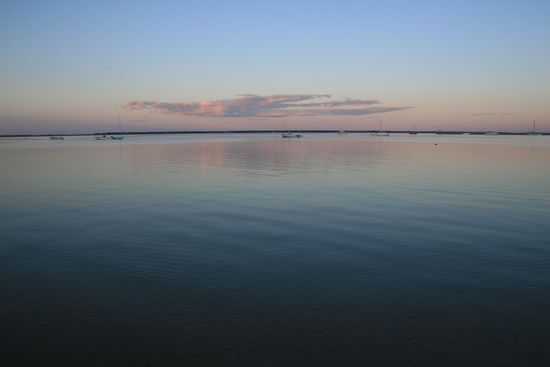
Ocean

Contra Susan Shaw et al, Michael Grunwald says the BP spill isn't as bad as it has been made out to be:

The scientists I spoke with cite four basic reasons the initial eco-fears seem overblown. First, the Deepwater Horizon oil, unlike the black glop from the Valdez, is comparatively light and degradable, which is why the slick in the Gulf is dissolving surprisingly rapidly now that the gusher has been capped. Second, the Gulf of Mexico, unlike Prince William Sound, is balmy at more than 85 degrees, which also helps bacteria break down oil. Third, heavy flows of Mississippi River water helped keep the oil away from the coast, where it can do much more damage. Finally, Mother Nature can be incredibly resilient.

But taking the long view, maybe not:

When Worm and colleagues combined the satellite data, the early shipboard records, and direct measurements of chlorophyll made from the 1950s onward, they found that the recent dip in phytoplankton wasn't a passing phase. It had been happening in most parts of the ocean for more than a century. On average, the planet has lost 1% of its phytoplankton every year since 1900, the team reports in the 29 July issue of Nature.

"You compound that over a century, this becomes a huge, huge decline," says Paul Falkowski, an oceanographer at Rutgers University in New Brunswick, New Jersey, who was not part of the study. Indeed, Worm's team estimates that phytoplankton numbers have plummeted 40% since 1950.

What's more, the team found that phytoplankton numbers were more likely to dwindle in areas of the ocean that were warming, suggesting that climate change is responsible for the drop.

Actual paper here. This is one of the feedback loops that has some of us deeply worried that the cost of climate change may be far worse than we now imagine:

The ocean absorbs 40% of the CO2 humans emit. Phytoplankton, in turn, convert that CO2 into oxygen or die and bury it at the bottom of the ocean. If the phytoplankton are disappearing, Richardson says, "the ocean as a carbon sink is declining, and what that means is ultimately more CO2 will stay in the atmosphere instead of being dissolved in the ocean." That will translate into a warmer world, which will wipe out even more phytoplankton.

Tenure: Stifling Teacher Growth

Jennie Rothenberg Gritz interviews Andrew Hacker about his new book on education. His views on tenure:

Academics typically don't get tenured until the age of 40. This means that from their years as graduate students and then assistant professors, from age 25 through 38 or 39, they have to toe the line. They have to do things in the accepted way that their elders and superiors require. They can't be controversial and all the rest. So tenure is, in fact, the enemy of spontaneity, the enemy of intellectual freedom. We've seen this again and again. And even people who get tenure really don't change. They keep on following the disciplinary mode they've been trained to follow.

Thoreau argues that tenure will not go away, but shrink. Cowen wants to know what would replace it.

The Politics Of Smashing Faces

Friedersdorf has noticed that many "hard core progressives" and "movement conservatives" think that "their ideology would prevail more often if only their partisans were more angry, their attacks more pointed, their operatives more ruthless." He thinks this mistaken:

Lots of hard core progressives and movement conservatives are wrong: Political and ideological gains don't come from being best at smashing faces through plate glass windows or winning news cycles or employing the most extreme rhetoric. Perhaps you disagree with some of the examples I used. These are contentious issues. Overall, however, I hope you'll agree that the subset of people who treat politics as guerrilla warfare have a terrible win-loss record, and a warped, wrongheaded view of how winning in politics is done. I don't really know if one side of the political spectrum or the other engages in this kind of nonsense more often, but this isn't an argument about which side is worse, its an observation that some people on both sides are operating on a faulty premise.

Disagree? Have counterexamples? I'd like to hear them.

Playing The Victim

Steve Chapman decodes the intent of NOM's Summer for Marriage Tour:

Why would NOM hold a rally where it is sure of being badly outnumbered by motivated and well-organized critics? Maybe because that's what it wanted. The Summer for Marriage Tour could have been called the Come Shout Us Down Tour. The endeavor has managed to make opponents of gay marriage look like a brave, embattled minority, even though they constitute 53 percent of the public and have gotten their way in all but a few states.

But they also suffer embarrassments like this.