… Bibi Netanyahu. But remember that he is really the same old Cheney he has always been.
Author: Andrew Sullivan
Creepy Ad Watch
Copyranter captions:
It's got suicide, murder, breasts, middle fingers, and a man pissing on another man. It's from 2007, but new to me, via DDB Stockholm for the re:member card. Quite the macabre roundabout sell, yes?
The View From Your Window Game, Ctd
Damn. The picture's URL was coded for around ten minutes and gave the game away. We've disguised it now. We'll stick with the contest, but exclude all those who cheated – and told us how they did it! Fair?
The Certainties Of A Skeptic
Felix Salmon meets Hitchens:
I had an interesting conversation with Christopher Hitchens, who’s in town plugging his memoir. He professed to be a man of few beliefs, political or otherwise: “my only commitment is to a group of skeptics who are not sure of anything,” he said. But when I asked him what he wasn’t sure about, he started talking about galaxy formation, of all things. He said that “my greatest delight is being proved right in my own lifetime”, and said that he couldn’t think of the last time that he was wrong about anything. In other words, he’s highly skeptical of others, but utterly incapable of interrogating his own opinions with the same kind of approach.
… I try hard to believe the opposite: that many if not most of my opinions are wrong (although of course I have no idea which they are), and that many of the most interesting and useful things I write come out of my being wrong rather than being right.
I've found the memoir a total delight.
The View From Your Window Game, Ctd

A reader writes:
I do this ALL THE TIME. I avert my eyes after clicking on the link in the RSS reader because the caption always shows before the pic. When in my peripheral vision I can see that the image is loaded, then I look and try to guess. I too am getting pretty good. Maybe hit it in the general region 70% of the time, though I have been known to confuse Shanghai with NYC.
Okay. So the first contest is the above window view. You have till noon tomorrow to guess it. Country first, then extra points for city and/or state. If we have a tie, the time will count. Obviously, the sender – and his or her family/friends – cannot enter. So be a sport and don’t. Another writes:
FWIW, I got Alaska from yesterday. The telephone pole looked like the standard American issue. From there, the ice was a giveaway. It’s been neat to realize how much visual information our brains register without our knowing it — looking at an anonymous photograph for clues and cues draws them into consciousness. There’s no mistaking a Chinese apartment block, for example, nor an American backyard.
Another:
I’m glad to know I’m not the only dweeb out there doing this.
Another:
I do it all the time. Sometimes I’m stunningly close; often I’m literally half a world away. Incidentally, my all-time personal favorite came a few months ago when I sent a View From Your Window link to my daughter, since I knew it was taken at her college. It turned out to be a View of Her Window, across the small courtyard of her dormitory. How fun is that?
Another:
This is about the coolest idea you’ve had in some time, especially for those of us who would love a copy of the book but are sending two young’uns to daycare and therefore are too frugal to pony up. I’d recommend “closest to the pin” — i.e., give country, state, and town. If you post a pic from Raleigh, NC, and nobody submits Raleigh, the winner should be the person who guesses Durham as opposed to, say, Charlotte.
So have at it. By noon tomorrow. Put “VFYW Contest” in the content line of the email.
A Quieter Atheism, Ctd
A reader writes:
The idea that most atheists are evangelizing is absurd. Most atheists are in the closet. There are real-world consequences to being indifferent or agnostic or undecided – much less an outspoken atheist.
Another writes:
We are well aware that polls show that voters would trust gays or Muslims over atheists. I've been in conversations with other parents where it was stated that they wouldn't let their child play at so-and-so's house because the parents were atheists (not realizing I too am an atheist).
People aren't worried about proselytizing, they're worried about amorality. Those without faith are assumed to be amoral. Coming out as an atheist is a bit like revealing to many communities that you're a sociopath – it's done with great care if you don't wish to be ostracized.
When I've mentioned to friends in the past that I was an atheist, I get this puzzled look, and the first question is always pretty much the same: "I've always thought of you as a rather moral person. Where does that come from if you don't believe in the Bible?" That's a pretty difficult brand problem to overcome, and it's a pretty difficult question to answer when you recognize that they basically cannot differentiate between morality and adherence.
Making it all the harder is there is no national organization that can educate the public – there's no HRC or other organizations for atheists that has any ability to do outreach. Hitch and Dawkins are pretty much all we've got going.
You want a fricking HRC? Be careful what you ask for. Another:
As a quiet atheist myself, I take Prothero's point, but I can't help feeling that we had decades of quiet atheism in the US, during which time we were even less well regarded than we are now. So while the aggressive tone of the "New Atheists" makes me uncomfortable, I think that it has to be acknowledged that Dawkins, Hitchens and others have pushed the boundaries of discourse in ways that have made being an atheist more comfortable overall.
Helen Thomas, Throwback
I found her remarks about Israelis returning to Poland unconscionably callous and vile, although I do think it should be possible for an anti-Zionist to be a major political reporter and/or columnist. (Bleg: is there a columnist on any American op-ed page who is explicitly against the existence of the state of Israel?) But as reporters cavort with Joe and Rahm with squirt guns, one cannot see the end of her career without some regrets. After all, who will now ask:
"When are you going to get out of Afghanistan? Why are we continuing to kill and die there? What is the real excuse? And don't give us this Bushism, 'If we don't go there, they'll all come here.'"
There's a fearlessness here that we desperately need. Instead we have socializing, trivia, source-greasing and stenography.
Illegal Human Experimentation?
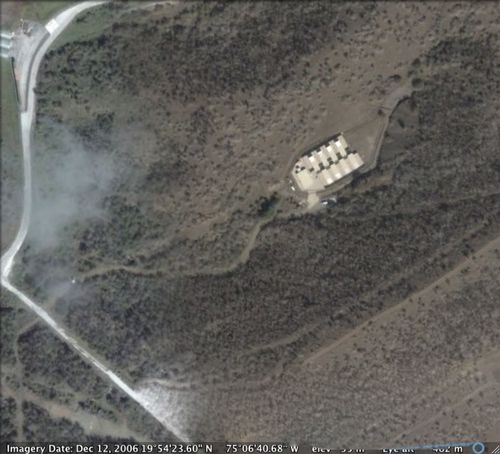
Physicians for Human Rights has just released a new report on the American way of torture. It sees real signs of illegal experimentation on imprisoned human suspects to refine torture techniques – a war crime. This is not exactly a surprise: Part of any torture regime is research into how torture techniques work, in order to refine them and to avoid accidentally killing victims (always embarrassing). The Nazis did this, as did the Khmer Rouge – and the Bush-Cheney administration followed this inevitable pattern, as every torture regime must. Somehow, however, documents help us see what is in front of our noses. In water-boarding, for example, the CIA mandated physicians to note
how long each application (and the entire procedure) lasted, how much water was applied (realizing that much splashes off), how exactly the water was applied, if a seal was achieved, if the naso- or oropharynx was filled, what sort of volume was expelled, how long was the break between applications, and how the subject looked between each treatment.
And you believed Dick Cheney when he said it was just splashing some water on someone's face. Some of this was to avoid accidental deaths:
According to the Bradbury memoranda, OMS teams, based on their observation of detainee responses to waterboarding, replaced water in the waterboarding procedure with saline solution ostensibly to reduce the detainees’ risk of contracting pneumonia and/or hyponatremia, a condition of low sodium levels in the blood caused by free water intoxication, which can lead to brain edema and herniation, coma, and death.
This, of course, is very different from the waterboarding in the SERE program – one session only, that ends the moment the victim asks, to prepare soldiers to resist torture imposed by countries that do not adhere to Geneva (like the US under Bush). The reason for the difference seems pretty obvious: waterboarding someone 183 times is different in degree and kind in the severe mental and physical suffering it inflicts from the one-off few seconds that training requires.
Then there was medical research on combining various torture methods. The CIA concluded – surprise! – that combining them did not increase the suffering:
No apparent increase in susceptibility to severe pain has been observed either when techniques are used sequentially or when they are used simultaneously – for example, when an insult slap is simultaneously combined with water dousing or a kneeling stress position, or when wall standing is simultaneously combined with an abdominal slap and water dousing. Nor does experience show that, even apart from changes in susceptibility to pain, combinations of these techniques cause the techniques to operate differently so as to cause severe pain. OMS doctors and psychologists, moreover, confirm that they expect that the techniques, when combined as described in the Background Paper and in the April 22 [redacted] Fax, would not operate in a different manner from the way they do individually, so as to cause severe pain.
And so the torture was intensified, with individuals tortured by combinations of sleep deprivation, repeated near-drowning, slamming against plywood walls by the neck, forced to stand in a stress position by shackles, etc. Was this sadism? No. It was bureaucracy. You have to monitor what is being done to prisoners, especially to avoid future prosecutions for doing what every legal authority had previously understood to be war crimes. Michael Chertoff told John Yoo in 2002 that
… the more investigation into the physical and mental consequences of the techniques they did, the more likely it would be that an interrogator could successfully assert that he acted in good faith and did not intend to inflict severe physical or mental pain or suffering.
So human experimentation was a form of legal exactitude and compassion! They were experimenting on prisoners to make sure they didn't cross over a line or, even, kill someone accidentally. Remember the classic gaffe: "If someone dies, you're doing it wrong."
I have one lingering question about all this. Since it appears that these refinements of torture were not ad hoc but part of a systemic effort, where was the experimentation taking place? How many doctors and psychologists were involved? Was there a separate facility, as at Bagram, for experimenting with torture? Did these experiments ever go wrong?
Could prisoners, for example, accidentally suffocate during experimentation? And what would the US government do if such a thing occurred? One thing is clear: we will never find out from the Obama administration. They have been as diligent in protecting the government's record of torture as Bush and Cheney were. That kind of accountability and transparency is not change Obama ever believed in.
“Massive Flow Of Bullshit Continues To Gush From BP Headquarters”
The Onion is on the case:
Though no one knows exactly how much of the dangerous bullshit is currently gushing from BP headquarters, estimates put the number at somewhere between 25,000 and 70,000 words a day.
The View From Your Window

The Hague, Netherlands, 10.20 am
 The Dish