A Palestinian woman whose house has been occupied by Jewish settlers argues with Israelis who came to celebrate Jerusalem Day on May 12, 2010 in front of her disputed house in the east Jerusalem neighborhood of Sheikh Jarrah. Israel recently celebrating the anniversary of the 'unification' of Jerusalem, marking 43 years since it captured mainly Arab east Jerusalem during the 1967 Middle East war. By Ahmad Gharabli/Getty.
Joshua: Gays just wish I were gay. And your readers wish I were gay. It's my chiseled physique. I can't help it.
Jeffrey: Are you now, or have you ever been, Jewish?
Joshua: No, but my love of hummus ought to make me an honorary member of the tribe, don't you think? I've always assumed you're on the membership committee.
Jeffrey: Why do you deny your Jewishness?
Joshua: To withhold satisfaction from the folks who send me all that anti-Semitic hate mail.
Jeffrey: What are you going to do with your life after journalism dies?
Stealth gay and stealth Jew and all abs, Josh Green is the man.
For the countless Christians wrestling with new scholarship and inquiry into the origins of our faith, Adam Gopnik's new summary is both rich and, in parts, revelatory. His favorite Gospel, and mine, seems to be the spare bleakness and concise mystery of Mark. Money quote:
In Mark, Jesus’ divinity unfolds without quite making sense intellectually, and without ever needing to. It has the hypnotic flow of dramatic movement. The story is one of self-discovery: he doesn’t know who he is and then he begins to think he does and then he doubts and in pain and glory he dies and is known. The story works. But, as a proposition under scrutiny, it makes intolerable demands on logic.
If Jesus is truly one with God, in what sense could he suffer doubt, fear, exasperation, pain, horror, and so on? So we get the Jesus rendered in the Book of John, who doesn’t. But if he doesn’t suffer doubt, fear, exasperation, pain, and horror, in what sense is his death a sacrifice rather than just a theatrical enactment? A lamb whose throat is not cut and does not bleed is not really much of an offering.
None of this is very troubling if one has a pagan idea of divinity: the Son of God might then be half human and half divine, suffering and triumphing and working out his heroic destiny in the half-mortal way of Hercules, for instance.
But that’s ruled out by the full weight of the Jewish idea of divinity—omnipresent and omniscient, knowing all and seeing all. If God he was—not some Hindu-ish avatar or offspring of God, but actually one with God—then God once was born and had dirty diapers and took naps. The longer you think about it, the more astounding, or absurd, it becomes. To be really believed at all, it can only be told again.
The Incarnation is the core truth of the Christian faith – and also what makes it seem so insane to those outside revelation's grasp. But because of the Incarnation, the core of the Christian faith is not, it seems to me, a theology – that merely became necessary when human beings fought to run churches – but the story of a man … who told stories. The Synoptic Gospels endure in a way that no "doctrine" ever can, and that John almost misses in his sublime attempt to make sense of the ineffable. They tell about a contingent moment of eternity. And that moment had a body. And a temper.
Neither flesh nor fleshless; Neither from nor towards; at the still point, there the dance is.
It's the top story on Memeorandum this morning. TNC watches the above Maddow interview:
Does Paul know anything about blockbusting? Does he think banks should be able to have a policy of not lending to black businesses? Does he think real-estate agents should be able to discriminate? Does he think private homeowner groups should be able to band together and keep out blacks? Jews? Gays? Latinos?
I think there's this sense that it's OK to be ignorant about the Civil Rights Act because it's a "black issue." I'm not a lawyer, but my sense is that for a senator to be ignorant of the Civil Rights Act, is not simply to be ignorant of a "black issue," but to be ignorant of one of the most important pieces of legislation ever passed. This isn't like not knowing the days of Kwanzaa, this is like not knowing what caused the Civil War. It's just embarrassing–except Paul is too ignorant to be embarrassed.
Think Progress highlights an interview Paul did with the Louisville Courier-Journal:
INTERVIEWER: But under your philosophy, it would be okay for Dr. King not to be served at the counter at Woolworths?
PAUL: I would not go to that Woolworths, and I would stand up in my community and say that it is abhorrent, um, but, the hard part—and this is the hard part about believing in freedom—is, if you believe in the First Amendment, for example—you have too, for example, most good defenders of the First Amendment will believe in abhorrent groups standing up and saying awful things. . . . It’s the same way with other behaviors. In a free society, we will tolerate boorish people, who have abhorrent behavior.
This is why so many feel contempt for Rand Paul. But it's one reason I am glad he will be more integrated into the American conversation. I don't agree with Paul on the Civil Rights Act because I believe that the legacy of slavery and segregation made a drastic and historic redress morally vital for this country's coherence, integrity and unity. But was the Act in many respects an infringement of freedom? Of course it was.
To bar private business owners from discriminating in employment would have been an unthinkable power for the federal government for much of American history. Now it's accepted as inevitable for almost everyone who can claim to be treated unjustly for an aspect of their identity irrelevant to a job. What I believe was a necessary act to redress a uniquely American historic evil became a baseline for every minority group with a claim to grievance.
To my mind, this is settled law and should remain that way. But it is not without cost to liberty (as I argued in Virtually Normal). And a real libertarian will feel some qualms about it. Not because they are racists or homophobes (although some may be). But because a truly principled defense of individual freedom will inevitably confront the huge role government now plays in policing fairness in what were once entirely unfair private transactions. You could argue, and I would agree, that the Act expanded freedom immensely overall. But you have to concede, I think, that it also restricted freedom for a few.
Bork made this case in The New Republic as the Civil Rights Act was being debated. It's a principled argument, and should be treated that way, without the usual stigmatization. There was a very solid constitutional case against the 1964 Civil Rights Act, which was why Goldwater opposed it. But as an empirical matter, I think the history of race in America proves the inadequacy of pure freedom to redress the darkest of human impulses – to own, torture and terrorize an entire race. Bruce Bartlett explains why:
As we know from history, the free market did not lead to a breakdown of segregation. Indeed, it got much worse, not just because it was enforced by law but because it was mandated by self-reinforcing societal pressure. Any store owner in the South who chose to serve blacks would certainly have lost far more business among whites than he gained. There is no reason to believe that this system wouldn't have perpetuated itself absent outside pressure for change.
In short, the libertarian philosophy of Rand Paul and the Supreme Court of the 1880s and 1890s gave us almost 100 years of segregation, white supremacy, lynchings, chain gangs, the KKK, and discrimination of African Americans for no other reason except their skin color. The gains made by the former slaves in the years after the Civil War were completely reversed once the Supreme Court effectively prevented the federal government from protecting them. Thus we have a perfect test of the libertarian philosophy and an indisputable conclusion: it didn't work. Freedom did not lead to a decline in racism; it only got worse.
Worse, Paul's entirely abstract intellectual argument wrests pure principles out of an actual society, with actual historical atrocities, violence, oppression and contempt. That's why I cannot be a libertarian the way some others like Paul are. I do not believe you can reify an abstraction like liberty and separate it from the context – historical, cultural, moral – in which it lives and breathes and from which it emerged. I can believe in freedom and believe in equality of opportunity but I should be mature enough to see when there has to be a compromise between the two – and decide. On the issue of race in America, the libertarian right was proven wrong – morally, empirically wrong. Giving up the ancient and real freedom to discriminate was worth it – indeed morally and politically necessary for America to regain its soul.
This is what makes the tea-party movement un-conservative. It is dealing with the world as it would like it to be, not as it is. It has an almost adolescent ideal it cannot compromise. I think that makes the movement, in its more serious incarnation (like Paul), a useful addition to the public debate, especially in reminding the GOP of some core principles it threw away under Bush and Cheney. I'm with Conor on this. Its bright, fixed glare also helps us illuminate what we believe in – merely by revealing what we no longer believe in.
But all this makes the movement simultaneously unready and unworthy for government. And, in its tinges of racial and cultural panic, will further marginalize the GOP in its fast faltering attempt to win over the next generation, especially among minorities.
Glenn Greenwald makes the point a lot of out gay people have recently been screaming at the television:
The very notion that it is "outrageous" or "despicable" to inquire into a public figure's sexual orientation — adjectives I heard repeatedly applied to those raising questions about Kagan — is completely inconsistent with the belief that sexual orientation is value-neutral. If being straight and gay are precise moral equivalents, then what possible harm can come from asking someone, especially one who seeks high political office: "are you gay?" If one really believes that they are equivalent, then that question would be no different than asking someone where they grew up, whether they are married, or how many children they have. That's what made the White House's response to the initial claims that Kagan was gay so revealing and infuriating: by angrily rejecting those claims as "false charges," they were — as Alex Pareene put it — "treating lesbian rumors like allegations of vampiric necrophilia."
The double standards are pretty staggering:
It's ironic indeed that so many progressives — who spent months during Sonia Sotomayor's confirmation process insisting that one's life experiences (growing up as a poor Puerto Rican in the South Bronx) play a crucial role in how one understands the claims of litigants — are now demanding that sexual orientation be permitted to be kept hidden as though it's completely irrelevant to one's perspective. If there's nothing whatsoever wrong with being gay, why the double standard? Just as Sotomayor's background would undoubtedly affect her ability to understand (or "empathize" with) claims of discrimination or other forms of oppression, wouldn't the same be true of a judge's growing up gay — or choosing to remain closeted?
Douglas Adams wrote the following words of wisdom in the pre-blog days of 1999:
So people complain that there's a lot of rubbish online, or that it's dominated by Americans, or that you can't necessarily trust what you read on the web. Imagine trying to apply any of those criticisms to what you hear on the telephone. Of course you can't 'trust' what people tell you on the web anymore than you can 'trust' what people tell you on megaphones, postcards or in restaurants. Working out the social politics of who you can trust and why is, quite literally, what a very large part of our brain has evolved to do. For some batty reason we turn off this natural skepticism when we see things in any medium which require a lot of work or resources to work in, or in which we can't easily answer back — like newspapers, television or granite. Hence 'carved in stone.' What should concern us is not that we can't take what we read on the internet on trust — of course you can't, it's just people talking — but that we ever got into the dangerous habit of believing what we read in the newspapers or saw on the TV — a mistake that no one who has met an actual journalist would ever make.
Below is a short documentary on billboard painting. It's a story of technological change making hard earned skills nearly obsolete and of the few hold outs who won't let the trade die completely:
The video of the Danish bus driver and his passengers brought tears to my eyes, literally. It is incredibly moving to see all these (mostly) blonde, Danish-looking people celebrating with such joy an African immigrant who brings them to and from work and school every day. On so many levels, the scene is beautiful, but mainly it shows that while we strive and toil and wish and hope for ever more, while we put off happiness hoping for it in some uncertain future, or in heaven if we believe in it, often little daily moments like those are the real "heaven" – the here and now.
There was once a survey done on who are the happiest people on earth. If my memory serves me correctly, it was the Danes. When the researchers looked into why, it turned out that Danes are happy because they have very low expectations and so when something good happens, they are always pleasantly surprised. Just like I was, with this moving video of a little serenade somewhere in Denmark.
Thanks for posting that. Six months ago, extremists in Denmark were pitching legislation banning minarets. And of course there was the Muhammed cartoon controversy. Now a bus driver whose name means "chosen" in Arabic is celebrated by the folks who see him every day. It's good to see a sense of goodwill, born of community, triumph over the tyranny of the fearful.
Jonah Lehrer pegs slot machine addiction to the brain's love of pattern recognition:
[It] helps to think about the slot machine from the perspective of your dopamine neurons. While you are losing money, your neurons are struggling to decipher the patterns inside the machine. They want to understand the game, to decode the logic of luck, to find the events that predict a payout.
But here's the catch: slot machines can't be solved. They use random number generators to determine their payout. There are no patterns or algorithms to uncover; studying our near-misses won't tell us how to win. There is only a stupid little microchip, churning out arbitrary digits. At this point, our dopamine neurons should just surrender: the slot machine is a waste of mental energy. But this isn't what happens. Instead of getting bored by the haphazard payouts, our dopamine neurons become obsessed. When we pull the lever and get a lucky reward, we experience a rush of pleasurable dopamine precisely because the reward was so unexpected.
Maureen Tkacik, of Jezebel fame, closes her eyes and meditates on the future of the printed/pixelated word. She suggests abandoning authority and productively channeling narcissism:
From a commercial perspective, “branding” has consistently bestowed its greatest rewards on those capable of projecting a kind of elusive authority that turns consumers’ fears, insecurities, aspirations, unarticulated dreams, etc. into healthy profit margins. But a sense of humanity is also a kind of authority. And maybe the best policy for our beaten-down population of journalists just naturally involves letting down the old guard of objectivity and letting go of illusions of unimpeachability. Rather than train journalists to dismiss their own experiences, what if we trained them to use those experiences to help them explain the news to their audience? Allow their humanity to shape their journalism? This isn’t some radically profound notion—it only seems that way in the context of the ridiculous zero-sum debate over the relative merits of “straight” news versus the self-absorbed nature of blogs. Maybe there is a way to combine the best of both.
If journalism’s more vital traditions of investigating corruption and synthesizing complex topics are going to be restored, it will never be at the expense of the personal, the sexual, the venal, or the sensational, but rather through mastering the kind of storytelling that understands that none of those things exists in a vacuum.

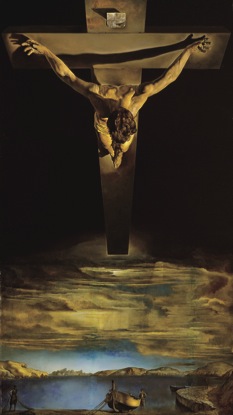 he doesn’t know who he is and then he begins to think he does and then he doubts and in pain and glory he dies and is known. The story works. But, as a proposition under scrutiny, it makes intolerable demands on logic.
  The Dish