Euro Trip

Europa

Bored with exploring Mars, Lee Billings urges scientists to seek life on Jupiter’s moon Europa, which likely holds “double or even triple the amount of water in Earth’s oceans”:

After the revelations of Galileo, a minor cottage industry arose among planetary scientists estimating the volume of Europa’s ocean and the thickness of overlying ice, all in hopes of pinning down what sort of life might exist in that dark watery world – and how accessible it might be to future probes. After more than a decade of debate, the general consensus is that Europa’s abyss is more than 100 kilometers deep. … Whether the ice is thick or thin, the key question facing astrobiologists is really whether sufficient free energy exists within Europa’s sunless depths to support a biosphere – for life, if it is anything, is hungry. If scant useful energy is available beneath Europa’s ice, as many researchers suspect, the ocean could at best be a sparsely populated habitat for alien microbes. But if energy is plentiful, Europa could boast rich ecosystems of complex multicellular organisms – perhaps even something as magnificent and fearsome as Earth’s predatory deep-sea giant squid.

He adds:

Many scientists suspect such sea floor oases were where our planet’s life first emerged from inanimate matter. If the overlying ice crust is thin and mobile enough, useful energy could also trickle down from above, via heat and ejecta from the occasional cometary impact, or from the upwelling mineral salts that oxidize at the surface before slowly filtering down through fractures in the ice. It increasingly seems that, unlike Mars, which, just maybe, might have been able to support a robust biosphere deep in its geological past, Europa probably offers a rich haven for extraterrestrial life right now.

(Photo: Europa, a moon of Jupiter, appears as a thick crescent in this enhanced-color image from NASA’s Galileo spacecraft. By NASA/JPL/University of Arizona)
Your Moment Of Octopus

Our eight-armed friend gets out of a jam:

Tamsin Woolley-Barker reminds us what makes the creature so spectacular:

Three-fifths of his neurons are in his arms. He has nerve cells and “eyes” all over his body. Like an eight-legged brainiac Mr. Potatohead, he is an inside-out neocortex covered in cameras. He sees through his skin, and thinks with it too. Each skin-neuron triggers a muscle connected to a tiny, pigment-filled, light-reflecting skin sac, flattening and stretching it to make a patch of that color. As many as two hundred of these sacs, each with its own muscle and brain cell, can fill an area of skin the size of a pencil eraser. It’s a shimmering pixel display that is also watching you.

Previous Dish on all things octopus here.

(Hat tip: The Hairpin)

A Journey, Not An Escape, Ctd

IbogaLife, an organization in Costa Rica, seeks to help addicts transition from heroin to sobriety through a powerful psychoactive drug, ibogaine, which is derived from a Central West-African bush called iboga. Abby Haglage describes visiting IbogaLife ceremonies, where she witnessed a young woman named Grace undergo the treatment:

In the first stage of the ibogaine trip, which lasts four to eight hours, users experience fantasies like walking on water, through fire, or flying. In the next stage, which can last anywhere from eight to 48 hours, users contemplate—usually with images from childhood—the meaning of what they saw. It is during this time that many discover the underlying reasons for their addiction, and, ideally, work through them.

So Grace trances, we watch, the Bwiti music plays. She howls afraid, we play instruments to keep her calm. For many minutes, she’s frozen and silent. The faces of the village soft and solemn around her. Then suddenly, without warning, terror invites itself. Her eyebrows furrow with pain, her mouth falls open in shock, her hand reaching out to be saved. For the next few days, this is her reality.

A week after the ceremony, Haglage talked to Grace about her visions, which she described as “more uncomfortable than scary”:

Finding these things, seeing them, wasn’t easy. “My whole body was on fire. I was in so much pain,” she says. But living through them seems to have changed, at least for now, the way she sees the world. “What this did, it gave me a perspective. That was the whole point of my trip I think, perspective,” she says. “Decisions are not good or bad, but what you hold them up against. I have a choice if I want to keep using and that’s fine, but if I do, it’s going to suck. This is the only life I have, as far as I know, and I’d at least like to give it a shot.” …

As for the trip? “I wouldn’t recommend it to somebody who is trying to have fun,” she says dryly. “If you want your body to explode into 1,000 pieces and rebuild itself into something beautiful, then yeah—but don’t expect it to be pleasant.”

Previous Dish on ibogaine here and here.

The Game Blame

Jesse Walker looks back on the history of moral panics about addictive, violent, or sexually explicit video games:

In December 1993, Joe Lieberman (D-Conn.) convened a Senate hearing on violent video games. His opening statement described some high-profile crimes—a girl abducted from a slumber party, a mass shooting on a commuter train—then declared that “violence and violent images permeate more and more aspects of our lives, and I think it’s time to draw the line. I know that one place where parents want us to draw the line is with violence in video games.”

As the senator slid back and forth between describing real and virtual violence, he argued that these “so-called games” lead to real crimes: “Instead of enriching a child’s mind, these games teach a child to enjoy inflicting torture.” Lieberman and his colleagues singled out some specific releases by name. Denouncing the martial-arts title Mortal Kombat, the senator noted that the Sega version of the game featured splattered blood and decapitation; the Nintendo version did not include those elements, he conceded, but “it is still a violent game.” The politicians also attacked Night Trap, a previously obscure interactive horror movie that Sen. Byron Dorgan (R-N.D.) described as an “effort to trap and kill women.” In fact, the aim of the game was to rescue the women, not to attack them. (After the hearings, sales of Night Trap shot up.)

Beats, By Apple?

It’s rumored that Apple is considering shelling out upwards of $3 billion to acquire Beats Electronics, which, in addition to its ubiquitous headphones, runs a music streaming service. Bob Lefsetz doesn’t see the point:

Tim Cook is an operations guy, he’s clueless, the company has no vision and this is evidence of it. Steve Jobs was famous for saying one thing and doing another, decrying this and then doing exactly that. Anybody with a brain knew that streaming was eclipsing downloads. Except at Apple, where they were adhering to Jobs’s philosophy. But it turns out Apple had no Plan B, no streaming service ready to be launched when necessary. It’s like they never read Clayton Christensen’s “Innovator’s Dilemma,” despite it being vaunted in the tech press for over a decade. If you rest on your laurels, you’re gonna be history tomorrow.

Derek Thompson, on the other hand, thinks buying Beats would be a smart move:

What’s iPhone’s Next Little Thing? Why not: the most popular premium headphones in the world (plus a promising streaming service)?

Headphones? Sure, headphones. Besides clothes, there are five things on my person each time I step out of my apartment: keys, wallet, watch, phone, and headphones. Apple already makes a best-in-class phone and is working on a best-in-class connected watch. But for reasons I won’t even guess, it makes weirdly fragile plastic headphones. Owning the most popular premium headphone manufacturer means Apple is an iWatch away from producing the top high-end version of just about everything I carry around with me when I walk, besides a wallet (which is going to the cloud anyway) and keys (which, who cares). The implications of dominating the high-end ambulatory consumer market in a world where everything is going to mobile seem profound.

Joshua Brustein puts the potential purchase in perspective:

Apple wants to build the best version of whatever device people start using next. If it decided that it wanted to do that through acquisitions, it would likely spend a few billion dollars on, say, the purchase of Fitbit in order to go deeper into wearable computers. Or Apple could make the same bet by scooping up a bunch of engineers from Nike’s defunct FuelBand division.

But Apple hasn’t shown much interest in buying its way into the future. Even if it does spend big on Beats, Apple will look pretty much the same at the end of the day.

Gorby argues that there’s “one good idea in the Apple-Beats deal: and that’s making big acquisitions”:

Beats’ main asset is it’s brand. It’s got a great brand, and it’s a great business success. That’s how it can sell mediocre headphones and make fat margins. Again, more power to them. Great. But Apple is a one-brand company. Its strength is its brand. Taking on a new, separate brand makes absolutely no sense. And if Apple wants to fold Beats into its brand, why buy them in the first place? Why not just make its own headphones. …

The technology landscape changes extremely fast, let’s face it Tim Cook is not the visionary that Steve Jobs was, and Apple has $100 billion in cash that it just doesn’t know what to do. It should make very big acquisitions. Just not Beats.

Mastering The World Of Mad Men

In a Paris Review interview, Mad Men creator Matt Weiner discusses what unites the show’s various outsider characters:

The driving question for the series is, Who are we? When we talk about “we,” who is that? In the pilot, Pete Campbell has this line, “Adding money and education doesn’t take the rude edge out of people.” Sophisticated anti-Semitism. I overheard that line when I was a schoolteacher. The person, of course, didn’t know they were in the presence of a Jew. I was a ghost.

Certain male artists like to show that they’re feminists as a way to get girls. That’s always seemed pimpy to me. I sympathize with feminism the same way I identify with gay people and with people of color, because I know what it’s like to look over the side of the fence and then to climb over the fence and to feel like you don’t belong, or be reminded at the worst moment that you don’t belong.

Take Rachel Menken, the department-store heiress in the first season of Mad Men.

She’s part of what I call the nose-job generation. She’s assimilated. She probably doesn’t observe the Sabbath or any of these other things that her parents did. That generation had a hard time because they were trying desperately to be buttoned-down and preppy and—this is my parent’s generation—white as could be. They were embarrassed by their parents. This is the story of America, this assimilation. Because guess what, this guy Don has the same problems. He’s hiding his identity, too. That’s why Rachel Menken understands Don, because they’re both trying desperately to be white American males.

Of all of them, Peggy is my favorite. I identify with her struggle. She is so earnest and self-righteous and talented and smart, but dumb about personal things. She thinks she’s living the life of “we.” But she’s not. And every time she turns a corner, someone says, “You’re not part of ‘we.’ ” “But you all said ‘we’ the other day.” “Yes, we meant, ‘we white men.’ ”

Mother’s Day Without Mom, Ctd

Reflecting on her mother’s death, Ruth Margalit writes, “I now mark Mother’s Day on my private calendar of grief”:

Meghan O’Rourke has a wonderful word for the club of those without mothers. She calls us not motherless but unmothered. It feels right—an ontological word rather than a descriptive one. I had a mother, and now I don’t. This is not a characteristic one can affix, like being paperless, or odorless. The emphasis should be on absence.

Freddie deBoer praises John Dickerson’s piece on his late mother. And Freddie remembers his “own mother, gone 25 years, somehow, this year”:

I am aware that her memory is passing grain by grain with those who loved her and have left us now themselves, I also know that as long as I am alive to feel that loss, her memory will persist, in a manner I neither want nor would wish away. Because for as far away as she seems to me now, memories like smoke, the truth is I still wake up in the night and feel that powerless grasping, reaching around in the dark for some object that I will never find, and it’s like it was yesterday, my father walking in that door, and I know that I will eat forever and not be fed, and within me that cold fire will burn forever.

A few readers share their sorrow:

My mother died on April 12 of this year.

While it was sudden, it was not unexpected, and it was the saddest day of my life. I have many friends who have lost their mothers, much younger than me (I am 56). It is mind-boggling to realize that whatever sympathy I had to offer – truly rang hollow. Not out of any oversight or short sightedness, but because the magnitude of the loss of one’s mother is not understood one iota, until it happens. Then it hits you like a ton of bricks.

My dear mama was one for superlatives; each year any celebration we had as a family was “the best one EVER!” This year Mother’s Day was decidedly the WORST one ever. I am now in a club that no one should ever be in a hurry to join, even though the majority of us will belong to it, eventually.

When someone who is “unmothered” reminds to you call, hug, kiss, and LOVE your mama – do it! I would give anything for one last superlative …

Another:

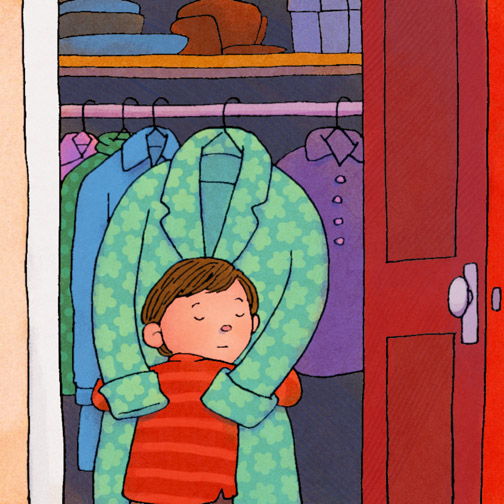
Your post struck a solid chord for me. My mother died when I was ten years old on the day after Christmas. She had been sick for two years, but nobody prepared my siblings and I. In our minds, people got sick, but then eventually they got better again. It happened 47 years and two stepmothers ago, but we still feel that ache.

For a while after her death, I found some comfort from the smell of her clothes, still hanging in a hall closet. After some hesitation (I was afraid my friends would think I was being maudlin), I posted the attached image on my Facebook page:

Mother

I was stunned by how many people it touched. Silly me. The loss of a parent doesn’t hurt any less for an adult. It’s universal.

Another reader:

My mother passed away 14 years ago, and this time of year is always difficult but for some reason, this year has been especially difficult. I don’t ever want to begrudge all my Facebook friends who want to share their love for their moms or my mom friends posting photos of their lovely days with their families. But it is a lonely time for those who are “unmothered” (I love that term!) and especially so when I scroll through my Newsfeed on Mother’s Day.

So to see your acknowledgement of that reality in this thread means the world to me. It is a small comfort knowing that I am not alone and that others understand what it’s like.

Everybody Do The Idaho Stop

Joseph Stromberg encourages other states to allow bikers to roll through stop signs and go on red lights, as Idaho has done since 1982:

Idaho’s rule is pretty straightforward. If a cyclist approaches a stop sign, he or she needs to slow down and look for traffic. If there’s dish_citibikesalready a pedestrian, car, or another bike there, then the other vehicle has the right of way. If there’s no traffic, however, the cyclist can slowly proceed. Basically, for bikers, a stop sign is a yield sign.

If a cyclist approaches a red light, meanwhile, he or she needs to stop fully. Again, if there’s any oncoming traffic or a pedestrian, it has the right of way. If there’s not, the cyclist can proceed cautiously through the intersection. Put simply, red light is a stop sign.

This doesn’t mean that a cyclist is allowed to blast through an intersection at full speed — which is dangerous for pedestrians, the cyclist, and pretty much everyone involved. This isn’t allowed in Idaho, and it’s a terrible idea everywhere.

Agreed on all counts. As usual, Dan Savage is on my side:

A cop stopped me in the U-District a few years ago after I failed to come to a complete stop at a stop sign.

There was no traffic coming in either direction—and I had slowed down (my days of bombing through intersections are over). But the cop explained as he wrote me a ticket that I had to apply my brakes and come to a complete stop, take one foot off a pedal, and put that foot on the ground. That’s a legal stop. I replied: That would be like telling a driver he had to put his car in park at a stop sign, take the keys out of the ignition, hold them out the window and jangle them. He handed me the ticket.

I’ve continued to roll through stop signs.

Drum is also on board:

I’m convinced. This actually sounds like a perfectly sensible rule to me. Blowing through intersections at top speed is obviously dumb, and you deserve every ticket you get if you do it. But bicycles are a lot slower than cars; a lot less dangerous than cars; and have a way better field of vision than cars. Allowing them to slow down but not stop for stop signs when no one is around makes perfect sense.

On the potato thing, though, Idaho needs to stand down. Let’s all leave the nutritionists alone, OK?

Quote For The Day II

“You know, like everyone was petrified of [Tim Russert]. When he died, Lewis Lapham described him as the overaccommodating head waiter at some really swanky restaurant who’s just really good at ass-kissing every rich person who comes into the door. And that was Tim Russert—which is why they all loved Tim Russert, right? Because the benefit of Tim Russert was that not only did he let them control the message, but he cast the appearance that they were subjected to really rigorous questioning. So it was the extra bonus of propagandizing while convincing the public that they weren’t being propagandized,” – Glenn Greenwald.