A Big Weekend For Turkey

TURKEY-POLITICS-COURT-TWITTER

Tim Arango and Ceylan Yeginsu discuss what’s at stake for Turkish voters:

The nationwide municipal elections on Sunday, the first time Turks will vote since last summer’s antigovernment demonstrations, are seen as both a referendum on Mr. Erdogan’s tenure and a test of his support as he struggles to survive the corruption scandal with authoritarian countermeasures, including purges of the police and the judiciary; a crackdown on the press; and a new law that gives the government more control over the courts and blocks access to Twitter and YouTube, where most of the damaging leaks have first appeared.

The outcome of the elections could determine Mr. Erdogan’s political future. While many analysts, as well as polling data, predict that the AKP. will win a plurality nationwide, the percentage is most important. Anything substantially less than 40 percent – roughly what the party won in the last local elections, in 2009 – would be considered weak. The effects could intensify dissatisfaction within the party toward Mr. Erdogan that could ultimately lead to his exit from politics. A strong showing, though, could embolden Mr. Erdogan to seek the presidency in an election later this year or, alternatively, seek to alter his party’s term-limit rules and run for a fourth term as prime minister.

Oray Egin explains why the ruling AKP appears to be doing well:

One reason is the ruling government’s relatively liberal attitude toward aid. One of the landmark features of the AKP’s local governing system is the party’s continuous offer of free gas, coal, provisions and even financial aid to voters in rural areas. “They’ve first made the people poorer and now dependent on government aid,” says Mustafa Sarıgül, the opposition party’s mayoral candidate in Istanbul. “They’re using scare tactics and spreading false rumors that we’ll cut their aid. Their campaign budget is 1.5 billion dollars.”

Another reason is that for less well-off voters, corruption just doesn’t rank as a primary issue. “Poorer voters,” posits Bülent Gültekin, former governor of Turkey’s Central Bank and now a professor of finance at Wharton, “don’t regard corruption allegations as sin.” Corruption, he says, “always existed in Turkey, especially in local governments.” But Erdogan, he allows, “made it more organized.”

A Kadir Yildirim details the opposition strategy:

The AKP’s infatuation with its successive electoral victories and popularity has created an aura of invincibility and infallibility. It is this feeling of invincibility that must be brought down first, if judicial accountability is to materialise at all. Hence, the opposition’s primary goal is to hold the AKP democratically accountable. Yet, chronically weak opposition parties like the center-left CHP (Republican People’s Party) and the nationalist MHP (Nationalist Movement Party) offer little hope in the way of taking on the seemingly invincible AKP.

The opposition has devised an original solution to this apparent conundrum: strategic voting. Voters in each locality would support the strongest non-AKP candidate in the hope of defeating the AKP in most municipalities.

Michael Koplow considers what would happen if the AKP falters:

Should Erdogan and the AKP do worse than expected, and somehow lose Istanbul – which to them is the worst possible thing that could happen given its symbolic importance to the AKP, its role as a political bellwether for the rest of the country, and Erdogan’s view of the city as his own personal fiefdom – they will not take it as a humbling warning. They will go into panic mode, and lash out at everything and anything. Expect to hear claims of election fraud, efforts to obstruct AKP voters, and Gülenist plots. Social media will become an even bigger target, protestors will be dealt with even more harshly, and Turkish cities will become even more frequent sites of confrontations between police and civilians. The hyper nationalist rhetoric will get turned up, and I wouldn’t even put it past the realm of possibility that Erdogan would seek to create a distraction, such as military escalation with Syria, to change the subject and try to regain his footing.

Dan Berman believes “the worst is yet to come”:

For Turkey is not just on the verge of elections; it is also on the verge of major civil unrest, unrest that promises to have serious geopolitical consequences, as well as domestic ones in Europe and America. And Erdogan has done more than anyone else to provoke the current climate. If the local elections next week, which will be the electorates first real chance to pass judgement on Erdogan’s recent actions, are close, or wracked with fraud, it is almost certain that mass protest will break out, and past experience indicates that Erdogan and his government will not refrain from using deadly force against them. And given that the opposition are already warning of fraud, and the government indicating it may not recognize an defeat, a clash seems almost certain.

Meanwhile, Victoria Turk notes that YouTube, in addition to Twitter, is now blocked in Turkey:

The video site went down just hours after an anonymous Youtube account posted an audio recording of what they alleged was Turkey’s intelligence chief discussing military operations in Syria with other high-ranking officials. Reuters said they were unable to authenticate the recording but said it was “potentially the most damaging purported leak so far as it appeared to have originated from the bugging of a highly confidential and sensitive conversation.”

Zeynep Tufekci analyzes Erdogan’s social media “strategy”

This is what Erdogan is now doing to social media: portray it as a place from which only ugly things come from, and which poses a danger to family and to unity. … [T]he content is not blockable, and this is quite obvious to the Turkish government which has many technologically competent people, including the minister of foreign affairs who was a frequent twitter user and I have once watched discuss the power of social media with “Arab Spring” youth where it was clear he knew what he was talking about (and quite smooth about it). These blocks are meant to demonize social media content, and dissuade Erdogan supporters from seeking them, knowing what to seek, and being motivated to seek.

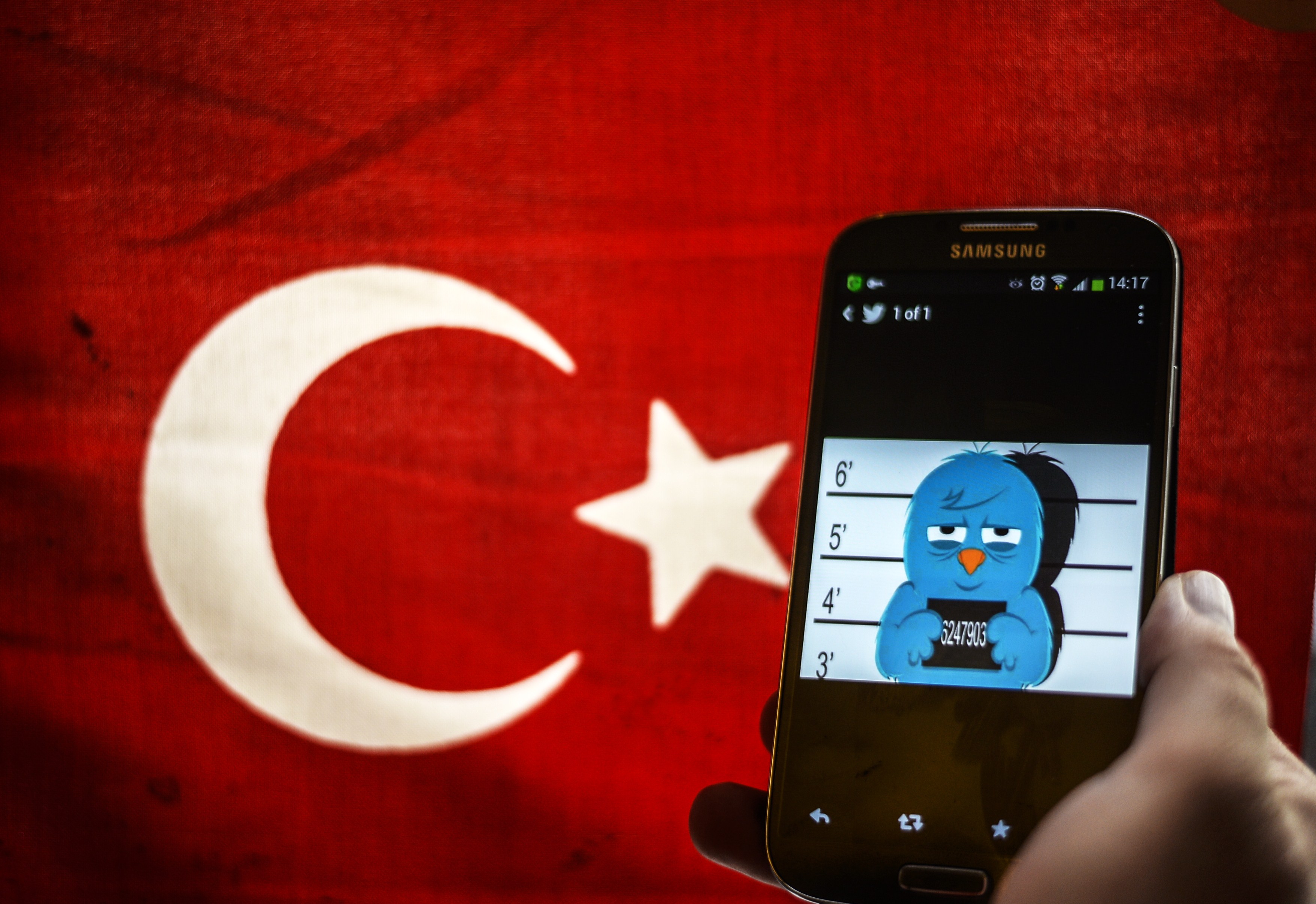
(Photo: A picture representing a mugshot of the twitter bird is seen on a smart phone with a Turkish flag on March 26, 2014 in Istanbul. By Ozan Kose/AFP/Getty Images)

“Our Greatest Ally” Update

The vote in the UN yesterday was good, if not spectacular, in isolating Russia for its annexation of Crimea. 100 countries voted to condemn; 11 voted against; and 58 countries abstained. All of America’s key allies backed the US – except Israel, which abstained. There is a diplomatic strike in Israel at the moment, but casting a critical vote in concord with your closest ally should never be restrained by such a thing.

Maybe it’s because of the obvious similarities between Putin and Netanyahu’s foreign policies – intransigent nationalists annexing neighboring regions to restore a Greater Russia or create a Greater Israel. Maybe it’s because Russia is a potential patron if Israel continues to settle its near-abroad and becomes even more diplomatically isolated. Maybe it was indeed a function of a strike.

But it remains the case that on a vital matter at the UN, where the US has isolated itself again and again and again in protecting Israel, Israel told the US to go take a hike. That’s how the current Israeli government treats the US: with thinly veiled contempt.

Quote For The Day

“If I would have to do it all over again, I would. The results speak for themselves,” – former vice president, Dick Cheney on the torturing of terror suspects.

One key reason that we need to read the full Senate Intelligence Committee Report on the Bush-Cheney torture program is because one major party could well bring torture back into America’s government. They have no shame; they have no remorse; they claim no moral conflict.

How Do We Keep Russia In Check?

Over the weekend, Douthat recommended “a more realistic assessment of both Russian intentions (which are plainly more malign than the Obama administration wanted to believe) and Western leverage (which is more limited than Obama’s hawkish critics would like to think)”:

Unless we expect an immediate Russian invasion of Estonia, for instance, we probably don’t need a sweeping NATO redeployment from Germany to the Baltics. Unless we’re prepared to escalate significantly over the fate of eastern Ukraine, we shouldn’t contemplate sending arms and military advisers to the unsteady government in Kiev. Unless we’re prepared to go to war for Abkhazia and South Ossetia, we shouldn’t fast-track Georgia’s NATO membership.

In response, Noah Millman asks what our options are:

Given that there’s no obvious way to walk back the annexation, and that accepting the annexation would amount to opening the pandora’s box of wholesale revision of the post-Cold War settlement, I suspect that the real choices are outright war with Russia (which nobody wants) or a persistently high level of tension. But high levels of tension make conflict more likely. Douthat mentions two things that America should not do in response to the situation in Crimea, specifically because they would be provocative: deploy troops to Estonia or send arms to Kyiv. I don’t disagree – but how should we respond if Ida-Viru (which is over 70% Russian, and which contains over a third of Estonia’s Russian population, and also most of Estonia’s natural resources, such as they are) starts talking about seceding from Estonia, with Russian encouragement? How should we respond if outright civil war erupts in Ukraine and Russia moves in to “keep the peace”? Those are not rhetorical questions – we need to know what our answers would be. My point being, “containment” is not a condition of peace.

I suspect that the brutal truth is that we can do very little if Putin continues to act this way.

We haven’t had a major country with nukes invading other countries in order to annex them since, well, 2008, when we did nothing. There is no way that a full-scale war with Russia over its near-abroad is something we can or should contemplate. The key thing, so far as I can see, is keeping the West united, and urging the Europeans to ready economic sanctions that could truly hurt Putin’s grip on power, if he keeps on keeping on. And the latest grim news is that the troops massing on Ukraine’s Eastern border are beginning to seriously worry US intelligence:

American intelligence agencies have told Obama administration officials and key congressional staffers that there is mounting evidence that Russia is putting the pieces in place for an invasion of eastern Ukraine, and that the possibility of an imminent assault cannot be ruled out, according to people with direct knowledge of the matter.

Rogin follows up:

“At this point, they are amassed and they could go at a moment’s notice if Putin gave the go ahead,” the official said. “Don’t do it,” the official added, in a comment directed at Putin.

I’m afraid I’m beginning to fear the worst.

A Nation Defined By White Supremacy?

I’ve been reading Ta-Nehisi Coates for many years now. He was a former colleague of mine at the Atlantic (where he still writes) and, in my view, has one of the best blogs on the web. Jon Chait, for his part, is the sharpest liberal writer of his generation – a devastating critic of the right’s blind spots and a merciless stylist. You know this, of course, as their work has enriched the Dish for years. So when they engage in a high-level debate about a deeply important question, you want to sit up and notice.

So if you haven’t, catch up on the full debate they have been having. It’s a sign that in an age of sponsored content, newspapers as ad agencies, sharing rather than reading, and quizzes rather than arguments, the blogosphere is still invaluable at its best. Here’s TNC’s original post, Chait’s response, and then TNC’s rebuttal. Chait’s final take is here. The debate is about the role of culture in perpetuating some of the profound problems afflicting black America. Are these problems fundamentally caused by racism, by the logic of white supremacy … or have they become their own independent impediment to black advancement?

I have to say that TNC has shifted my understanding of black America more than any other writer. His passion is supercharged by his scholarship. I come with some disadvantages because I was not born in America and did not grow up here. It has taken me three decades to really grasp the racial resonances that come so easily to the native-born and to see them penetrate the decades and centuries. I was way too naive about the legacy of slavery and segregation, and way too ahistorical in engaging the problem. No conservative, properly speaking, should doubt the power of history:

Society is indeed a contract … As the ends of such a partnership cannot be obtained in many generations, it becomes a partnership not only between those who are living, but between those who are living, those who are dead, and those who are to be born.

That classic statement by Burke kept occurring to me while watching Twelve Years A Slave.

How can I have a “partnership” with proud, defiant and violent slave-holders? How on earth could an African-American? And yet that is where we are. America can no more shrug off its early existence as a genocidal gulag for African-Americans than it can ignore its first existence as a British colony. And a central part of that partnership with the past has been what TNC rightly calls white supremacy.

But it seems to me that in this debate, TNC is almost willfully blind to the truth that historical legacies can create self-sustaining cultures of poverty that have a life of their own. And I think Chait is equally too pessimistic about the ability of people to transcend the circumstances into which they were born. There comes a point at which any community, which has been historically suppressed and vilified, simply has to believe that the future has potential. That’s certainly how I see the gay community in my lifetime. You can acknowledge the psychic toll of homophobia and heterosexual supremacy all you want, but it won’t help people overcome it. In fact, you run the risk of so emphasizing the crushing burden of the past you entrench the very sense of helplessness that perpetuates the problem.

Which is why TNC’s recent turn toward profound gloom seems – no, is – out of place. Blacks and Hispanics are more hopeful about the future than whites, as Chait notes. By the middle of this century, whites will be in a minority in this country. The potential for America to transform itself again through the arc of history is real. Burke’s social contract, after all, was not just with the past. It was with the future as well, with the black America yet to be born.

Christie Clears Himself Of Wrongdoing

This embed is invalid


Weigel calls yesterday’s Bridgegate report, written by lawyers hired by Christie, “a classic example of shamparency, or sham transparency—an official-looking document that reveals basically nothing yet must be discussed.” Regardless, Alec MacGillis read through it. Among the takeaways:

The retribution really was motivated at least partly by the Fort Lee Mayor’s refusal to endorse. All along, it’s seemed hard for many people to believe that the Christie aides’ retribution against Mayor Mark Sokolich could have been grounded in his refusal to endorse Christie. Yes, Christie had been trying very hard to get as many Democratic officials as he could to endorse him to add to his bipartisan veneer, but would failure to endorse really come at such a cost?

Well, the report sure makes it sound as if it did. While Sokolich had made clear in the spring that he did not plan to endorse Christie, the report states that Christie’s then-deputy chief of staff, Bridget Kelly, made a final check with a colleague about the status of Sokolich’s non-endorsement on August 12, the night before she sent her infamous “time for some traffic problems in Fort Lee” e-mail to David Wildstein, Christie’s political liaison at the Port Authority. “Kelly asked whether Mayor Sokolich was going to endorse Governor Christie, and [her colleague] responded that he was not. Kelly responded, in sum or substance, that that was all she needed to know.”

Philip Bump notes how the report lays blame at Kelly’s feet:

The portrayal of Kelly as unstable and in an emotionally vulnerable place might have been intended to help rebut one of the main questions Christie has been trying to curtail: that his natural tendency towards aggression and bullying prompted Kelly and Wildstein to act. In an interview with ABC’s Diane Sawyer that aired on Thursday night, Christie assured viewers that he had “spent a lot of time the last 11 weeks thinking about what did I do if I did anything to contribute to this,” ultimately deciding that, “I don’t believe that I did.” At another point in the interview, he circled back to the other big lurking question. No, he doesn’t think this affects whether or not he’ll run for president in 2016.

Tomasky’s take:

The central political question is this: Can everything change back if the feds exonerate him? To an extent, but I think only to an extent—because if he is exonerated, it will happen only because no one found a smoking gun. So you’ll still have, in others words, other officials like Wildstein saying Christie knew something, and Christie saying he didn’t know, so it will just be an unresolved he said/he said situation. In all likelihood, the clouds will linger. And as long as clouds linger, the big GOP establishment money doesn’t flow like it might have.

Eric Lach thinks Thursday was a good day for Christie – but that Bridgegate isn’t over yet:

Christie isn’t off the hook yet. The release of the internal review comes as state lawmakers and the U.S. Attorney’s Office in New Jersey continue to investigate the lane closures. For months, many have suggested that the lanes were closed for political reasons, and documents released in January showed that close aides to Christie were involved in discussions of the closures both before and after they took place. Federal prosecutors have also looked into allegations made by the Democratic mayor of Hoboken, N.J., Dawn Zimmer, who in January publicly accused the Christie administration of threatening to withhold Hurricane Sandy relief aid if she did not support a development project in her city.

If you haven’t read MacGillis’ terrific takedown of Christie’s rise in New Jersey, it’s here.

How Will Rand Be Received?

Nick Gillespie, unsurprisingly, sees a bright political future for Rand Paul:

Surveys such as the Reason-Rupe Poll (conducted quarterly by the nonprofit that employs me) Senators Discuss Balanced Budget Amendmentthat engage respondents on tradeoffs have found that healthy majorities are willing to scratch Social Security (61 percent) and Medicare (59 percent) if they can get out the dollar amounts they’ve paid into these unsound entitlement programs. When you consider such swings in public opinion along with sustained contempt for Obamacare, the rapid embrace of gay marriage and pot legalization, and more, there’s every reason to conclude that Rand Paul’s libertarian divergence from the status quo represents the future of politics rather than a curious diversion.

Chait skewers Gillespie’s defense of libertarianism:

The one sort-of on-point factoid Gillespie offers is a poll conducted by the libertarian Reason foundation showing that, contrary to the overwhelming findings of pollsters everywhere, voters really do want to cut Medicare and Social Security. The unstated joke here, in case you didn’t catch it, is that every interest group has its own handcrafted polls showing that, if you word the question in just the right way, overwhelming numbers of Americans agree with their position on any given issue. And sure enough, Reason’s poll has its own wording that finds people are really keen to cut Social Security and Medicare. But this poll, just like every advocacy poll, is worthless, because in real politics, one side of the issue can’t control the terms by which it will be debated.

Waldman is taking Paul seriously:

In his short time in Washington, Paul has managed to garner an extraordinary amount of good press. And as Robert Costa reports [yesterday], Paul is moving more aggressively toward 2016 than any other candidate, Republican or Democrat.

While the rest of them are publicly thinking about thinking about running, Paul and his people are working like busy little beavers. … Costa’s article has lots of details: Paul is raising money, putting together a staff, lining up organizers in key states, and building a social media network. It’s pretty impressive for this stage of the campaign. Of course, it could all wind up like his father’s presidential campaigns did: a well-funded effort with passionate supporters who were nevertheless finite in number.

The comparison between the Pauls only goes so far, though. Rand’s libertarianism is a lot looser than Ron’s was, and the son is willing to cast it off when it threatens him. And he doesn’t come off like your crazy old neighbor.

Weigel’s view of the Costa report:

Rand Paul’s network absolutely reaches across all 50 states. The spadework of the Campaign for Liberty, created after Ron Paul’s 2008 run, created the conditions for Rand Paul to build a new infrastructure based on his own appeal and causes. It’s like a mansion built on the bones of a duplex built on the bones of a ranch house. And it wants the press to tour the mansion.

Regardless of these preparations, Kilgore expects the neocons to sabotage Paul’s candidacy:

[U]ltimately, I’d say the biggest obstacle to Rand Paul’s effort to transcend his father’s Revolution will be the extraordinarily powerful connection between the GOP and the military-industrial complex. Paul has already managed to partially overcome his father’s unsavory reputation in pro-Israel circles, and has carefully avoided the old man’s inflammatory tendency to identify with foreign hostility to American hegemonism. He’s even found ways to participate in Obama-bashing over the president’s alleged “weakness” towards Russia and other adversaries.

But non-interventionism, accompanied by a lust for reducing expensive overseas commitments and getting rid of the hardware and manpower that goes with them, were very near the heart of the Ron Paul Revolution, second only to hostility to the Fed. Can the politically and financially powerful Dick Cheney wing of the GOP ever trust Ron Paul, or fail to back virtually any available rival? I don’t think so. And that may be an absolute bar to Rand Paul’s presidential ambitions.

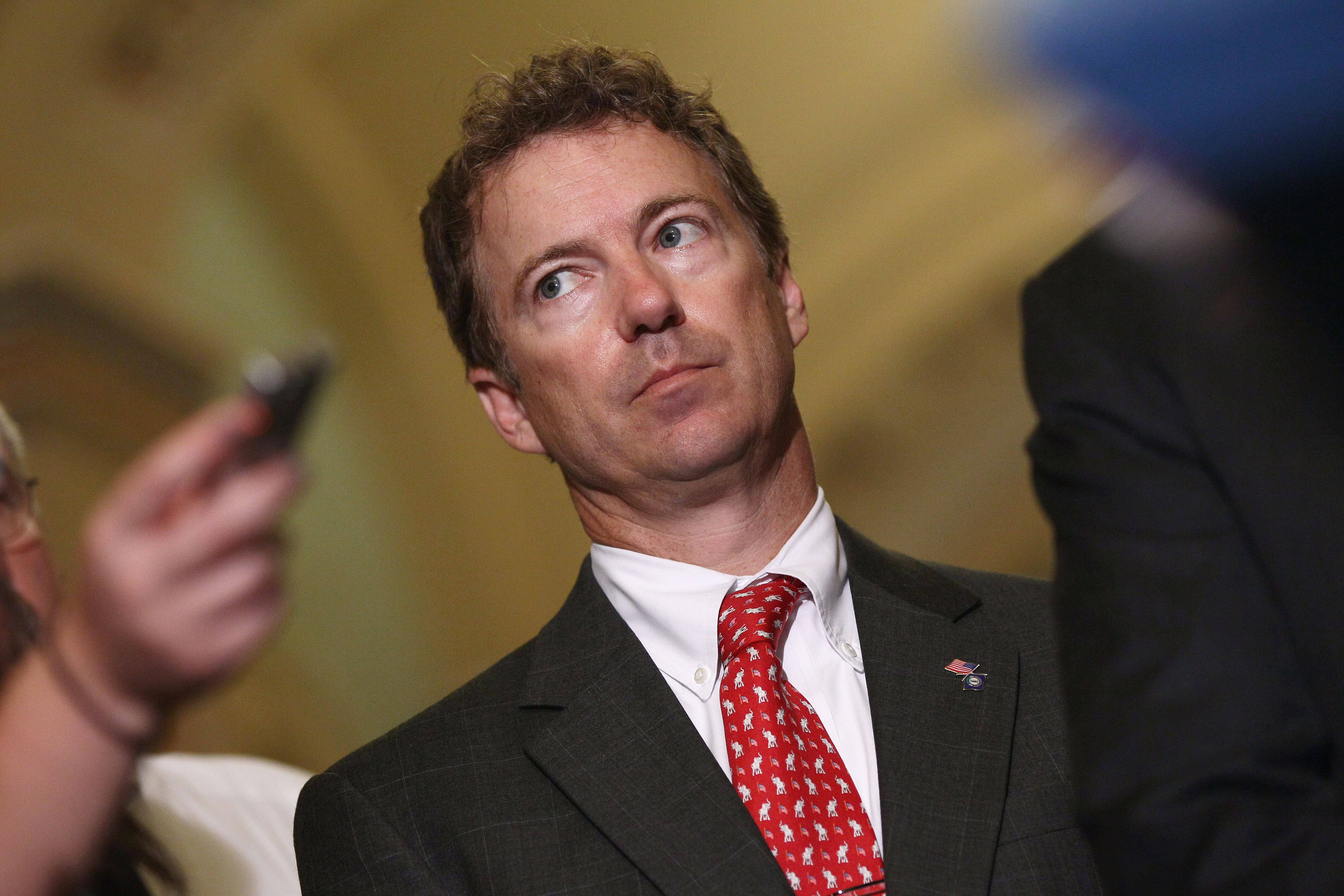
(Photo: Win McNamee/Getty Images)

A Surge Of Enrollment Stragglers

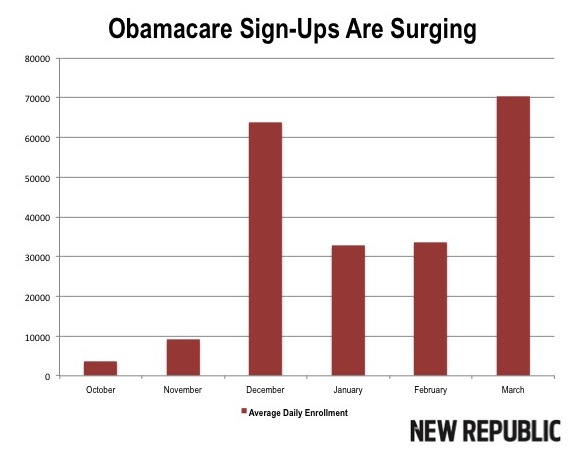
Daily Enrollments

There are now six million Obamacare enrollees. Jon Cohn, who passes along the chart above, is optimistic:

[T]he fact that enrollment will probably be close to the original projections suggests that the law is working more or less like it’s supposed to work. Whether that’s good or bad, obviously, is a matter of opinion. Most readers are familiar with mine.

John Marshall thinks the administration might hit its target:

That still leaves the sign ups a million short of the 7 million sign up prediction the Congressional Budget Office made last year. … But remember, people sign up in big numbers, right before the deadline. During the final 8 days before the last deadline in December 750,000 signed up. Between December 16th and December 24th. If we assume the 6 million number is through yesterday that leaves 5 more days to enroll.

Allahpundit deflates the numbers:

[A]s far as I know, the new numbers do include people who’ve placed a plan in their virtual shopping cart on Healthcare.gov but who haven’t pulled the trigger and actually purchased it.

That policy dates back to last year, when the White House was desperate for good news about enrollments so they decided to treat “sign-ups” as people who’ve reached merely the next to last stage of the purchase process. All of which means that not only might this large risk pool nonetheless be toxically skewed towards people in comparatively poor health, but the numbers that HHS is handing out here almost certainly overstate the actual number of enrollees by hundreds of thousands (or even a million or more) people.

Avik Roy makes related points:

If we assume that 80 percent of the 6 million will ultimately pay up, that’s 4.8 million enrollees. And we don’t know what percentage of those enrollees were previously uninsured. After all, the core goal of Obamacare is to increase the number of Americans with health insurance. Thus far, surveys indicate that the vast majority of enrollees were previously insured.

If we assume, beyond the available evidence, that as many as half of Obamacare exchange enrollees were previously uninsured, we end up with 2.4 million uninsured exchange enrollees. The Congressional Budget Office’s original prediction was that more than 6 million previously uninsured people would sign up for exchange-based coverage in the first year.

Finally, Bernstein wonders why we define reaching the enrollment goal as “success”:

There’s nothing at all magical about this number. Reaching it doesn’t mean that Obamacare “works.” Surpassing the goal might have some effect on the federal budget (more signups, for example, presumably mean higher subsidy costs), but there’s no obvious correlation between the signup total and anything else.

There is still way more that we don’t know about this new world and the details matter a lot for insurers setting next year’s premiums. We don’t know, for example, how many of those who signed up will wind up paying premiums. We don’t know the mix of young and old. And until people start making claims, we also won’t know the mix of healthy and unhealthy.