The Best Of The Dish Today

Sen. Feinstein Accuses CIA Of Ease-Dropping On Senate Panel Computers

First, a little house-keeping. Ross Douthat has an excellent post on the question of religious liberty and gay rights. It’s a judicious argument that cultural isolation can led to infringement of religious liberty, given how complex our society is. Ross asks my help in defending the religious from the potential abuses of the pro-gay majority. He’s got it. But so far, as he concedes, it’s not a huge problem. And excessive self-pity is pathetic.

On another of my obsessions, there’s a great piece in Time from the CEO of Chartbeart, Tony Haile. It was best summed up by a re/code post linking to it: “No One’s Looking At Your Native Ads Either.” It’s a fascinating look at click-bait culture online, and the increasing frenzy Screen Shot 2014-03-11 at 7.24.08 PMfor pageviews, as well as the surrender to the public relations industry. And it contains some seriously good news, best summed up in a simple chart (on the right).
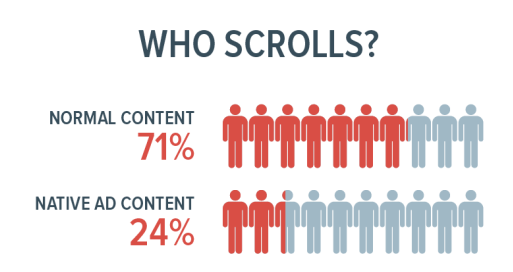
Readers soon figure out that the lame p.r. piece by some dude from Dell is indeed a lame p.r. piece from some dude at Dell, and they stop reading far more quickly than they do when an actual journalist is writing, you know, an actual piece. So that means readers are sussing out the scam pretty quickly. What happens next to a website that keeps subjecting its readers to the same grift? A declining readership and a declining respect from its readership. After that, the corporations pull the native ads – especially if they see the metrics above. Haile:

The truth is that while the emperor that is native advertising might not be naked, he’s almost certainly only wearing a thong. On a typical article two-thirds of people exhibit more than 15 seconds of engagement, on native ad content that plummets to around one-third.

Today, I remembered Joe McGinniss, hero of the Palin wars, and spelled out the truly remarkable accusation of criminality that Senator Feinstein unloaded on the CIA this morning. We gawked at strangers being filmed kissing each other, and at the anti-Barbie. And, in order to speed my sojourn in Purgatory, I went another round with Rod Dreher on religious liberty.

The most popular post of the day was last night’s Best Of The Dish on Obama’s impressive economic record, followed by The Christianist Closet?

See you in the morning.

(Photo: Sen. Dianne Feinstein (D-CA) returns to her Senate office after speaking on the floor of the Senate where she accused the CIA of breaking federal law by secretly removing sensitive documents from computers used by the Senate Select Committee on Intelligence, the committee tasked with congressional oversight of the CIA. Feinstein said, ‘I am not taking it lightly.’ By Win McNamee/Getty Images.)

Omline

Sue Thomas, author of Technobiophilia: Nature and Cyberspace, looks at how spiritual seekers are using apps and social media to enhance their meditation sessions. Consider Insight Timer, an app that offers guided meditations and connects users in real time across the globe:

So how does it feel to meditate alongside invisible people? Well if, like me, you’ve spent a lot of time in virtual worlds, gaming online, or even just chatting in Facebook, you’ll know that there can often be a strong sense of co-presence. During research for my book on technobiophilia, our love of nature in cyberspace, I found that as early as 1995 the Californian magazine Shambhala Sun described the internet as an esoteric place for meditation which provided “a feeling of complete and total immersion, in which the individual’s observer-self has thoroughly and effortlessly integrated.” I have felt that “experience of the moment” many times while using Insight Timer to spend time “on the cushion” alongside others in virtual space.

Previous Dish on technobiophilia here.

Leaving Our Iraqi Allies Behind

Neve Gordon, reviewing a pair of books that shine light on the “very dark sides of occupation” in Iraq, considers the role of Iraqis who collaborated with the US military. He assesses To be a Friend Is Fatal, a nonfiction account by Kirk Johnson, who worked with USAID in Baghdad and Fallujah and “founded the List Project to Resettle Iraqi Allies and raised money, wrote op-eds, mobilized journalists, and lobbied Congress to find a solution for these Iraqi refugees”:

Johnson’s book ends up being a poignant story about bureaucratic red tape and lies, where the US government constantly made promises to address the plight of the collaborators while simultaneously creating insurmountable obstacles for their visa applications. Samantha Power and her friends were unwilling to say it, but they preferred to leave behind a hundred innocent Iraqi employees facing possible assassination than to admit one former collaborator who could potentially cause damage — nobody, Johnson surmises, wanted his or her signature to be on the visa papers of the next 9/11 hijacker.

This is the major difference between Johnson’s List Project and Operation Baghdad Pups, an initiative to resettle Iraqi dogs that had befriended US troops. “No Buddy Gets Left Behind!” reads the organization’s flashy website banner followed by the imperative: “Abandoning Charlie in the war-ravaged country would have meant certain death for him.” In exchange for a $1,000 donation, the group promises to cut through the US government’s red tape in order to bring these pets to “freedom.” In July 2012, CNN reported that Americans had donated $27 million to help Iraqi dogs (nearly 14 times the amount the List Project was able to raise over the years). On January 2, 2013, President Obama signed the 2013 National Defense Authorization Act, which included an amendment to grant dogs working for the US military the status of “Canine Members of the Armed Forces.”

While I don’t have anything against the resettlement of dogs, witnessing the government’s radically different approach toward those Iraqis who came to the US’s aid leaves, to use a British understatement, a foul taste in one’s mouth.

Ephemeral Employment

 
Michael Grabell investigates the struggles of our 2.8 million-strong temporary workforce:

Overall, nearly one-sixth of the total job growth since the recession ended has been in the temp sector. Many temps work for months or years packing and assembling products for some of the world’s largest companies, including Walmart, Amazon and Nestlé. They make our frozen pizzas, cut our vegetables and sort the recycling from our trash. They unload clothing and toys made overseas and pack them to fill our store shelves.

The temp system insulates companies from workers’ compensation claims, unemployment taxes, union drives and the duty to ensure that their workers are citizens or legal immigrants. In turn, temp workers suffer high injury rates, wait unpaid for work to begin and face fees that depress their pay below minimum wage. Temp agencies consistently rank among the worst large industries for the rate of wage and hour violations, according to a ProPublica analysis of federal enforcement data.

Another report sheds light on the squalid living conditions of California’s farmworkers:

Don Villarejo, the longtime farmworker advocate who authored the report, tells In These Times that growers have “systematically” reduced investment in farmworker housing over the past 25 years in order to reduce overhead costs and to avoid the trouble of meeting state and federal regulations, which were established as part of a broader overhaul of agricultural labor, health and safety standards during the 1960s and 1980s. According to Villarejo, workers’ modern material circumstances are little improved from the old days of the Bracero system. That initiative—the precursor to our modern-day guestworker migrant program—became notorious for shunting laborers into spartan cabins, tents and other inhospitable dwellings on the farms themselves, beset with entrenched poverty and unhealthy, brutish conditions.

Even today, however, surveys and field reports have revealed that a large portion of workers are squeezed into essentially unlivable spaces. Some dilapidated apartments and trailer parks lack plumbing or kitchen facilities, much less any modicum of privacy; others are exposed to toxic pesticide contamination or fetid waste dumps. Workers can “live in a single-family dwelling with perhaps a dozen to 20 [people] crowding in,” Villarejo says.

Face Of The Day

CIA Director John Brennan Speaks At The Council On Foreign Relations

Central Intelligence Agency Director John Brennan takes questions from the audience after addressing the Council on Foreign Relations in in Washington, DC on March 11, 2014. Brennan denied accusations by U.S. senators who claim the CIA conducted unauthorized searches of computers used by Senate Select Committee on Intelligence staff members in an effort to learn how the committee gained access to the agency’s own 2009 internal review of its detention and interrogation program, undermining Congress oversight of the spy agency. By Chip Somodevilla/Getty Images.

My take on the constitutional crisis created by Brennan’s CIA is here.

A Sweet IPO, Ctd

James Surowiecki doubts that the makers of Candy Crush will come up with another comparable hit and insists they are making a mistake in going public:

It’s easy to see why [King Digital Entertainment’s] founders want to go public: money. But the money isn’t worth the hassle. As a public company, King will have to show shareholders consistent results and ever-growing profits. Such expectations are, frankly, silly in crazily competitive, hit-driven industries, and trying to meet them is a recipe for frustration. If King stayed private, it could milk its cash cow and build games without having to worry overmuch about hatching a new cultural juggernaut.

We expect companies to constantly be in search of the next big thing. But, for one-hit wonders, the smartest strategy might be to just enjoy it while it lasts.

But Felix Salmon suspects the company is trying to seduce a buyer, thus making the IPO a rational choice in the current market:

[T]he IPO market is so frothy right now that companies have to have the credible threat of an IPO in order to get the best possible price from a strategic acquirer. Right until the day before the IPO, King is going to retain the option to simply sell itself to some company which wants proven expertise at making enormous profits in the world of mobile-native apps. By moving towards an IPO, King is forcing those companies to get serious about making an offer — both in terms of timing (they’d better do it quick) and in terms of valuation (they’d better meet the likely IPO share price). Because buying King after it’s gone public is going to be a lot more difficult.

An Uncrackable Case Of Unrealistic Expections

Douthat found True Detective‘s finale wanting:

The fact that the internet is full of defenses (or at least quasi-defenses) of the “True Detective” finale today is a testament to the show’s genuinely extraordinary qualities — direction, acting, atmosphere, and (sometimes) writing. But I’m afraid it’s also a testament to the human will to believe, often in defiance of the evidence, and reading the various apologia for the way the detective drama finished up I’m inclined to channel the show’s nihilist-hero’s harsh words about religion: “You gotta get together and tell yourself stories that violate every law of the universe just to get through the [expletive] day? What’s that say about your reality?”

Freddie deBoer blames the disappointment on the enthusiasm of the show’s viewers:

I would argue that True Detective, despite its pedigree, its status as a limited-run series of 8 episodes, and its resolute dedication to realism, had the same problem as Lost.

After all, the enormous public engagement and commentary on the show was largely dedicated to crackpot theories, the great fun of trying to piece together convoluted explanations of plot points both large and minute. That’s the fun of puzzlebox fiction, and why it has such obvious commercial appeal: the participatory nature of solving the puzzle fits perfectly in with the current way many people engage with fiction, which is by analyzing it in a way once reserved for critics and academics. The problem is that as you generate more and more outlandish theories, the expectations about the real conclusion become impossible to meet. Reality will always be a disappointment in relation to imagination.

Orr contends that the show’s “moments of greatness far outweighed its disappointments”:

All told, I feel a little bad for Nic Pizzolatto, who in retrospect seems to have written a powerful, engaging serial-killer miniseries that was so good early on that it raised expectations that it would be considerably more—expectations that, again, he’s seemed to spend the last couple weeks trying hard to ratchet down. Do I think some of the scenarios invented by the shows’ many rabid fans were better than what wound up on screen? Yes, I do. … But what writer is going to do a better job at a mystery series—especially so early in his career—than the combined ingenuity of a horde of meticulous fans who don’t really need to make the pieces all fit?

So now Pizzolatto has something to aim for next season. And I’ll be right there watching, hoping for a bullseye.

In Venezuela, The Regime Is Winning

Francisco Toro checks in from Venezuela, where he says the protesters are now playing right into the government’s hands:

The sites of ongoing unrest remain solidly concentrated in the middle class enclaves of the bigger cities, i.e., precisely where the government wants them.

Large, peaceful daytime demonstrations are followed every night by running battles around makeshift barricades, or guarimbas. This night-time ritual of improvised road-blocks, burning garbage, plastic pellets, tear gas and armed bikers in plain clothes involves many fewer people than the daytime protests. And yet, inevitably, the guarimba has come to define the current protest movement, giving it its flavor, its distinctiveness, its identity.

The peaceful daytime marches have broad public support, but only when they’re seen as demanding redress for failures of government rather than agitating for regime change. In the country at large, support for a coup is practically non-existent. For the communicational hegemon, it’s easy to disappear the large, day-time protests and paint the entire movement as the outcome of a tiny, violent guarimbero clique.

Katelyn Fossett examines how the government has tightened its grip on the media since 2002, when private news outlets were a driving force behind the attempt to oust Hugo Chávez:

Throughout the unrest, critics have been sounding the alarm about a  government-coordinated “media blackout” designed to minimize coverage of the protests. Press freedom advocates say the government’s harsh treatment of private media organizations has led many newspapers, TV stations and radio broadcasters to effectively censor their own coverage and largely ignore the protests. Maduro took a news channel off the air after it broadcast coverage of the violence in mid-February. When Henrique Capriles Radonski, the country’s most prominent opposition leader and the runner up in last year’s presidential election, delivered a major speech two weeks ago, no network covered it.

It’s a far cry from the political muscle the private media flexed in 2002.

SXSnowden

Speaking to an audience at South by Southwest via Google Hangout yesterday, Edward Snowden stressed the need for consumers to start encrypting the information they send online and demand that tech companies make that easier:

To protect against secret surveillance, Snowden said, we need to make encryption a part of everything we do. “The bottom line is that encryption does work,” he said. “We need to not think of encryption as an arcane, dark art, but as basic protection for the digital world.”

He offered a personal example, which got laughs from the crowd. The NSA has a massive investigation team looking into Snowden, and “they still have no idea what documents” what documents he’s leaked to journalists “because encryption worked.” He did say that one can break into a computer and steal encryption keys, which “happens every day,” but cracking modern encryption would require an unfeasible amount of resources—and we should continue to develop crypto for the future.

John Cassidy summarizes Snowden’s argument:

The non-techies in the audience may have found some of what Snowden said a bit obscure, but it wasn’t, really. The sort of encryption he was recommending is so-called end-to-end encryption, in which data is readable only by the receiving—not by intermediaries, such as Internet-service providers and the intelligence services that intercept their traffic. Some tools of this nature are already available, but they can be complicated to use or costly to implement; commercial services like Gmail and Facebook don’t provide them. The key to progress, Snowden said, is developing cheaper and easier to use encryption methods, which could be incorporated into big e-mail and messaging systems. “It has to be out there,” he said. “It has to happen automatically. It has to happen seamlessly.”

Snowden’s co-panelist, ACLU principal technologist Chris Soghoian, explains the big picture:

We, the everyday consumers, must make privacy and security profitable. If we want these companies to put our interests first, we must pay for the services that they provide us. We must demand that those products preserve privacy – again, by default. Until this business model changes, the services that are made for the mass market will remain insecure, vulnerable and optimized for data collection.

By making it harder for the NSA to engage in mass surveillance, we force the agency to target the communications and devices of people genuinely suspected of wrongdoing without compromising the privacy rights of everyone else. I cannot stress enough what I said yesterday: the goal here isn’t to blind the NSA. The goal here is to make sure they cannot spy on innocent people, in bulk. Starting right now.

Mimi Dwyer is disappointed that Snowden didn’t address his critics:

From such a public venue as SXSW—more than 40,000 were watching the livestream at peak viewership—it makes sense for Snowden to address the criticisms levied towards him, like that he’s advocating for free speech from Russia, or that he’s done more harm to public security than good. These criticisms, common in public discussion of Snowden, barely came up in the interview. That’s not doing anyone any good.