“Old hands in the television news business suggest that there are two things a presenter cannot have: an accent or a beard,” – David Carr. Oh well.
Author: Andrew Sullivan
The Uprisings Around The Globe
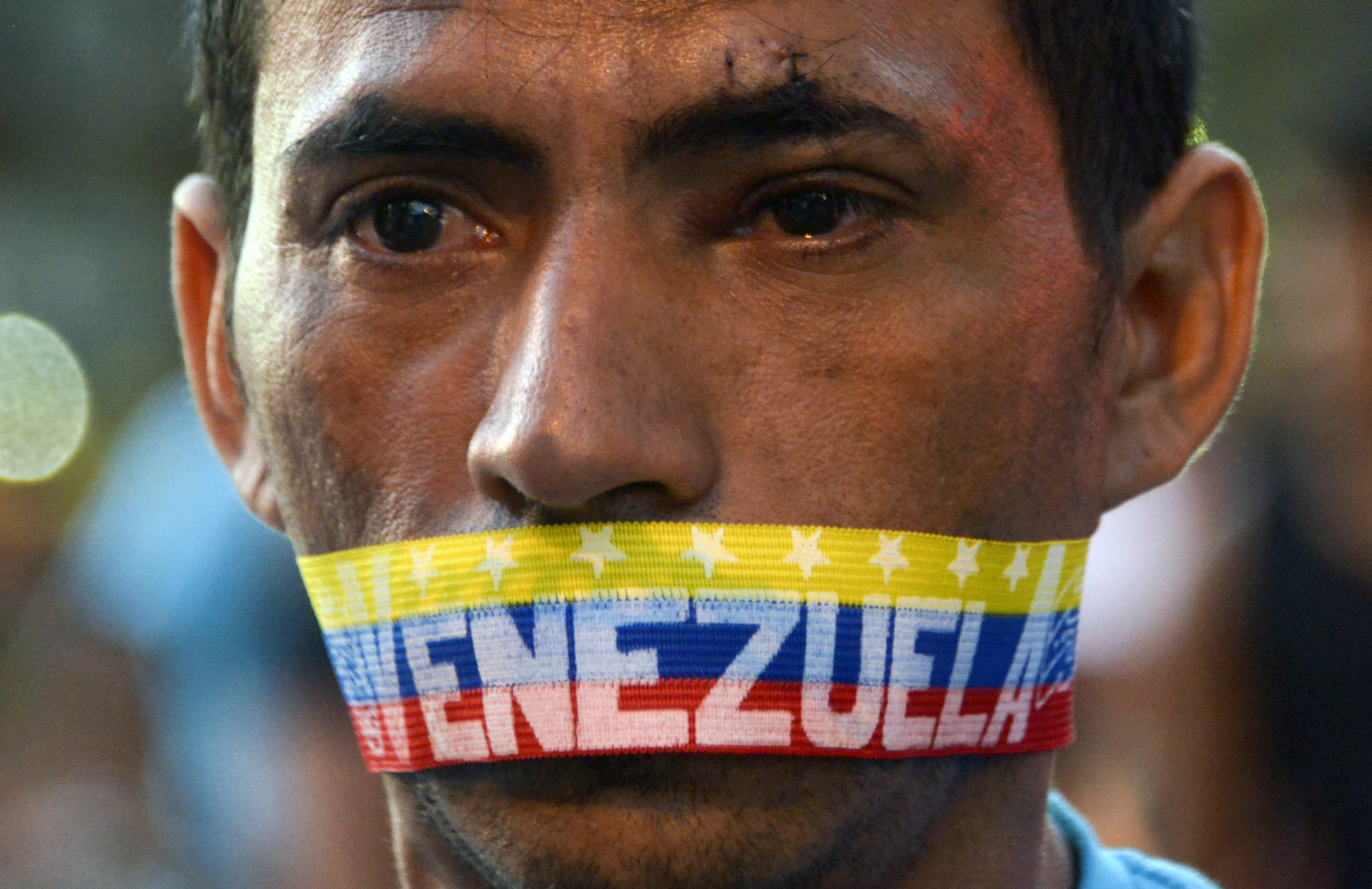
Ed Krayewski sees the protests in Ukraine, Venezuela, and Thailand as part of a global backlash against irresponsible “democratic” governments:
To varying extents, Ukraine, Venezuela, and Thailand have democratically-elected governments. And in each case, those governments, rather than working to do their best to represent all people, have demonized and alienated the opposition, claiming their slim margins of victories as mandates to act in any way they please.
The root problem in each country is unaccountable government. That unaccountability, in each case, is an outgrowth of the attitude that a mere democratic majority (of the actually-voting voting population) suffices to permit the government to do anything it wants under the guise of having a popular mandate for it.
Dalibor Rohac and Juan Carlos Hidalgo note several “striking parallels” between Ukraine and Venezuela. On the two countries’ economies:
In 1990, Ukraine’s GDP per capita was $8,200, which was roughly identical to Poland’s.Today, Poland’s GDP is $18,300 and Ukraine’s has gone down to $6,400. Unlike its post-communist neighbors to the West, Ukraine did not pursue deep institutional reforms and its economy was seized by a narrow group of oligarchs, with close connections to political power and to the Kremlin. The son of the President Viktor Yanukovych, Oleksandr, has become one of the richest men in the country during his father’s time in the office, while incomes of most Ukrainians stagnated.
In Venezuela the economic situation has deteriorated sharply since the death of Hugo Chávez last year. The country has the highest inflation rate in the world (officially 56 percent in 2013, although according to Steve Hanke’s Trouble Currency Project, the implied annual inflation rate is actually 305 percent). After years of nationalizations, expropriations, and currency and price controls—all under the name of “21st Century Socialism”—the private sector has been decimated. Hour-long lines in supermarkets are a daily occurrence and shortages of basic food staples and medicines are widespread. And just like in Ukraine, corruption is rampant as the ruling elite rake in the profits from oil revenues. This has resulted in the rise of a new privileged class called the “Boligarchs.” so-named because they’ve prospered tremendously under the so-called Bolivarian revolution.
(Photo: A man attends a protest against the government of Venezuelan President Nicolas Maduro in Caracas on February 23, 2014. By Raul Arboleda/AFP/Getty Images)
Playing It Safe On The Campaign Trail
Briefed by my old @WhiteHouse colleagues yesterday on the new wildlife trafficking report. Good progress being made. http://t.co/N5IOpQY1SA
— Hillary Clinton (@HillaryClinton) February 12, 2014
John Dickerson fears that 2016 presidential hopefuls will be overly cautious:
The candidate reaction to increased scrutiny is timidity and increased calculation. The level of attention and constant pressure is likely to squeeze out the innovation, risk-taking, and spark that we want in our presidential candidates. If they can somehow retain these qualities, they don’t dare show them, for the searchlights will be on them immediately. There was once a period in which two years before the primaries presidential candidates could roam around Iowa and New Hampshire without these constraints. That gave us a better chance to see them before they were encased like Robocop in armor and artifice. It wasn’t a genuine view, but it was less rigid than the full battle-readiness now required. Christie’s office used to promote YouTube videos of the governor in heated conversations with constituents. No more of that now—the governor doesn’t want to reanimate the image of him as a bully. So after his latest town hall, the governor’s office released a picture of him giving a little girl a high-five. Next week: puppies.
A Historic Non-Event
Jack Hamilton marks Jason Collins’ momentary return to the NBA:
Years from now memories and box scores will attest that Collins entered that game and was the best thing anyone could hope for:
He was himself. He was himself without any hint of incident, turmoil, or gawky spectacle. In the aftermath of his coming out last spring, the vast majority of NBA players voiced strong support for their friend and co-worker, but that landmark Sports Illustrated cover also provoked its share of ugliness. Certain members of the media howled about how they could care less about Collins’ sexuality, and shame on all of us for turning Collins into a “hero” since sexual preference (suddenly) mattered so little to them (that is, straight dudes). As we’ve seen repeated in the wake of Michael Sam’s announcement, there were passive-aggressive grumblings about “distraction”: Hey, I’m not saying it’d bother me, just the guys who work with me, even though they’re saying the opposite. There were no “distractions” last night—Brooklyn came away with a victory—and no one was unduly concerned with sexuality, outside of the energized anticipation of seeing a brave and important person make history.
Update from a reader:
Taking nothing away from Jason Collins, but he wasn’t the first active player of a major American sport to come out; Glenn Burke was (Los Angeles Dodgers and Oakland As from 1976 to 1979 ). He was out to his team, family and the front office of the Dodgers. He even talked to reporters about it. But they wouldn’t print it.
The Other Sponsored Content …
Rosie Gray has a must-read on how the Ukraine government tried to get pro-Yanukovych op-eds into the US journalist mainstream. The usual suspects pop up. Money quote:
Huston didn’t directly deny being paid by Scoville. “I would not be open to say who pays me and who doesn’t,” he said.
Other writers who were producing incongruous pro-Party of Regions stories at the time include Ben Shapiro of Breitbart and Seton Motley, a conservative blogger. One of Shapiro’s Ukraine posts, “Hillary Sides With Anti-Semitic Ukrainian Opposition,” is nearly identical to a post that appeared four days later in a different publication under Huston’s byline: “Clinton Dept. of State Backing the Anti-Semitism Party in Ukraine?”
Shapiro said he hadn’t been paid by anyone other than his employers to do the posts.
The Obamacare Debate Is Not About Healthcare
“We’re at our worst when it comes to politics,” declares Paul Bloom in an essay about reason and morality:
Most of us know nothing about constitutional law, so it’s hardly surprising that we take sides in the Obamacare debate the way we root for the Red Sox or the Yankees. Loyalty to the team is what matters. A set of experiments run by the Stanford psychologist Geoffrey Cohen illustrates this principle perfectly.
Subjects were told about a proposed welfare program, which was described as being endorsed by either Republicans or Democrats, and were asked whether they approved of it. Some subjects were told about an extremely generous program, others about an extremely stingy program, but this made little difference. What mattered was party: Democrats approved of the Democratic program, and Republicans, the Republican program. When asked to justify their decision, however, participants insisted that party considerations were irrelevant; they felt they were responding to the program’s objective merits. This appears to be the norm.
The Brown psychologist Steven Sloman and his colleagues have found that when people are called upon to justify their political positions, even those that they feel strongly about, many are unable to point to specifics. For instance, many people who claim to believe deeply in cap and trade or a flat tax have little idea what these policies actually mean.
So, yes, if you want to see people at their worst, press them on the details of those complex political issues that correspond to political identity and that cleave the country almost perfectly in half.
Recent Dish on Bloom’s work here.
Exit Alec Baldwin, Pursued By A Bear
The latest installment in the saga of a brilliant comic actor felled by his extreme temper unfolds this week in New York magazine. The “greatest actor in the world” has declared that he is now withdrawing from public life, and eschewing “show-business” for the artist’s life. I hope he finds happiness, really hope he can do what he does best again, and I sure don’t begrudge him his utter frustration with the price of celebrity in 2014.
But he accuses me and Anderson Cooper of falsely accusing him of homophobia. He insists he did not call that photographer a “cock-sucking faggot.” Rather, he called him a “cocksucker” and some other word he can’t quite remember. And he had no idea that “cock-sucker” was an anti-gay slur in any case. Yes, he did refer to someone has a “toxic little queen” but again he was utterly unaware that the phrase had anything to do with homosexuals. He is now researching homophobia he was so oblivious to it before: “I want to learn about what is hurtful speech in your community.”
A couple things: as I said before, I have no window into Alec Baldwin’s soul and have no reason to believe he is, in some permanent or fundamental way, homophobic. So much of his public life would seem to portray the opposite. My point is nonetheless that he deployed homophobic curse-words in public against other human beings, in order to cut them down to size. All he has to say is that he has a hot Irish temper, that it got the better of him, that he realized he has some buried issues that he needs to grapple with … and get on with his life. The gay community would have welcomed him with open arms. But he cannot accept the truth of what transparently occurred, because it would dent his pride. So he still bizarrely insists his Twitter tirade against a nasty British tabloid hack had nothing to do with homophobia:
At the time, I didn’t view “toxic little queen” as a homophobic statement. I didn’t realize how those words could give offense, and I’m sorry for that.
Really? He had no idea that this was homophobic:
George Stark, you lying little bitch. I am gonna f%#@ you up … I want all of my followers and beyond to straighten out this fucking little bitch, George Stark. @MailOnline … My wife and I attend a funeral to pay our respects to an old friend, and some toxic Brit writes this fucking trash … If put my foot up your fucking ass, George Stark, but I’m sure you’d dig it too much … I’m gonna find you, George Stark, you toxic little queen, and I’m gonna fuck…you…up.
My italics. And so – drum-roll – comes the classic non-apology apology:
If I offended anyone along the way, I do apologize.
And, of course, after a non-apology will come a non-exit from public life. If you want to exit from public life, you can do it. You can stop giving paparazzi what they live for; you can let old stories die and rebuild your career with good work; and you can give to charity with total anonymity. Alternatively, you can write a long screed in New York magazine, claim that you were completely and falsely smeared, re-visit every tortured detail of the story that made life more difficult for you, detail your expansive holiness, throw barbs at lots of people who once worked with you, and loudly tell the world you’re taking your marbles and going home.
He is a good actor, isn’t he?
Update from a reader:
A Jezebel commenter nails it:
Alec Baldwin is less sad if you imagine Jack Donaghy saying the things that come out of his mouth. “I won’t be in tomorrow, Lemon, I’m being subpoenaed by the Gay Department of Justice.
Alex has apparently morphed into Jack Donaghy, or was that portrayal truer to life than we knew?
Ads In The Age Of Cryptocurrency
Paul Ford ponders how new currencies like Bitcoin might actually make us appreciate online advertising:
Advertisers pay to reach highly valued online audiences; they use a variety of technologies, many surprisingly ineffective, to find these individuals. Could cryptocurrencies help? [Digital advertising and finance analyst Larry] Smith asks us to consider the following scenario: imagine a brand like Dunkin’ Donuts that wanted to create a loyalty program. Now imagine that brand creating its own currency: DunkinDollars. Finally, imagine an online advertising campaign where people who clicked on an advertisement would be given the virtual coins. Small amounts of money might be distributed without friction. If large brands could create their own currencies and allow individuals to participate in this marketplace, they could create consumers who were truly invested, in every sense.
The entire web of advertising would suddenly become a more interesting place. Before, the ads seemed to hunt you, but now you would have reason to hunt for ads. The coins you earned could then be exchanged for branded goods, but they could also be exchanged on an open market, like a kind of penny stock. “Pay consumers for clicks and acquisitions,” says Smith, defining this new kind of model.
Adapting Rap In Pakistan
When the Karachi-born Bay Area rapper Bohemia released an album including lyrics in Punjabi in 2006, he kicked off a new wave for rappers in Pakistan. Hamzah Saif describes how contemporary Pakistani rappers moved on from the English raps of Eminem and began to embrace the vernacular:
The new rappers owned their product. Their rhymes, rapped in street vernacular, had now found a vocabulary familiar with representing their own experience. … Kasim Raja’s track Black Hoods Black Sheeshay illustrates this indigenization of creative trajectory. While the track shares a celebration of braggadocio and automotive culture with commercial American rap, its engagement with alcohol is a radical departure from the substance abuse celebrated by Eminem and Bohemia, “Not into drugs / we’re into cars… Poppin bottles but only sodas / livin far from drugs, we’re against drugs / we’re against drugs…” …
Vernacular raps added another new dimension to Pakistani rhyming. Rappers were no longer just rapping; they were rapping in their language, itself a socio-political statement. “Why should I rap in someone else’s tongue?”, says Jawad from [rap group] DirtJaw, “I love Punjabi very much.” This sentiment was quick to catch on among non-Punjabis as well.
(Video: “Black Hoods Black Sheeshay” by Kasim Raja)
(Hat tip: 3QD)
Quote For The Day
Why on earth would anyone pay $19.99 to read the bitchy whines of @sullydish ? Hilariously deluded vanity flight into obscurity.
— Piers Morgan (@piersmorgan) January 2, 2013

