Artist Caleb Charland recently added new images to his Back to Light series:
My current body of work, Back to Light, expands upon a classic grade school science project, the potato battery. By inserting a galvanized nail into one side of a potato and a copper wire in the other side a small electrical current is generated. … [M]y hope is that these photographs function as micro utopias by suggesting and illustrating the endless possibilities of alternative and sustainable energy production. The cycle that begins with the light of our closest star implanting organic materials with nutrients and energy, is re-routed in these images, Back to Light, illuminating earth once again.
Since the long-exposure photographs are illuminated solely by their subject matter to make for a kind of autonomous still life, the light source is paramount; the arrangements are either backlit or clustered around the bulb, huddled together in quasi-ritualistic fashion powering small light sources. The project is not only intriguing for highlighting the unusual use of fruit in an energy-giving sense, but also for fueling our curiosity about just how many citruses it would take to sustain household lights.
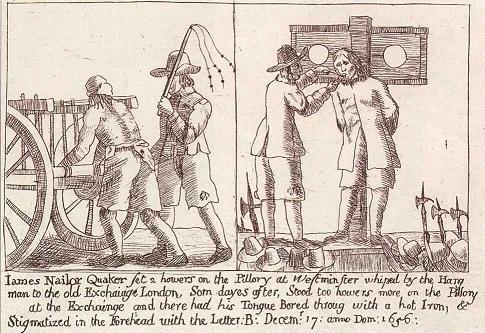
Quakers initially struggled to achieve acceptance in America:
Known today for their pacifist and quietist ways, Quakers had an altogether different reputation in the seventeenth century: belligerent and boisterous rabble-rousers. Fueled by evangelical zeal, and asserting radical ideas for the time, the Quakers were aggressive proselytizers. As a result, they faced violent persecution in England and, to a lesser extent, in the Netherlands, where many migrated. News of their beliefs (e.g. equality for women, refusal to swear oaths, etc.) and their tactics (e.g. preaching loudly and publicly, disrupting worship services, etc.) reached the colonies before the Quakers did.
Connecticut, in fact, banned Quakers in October 1656—prior to any Quakers having ever reached the colony. Other English colonies followed suit (Massachusetts would be particularly harsh on the Quakers), with the sole exception of Rhode Island—though Roger Williams, its founder, spent much of his later life debating Quakers and being frustrated with their refusal to adhere to the “sober rules of civility and humanity.” Quaker missionaries arrived in New Netherland in 1657. Following the sentencing of one of their number, Robert Hodgson, for public preaching, Peter Stuyvesant passed a law that penalized anyone who housed a Quaker, and at the same time incentivized locals to become informants of Quaker activities. The law had gone into effect by December 1657, when local men John Tilton and Henry Townsend were convicted under it.
(Image of Quaker James Nayler (1618–1660) being pilloried via Wikimedia Commons)
Bruce Springsteen recently talked about the “religious impulse” that shapes his music:
Without overusing the word, you know, there’s a Christian element that runs through it because I grew up Catholic and so I was indoctrinated in religious language between eight o’clock and nine o’clock every single morning for the first eight years of my schooling. Five days a week, every single morning, the first thing you did was religion. And so you grew up with that language and it was, of course, distorted, and screwed me up terribly, but at the same time, it made for good writing. And it was a wonderful source of metaphor when you went to write about the world and about your inner life and it served me. I suppose looking back on it, I would like to change some things but I wouldn’t have had that any other way in that it’s served me very, very well and continues to do so. I have a very deep connection to gospel music. I understand the language — I feel I understand the essence of the music itself.
This reminds me a bit of the time the “militant atheist” Richard Dawkins told a reporter for the Spectator that he has a certain love for the Anglican tradition in his native land, and specifically its aesthetics, even if he doesn’t for one moment believe any of its theology. Would he feel deprived if church buildings were to disappear from the English landscape? “Yes, I would feel a loss there,” Dawkins said. “I would feel an aesthetic loss. I would miss church bells, that kind of thing.”
These comments from Springsteen and Dawkins beg the question: What should Christians make of such (unexpected?) appreciation for the aesthetics, sensibilities, and cultural contributions of our faith, while the substance behind those contributions is largely or wholly dismissed? Is this good, to an extent?
Earlier this month Tom Ehrich argued that religion ”shouldn’t be this hard,” leading Rod Dreher to warn against “the siren song of easy religion.” Readers join the debate:
Responding to Tom Ehrich, Dreher neatly sidesteps the point by changing the subject, and politicizing the argument. As I understood it, Ehrich was commenting on how faith’s original role – to ease the suffering of guilt so we might have a closer relationship with God – has been flipped to a kind of Big Brother approach to guilt, where, instead of having Jesus help you carry the weight (“my yoke is easy and my burden is light”), a supposedly loving community pushes down harder. It’s a “hospital for sinners” where the sick are made to feel worse.
A few readers think Dreher made a category error:
Rod Dreher either misses the point of Tom Ehrich’s article or is deliberately obfuscating things to project his own biases onto the debate. ”Church,” “faith,” and “religion” don’t all mean the same thing, yet Dreher equates them. In the original article, Ehrich specifically makes this distinction:
Faith should be difficult, yes, because it inevitably entails self-sacrifice and renewal. Life, too, is difficult. Dealing with Mammon is difficult. Speaking truth to power is difficult. Confronting our own weakness and capacity for sin is difficult. But the institution whose sole justifiable purpose is to help us deal with those difficulties shouldn’t be making matters worse.
Another tries to reconcile Ehrich’s and Dreher’s views:
When you quote Ehrich saying religion should not be so hard and Dreher saying religion should challenge the believer, the opposition of ideas is interesting but omits a discussion of the bridge between the two. Dreher is right that Christian believers should question their behavior and confront sin, but when they do that they should do so with the glad news of the gospel – that grace will offer them forgiveness and acceptance.
Grace is something we can be sure of receiving because it is promised and is the assurance Ehrich wants to provide to the uncertain, but grace is something we cannot know we have in hand and the desire to seek grace is what can compel Christians to do the hard work Dreher favors. Grace is a practice that should infuse our behavior, and Pope Francis has demonstrated the basics of grace when he talked about being a sinner and downplayed rules of the church to emphasize the value of every person. Grace is a gift of God, and believers cannot decide how and when and where God will grant it.
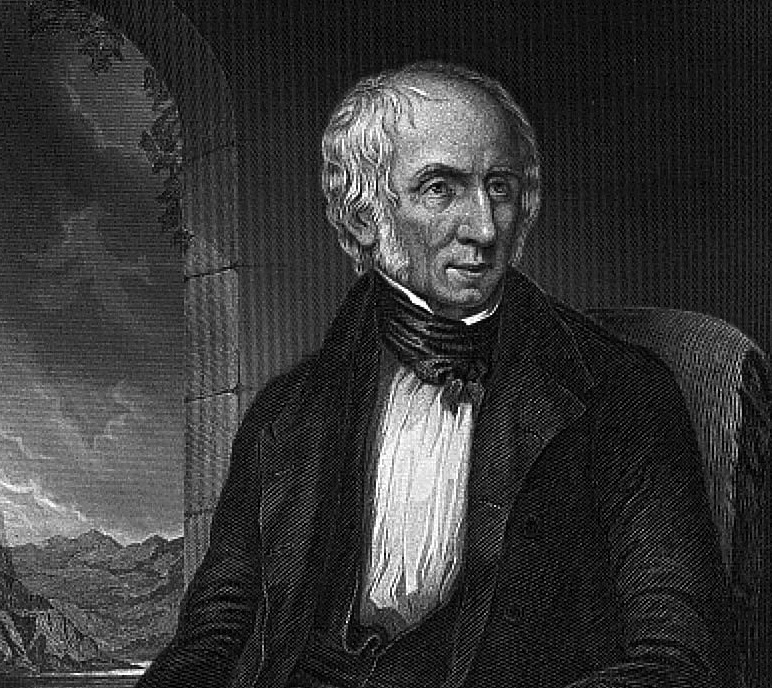
“Nuns fret not at their Convent’s narrow room” by William Wordsworth (1770-1850):
Nuns fret not at their Convent’s narrow room;
And Hermits are contented with their Cells;
And Students with their pensive Citadels:
Maids at the Wheel, the Weaver at his Loom,
Sit blithe and happy; Bees that soar for bloom,
High as the highest Peak of Furness Fells,
Will murmur by the hour in Foxglove bells:
In truth, the prison, unto which we doom
Ourselves, no prison is: and hence to me,
In sundry moods, ‘twas pastime to be bound
Within the Sonnet’s scanty plot of ground:
Pleased if some Souls (for such there needs must be)
Who have felt the weight of too much liberty,
Should find short solace there, as I have found.
I took this picture on January 20 from the highest level on the minaret that spikes above the Tower of David at Jaffa Gate. This level is unstable and not usually accessible. Today, exceptionally, a few people were permitted access in the morning.
Last Sunday, we pointed to an interview with the Catholic poet Dana Gioia, in which he mused that there “is a great essay waiting to be written on the differences between observant and cultural Catholic writers.” Dreher picks up the question:
From the outside, my guess is that culturally Catholic writers are more likely to be reacting against something. Their imaginations were formed by the culture and rituals of Catholicism, even if they’ve rejected the religion. I am skeptical, though, about whether there is anything identifiably or meaningfully Catholic about any culturally Catholic writer whose imagination was formed after the postconciliar dissolution of that strong and distinct American Catholic culture. I could be wrong about that; there is certainly something distinctly Jewish about culturally (but not religiously) Jewish writers. Then again, Jews are a minority in America, whereas Catholics are members of the largest church in the country — though an increasingly assimilated one.
Noah Millman offers an explanation for the distinctiveness of such Jewish writing:
Judaism is simply less theology-centric than Catholicism, and as a consequence you can be a religiously observant Jew who writes books about religiously observant Jews and your fiction may still be Jewish primarily in the sociological sense. Take, as an example, Kaaterskill Falls, by Allegra Goodman. This is a very good novel to read if you want to get a feel for the dynamics of an ultra-Orthodox Jewish community. It’s also a good novel qua novel. But it isn’t god-haunted in the way that, say, Graham Greene’s or Flannery O’Connor’s work is. Or, for that matter, Isaac Bashevis Singer’s – even though Singer was less observant than Goodman is. I’d say similar things about Nathan Englander: that he’s interested in Jews and Judaism, but if he’s haunted by anything, it isn’t by God. History, maybe.
An interesting phenomenon to end on is Jewish writers who, in search of a spiritual inspiration, wandering into foreign fields precisely because that’s the best way to find their way home. Tony Kushner’s play, Angels in America, for example, is fascinated by Mormonism precisely because of its link to archaic Judaism, which (though politically very problematic) appears more spiritually nourishing than the Judaism that actually exists in the contemporary world.
Previous Dish on faith and literature here, here, and here.
Thanks to the combined power of technology and our understanding of neuroscience (and perception), you don’t need drugs or to provoke your brain into releasing DMT. Rather, a simple visual pattern can induce temporary (lasting under a minute) hallucinations, safely and temporarily.
Visit this site for a fuller hallucinatory experience, or watch the above video:
To get the most out of your experience, just full-screen it, move your face close to the screen and stare at the center, trying not to blink and trying not to look away. When the video ends (it’s only 40 seconds long), look anyplace else and enjoy your distorted, hallucinatory vision for under a minute!
If you aren’t careful, the video Milkyeyes by Donato Sansone might give you nightmares. The piece describes itself as “A slow and surreal video slideshow of nightmarish, grotesque and apparently static characters.” The video clocks in at just over 2 minutes and features 26 different characters, and is accompanied by music you’d hear in an old, abandoned warehouse or horror film. Some characters have faces that have been mutilated and warped to the point where they are nearly unrecognizable. Milkeyes is a name that conjures an unpleasant visual. So, it’s not surprising that this video is a visceral journey into a world of unfortunate humans. We see steam coming from their heads, stuff bubbling from their lips, and eyes floating of their head. While they are affected, the environment behind them remains static and untouched. The juxtaposition between calm and a surreal chaos makes this video both puzzling and trippy. (ViaArtnau)
Mike Power investigates the world of designer drugs, or “controlled substance analogs,” described as “version[s] of a banned compound that [have] been created with the aim of making it legal”:
[H]ow easy is it to design and commission a new legal drug based on a banned one?
For the most part you cannot simply tweak cocaine, add a molecule and dodge the law—most countries are wise to this, and their rules are tightly-written, expert affairs focused on well-known narcotics. But outside of headline drugs … it is simple enough to scan medical literature and look for new compounds that could intoxicate. The resulting drug will, most likely, be legal—though whether the result will be pleasant or not will only be discovered by a process of human trial and error.
I passed my drug along to [clinical toxicologist] John Ramsey at St. George’s [Hospital in London] to be logged into TICTAC, a database that is used by law enforcement and healthcare professionals. We do not know precisely what my legal drug will do: It may be incredibly unpleasant—but it will be active and, with the right marketing, could potentially sell by the truckload.
And here lies the problem. We can ban drugs. But we can’t ban chemistry, and we can’t ban medical research. There are an almost infinite number of different drugs and substitutions that are possible, and a combination of circumstances have radically increased the public’s ability to access and alter them. The openness of the Web, China’s prominence as both a manufacturer and exporter, the ability of laypeople to study organic chemistry, the availability of research, improved technology and falling prices—these have all come together to create an unusual, explosive, effect.