Time To Drop The Ball?

For those like me who need a primer on American football:

Steve Almond wonders whether watching the Super Bowl is immoral (NYT):

There are two basic rationalizations for fans like myself. The first is that the N.F.L. is working hard to make the game safer, which is flimsy at best. The league spent years denying that the game was causing neurological damage. Now that the medical evidence is incontrovertible, it has sought to reduce high-speed collisions, fining defenders for helmet-to-helmet hits and other flagrantly violent play. Its most significant response has been to offer $765 million to settle a class-action lawsuit brought by more than 4,500 former players, but a judge recently blocked the settlement. It simply wasn’t enough money.

The second argument is that players choose to incur the game’s risks and are lavishly compensated for doing so. This is technically true. N.F.L. players are members of an elite fraternity that knowingly places self-sacrifice, valor and machismo above ethical or medical common sense. But most start out as kids with limited options. They may love football for its inherent virtues. But they also quickly come to see the game as a path to glory and riches. These rewards aren’t inherent. They arise from a culture of fandom that views players as valuable only so long as they can perform.

Update from a reader, who points to the below video to say it “reminds me of what Bill Maher said a coupla years ago” – comparing the economic systems of professional football and baseball:

 
Update from another reader:

Not only is the NFL socialist internally, it’s socialist externally. So are other major league sports. They get the city or the county or the state or a combination of them to build them stadia. I don’t have a source for this, but the only NFL stadium built without government subsidies of one sort or another is Met Life in East Rutherford, which is shared by the NY Jets and the NY Giants. But there are other hidden subsidies lurking. The massive roadways to support the Meadowlands. The train station that makes it possible for them to use the Met Life stadium for the Superbowl. The work NJTransit did at Seacaucus Junction station. NJTransit is going to be running a modified weekday schedule for that Sunday. That’s costing a lot of money. And giving ticket holders bus service if they don’t want to use the train.

The subsidizing goes on and on and one. In the meanwhile they get billions of dollars for the telecasts, merchandizing etc. And pay themselves very very well. It’s not just the players pulling down millions a year. It’s the coaches and the assistant coaches and the marketing director etc. And it’s not just the NFL. I’m sure you read a bit about what went on with the Barclay’s Center in Brooklyn. The Port Authority is busy spending 100 million to rebuild the PATH station in Harrison so a minor league soccer team can have games a few blocks away. They suck great big drafts of socialistic subsidies out of the system.

Recent Dish on Beinart’s moral qualms with the sport and his son here. Recent coverage of the blocked NFL settlement here.

Fighting Over America’s Interests

Zack Beauchamp kicks national interest off its pedestal:

In getting a handle on the basic foreign policy issues of our day — how to think about the NSA leaks, or what the hell to do about Syria — the basic intellectual divide isn’t the one you’d immediately think of. It’s not the split between Left and Right, or civil libertarians and security state hawks, or interventionists and non-interventionists.

It’s between those who buy into the cult of America’s national interest and those who don’t.

The cult worships at the altar of American selfishness, the idea that the United States is justified in doing anything — including invading a “crappy little country” and ignoring the systematic slaughter of innocent foreigners — if it further America’s “interests” in some vague fashion.

Damon Linker argues instead that American foreign policy is “far more often led astray by an excess of moralism”:

In political terms, it is perfectly legitimate for a resident of Wichita to feel more of a duty to help the victims of a natural disaster in the city’s downtown than for residents of other parts of Kansas, and for residents of Kansas to feel more of a duty to help than residents of other states, and for citizens of the United States to feel more of a duty to help than citizens of other countries. Morality makes no such distinctions, but politics does. And there’s nothing shameful about it. (For more on the legitimacy of politics, I recommend the writings of its greatest living theorist, Pierre Manent.)

None of which is meant to deny that the parochialism of politics needs to be tempered by universalistic moral considerations. It does. But the U.S. has quite enough of it already. The nation’s founding documents and civil religion conceive of democracy in emphatically moral and universalistic terms. The Judeo-Christian faith of many Americans draws on concepts derived from natural law as well as the prophetic tradition of moral exhortation and denunciation. And finally, progressive ideology appeals to universalistic imperatives and ideals of universally accessible public reason.

All of this adds up to an over-abundance of moralism in American public life. And nowhere is its influence more pernicious than in the realm of foreign affairs, where do-gooderism far too often leads to confusion, misguided policy recommendations, and (paradoxically) immoral outcomes.

Ask Reza Aslan Anything

Reza is an Iranian-American writer and a scholar of religions. He is the author of No god but God: The Origins, Evolution, and Future of Islam and, most recently, Zealot: The Life and Times of Jesus of Nazareth, which offers an interpretation of the life and mission of the historical Jesus. Previous Dish on Zealot here, here and here, as well as Fox News’ treatment of Reza here and here.

Let us know what you think we should ask Reza via the survey below (if you are reading on a mobile device, click here):


This embed is invalid

Preventing Another Runaway Primary

For its 2016 nomination process, the RNC has adopted several new rules intended to avoid an extended primary that ground up Romney in 2012 (but which ultimately helped Obama in 2008 following his marathon run against Clinton). Over to Weigel:

The new rules, as just approved, allow only four states to lead the first month of balloting: Iowa, New Hampshire, South Carolina and Nevada. (The rules put these contests in February, but in previous years an arms race has ended up putting the contests at the front of January.) Florida will not jump into the first month.

What’s left? Any election (presidential preference caucus, primary) between March 1 and March 14 will operate under proportional representation. Any contest after March 14 can go proportional, or assign delegates on a winner-takes-all basis. Any state that defies these rules (or the timing rules) will lose one-third of all delegates, or nine elected delegates plus the normal three RNC member-delegates—whatever’s larger.

Ambers’ takeaway:

The end result is that the party has conspired to nominate the most electable conservative candidate and quickly. Challengers must prove themselves much earlier. Deep pockets and good field organizations will become more important relative to free media generated by tactical maneuvers and conservative radio hosts.

But not everyone in the party agrees that a shorter process is a good idea:

“Anytime you talk about limiting access and [debate] opportunities, it helps the frontrunner. It really makes me nervous,” said former Iowa Republican Party Political Director Craig Robinson, who is now editor in chief of the state party’s website. “There’s not much time to compete once you figure out who’s real or not. You don’t want to space it out so if you don’t win Iowa or New Hampshire, you don’t have a chance.”

Larison doubts the shorter schedule will have its intended effect:

Now that they are going back to a more compressed schedule, that greatly improves the chances of whoever fills that front-runner role ahead of the voting. This makes it much more likely that what could potentially be the most wide-open, competitive Republican nomination contest on record will be turned into a rapid coronation of whoever happens to be in the lead at the start. That will probably mean that the party will once again choose another relative moderate distrusted by large numbers of conservatives, and who will suffer from the same lack of enthusiasm that afflicted McCain and Romney.

Jonathan Bernstein thinks a shorter primary season makes a fringe candidate more likely, not less:

By compressing the calendar, you increase the danger that a mediocre or worse candidate could get hot at just the right time and wrap up the nomination before the party has time to stop it.

Drum downplays those fears but concedes that he could be unpleasantly surprised come 2016. His advice to both parties:

Make your primaries as similar to a general election as possible. That would mean, for example, ditching the Iowa caucuses, since the kind of retail politics that win in Iowa are irrelevant to success in November. What you want is a candidate that can raise lots of money; appeal to lots of people; and has a good media presence. That’s what wins general elections these days, and a successful primary season is one that gives the advantage to those qualities.

Cillizza theorizes that Rand Paul could benefit from the new rules:

The compression of the calendar and the likelihood that Iowa, New Hampshire, South Carolina and Nevada will have February all to themselves makes coming out of those four states with some momentum all important. No potential candidate — up to and including Jeb Bush — is better positioned, at least at the moment, to run strong in all four states.

FHQ considers how the states are likely to react:

The bottom line for now is that the national parties are doing exactly what one would expect them to do. While they are still susceptible to rogue states, the national parties have gotten more sophisticated in their responses to them. The traditionally-exploited loopholes have largely been closed.

Want rogue states in 2016? Look at the usual suspects FHQ has been mentioning for months. It won’t be Florida. It’ll be Arizona, Michigan, Missouri and North Carolina. And start looking to the end of the calendar too. We may see some creative rogue states in 2016.

The Cognitive Dissonance Of The One Percent

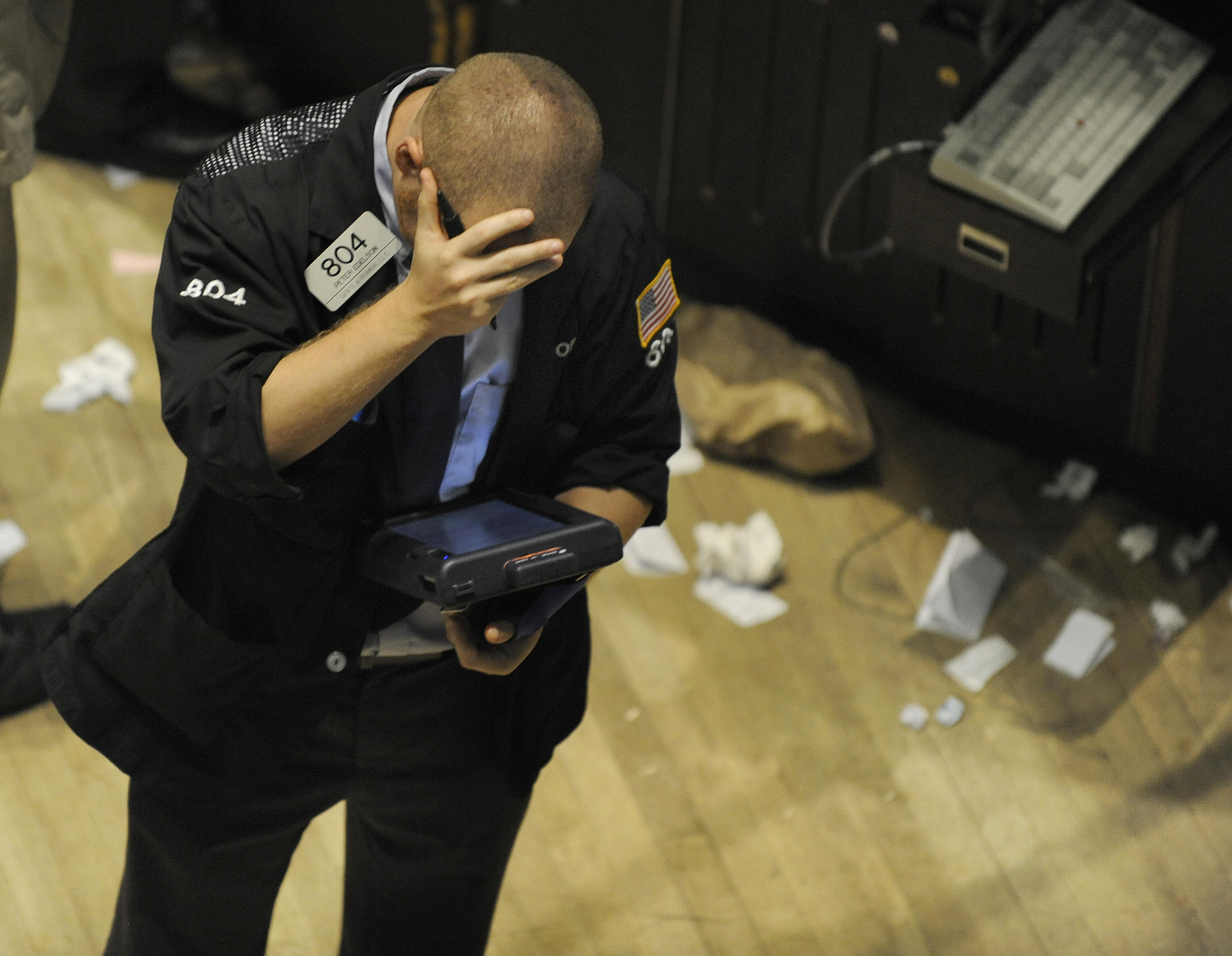
A trader reacts on the floor of the New

There has been plenty of well-deserved derision directed at the billionaire fretting in the Wall Street Journal that the super-duper-rich like him are headed for concentration camps. Paul Krugman fires an AK47 into the world’s smallest barrel here; while Josh Marshall has a must-read. Josh is actually trying to understand rather than simply excoriate the completely bizarre idea that the Obama administration is a populist, socialist threat to a capitalist system it all but saved from itself:

It is that mix of insecurity, a sense of the brittleness of one’s hold on wealth, power, privileges, combined with the reality of great wealth and power, that breeds a mix of aggressiveness and perceived embattlement.

I’ve been a little taken aback too by the attitude of the Wall Street class, after they royally fucked up the entire global economy, were bailed out by the rest of us, still get Dimon-style compensation, and have enjoyed one of the sharpest booms in stock prices since 2009. At some point, you have to ask: WTF? But here’s the empirical data on how hard the one percent have had it over the last few decades:

Average_Federal_Tax_Rates_Top_1_Percent-thumb-615x480-109671

Well, yes, they have returned to pre-Reagan levels of taxation. But the tax take is still roughly where it was in the mid-1990s and I don’t recall Clinton being perceived as a socialist or howls of protest from the wealthy as the economy boomed in the tech boom bubble. Josh notes, for example:

It’s worth remembering that Bill Clinton pushed through a reasonably substantial tax hike on upper income earners in 1993. President Obama meanwhile largely maintained the tax policies of George W. Bush, the guy who had in essence repealed Clinton’s tax increase. These are all facts that are hard to ignore.

So whence the anger and the panic? Josh thinks, as my shrink would say, that it is multi-determined. Is it adjusting to a president who, though he is a pragmatist in his record, is nonetheless more progressive in outlook than any president since the conservative revolution of the late 1970s (of which Carter, in some ways, was a part)? Is it classic in-group isolation that fosters ideological extremism? Yes and yes. But I’d add a couple of factors to the mix.

The first is the triumph of victimology in political discourse. It began on the hard left, of course, in the 1990s, as every member of a minority group was designated a victim, and all were allegedly on the verge of being targeted or discriminated against. Godwin’s Law had to be constantly invoked back then as well. But today, what began on the left is ubiquitous on the right: those denying marriage rights to gays are in fact the real victims of lefty intolerance; whites, not blacks, are the real victims of our racial politics; and men are now the real victims of the feminized, big government left (see Hume; Brit, et al.). If you want to free-base on far right victimology, just track down the rhetoric of Sarah Palin. According to her, Christians now live in constant fear of legions of Obama’s jack-booted thugs, i.e. Wal-Mart greeters wishing them “Happy Holidays.”

The second factor, I’d argue, is actually self-awareness. This is entirely speculative, but many of these extremist plutocrats must surely know, somewhere in their psyches, that they collectively failed – and failed terribly – in self-regulating and thereby protecting the very capitalist system they depend on for so much.

These masters of the universe had to go cap in hand to the federal government to bail out their sorry, incompetent asses. They were revealed not as brilliant engineers of our collective wealth, but as enablers of the debt-mania, tech-hubris and bubble-creating that destroyed so much from 2007 onwards. They were exposed as something much worse than greedy; they were revealed as incompetents whose mistakes and over-reach created untold misery and hardship for countless millions. Their own self-image – again, somewhere deep down – must have shattered a little.

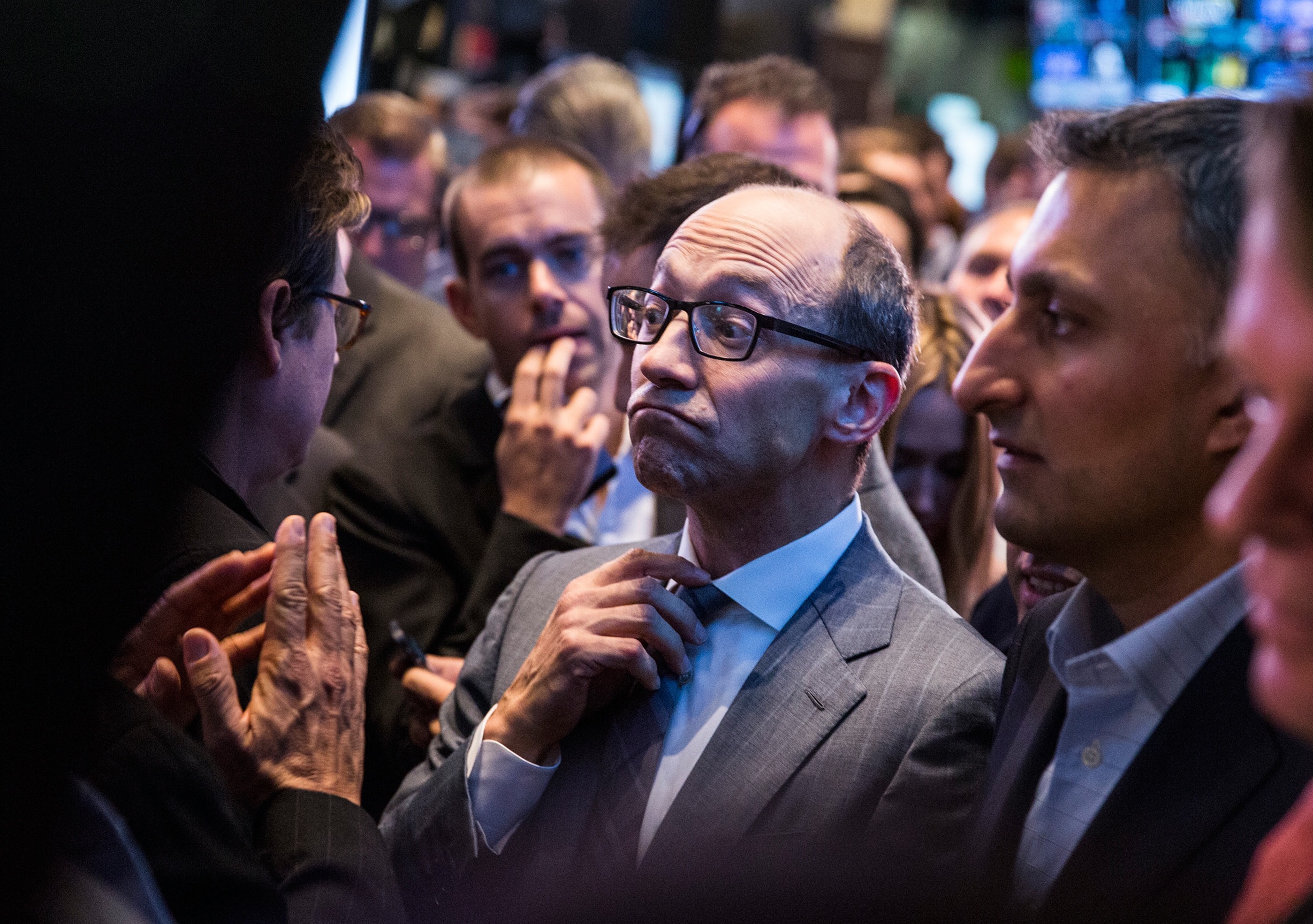
People respond to revelations of their own incompetence in different ways. But the proudest – and this group of people are not exactly renowned for humility – can sometimes respond by internalizing an ever more extreme version of their own previous mindset. They cannot compute the fact that they failed, and so they have to construct a version of reality that insists it was all someone else’s fault, and then build Twitter Goes Public On The New York Stock Exchangeon that an ideology of their own unrelenting heroism, which is now, on their minds, unfairly impugned.
And the only target of blame that can plausibly fill the gap is the federal government. Anything lesser would actually diminish the one-percent’s self-perception as masters of the universe, and require some adjustment in an ideology that has been cast as eternal truth since 1980. Hence the early 2008 myth that the government alone created the economic crisis through too-cushy mortgages – when the vast majority of shady mortgages were in the private sector. And because the one percenters’ collective humiliation has been so great and so public – even the Pope won’t absolve Larry Kudlow of his heresies any longer! – you get the kind of anguished psychology behind Tom Perkins’ absurd paranoia (which makes the neocons’ habitual resort to the anti-Semite card look relatively mild).

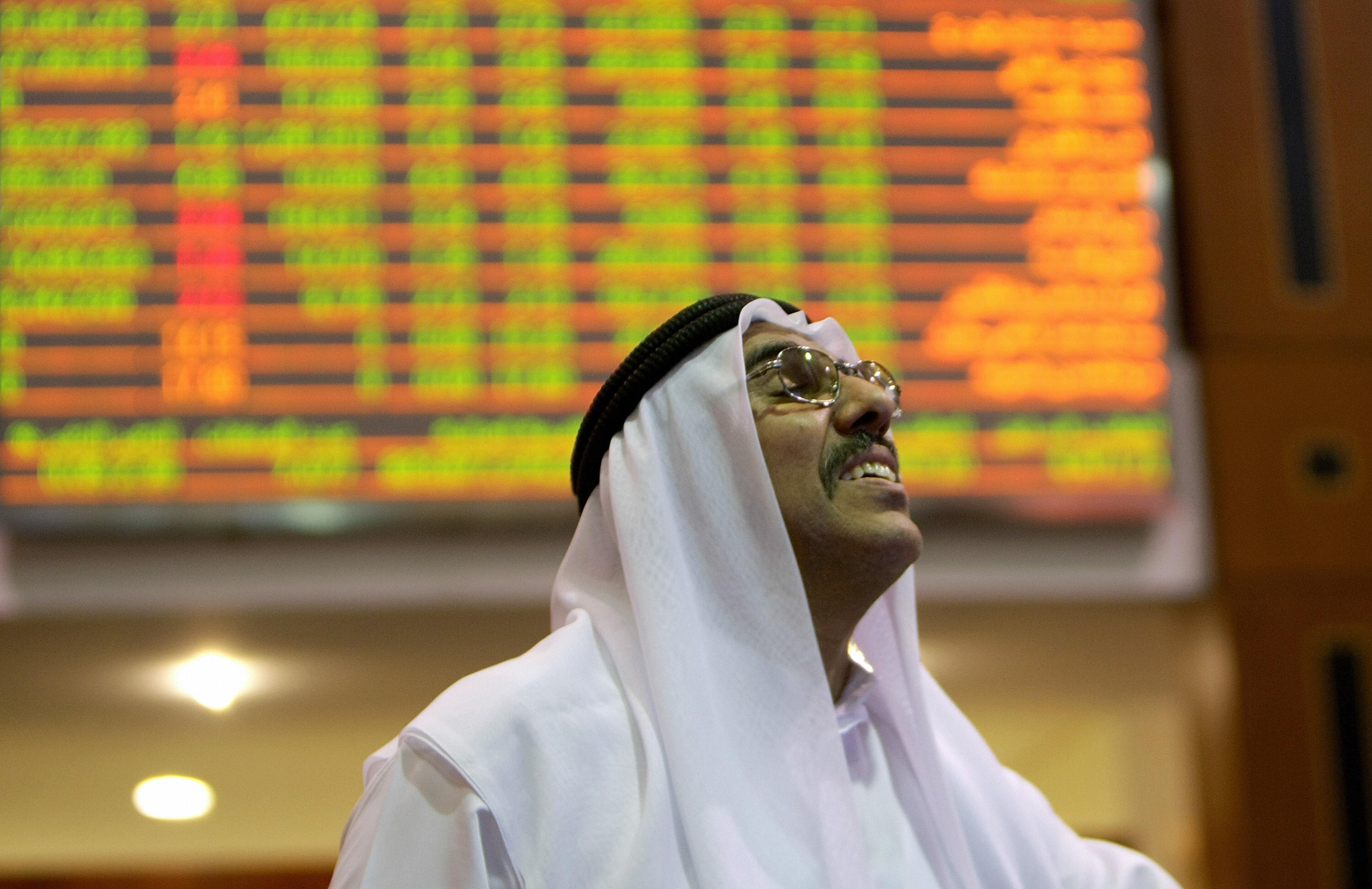
You know who they remind me of? Dick Cheney and Don Rumsfeld after 9/11. Both were responsible for the collapse in national security that enabled 9/11 to take place. Both were sold to the public as safe hands behind a jejune young president. And both were anything but safe hands – in fact, they acted like reckless, panicked, and blinkered chickens with their heads cut off. Both simply could not internalize the obvious fact of their own failures – because both had long regarded themselves as national security “masters of the universe.” Their An Emirati trader looks at the prices ofself-understanding could not adjust; it was too fixed by then.
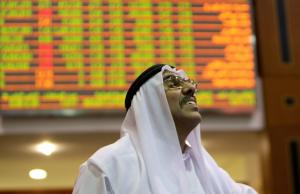
But they are both very intelligent men and knew, deep down, the extent of their incompetence. Their reaction was to up the ante, not unlike Tom Perkins’ crazy. So they did not rationally reflect on the reasons for the failure to protect Americans from 9/11, they assuaged their buried guilt by turning the fight into an even greater battle between good and evil, by putting their previous belief in an unfettered presidency on steroids, authorizing torture on a massive scale, and embracing policies, like the war in Iraq, that could both erase memories of their own incompetence and yet also project that incompetence onto an even larger stage, with even worse results in terms of human life and economic and security costs.

When cornered, the sequestered, guilt-ridden, but psychologically rigid mindset does not reflect. It cannot see the broader picture. It cannot even publicly acknowledge what it must internally understand somewhere: that it played a part in the catastrophe that has now led to public shaming. And they worry deeply that this buried truth, if embraced by the politically influential, could come back to bite them yet. That worry is as rational as their response to it is irrational. If only they could know it, Obama is the best friend they could have in times like these. He wants to defend the capitalist system from its fatal, unregulated flaws. And it’s only by doing that can the one percenters’ wealth-creating dreams have a chance of being realized. If only they could see that. And if only they could adjust.

(Photos: scenes from the crash of 2008 and from Twitter’s IPO from Getty Images.)
How Big Of A “Bailout”?

Gains And Losses

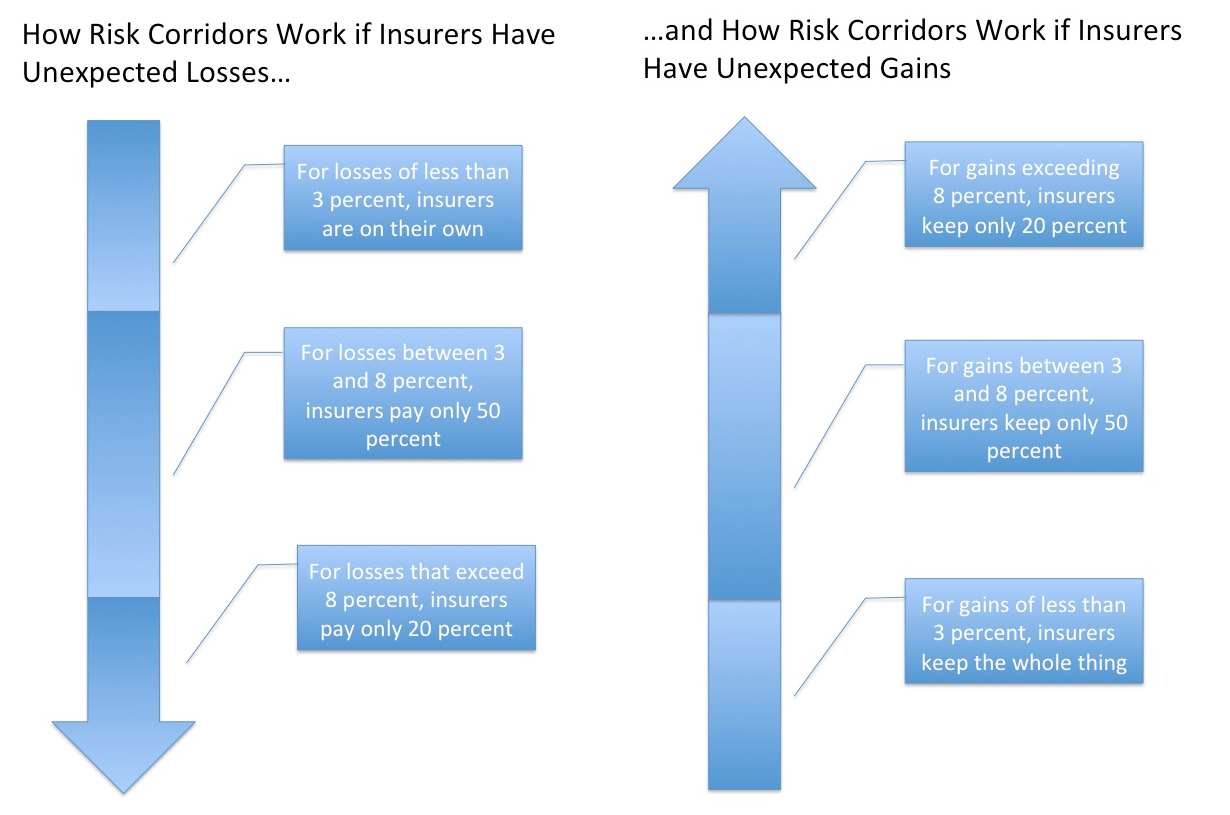
Cohn defends Obamacare’s risk corridors, which Republicans are calling an “insurer bailout”:

Suppose the conservative critics are right. Suppose that most insurers end up taking losses—and that, as a result, the risk corridor program ends up costing the taxpayers money. How much would it really be? Nobody has done the official math on how big the payouts could get. But James Capretta and Yuval Levin, writing in the Weekly Standard, say “This year it could easily cost taxpayers hundreds of millions and perhaps billions of dollars.” That’s consistent with what I’ve heard informally from experts. And in the context of the Affordable Care Act—let alone the entire federal budget—that’s not a ton of money. Remember, the original CBO projections suggested that the federal government would spend about $26 billion on exchange subsidies and nearly twice that on the coverage expansion as a whole.

Here’s where we get to the least familiar—and potentially most important—argument of the whole debate. The premiums insurance companies are offering this year are lower than the CBO expected. As a result, the federal government will probably end up spending less—quite possibly a lot less—subsidizing private insurance for the poor and middle class. So even if the taxpayers have to pay more to insurers through risk corridor payments, they will be paying less to insurers through subsidies. And this isn’t just some happy coincidence: The higher risk corridor payments and lower subsidies are products of the same root cause.

Another Debt Ceiling Debacle?

The GOP appears to be committed to repeating past mistakes:

It would be, McConnell suggested, “irresponsible” to avoid a debt-ceiling crisis.

McConnell is hardly alone; many Republican lawmakers are making similar threats. Rep. Jason Chaffetz (R-Utah) said over the weekend that the White House will have to give congressional Republicans something “impressive” in order to entice GOP officials to do their duty and avoid crashing the economy on purpose.

And what, pray tell, might this “impressive” gift be? What do Republicans want before they start hurting Americans on purpose? By all accounts, they’re still working on the ransom note in this latest hostage strategy, but they appear to have narrowed the list to the Keystone XL pipeline or eliminating “risk corridors” in the Affordable Care Act in the hopes that consumers will be forced to pay higher premiums.

Oy. Chait sighs:

A clean debt-ceiling bill can’t pass the House, you say? Then how come a clean debt-ceiling bill passed the House three months ago by a vote of 285–144? And how come, nine months before that, a clean debt-ceiling increase passed the House by the same margin? The Journal reports on the demands being hopefully floated by various Republican factions without mentioning at any point that the House did in fact raise the debt ceiling without policy concessions the last two times.

Yglesias piles on:

We have already seen this movie! Multiple times! The way it goes is that the clean debt limit “can’t pass the House” because of party cartel situations. Then Democrats argue, rightly, that it would be dangerous to allow the threat of economic chaos to be used as a lever of policy and they won’t back down. Then John Boehner admits he was bluffing and allows the clean debt limit to pass the House, with most Republicans voting no but a bipartisan majority in favor. We’ve seen it. Several times. The only thing possibly accomplished by doing this again is dealing some minor damage to the economy with unnecessary waiting and uncertainty.

Ted Cruz’s “Reality”

It’s enough to crack Bob Schieffer up. Enjoy this rare moment of actual journalism on a Sunday show:

This embed is invalid


Update from a reader:

C’mon. A nervous chuckle is not “a rare moment of journalism.” Demonstrating that Cruz traffics in lies, distortions and a weird alternate reality would be journalism. A chuckle – or even an actual laugh – doesn’t prove anything except Schieffer’s discomfort.

Another agrees:

Schieffer should have had the guts to simply call out Cruz’s absurd claim by asking, “How did Obama cause the shutdown?” Then we’d have at least a glimpse of Cruz’s specious logic and could begin to understand his delusional mind.

Who Watches Cable News?

Fewer people than you might guess:

[T]hose who blame Fox and MSNBC for dividing the country should check their sums. Markus Prior of Princeton University has dug into data, much of it unpublished, from ratings companies who remotely track viewing habits in sample households. His conclusion is that Americans fib about what they watch, and that large majorities simply shun cable news. Perhaps 10-15% of the voting-age population watch more than 10 minutes of cable news a day, a share that rises modestly before exciting elections. For most individual news shows (including hybrids like Jon Stewart’s satirical “Daily Show”), 2m viewers counts as a wild success. That is the equivalent of 0.8% of voting-age Americans.

Yes, but I also think that is too narrow a definition of influence. If the 10 – 15 percent form the bedrock of one party’s base, and shape and echo a message fed through the hyper-partisan cable pipeline, it is precisely the isolated nature of the phenomenon that gives it power. After all, anyone who is not super-ideologically committed or highly partisan would find both MSNBC and Fox to be ridiculous, propagandistic caricatures of news. That’s why their audiences are relatively small. In fact, both propaganda channels may have maxed out on their reach because most (sane) Americans never stop laughing or gasping at cable news’ inane extremism when they have the misfortune to turn it on. But keep that audience geographically isolated, feed them with all sorts of political, erogenous-zone pap, and get them to spread the word (far more credibly than the TV) and you have a political movement. Without Fox News, no Tea Party.

Cable news is both a marginal enterprise and yet a central force behind the disintegration of a reasonable national conversation. It’s tiny in size but exponentially more potent in influence. Which makes it a particularly vexing problem for a politically stale-mated country.