The View From Your Window Contest

by Dish Staff

vfywc-221

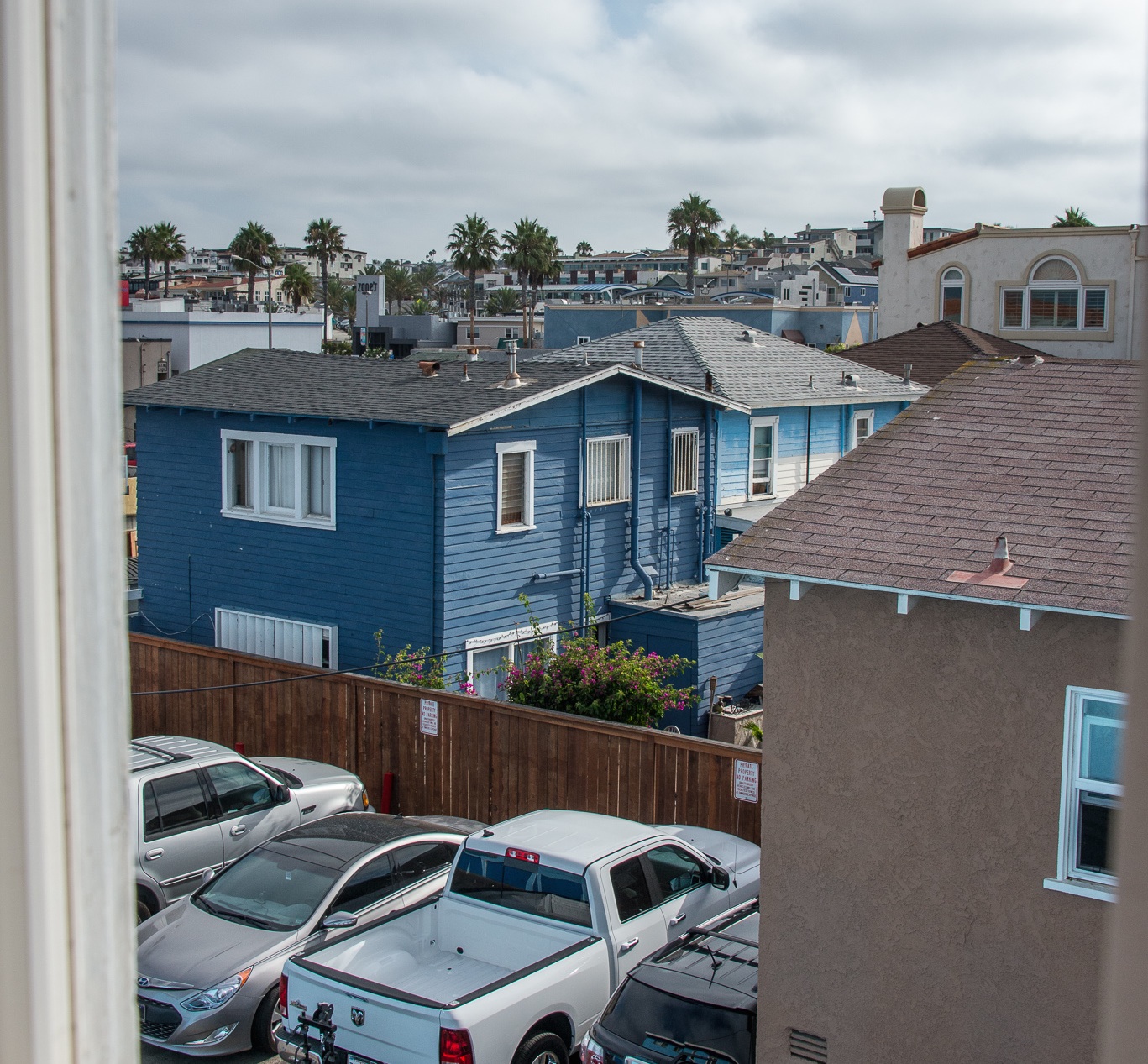
You have until noon on Tuesday to guess it. City and/or state first, then country. Please put the location in the subject heading, along with any description within the email. If no one guesses the exact location, proximity counts.  Be sure to email entries to contest@andrewsullivan.com. Winner gets a free The View From Your Window book or two free gift subscriptions to the Dish. So have at it, and just be happy you don’t have to compete against these guys:

Browse our previous window view contests here.

The Decline Of Housewives As Political Volunteers

by Dish Staff

Women Politics

Seth Masket wonders what effect it has had:

Barry Burden investigates the role women have played in polarization. More specifically, he’s looking at the decline of housewives as party activists and their replacement by more ideologically motivated men.

Why we can’t draw firm conclusions:

This is one of those projects that just screams for more data. Unfortunately, there just aren’t great mass surveys prior to the 1950s, and studies of campaign activists are even more recent than that. … But at least tentatively, we have a plausible account for at least some of the shift in the parties since the 1950s. The parties are different because very different people are working for them now.

A Short Story For Saturday

by Dish Staff

A reader emails: “It’s time to resurrect that one-time Young Adult staple, Shirley Jackson’s ‘The Lottery,'” and we agree. How the story begins:

The morning of June 27th was clear and sunny, with the fresh warmth of a full-summer day; the flowers were blossoming profusely and the grass was richly green. The people of the village began to gather in the square, between the post office and the bank, around ten o’clock; in some towns there were so many people that the lottery took two days and had to be started on June 2th. but in this village, where there were only about three hundred people, the whole lottery took less than two hours, so it could begin at ten o’clock in the morning and still be through in time to allow the villagers to get home for noon dinner.

The children assembled first, of course. School was recently over for the summer, and the feeling of liberty sat uneasily on most of them; they tended to gather together quietly for a while before they broke into boisterous play. and their talk was still of the classroom and the teacher, of books and reprimands. Bobby Martin had already stuffed his pockets full of stones, and the other boys soon followed his example, selecting the smoothest and roundest stones; Bobby and Harry Jones and Dickie Delacroix – the villagers pronounced this name “Dellacroy” – eventually made a great pile of stones in one corner of the square and guarded it against the raids of the other boys. The girls stood aside, talking among themselves, looking over their shoulders at rolled in the dust or clung to the hands of their older brothers or sisters.

Keep reading here (pdf), or check out the story in the collection Shirley Jackson: Novels and Stories. Previous SSFSs here.

Our Freelance Future

by Dish Staff

In the wake of Dish editor Jonah Shepp’s appreciation of freelance war reporters and Steven Greenhouse’s reporting on the temp economy comes Elizabeth Nolan Brown’s analysis of the news (pdf) that a third of US workers are freelance:

When it comes to millennials, we see an even more freelance-heavy generation. About 38 percent of those under age 35 are freelancing, compared to 32 percent of those 35 and older. Millennial freelancers are also more likely to look for job with a “positive impact on the world”—62 percent of the younger group said this was important, versus 54 percent of older freelancers. Finding freelance work that’s “exciting” is also more important (62 percent versus 47 percent).

I’m happy to say that this all squares up with what I wrote about millennial workers for Reason’s latest (and millennial-themed) issue. And I’m also glad someone’s dug a bit deeper into the demographics of freelance workers (with all due respect to the 2004 report, a few little things may have changed since then).

Justin Fox also weighs in:

Back in February, in an exhaustive (and maybe exhausting) look at the numbers on self-employment, I tried to square the grand claims with the pretty inconclusive data by arguing that long declines in old-style independent work in agriculture and small-scale retail and services were probably masking a rise in white-collar independent work. But while there’s some evidence to back this up, such as the Census Bureau’s annual tally of “nonemployer businesses,” which shows a 29% rise from 2002 to 2012, government data on the phenomenon is pretty spotty.

This new survey of 5,052 U.S. adults, conducted by the research firm Edelman Berland in July for the Freelancers Union and Elance-oDesk, is a welcome attempt to fill in the picture. To really get a sense of where we’re going, though, they will need to keep paying for identical surveys for years to come (the back-office firm MBO Partners has been doing this for a narrower population of “independent workers” for three years now). When I asked Freelancers Union founder and executive director Sara Horowitz if that’s the plan, she said yes. “Having real longitudinal data would be very helpful for everyone.”

Where Do Audiences Come From?

by Dish Staff

Ann Friedman searches for the answer in a new book:

In The Marketplace of Attention: How Audiences Take Shape in a Digital Age, James G. Webster, a communications studies professor at Northwestern, takes an exhaustive look at the research about how such audiences form. Or rather, how audiences are formed. It’s tempting to focus on what readers say they want, assuming their decisions are based on those desires. What Webster argues quite convincingly is that even if users do have some idea of what news and information they want (and it’s not entirely clear they do), they don’t know how or where to find it. And they might not have the time to figure it out. So users are more susceptible to the manipulations of algorithms and the biases of their social networks than many would like to believe. People make “pull” decisions—seeking out news about their favorite football team, or the latest from their favorite op-ed columnist—but also can be “pushed” into consuming media. Outside the digital realm, this can mean bundling hard news with soft, or scheduling a new sitcom in between two already popular shows. Online, it often means encouraging clicks with lists of suggested articles and other algorithmically fine-tuned prompts. An audience, in other words, is not something that exists on its own. It must be constructed.

One of Friedman’s take-aways:

Rather than complaining about the proliferation of clickbait, journalists should understand that their audiences’ high-minded desires don’t always align with the choices they make—in part because those choices are nudged by algorithms and popularity. The wealth of information has made editorial judgment more important, not less, because consumers need help to find what’s important and relevant to them. If they aren’t presented with an easy way to keep up on the news from Gaza, they’ll default to clicking on quizzes on checking sports scores. They need our help.

You Never Expect To Get Dementia

by Dish Staff

Alzheimer'S Disease, Scan

Kent Russell struggles to wrap his head around stories of Alzheimer’s:

The thing about these storiescompelling as they can beis that they tend to work against themselves. They have a dampening effect. Emerging from one, you feel a little stupefied, and bone-tired, as though you yourself have just swum through six feet of cemetery dirt. The reading or viewing experience is harrowing, grievous truly scarybut also inconsequential, in a way.

Scary because dementia creates what should not be: mindless persons. Mindless, selfless, unreasonable creatures, somehow still looking like human beings. We see a metaphysical incompatibility in them, and it is deeply unsettling. They might as well be headless bodies, up and shambling around.

Inconsequential because, for all their pathos, each dementia story comes across as an individual tragedy. You read it or watch it or hear about it, and you might fear something similar happening to you, but you can’t really imagine such a thing ever happening to you. Literallydementia is unimaginable. We can’t put ourselves in the place of the demented; we can’t wrap our minds around what it must be like to lose your mind. Instead, you and me, storytelling animals that we arewe invent confident memories of our future.

And then, of course, it happens to us.

(Photo: A scan of the brain of a patient affected by Alzheimer’s Disease. By BSIP/UIG via Getty Images)

Faces Of The Day

by Dish Staff

bosnian-coal-miner

A Bosnian coal miner is helped by friends and relatives as he exits the Raspotocje mine in the central town of Zenica during rescue operations on September 5, 2014. Five miners were killed after a 3.5-magnitude earthquake triggered a gas explosion and tunnel cave-in, stranding their crew for 20 hours. By Elvis Barukcic/AFP/Getty Images.

Food Quality And Inequality

by Dish Staff

James Hamblin flags new research on food and socioeconomic class:

Nutritional disparities between America’s rich and poor are growing, despite efforts to provide higher-quality food to people who most need it. So says a large study just released from the Harvard School of Public Health that examined eating habits of 29,124 Americans over the past decade. Diet quality has improved among people of high socioeconomic status but deteriorated among those at the other end of the spectrum. The gap between the two groups doubled between 2000 and 2010. That will be costly for everyone.

Meanwhile, Danielle Kurzleben responds to a report on hunger in America (pdf):

There are a few big points to draw from this report. One is that even as so many headline numbers — unemployment, GDP growth, stock market index levels — are bouncing back, the number of Americans who report they have trouble eating is holding relatively steady, at levels it first hit during the recession. So even when, for example, Friday’s unemployment report shows the economy added a projected 230,000 jobs, as Bloomberg’s consensus reflects, there are plenty of reasons (17.5 or 6.8 million, depending on how you look at it) not to celebrate.

Another thing to note is that the report mostly doesn’t cover the period after food stamp cuts went into effect. In November 2013, a temporary boost to SNAP expired, and this year, Congress passed and President Obama signed into law $8.7 billion in food stamp cuts, a reduction of around $90 per month for 850,000 households, as MSNBC’s Ned Resnikoff reported. (And $8.7 billion is a compromise amount; House Republicans initially wanted much steeper cuts.)

On the agricultural end, there’s some more pessimism. Conor Friedersdorf sees a connection between urban farms and urban inequality:

Successful urban centers are constantly changing, and those changes raise complicated issues. A growing city’s dynamism is core to what makes it attractive and useful. At the same time, cities aren’t just concrete and glass: They’re where people live. There’s a cost to pricing out families and disrupting longstanding communities. Settling on the most fair or desirable housing policies can seem impossible.

But subsidies for urban farming in one of the most dense, geographically constrained, pricey U.S. cities? That’s insanity. “It’s part of the Urban Agriculture Incentive Zones Act, a state law spearheaded by local sustainable land-use advocates and state Assemblyman Phil Ting, D-San Francisco,” the article explains. “The law encourages would-be urban farmers to turn trash-covered empty parcels into gardens with the assurance they won’t be forced out after putting in a lot of time and money.” …

San Francisco residents tend to self-describe as cosmopolitan liberals. But as a friend in the Bay Area once put it to me, they’re often reactionary conservatives when it comes to development. I am not unsympathetic to their desire to preserve such a fantastic city. But they aren’t doing any favors for those who can’t make rent.

On a more uplifting note, Susanna Bohme welcomes a proposed change to legislation regarding pesticides and labor, which would have a particular impact on the youngest workers:

For the 6 percent of farm workers who are under age eighteen, pesticide exposure is particularly dangerous. Children and adolescents’ growing bodies and age-specific behaviors mean they are at special risk for learning and developmental disabilities, asthma, cancer, genetic damage, and endocrine disorders. Despite these dangers, even young farm workers get short shrift when it comes to federal protections. The law allows children as young as twelve (and under some circumstances, even younger) to work on farms, while most other jobs have a minimum age of fourteen. Farm workers under age sixteen are prohibited from working any job deemed hazardous, including those that involve handling the most harmful pesticides. But they are allowed to handle other chemicals, including some whose active ingredients have been implicated in a high number of poisonings. In other sectors, workers aren’t allowed to enter highly hazardous jobs until they are eighteen; in agriculture that age is sixteen.

The revised Standard tightens the rules by establishing that same age, sixteen, as the minimum for handling any pesticide, not just those with the highest toxicity ratings. The new Standard would also prohibit the use of young people as early entry workers during the post-application interval. This is a meaningful change because, as the proposal notes, in one study of 531 acute poisonings among child farm workers, in cases where the toxicity category of the responsible pesticide was known, “67% of the illnesses were associated with toxicity category III pesticides, which are not currently prohibited under the hazardous order.” On the EPA’s scale of I to IV, with I the most toxic, category III can be plenty dangerous. Again the example of RoundUp is instructive. Currently there are no age restrictions for handling this category III chemical, but a 2008 study found that farmworkers exposed to it are twice as likely to develop Non-Hodgkin’s lymphoma.
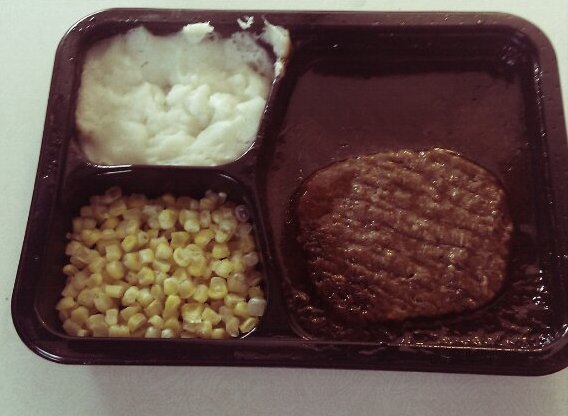
The Case For Microwave Dinners

by Dish Staff

5889496675_de6b26e719_o

Amanda Marcotte makes it:

While home-cooked meals are typically healthier than restaurant food, sociologists Sarah Bowen, Sinikka Elliott, and Joslyn Brenton from North Carolina State University argue that the stress that cooking puts on people, particularly women, may not be worth the trade-off. The researchers interviewed 150 mothers from all walks of life and spent 250 hours observing 12 families in-depth, and they found “that time pressures, trade-offs to save money, and the burden of pleasing others make it difficult for mothers to enact the idealized vision of home-cooked meals advocated by foodies and public health officials.” … The researchers quote food writer Mark Bittman, who says that the goal should be “to get people to see cooking as a joy rather than a burden.” But while cooking “is at times joyful,” they argue, the main reason that people see cooking mostly as a burden is because it is a burden. It’s expensive and time-consuming and often done for a bunch of ingrates who would rather just be eating fast food anyway.

Megan McArdle offers an assent from the frozen foods aisle:

Don’t cook from scratch if you hate to cook. Cooking is a joy. So is rock climbing, or ice skating, or reading science fiction novels. That doesn’t mean it’s a joy everyone shares. There’s no reason that you should cook from scratch if you don’t like doing it. America’s supermarkets offer an ever-more-stunning variety of quick, tasty, relatively healthy frozen entrees. Virtually every grocery store has a giant freezer case devoted to making dinner time a snap, another big refrigerator case filled with things that take barely more time, and a huge prepared-foods section that is still cheaper than takeout. So is a box of pasta and a bottle of decent sauce like Rao’s. For that matter, I still remember very fondly my grandmother’s signature kid dish: hamburger meat, pasta shells and Ragu.

On a related note, Jeffrey Kluger advocates for staggered mealtimes:

It’s not that my wife and I don’t eat with our daughters sometimes. We do. It’s just that it often goes less well than one might like. For one thing, there’s the no-fly zone surrounding my younger daughter’s spot at the table, an invisible boundary my older daughter dare not cross with touch, gesture or even suspicious glance, lest a round of hostile shelling ensue.

There is too the deep world-weariness my older daughter has begun bringing with her to meals, one that, if she’s feeling especially 13-ish, squashes even the most benign conversational gambit with silence, an eye roll, or a look of disdain so piteous it could be sold as a bioterror weapon. Finally, there is the coolness they both show to the artfully prepared meal of, say, lemon sole and capers – an entrée that is really just doing its best and, at $18.99 per lb., is accustomed to better treatment.

All of this and oh so much more has always made me greatly prefer feeding the girls first, sitting with them while they eat and, with my own dinner not on the line, enjoying the time we spend together. Later, my wife and I can eat and actually take pleasure in the experience of our food.

(Photo by Michael Beck)