Michael Sam Joins America’s Team

by Dish Staff

He snagged a spot on the Cowboys’ practice squad. Sam Laird approves:

Why the Cowboys are an ideal fit for Sam’s quest to build an NFL career is simple: They suck, especially on defense. If Sam is going to work his way from a practice squad to a regular 53-man roster, Dallas is as good a place as any to do so. Their defensive line is full of holes, and the loss of highly touted rookie DeMarcus Lawrence for at least six weeks creates another. Lawrence’s replacement, Jack Crawford, is no great shakes either, having been cut by the lowly Oakland Raiders just last week.

Other reasons to cheer the news:

You don’t get much more #America than Dallas, a red state where the steak is rare, the whiskey’s strong and the dudes sure as hell don’t kiss other dudes. The Cowboys are even nicknamed “America’s Team,” for crying out loud. … [H]aving America’s first gay NFL player in the middle of conservative Texas, on America’s Team, amid the league’s brightest media spotlight is pretty amazing.

Jay Caspian Kang also sees the logic of the move:

In many ways, Dallas is a perfect fit—the team has enough problems to be too worried about a practice-squad player. Aside from the on-field problems—and there are many—owner Jerry Jones has become a big-tent circus unto himself, with an alleged tampering scandal involving Adrian Peterson, of the Vikings, and a set of leaked photos—which are, frankly, bizarre—that showed Jones cavorting with two younger women. The Cowboys are a big-tent show, and if Sam indeed has a circus around him, it shouldn’t be more than a sideshow.

But Scott Shackford points out that Sam could get cut again:

Whether he eventually gets elevated to the roster and actually take to the field of a game, or even lasts on the practice squad, is a whole other question. For those who want to read the technical analysis of how Sam does and doesn’t fit in NFL play with only minor emphasis on Sam’s pioneering identity, ESPN’s Kevin Seifert has some explanations here.

Recent Dish on Sam losing his spot on the Rams here. Update from a reader:

While the Dallas Cowboys marketing team has done a great job of trying to brand them as “America’s Team,” the rest of the country hasn’t seen fit to go along with it. The most recent polling data seems to indicate they are the most hated team in the league.

Another:

In your post, Sam Laird writes, “You don’t get much more #America than Dallas, a red state where the steak is rare, the whiskey’s strong and the dudes sure as hell don’t kiss other dudes.” Gracefully, I would like to protest. As a resident of Dallas I like rare steaks and strong whiskey. But, I sure as hell like to kiss other dudes. There’s a saying of what Texas is really like: “Nothing but steers and queers.”
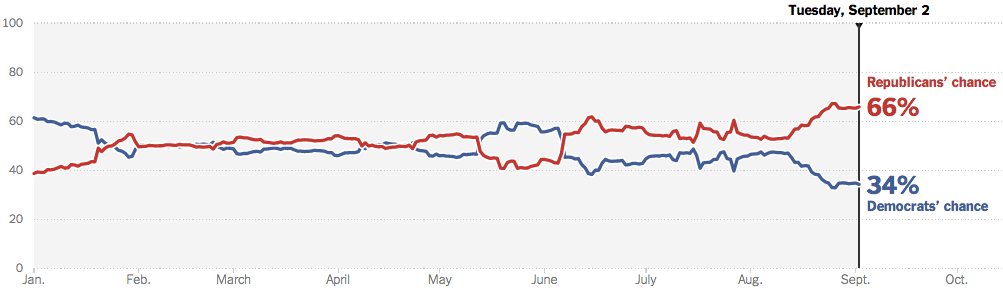
Gridlock Deflated The Democrats

by Dish Staff

Senate Chances

Steinglass assesses the damage:

In the face of the far rights effective veto over the congressional GOP, Democrats have given up on passing any significant legislation either until they regain control of the House, an impossibly remote prospect, or until the Tea Party somehow withers away, which shows no signs of happening. The Democrats acceptance of their inability to accomplish anything significant has left them unable to campaign on big themes. The party feels exhausted, still convinced of the need for immigration reform, climate change legislation and expanded benefits for the middle class, but unable to imagine a political pathway to get there. If the Democrats lose the Senate this fall, it may be technically due to an unlucky roster of elections and the traditional midterm setback for the party in power. But it will also be a verdict on the partys inability to conjure a sense of élan or vision in the face of the political paralysis tea-party Republicans have induced.

Tomasky agrees that, thus far, DC’s dysfunction has harmed Democrats more than Republicans:

Too much of Obama’s America is just too worn down. In that sense, the scorched-earth campaign has won. But Republicans should remember that in 2016, that America will be back, and bigger by a few percentage points than before, and still hungry to win the fights the obstructionists have blocked.

In other midterm analysis, Bernstein recommends taking Senate forecasts with a big pinch of salt:

I’ll continue to emphasize that the headline numbers suggest unearned precision. Most of these modelers, most of the time, don’t really make unsupported claims – but the numbers often suggest more certainty than the prose claims, and both the headline writers and the chart designers rarely include important caveats.

So we shouldn’t trust any single model, or even a single average of the various models. Instead, the best way to read all of this is to focus on the range, both in individual models when supplied by the authors, and across models. That’s going to give smart readers uncertainty, and that’s exactly what we all should be experiencing right now. If you want certainty, try the U.S. House: It’s going to stay Republican. But we don’t know who is going to win the Senate, and there’s a very good chance we won’t on Election Day morning, or on Election Day night – until Alaska comes in, and even then we may have to wait for Louisiana to hold a runoff to really know.

(Image: the latest Senate forecast from The Upshot.)

Celebrities: They Sext Like Us, Ctd

by Dish Staff

The photo leak scandal wages on. Alyssa Rosenberg raises an eyebrow at some of the advice these celebrities have received:

The theft and release of the photos are callous enough. These periodic violations suggest a sense of extreme entitlement to famous people’s bodies, a contempt for the idea that people in public life have the right to define any zone of privacy and a sense of glee about the possibility of exposing famous individuals as human and vulnerable.

But the response to these sorts of leaks comes with its own sort of cruelty. Rather than casting a jaundiced eye at large corporations that fail to keep their clients’ data safe or railing against the impulse to pry into other people’s intimate lives, we see sentiments such as the one expressed by New York Times technology columnist Nick Bilton. “Put together a list of tips for celebs after latest leaks: 1. Don’t take nude selfies 2. Don’t take nude selfies 3. Don’t take nude selfies,” Bilton tweeted on Monday.

As tech reporter Kashmir Hill pointed out in Forbes, this kind of response is the digital equivalent of abstinence-only sex education, which is divorced from the realities and expectations of contemporary relationships. And it shares a smug moralism with that sort of thinking: Anyone who experiences a bad outcome from bowing to a partner’s request (much less acting for his or her own pleasure) deserves it and ought to be held up as a cautionary lesson for everyone else.

Amanda Hess compares the controversy to one of an earlier era:

…BuzzFeed‘s Anne Helen Petersen has proposed that Lawrence should counter the incident by laughing off the violation and acting as if she’s so devoid of hangups that it’s impossible for anyone to truly embarrass her. Petersen—author of the forthcoming Hollywood history Scandals of Classic Hollywood—advises Lawrence to hew to the example of Marilyn Monroe, who was affronted with a similar “scandal” when topless photographs she had posed for pre-stardom in exchange for a flat $50 fee were later republished without her consent in a 1952 pinup calendar.

Petersen notes that, in the face of the puritanical Hollywood climate of the early 1950s, Monroe was able to overcome the potential stigma of the photos by not “denouncing the images” but instead taking “control” of the narrative by facing them with her trademark sexy giggle and wink. Monroe told the press that she was “not ashamed” of the photos and had “done nothing wrong.” Then, she flipped the incident into a self-deprecating joke: “I’ve only autographed a few copies of it, mostly for sick people,” she told the the Saturday Evening Post. “On one I wrote, ‘This might not be my best angle.’ ” By laughing it off, Monroe contributed to “what came to be known as thePlayboy philosophy,’ that sex is only dirty when suppressed,” Petersen writes. …

What Petersen doesn’t mention is that Monroe never agreed to be the face of Playboy’s ostensible revolution—in 1953, Hugh Hefner bought photos of Monroe from that same old nude shoot and published them in his magazine’s first issue without her consent, and without paying her a dime. (With his Playboy fortune, Hefner later bought the funeral plot next to Monroe’s crypt, ensuring that they’d be laid side by side forever—again, not her call.) Similarly, Lawrence never agreed to share these images of her “beautiful body” with the world. Why would anyone want her to shrug that off?

Update from a dissenting reader:

Alyssa Rosenberg calling the advice to “just say no” to sexting the same as abstinence-only education is laughable. A better example is unsafe sex, which (at least in my book) is poor judgement and not the result of some act of shaming by society. Really, nobody is telling these narcissists celebrities to not Instagram, Tweet, etc. Just use some reasonable judgment. Be aware that you’re going to be a target for this kind of thing. I mean, is your life really going to start to suck if you can’t take nude pics on your telephone?  ’80s me is puzzled.

The Short Shrift, Ctd

by Dish Staff

Screen Shot 2014-09-01 at 8.02.25 PM

A reader writes:

I enjoyed Phoebe’s commentary regarding Jezebel’s Disney character nude-rendering piece. However, I don’t agree with the generalized notion that women are purported, or at least depicted, to not care about men’s looks. I think Phoebe slightly underplays the spectatorial role of women that women have obtained in hetero-normative dating. The height thing is a real thing; in my experience, it’s the most likely deal breaker to be found on most online dating websites (it’s certainly the most verbalized one). Perhaps online dating contains a different dynamic than dating in general, but the general gawking, ogling and just plain fantasizing about ideal men and their bodies types seems rather abundant at this point.

Another:

Your post interrupted my work and dragged me out of my “Andrew’s on vacation” lethargy and back into Post Mode. Women and men’s height: really? You’re shocked that women are interested, concerned – no – even fixated on height?

I’m a whopping 5′ 6″ (plus a 1/2″ on a good day).

It’s never bothered me, and I’ve been extremely happily married for 22 years to an incredible, beautiful, powerful, successful woman, but … I oh so remember my high school-college-pre-marriage days of dating. Do you know how many times I was told to my face that I wasn’t tall enough? How many times I was set up on dates only to see the woman’s face fall when she met me saw and I wasn’t (much) taller than her? How many female friends said they would never date men their height or shorter, that is was “weird,” and lived by the mantra of “TALL, dark, and handsome?” (BTW: I’m considered good looking, smart, and have a terrific sense of humor, so it’s not that I’m a hideous looking asocial troll. Just for the record!)

There are SO many women who worry about a man’s height, who want someone to be taller than they are even when wearing heels, who worry what their friends will think. Ah! There it is. If it’s true that only a minority of women really insist on taller men, then I’m sure there is a larger, sizable group that is concerned about what other women would think of them dating someone who was “short.” (I’m not going to address the “Daddy” thing, as I have no idea if needing a “Big, strong man” is related to daddy-fixation or not.)

And, I have to ask you: how many times do you see women walking hand-in-hand with men on the street and yet towering over them? Like the idea that no one complains about Harrison Ford’s love interest being in her 30s while he is in his 70s – it may be  wrong, but no one complains about the “law” that men must be taller than their women. Sorry, but it’s way too common to be a “fetish.” It’s more the rule I believe.

And another:

As a 5’10” straight guy who is single and looking, I think the issue isn’t that women prefer tall men to short men. The issue is what women consider “short.” I saw a recent study that found that 80% of women prefer a man who is 6 feet tall or taller. Well, only 15% of men in the US are that height. Do the math.

Let’s look at male sex symbols who aren’t tall enough for most girls by that standard: George Clooney, Johnny Depp, Brad Pitt, Matt Damon, Daniel Craig, Sam Worthington, James Franco, Colin Farrell, Jeremy Renner, Zac Efron, Joseph Gordon-Levitt, Tom Hardy, Taylor Lautner, Joaquin Phoenix, Orlando Bloom, and Mark Wahlberg – just to name a handful of sub-6 foot “shorties.” And throw in the actor whom many consider the most beautiful man who ever lived: Paul Newman, a sad 5’10”. And that little wimp, Steve McQueen, also 5’10”. And that midget, James Dean, at 5’8″. And all of The Beatles.

I blame the Internet. 6 feet is a nice round number for your online search preferences. At 5’10” (average male height in the US), it never occurred to me that my height could be an obstacle for me – after all, I look down at as many guys as I look up at – until I started online dating. Suddenly a number was put on my height for all to see, and that little 2-inch gap between me and 6 feet apparently makes me far less of a man to the female height-shamers, many of whom probably wouldn’t consider my height an issue if we met in person rather than online.

For a lot more reader input on the subject, check out the long Dish thread, “The Bias Against Short Men“.

(Screenshot from an OKCupid profile)

Modernism’s Not Dead

by Dish Staff

1024px-Catedral_metropol (1)

Sarah Williams Goldhagen lauds this year’s Venice Biennale for its nuanced take on the architectural movement:

In architecture, [Modernism] is commonly understood to have produced a more or less deplorable “international style” that made every office building, elementary school, town hall, and housing 
project into something resembling a taller or shorter flat-roofed factory. Modernism’s trajectory from the 1920s to the 1980s is held to be one in which 
misguided architects cluelessly ambled down this technology-smitten path to its inevitable dead end, when architecture, reinvigorated in part by the Historic Preservation movement, remade itself in an efflorescence of eclectic post-modernism. …

The Biennale’s national pavilions offer a completely different and far more accurate account of recent architectural history. Whether we look at Italy, Finland, or Brazil, we find that modernism was never – 
not in its earliest days in Europe, not in the many countries around the globe to which it eventually spread – an arid, landless, technology-smitten movement that privileged steel frames and concrete connections over the particularities of local 
geographies, cultural traditions, and human needs. Instead, modernism in architecture was akin to classicism: a highly malleable practice that over time produced a wide range of family-resemblance-type styles.

(Photo: Brasília’s Catedral Metropolitana Nossa Senhora Aparecida (1970) via Wikimedia Commons)

Coming Out Is (Still) Hard To Do

by Dish Staff

Vanessa Vitiello Urquhart, who “started coming out” in high school, has trouble telling people about her wife:

“So, what are you doing here in Knoxville?” asks every single person in Tennessee immediately after meeting me. (Apparently my presence here is in need of some sort of explanation.) And, since it’s the truth, there’s really nothing for it but for me to tell them, honestly, that my w-w-w-wife is here for grad school. My, uh, uh, my w-w-wife. My—ulp—w-wife, Cassie. Because, try as I might, I can’t quite say it without stuttering. … Since I believe that my marriage ought not to be more controversial or upsetting than these other topics, I’ve attempted to rid myself of these telltale signs of nervousness. I’ve tried giving myself little pep talks about how no one cares these days, and I’ve even tried practicing the line in front of a mirror. But when those moments come, I just can’t seem to lose the stutter.

A Generational Split Personality

by Dish Staff

Jesse Walker pans Millennials Rising by Neil Howe and William Strauss:

A generation, Strauss and Howe wrote, is “a society-wide peer group, born over a period roughly the same length as the passage from youth to adulthood (in today’s America, around twenty or twenty-one years), who collectively possess a common persona.” They accepted the existence of exceptions and edge cases, but they insisted a core persona is there.

Contrast that with Karl Mannheim’s “The Problem of Generations,” a 1923 essay that has become a touchstone for sociologists studying generational change. Like Strauss and Howe, Mannheim defined a generation not just by when its members were born but by the events that shaped their worldviews in their youth. Unlike Strauss and Howe, Mannheim did not write as though those events shape an entire generation the same way. Instead he wrote of different “generation units” with different reactions to their formative experiences. The Napoleonic wars, he elaborated, produced “two contrasting groups” in Germany, “one that became more and more conservative as time went on, as against a youth group tending to become rationalistic and liberal.” (For a more recent example, consider the ways different American boomers reacted to the upheavals of the 1960s.)

For Mannheim, those opposing units still belong to the same social cohort: “they are oriented toward each other, even though only in the sense of fighting one another.” But they did not have the “common persona” that Strauss and Howe imagined.

Old School

by Dish Staff

Teacher_and_children_in_front_of_sod_schoolhouse._Woods_Co.,_Okla._Terr.,_ca._1895_-_NARA_-_516448

Elizabeth Green contends that the US lags behind educational powerhouses such as Finland and South Korea in part because “our school system is earlier”:

It dates back to the 19th century, and in many ways the one-room schoolhouse is the model of our system, where an adult is working alone. One adult. Japan, South Korea, Finland – these were systems that were completely reformed after World War II. There is a lot more modern or contemporary thinking that has gone into these systems. We are still living with the legacy of an early 19th century education system.

Decentralization is another factor:

Those countries also have very strong national governments, so they set standards for the schools and have a much greater power at the level of implementation. Our federal government only controls 13 percent of local school funding. Through incentive programs, the Obama administration has actually been very successful at getting local schools to do things because they want every last dollar they can get. And yet once they promise to do something like evaluate teachers in new ways, there’s actually nobody watching at the implementation level to make sure they do it in a smart, strategic way. We have these top-down reform priorities and the federal government is successful in getting schools to adopt them, but there’s no quality check on that process. That’s fundamentally different than other nations.

Another fundamental difference: the US population is 2.5 times larger than Japan’s, 6 times larger than South Korea’s and a whopping 58 times larger than Finland’s, with far more regional diversity than all three. That vastness certainly makes educational reform more difficult for the US than other national governments.

(Photo: Teacher and children in front of sod one-room schoolhouse in Woods County, Oklahoma Territories, ca. 1895 via National Archives and Records Administration and Wikimedia Commons)

Weed Growers Of The Corn

by Dish Staff

Several years ago, while inspecting a cornfield,  Kaitlin Stack Whitney discovered five marijuana plants “each standing about eight feet tall, in the middle of our survey plot and bursting with buds ready to harvest.” Apparently, this isn’t unusual:

Once a corn field is planted and herbicide applied, many farmers don’t return to a given field until harvest time. The biotechnological and labor-saving innovations that have reduced costs for corn farmers mean that literally no one walks into the average corn field during the growing season. Which presents a major opportunity for marijuana growers. Indeed, entire Internet forums devoted to sharing tips for growing marijuana in other people’s corn fields have sprouted. …

Growing marijuana in cornfields keeps it better hidden than growing in remote forests, albeit in plain sight. Helicopters and thermal imaging are only able to detect large patches of marijuana by color difference. So marijuana growers use GIS technology and handheld GPS devices to spread out their growing into distributed networks of small patches, like the one I stumbled across. This tactic also reduces the risk of losing one’s marijuana crop: If one patch is found and destroyed, the rest of the plants are in other locations, known only to the GPS and the marijuana grower. Man-made patterns in natural areas are a telltale sign of marijuana to enforcement agencies; growing it in corn renders that giveaway moot, as everything is in rows. The growing conditions for marijuana are also better in cornfields than remote forested land: Every input that corn farmers carefully measure and apply to maximize their crop growth—fertilizer, herbicide, irrigation—benefits the marijuana plants, too.