Why Intervene In Iraq And Not Syria? Ctd

by Dish Staff

Frederic Hof slams Obama for not arming the Syrian rebels back in 2012:

No doubt the president is sensitive to the charge that his rejection of the 2012 recommendation by his national security team to arm and equip nationalist Syrian rebels robustly has contributed significantly, if inadvertently, to ISIL’s growth in both Syria and Iraq. His comments to Friedman implicitly dismiss the 2012 recommendation itself as a fantasy, but as Secretary Clinton’s Syria adviser I was a member of the administration at that time. The recommendation, in one form or another, was offered not only by Clinton, but by Secretary of Defense Leon Panetta, CIA Director David Petraeus and Chairman of the Joint Chiefs Gen. Martin Dempsey. Yet the president, ignoring decades of universal conscription and mandatory military service in Syria, persists in characterizing the Assad regime’s armed opponents as a hopeless collection of former butchers, bakers and candlestick makers.

What is truly curious, however, is the request to Congress for $500 million to finance what the president deems a fantasy. Indeed, if press reports are true that the United States is already involved in some low-level arming, equipping and training of Syrian rebels, one wonders how many taxpayer dollars have already been spent on something the commander-in-chief deems illusory.

In a post we noted earlier, Marc Lynch explains why arming was a dodgy idea, and remains so today. Larison piles on, starting with a reminder that the exact same outcome that anti-interventionists feared in Syria (jihadists taking control of American weapons intended for “moderate” allies) has come to pass in Iraq. And another thing:

It should also be obvious that groups such as ISIS benefit from collapsing state authority, so it is not clear why an even more activist Syria policy aimed at collapsing the Syrian government would have been bad for that group or one like it.

The bigger problem with the hawkish revisionism on this question points to the inherent absurdity of what they were demanding from the U.S. (and what the administration has more recently agreed to do). Syria hawks wanted the U.S. to arm anti-regime forces for the purpose of overthrowing the government, but they emphasized their desire to arm only the “right” kind of insurgents to distract from the small problem that their overall goal of regime change would inevitably empower jihadist groups. Syria hawks wanted to arm the opposition in the hopes that it would start a process that would bring the Syrian government down, and if that had happened that would have created an even worse chaotic landscape in which jihadist groups would have thrived even more than they already do. Instead of jihadists controlling just part of Syria, it is entirely possible that even more of Syria would have ended up under their control had the administration done exactly what Syria hawks wanted and if things had worked according to plan.

Max Fisher and Amanda Taub list some other reasons why Obama’s choice not to intervene in Syria doesn’t contradict his choice to intervene (reluctantly) in Iraq. Among these reasons is that there’s a difference between intervening to preserve the status quo and intervening to change it:

Obama ordered air strikes against ISIS in Iraq focused on the narrow goal of defending Iraq’s semi-autonomous Kurdish region. Kurdistan had been mostly secure until ISIS began pushing into the territory about a week ago; it’s got a stable, pro-American, oil-producing government. Obama’s strikes are meant to help Kurdistan defend itself, and to preserve the status quo of a secure Kurdistan. The strikes are very clearly not about trying to change the larger ISIS war in Iraq, or to help Iraq retake the vast ISIS-held swathes of territory. In Syria, there is no “good” status quo to defend. Any strikes against ISIS there would be about pushing the group back from Syrian territory it already controls, so that more moderate Syrian rebels could seize it. In other words, the air strikes would be about changing the facts on the ground in Syria, rather than preserving them.

Obama seems willing to use force when he can protect something good — a stable, secure Iraqi Kurdistan — but not to try to fix something bad. He doesn’t want to “own” the outcome, get dragged into a potentially long engagement that could easily escalate, or risk sending the conflict spinning in an unpredictable new direction. So the US approach to Syria and Iraq is consistent in this respect.

Even Allahpundit sees how these criticisms of Obama’s reticence to intervene ignore reality:

It’s easy to say in hindsight “we should have hit ISIS harder before they had time to establish themselves”; in reality, had Obama made that case at the time, he would have been scoffed at by war-weary lefties and righties. And with good reason: There’s simply never been compelling evidence, the way there is with an America-friendly battle-tested force like the peshmerga in Kurdistan, that an FSA armed by Uncle Sam would have been equal to the task of stopping the jihadis, let alone Assad.

Previous Dish on intervention in Iraq vs. Syria here and here.

Face Of The Day

by Dish Staff

UKRAINE-RUSSIA-CRISIS-POLITICS

A woman reacts after shelling in the town of Yasynuvata near the rebel stronghold of Donetsk on August 12, 2014. Shelling on a town just north of Donetsk in eastern Ukraine on Tuesday ripped through blocks of flats and set its central market on fire, killing several in an attack that local residents blamed on Ukrainian forces. By Dimitar Dilkoff/AFP/Getty Images.

Was Dietrich Bonhoeffer Gay? Ctd

by Dish Staff

In a lengthy and absorbing interview, Charles Marsh, whose new biography of Dietrich Bonhoeffer has raised questions about Bonhoeffer’s sexuality, opens up about what he found when researching the German theologian’s life:

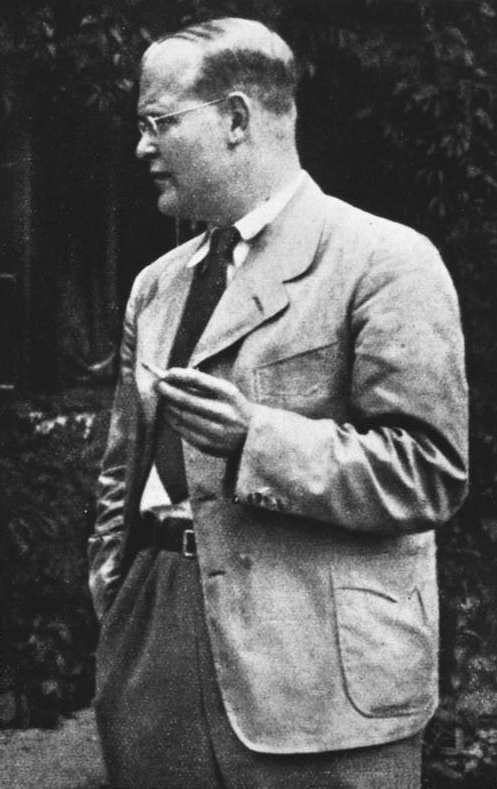
Over the years, I’ve gone to many Bonhoeffer conferences. This subject has been discussed Bundesarchiv_Bild_146-1987-074-16,_Dietrich_Bonhoefferoften over meals and drinks and beers, but it’s never been discussed in an academic session or a lecture. But there’s been conversation among scholars for as long as I can remember. What I had that scholars didn’t have, and do now, is the body of letters that Bonhoeffer and Eberhard [Bethge] exchanged. They wrote when they were apart during those seven years of their partnership. To be sure, I was intrigued when I found in those archives in Berlin a statement from a joint bank account. I did not realize that their partnership had that kind of formality about it as well. So Bonhoeffer and Eberhard began giving gifts together as a pair, Christmas presents and the like. They traveled and shared a room. They were soul mates of a sort. Bethge never reciprocated the intensity of Bonhoeffer’s affections. I don’t think Eberhard was gay; I simply don’t have any reason at all to think that. I think that Bonhoeffer’s love of Eberhard was one that he, Bonhoeffer, wanted to define as a kind of spiritual marriage, but Bonhoeffer’s love of Eberhard was also deeply romantic.

The challenge for trying to narrate this complicated relationship is, on the one hand, it was a chaste relationship. It was a relationship that was centered on their shared love of Jesus and shared devotional practices and it had a kind of liturgical shape to it. And yes, Bonhoeffer also was in love with Eberhard, and wanted in some fashion to secure a spiritual marriage of sorts, and Eberhard could not and did not want to finally accept that.

How Marsh responds to critics who question his portrayal of the Bonhoeffer-Bethge relationship:

[T]his is not my own attempt to sensationalize a relationship. If anything, I tried to capture it and respect it in its uniqueness, and not politicize it or insinuate. It was understood as a unique relationship, a different kind of relationship, in 1935 and 1936. The letters that we have now between Bonhoeffer and Eberhard are love letters, at least Bonhoeffer’s letters to Eberhard. Bethge’s letters back, I should make clear, were always more perfunctory, and the romantic quality, the quality of enthrallment and enchantment, this sort of romantic love, were not part of Bethge’s responses to Bonhoeffer. But for Bonhoeffer, they weren’t just letters, but beautiful love letters.

(Image of Bonhoeffer in 1939 via Wikimedia Commons)

A Slew Of Sketchy Polls

by Dish Staff

Polling Problems

Harry Enten is alarmed by bad pollsters copying good ones:

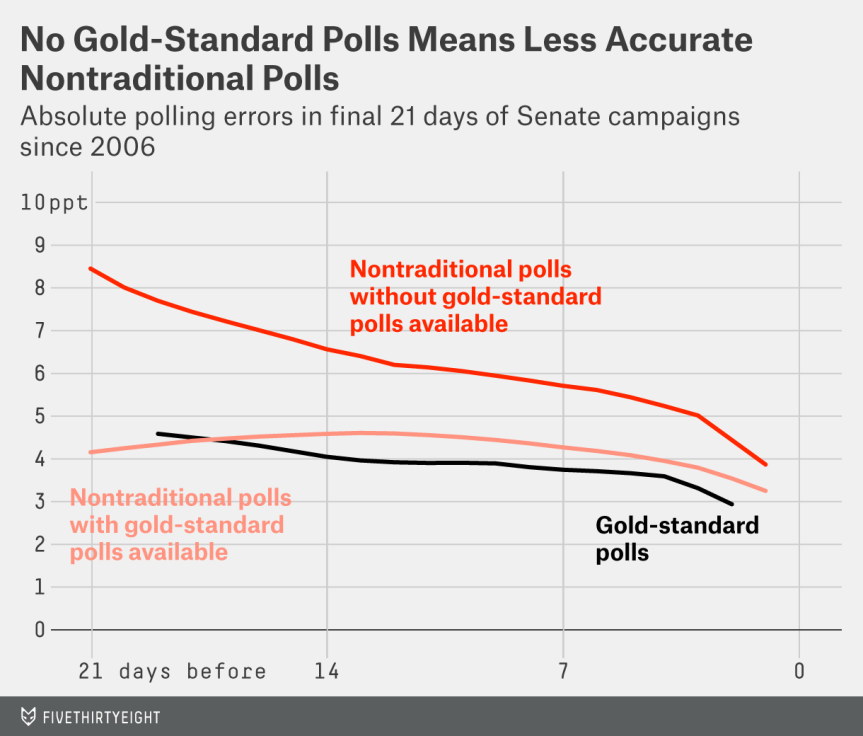
The problem is that many of these nontraditional polls may be cheating, adjusting their results to resemble higher-quality polls. We can see this by looking at polling from the final three weeks of Senate campaigns since 2006: in races without traditional, live-interview surveys (what we’ll call gold-standard polling), nontraditional polls have had significantly higher errors than they’ve had in races with at least one gold-standard poll. Gold-standard surveys appear to be the LeBron Jameses of the polling world: They make everyone around them better.

That’s how it’s supposed to work in basketball but not in polling, and this is a major problem for anyone watching 2014’s races. There hasn’t been a gold-standard poll released to the public at all for Alaska’s Senate race, in three months for Arkansas’s Senate race, in three months for Kentucky’s Senate race, ever in Louisiana’s likely Senate runoff, and in nearly four months for North Carolina’s Senate race. The only polls we can consider in these races were conducted by pollsters who have historically fared considerably worse as a group when the gold-standard pollsters weren’t around.

Is Russia About To Invade Ukraine? Ctd

by Dish Staff

As Ukrainian forces surround Donetsk and prepare for what they say is a final advance on the separatist stronghold, NATO has reiterated its warning that a Russian invasion is likely:

NATO Secretary-General Anders Fogh Rasmussen said there was no sign Russia had withdrawn the troops it had massed at the Ukrainian frontier. Asked in a Reuters interview how he rated the chances of Russian military intervention, Rasmussen said: “There is a high probability.”

“We see the Russians developing the narrative and the pretext for such an operation under the guise of a humanitarian operation, and we see a military build-up that could be used to conduct such illegal military operations in Ukraine,” he said.

Jeremy Bender observes that if Russia decides to invade, it is prepared to do so on multiple fronts:

According to The Interpreter, there has been a sharp increase in Russian troop movements in Belarus. Belarus borders Ukraine to the north, and the border crossing between the two countries is located less than 150 miles from Kiev. Belarus and Russia share close relations. Russia maintains military bases in the country, and Russia recently announced plans to build an airbase in the west of Belarus.  A YouTube video, thought to have been taken today in the Belarusian city of Vitebsky, shows a large number of Russian troops and equipment. The city is located approximately eight hours due north of Ukraine.

A second YouTube video, shot on August 10, depicts another large armored convoy in Novoshakhtinsk, by the Rostov region of Russia. This convoy is less than 20 miles from the Ukrainian border, and it is less than 150 miles to either of the separatist-held cities of Luhansk or Donetsk. Simultaneously, a Russian aid convoy is set to enter Ukraine in the north east through the city of Kharkhiv, according to a document translated by The Interpreter. The convoy is said to contain humanitarian cargo for the east of Ukraine and it will fly under the signal of the International Committee of the Red Cross (ICRC) once it passes into Ukrainian territory.

But Ukrainian authorities now say they won’t let the aid convoy cross the border:

Russian news agencies reported that hundreds of white trucks were being packed with supplies and sent to the eastern Ukraine border, but a spokesman for Ukraine’s National Security and Defense Council, Andriy Lysenko, said Ukraine would not allow the trucks to cross into the country because the aid was not certified by the Red Cross. “This convoy is not a certified convoy. It is not certified by the International Committee of the Red Cross,” Lysenko said, according to the Associated Press. Another Ukraine presidential aide, Valery Chaly, told reporters that the supplies would be loaded onto other transport vehicles before they crossed into Ukraine territory held by separatists, Reuters reported.

Ed Morrissey worries that things are on the verge of getting out of control:

The convoy doesn’t even have to include military supplies to produce the kind of provocation Putin has clearly desired for months. They can set themselves up as “observers” once inside Ukraine and block Kyiv from further military action against the rebels. If the Ukrainian military does proceed, then Putin can send in his troops in order to protect his “humanitarian” mission. Whatever happens, it’s going to happen quickly. The West had better be prepared to shut Russia down economically when it does — and it would be best to “telegraph” that intention to Putin now, as the WaPo’s editors advise, in order to avoid the situation altogether. If Putin wants to donate aid, let him work through the Red Cross. Anything else is a thinly-veiled provocation for a European war that only the Russian media would miss.

Paul Huard flagged another troubling sign late last week:

“The probability of invasion is much, much higher than it has ever been,” James Miller, managing editor of The Interpreter, told War is Boring in an e-mail. The Interpreter translates media from the Russian press and blogosphere into English for use by analysts and policymakers. The Russians reportedly have moved military vehicles with “peacekeeping” insignia to the border—a first since the crisis in the Ukraine began. Earlier this month, NATO warned that the Russians could mount an incursion into Ukrainian territory under the guise of a peacekeeping mission. The Interpreter reports that it has found several pictures and a video showing Russian armored vehicles bearing the insignia “MC,” an abbreviation of the Russian words mirotvorcheskiye sily or “peacekeeping force.”

Meanwhile, Josh Kovensky highlights Putin’s ever loopier propaganda, featuring Mickey Rourke and Steven Seagal:

Russians saw a familiar face on television last night, when Seagal appeared at a show in honor of the “reunification of Crimea with Russia.” Seagal did not appear alone; a Russian-nationalist motorcycle gang called the Night Wolves accompanied him. At the show, the bikers reenacted Russia’s version of the past eight months of Ukrainian history. An idyllic Slavic scene is interrupted by marching Ukrainian Nazis, whose swastika formation bizarrely matches that of “Springtime for Hitler.” The swastika-shaped Ukrainian Nazi junta is controlled by a pair of massive hands emblazoned with symbols of the U.S., holding huge cigars.

The Nazi-Ukrainians go on a reign of terror until a bunch of Russians with AK-47s show up, duking it out with the Kievan Fourth Reich until the Donetsk and Luhansk People’s Republics solidify, with many evil Ukrainian-Nazi-Fascist-Junta members set on fire in the process. At the end of the show, a massive Mother Russia statue appears along with the Soviet national anthem, heralding the reunification of Crimea with Russia.

Obama’s Imperial Presidency? Ctd

by Dish Staff

Last week, Douthat provoked a conversation about Obama potentially legalizing millions of undocumented immigrants with an executive order. Chait is uncomfortable with Obama’s plan:

I fully support Obama’s immigration policy goals. But the defenses of Obama’s methods seem weak and short-sighted. To imagine how this method might be dangerous, you have to abstract it away from the specific end it advances and consider another administration using similar methods for policies liberals might not like. What if a Republican president announced that he would stop enforcing the payment of estate taxes? Or suspend enforcement of regulations on industrial pollution? Or laws on workplace discrimination against gays and lesbians? …

The Linzian nightmare that seized many liberals last year is a vision of a political system in which neither the president nor the Congress can share power, and neither recognizes the other’s legitimacy. The extremism of the Republican Party may have precipitated Obama’s confidence in unilateralism. To think that the cycle will end here, and that a future president won’t claim more expansive and disturbing powers to selectively enforce the law, requires an optimism not borne out by history. In the short run, we will rejoice in the sudden deliverance of massive humanitarian relief to people who have done nothing more than try to create a better life for their families. In the long run, we may look back on it with regret.

But Jonathan Cohn doesn’t worry much about Obama’s potential executive actions because a Republican president could reverse them:

I totally get the underlying concern here. The limits of presidential power matter and smart, reasonable people can disagree about what they should be. But here’s one fact to remember: Any action Obama takes will, by definition, lack the permanence of legislation. President Ted Cruz could undo it on January 20, 2017. He might not want to do that, for all sorts of political and practical reasons. But he or any other Obama successor would have the same kind of unilateral authority to act that Obama does. And reversing an executive order is a heck of a lot easier than trying to undo legislationwhich, after all, requires new legislation, which in turn means pushing a new bill through both houses of Congress and getting a presidential signature.

On the legal merits, Eric Posner continues to insist that Obama can act to halt deportations:

When government agencies decide which types of corporate or tax fraud to investigate, and which types to ignore, they exercise executive discretion, as they do when they decide whether to shut down an undercapitalized bank or a restaurant that has served food that gives someone a stomachache. This is why a crusading prosecutor, like New York’s Eliot Spitzer in his time, can decide to crack down on a type of conduct—insider trading, accounting fraud, whatever—that had previously been winked at. We live surrounded by “domestic Caesars.”

All of this goes double for immigration law. The president’s authority over this arena is even greater than his authority over other areas of the law. For decades, presidents of both parties have deferred legal action against millions of people who entered the country unlawfully. As the immigration law experts Adam Cox of New York University School of Law and Cristina Rodriguez of Yale Law School have described in a paper, this has been going on at least since the 1940s.

Steinglass sees the “threat to the rule of law here comes mainly from America’s unrealistic immigration policies”:

The country is a very rich, well-governed country that shares a 3,000-kilometre-long border with a much poorer, badly governed one, which in turn borders countries that are poorer still. Until Central America becomes stable and prosperous, it will continue to send millions of emigrants to the US. Current immigration quotas, which date from 1990, limit each country to no more than 7% of the total of 700,000 legal immigrant visas each year; in principle, Mexico is treated the same as Switzerland. Enforcing this skewed system requires America to constantly raise the already large sums it spends on patrolling the Mexican border; in 2012 America spent $11.7 billion on border security. Fully sealing the border could cost $28 billion per year. The American public (let alone the Republican party) has shown no willingness to appropriate that much money. Deportations rose from 70,000 in 1996 to 419,000 in 2012, with the Obama administration deporting as many people in its first five years as the Bush administration did in eight. Yet this has made no dent in the total population of undocumented immigrants. And the current level of deportation seems to be politically unsustainable. Latino constituents are increasingly fed up.

He goes on to argue that “Republican inability to articulate any coherent immigration policy other than “deport them all” amounts to a preference for fantasy over reality, rather than engaging in the messy job of making policy for the real world.” But Reihan thinks Congressional gridlock is good, in that it serves as a check on government actions that lack public support:

The House of Representatives was designed to be the part of Congress that is most responsive to popular opinion. It’s not at all obvious that members of the House are failing in their constitutional obligations when they are resisting a legislative proposal—even one backed by every significant business lobby under the sun, Michael Bloomberg, Mark Zuckerberg, and other enlightened billionaires—that increases immigration levels when doing so is extremely unpopular.

However, Yglesias points out that by obstructing action on this and other issues, the House GOP ends up with less favorable outcomes:

Regardless of your views on what should happen with the unauthorized population, a compromise is strictly preferable to letting immigration authorities flail away at the situation just as a compromise was strictly preferable to letting the EPA handle climate change without congressional input.

Yet at this point, blindly choosing the worse outcome over the better one has become such an ingrained habit for the ideological right that it barely seems to have been considered. Instead, immigration restrictionists waged a vigorous intra-party war against the supporters of comprehensive immigration reform. They sought to prevent a sell-out, and did so utterly without regard to whether blocking comprehensive reform would actually lead to an outcome they prefer.

Robin Williams, RIP, Ctd

by Dish Staff

People Leave Tributes To Robin Williams Outside Mork & Mindy House

Megan Garber honors the comedy legend:

[Robin Williams] has been with us—and next to us, and above us—for more than 40 years, not just on the screens of multiplexes, but in our living rooms and in our lives. There’s Good Morning, Vietnam, on Netflix. There’s Mrs. Doubtfire, on TBS. There are those reruns of his stand-up on Comedy Central. There are all those clips on YouTube. …

We refer to our actors—the big ones, at least—as “stars.” We do that mostly because it’s a convenient cliche. But we do it as well because celebrities have a kind of cosmic constancy in our lives. The people we put on our screens—the people we elevate and exaggerate, the people whose likenesses we watch, huddled together in darkened rooms—form their own kind of firmament. Ancient humans used the stars to navigate the world; we ask our own stars to do similar work. We look to them not necessarily to guide us, but to orient us.

What are your thoughts about Mrs. Doubtfire? How funny is the Genie? Do you think that “words and ideas can change the world“? However you answer those questions, they will reveal something about you and your place in the universe.

A bit more down to Earth, Alyssa reflects on Williams’ remarkable range, which “resonated in radically different ways”:

Williams excelled in bring out the strength in characters who initially appeared weak, and in bringing dignity to people mired in hopelessly undignified situations. He also slyly exposed the weakness and selfishness in people who seemed to be strong, even when he was only acting with his voice. As the Genie in Disney’s gorgeous animated movie “Aladdin,” Williams beautifully captured the dilemmas of a being who had access to tremendous power, but had to manipulate other people to get closer to his own heart’s desire. He was critical to making the movie more than kids’ stuff.

Marlow Stern adds:

[Williams] didn’t just play a huge role in the lives of children; he was a malleable, adaptable comedian who could cater to audiences young and old, gay and straight. Take his outré turn as gay Miami nightclub owner Armand Goldman in Mike Nichols’ The Birdcage (a personal favorite), which saw him shift from flamboyant scenery-chewer to composed pseudo-Republican parent at the drop of a hat. Or as Joey, the sleazy, besieged used car salesman in Cadillac Man.

A good glimpse at Robin’s range:

But Damon Linker sees the darker edge of that versatility:

In his manic and maniacal stand-up routines no less than in his greatest dramatic acting, Williams danced on a tightrope over the abyss.

He behaved like a man desperately trying to distract attention from an emptiness within himself. The possibility that he ended his own life leaves me feeling terribly sad. But it also feels somehow fitting, like the confirmation of a half-acknowledged hunch — or the fulfillment of an awful prophesy barely perceived or understood.

On stage Williams could be exhilarating, and exhausting, as he hurtled through a kaleidoscopic array of characters, some impressions of famous people, most of them conjured from the depths of his own slightly deranged and riotous imagination. In well over an hour of frenzied free-association, Williams would careen through the world, making bizarre connections, heaving forth fragments of ideas and clumps of observations from what must have been a tortuous unconscious.

When it was over, I was invariably worn out by laughter — but I also felt slightly unnerved, aware on some level that I’d just been entertained by one man’s utterly distinctive form of self-abuse. It was less a comedy routine than a comedic seizure.

That spectacular energy came from “not just natural genius,” Willa Paskin points out, “but also cocaine, drugs, emotional pain”:

At his best, and also at his worst, there was something uncontrollable about Williams. Even perfectly in control of his body, of his impersonations, of his timing, he seemed powerless—or scared—to stop being a fount of funny, to turn it off. His non-stop energy often had a childlike quality to it—Peter Pan in Hook; an overgrown boy in Jack; even Mork, who like all Orkans aged backwards—but also something more substantial, more dangerous, and more unhinged. … Performers’ deaths, especially the unnatural ones, often color, at least for a little while, their work. Amy Winehouse’s “Rehab” is not a song you could listen to the same way after she drank herself to death.

J. Cohn hopes that Williams’ death raises more awareness of depression and the risk of suicide:

Although we’re accustomed to hearing about artists and their hidden “demons,” Williams was such an effervescent, joyous presence that his struggles could put into sharper relief just how life-altering and devastating mental illness can be. If he couldn’t conquer it on his own, who could? The lesson would be one last, great contribution from an artist who made so many already. …

We’ve come a long way since the days when we treated the mentally ill as freaks—covering up and denying their problems, holding them singularly responsible for their conditions, or locking them up far away in institutions. We’ve also learned a great deal about the interaction with addiction—and the extent to which both afflictions can have deep genetic roots or be shaped by experience very early in infancy and childhood. But we still treat it as a second-class disease. It’s evident in the choices we make as a society and, too often, in our actions as individuals. The stigma, though far less potent, lingers.

Comedian Jim Norton can relate:

So many comics I know seem to struggle with the demons of self-hatred and self-destruction. While my physically self-destructive days ended when I got sober, the thought of suicide has always been there, as an option, behind a glass that I could someday break in case of an emergency. I glamorized the idea of constructing my own exit. …

The funniest people I know always seem to be the ones surrounded by darkness. And that’s probably why they’re the funniest. The deeper the pit, the more humor you need to dig yourself out of it.

Read all of our RIP coverage here.

(Photo: A makeshift memorial for Robin Williams is set up in front of a home in Boulder, Colorado on August 11, 2014. The exterior of the house was used in the opening credits for “Mork & Mindy,” the comedy based in Boulder that catapulted Williams’ career. By Marc Piscotty/Getty Images)

Medical Services On Aisle Five

by Dish Staff

McArdle sees the logic of Walmart getting into the healthcare business:

The company is piloting what it hopes will be a broad network of primary-care clinics. The company already has urgent-care clinics in about 100 stores, but the new facilities will provide much broader services such as chronic-disease management that are normally provided at a doctor’s office. And it is doing so at an admirably low cost: A doctor’s visit at one of its primary-care clinics costs just $40, in cash — the only insurance they take is their corporate health plan and Medicare.

This model makes a lot of sense to me.

Doctor’s offices are, as the Affordable Care Act’s designers frequently stressed, remarkably inefficient compared to most of the rest of the economy. There are a lot of efficiencies that can be brought to the market by a big company employing staff physicians and centrally coordinating things such as purchasing and information technology. And what is Wal-Mart very good at? Central coordination of purchasing and IT.

Jonathan Cohn tentatively supports Walmart’s efforts:

Walmart’s famously ruthless approach to cost-cutting has its downsides. It’s easy to imagine the company treating its medical employees badly or, maybe even worse, creating a system of medical care that isn’t very good for patients. But the company also has a chance to be innovative, in ways that could benefit the public. It can make medical care easier to get, simply by providing routine care at more convenient times (like a Sunday afternoon, when your doctor’s office probably isn’t open). Walmart can also use its buying power to bargain for better prices from drug makers and suppliers. As Dan Diamond of the Advisory Board notes, the two South Carolina clinics are in two of the poorest parts of the statewhere the need for cheap health care is greatest, particularly since South Carolina hasn’t expanded its Medicaid program.

Not Again, Ctd

by Dish Staff

Dara Lind brings us up to date on yesterday’s developments in the Michael Brown case:

After Sunday night’s unrest, a protest and rally scheduled for 10am Monday morning was canceled, and the mayor of Ferguson has said that anyone who attempted to show up to the rally would be arrested. Regardless, people still turned up at police headquarters to protest. Police officers were there with riot gear. After about two hours, the police succeeded in getting the crowd to disperse and started making arrests.

On Monday night, protests continued. Groups gathered in the street, raising their hands in surrender and chanting “Don’t shoot” – it’s become the unofficial motto of the Ferguson protests. Police also attempted to disperse these protests, moving down W. Florissant, the main street in the neighborhood. This time, they used tear gas and explosives to clear crowds, and fired rubber bullets. One report indicates that police cocked their rifles at protesters. Police told protesters to “go home,” but several residents protested that they were trapped in cul-de-sacs while the main road was closed off. Police also threatened press with arrest if they didn’t leave the scene.

Ed Morrissey is hung up on the weekend’s rioting:

So far, it appears that no one died or got seriously injured during the riot, although that hasn’t been entirely confirmed yet. If so, consider that luck. Riots get very ugly very quickly, and usually include vendettas from old conflicts and new. That was the case in the LA riots of 1992 after the Rodney King verdict, which resulted in 53 deaths, more than two thousand injuries, and 11,000 arrests.

In the end, though, the LA riots did what the Ferguson riot did last night — damage the community that had the grievance in the first place. Riots are about rage and insanity, not justice or accountability, and it drives people away rather than heal, regardless of whether the underlying cause is just or not. It destroys investment, usually in areas which already suffer from a lack of investment in the first place, and mires the area even deeper into poverty and dysfunction. It’s senseless and harms the people that were allegedly victimized in the first place.

But Jia Tolentino is more disturbed by the authorities’ response:

The chief of the St. Louis County Police Force “ask[s] the public to be reasonable” in this difficult time. The police, in the meantime, are dealing with looting and considerable unrest, but all accounts point to them not being reasonable.

Mychal Denzel Smith is frustrated:

Rioting/looting (what some would call rebellion) may not provide answers or justice. But what to do with the anger in the meantime? We are told to stay calm, but calm has not delivered justice either. Do we wait for the FBI to investigate? I guess, but what to do in the meantime, as the images coming from Ferguson echo Watts in 1965? We’re told not to tear up our own communities, when time and time again we’re reminded that they don’t belong to us. Deaths like Michael Brown’s tell us we don’t belong here. What, then?

Counting the bodies is draining. With every black life we lose, we end up saying the same things. We plead for our humanity to be recognized. We pray for the lives of our young people. We remind everyone of our history. And then another black person dies.

Amy Davidson weighs in on the whole sad affair:

Michael Brown was black and tall; was it his body that the police officer thought was dangerous enough? Perhaps it was enough for the officer that he lived on a certain block in a certain neighborhood; shooting down the street, after all, exhibits a certain lack of concern about anyone else who might be walking by. That sort of calculus raises questions about an entire community’s rights. One way or the other, this happens too often to young men who look like Brown, or like Trayvon Martin, or, as President Obama once put it, like a son he might have had.