Chart Of The Day

by Doug Allen

sequester

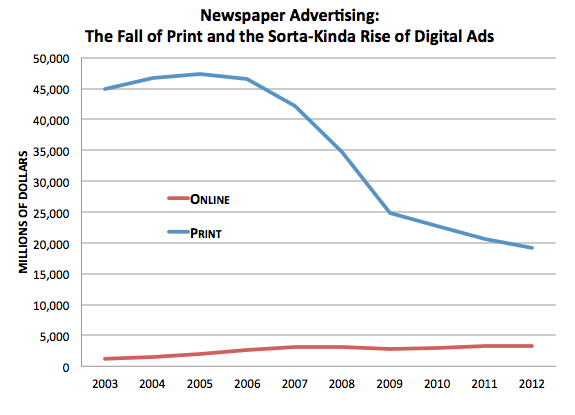
Dave Weigel traces the public’s interest in “sequestration” (in blue) and “the sequester” (in red):

[Y]ou’ll see that interest started to rise at the end of February, that the buzziest news stories were about congressional action, and that search volume exploded on March 1 — the Friday the cuts went into effect. By Monday, search volume had fallen by 63 percent. And it’s never recovered, even as the cuts get implemented and local news outlets diligently file stories on their impact.

Chart Of The Day

Popularity And SCOTUS

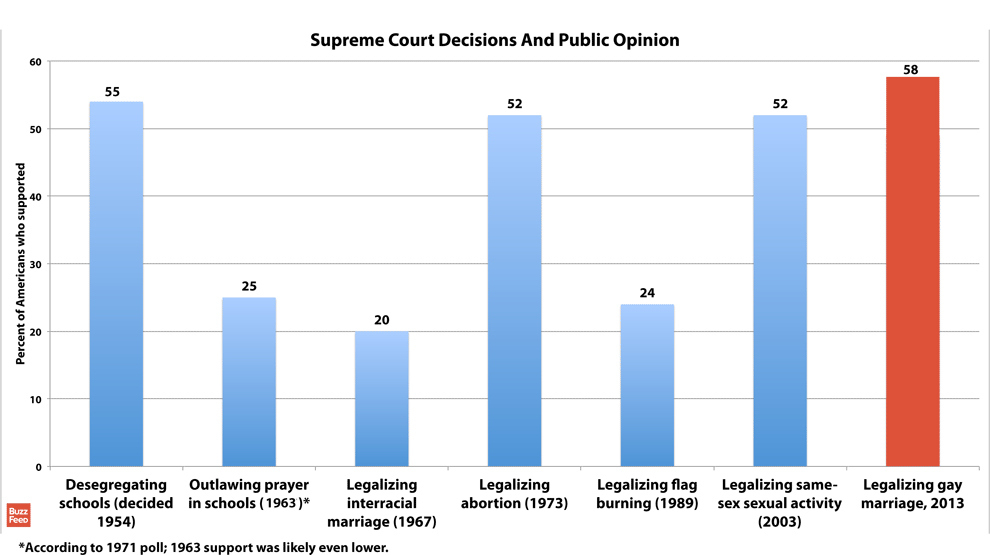
SCOTUS often doesn’t do what’s popular:

In the cases of Loving v. Virginia, which struck down state laws banning interracial marriage; Abington School District v. Schempp, which declared Bible reading in public schools unconstitutional; and Texas v. Johnson, which found flag-burning to be constitutionally protected, large majorities of Americans at the time disagreed with the Supreme Court’s decision. On interracial marriage, public opinion is now aligned with the Court’s decision — on flag-burning and prayer in schools it’s not, though it may be moving in that direction.

Chart Of The Day

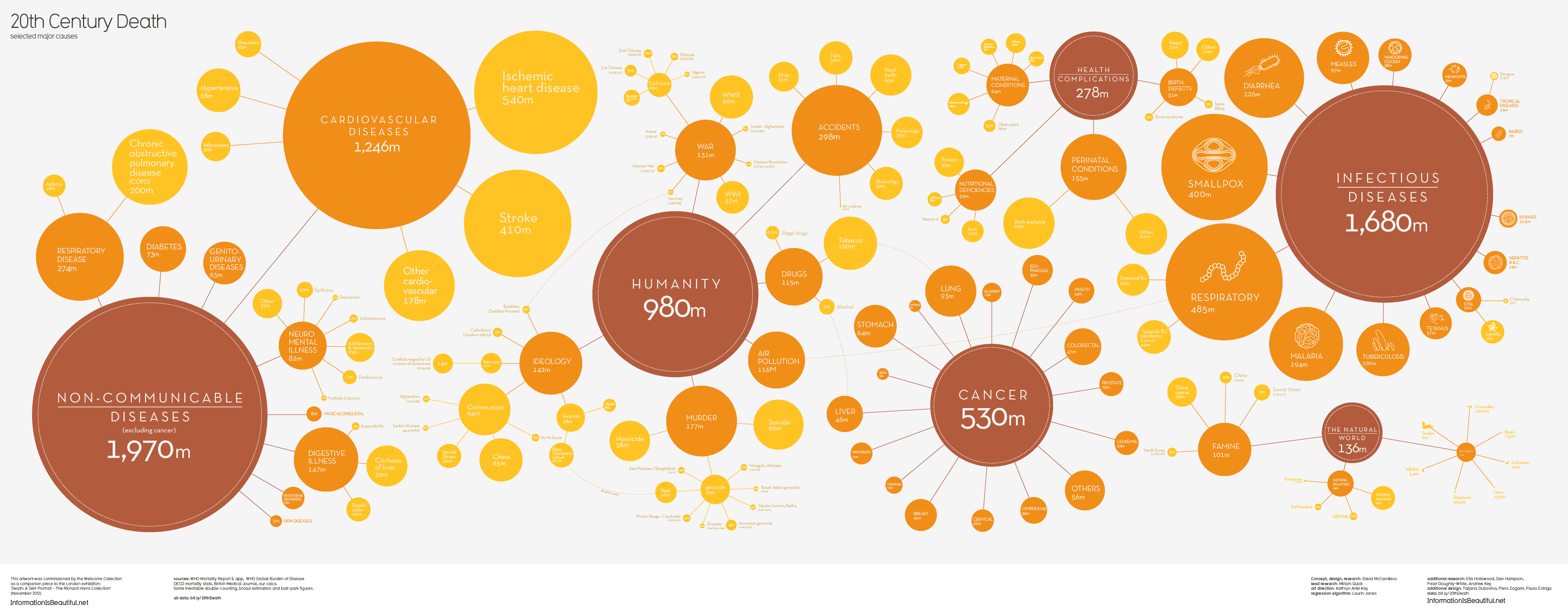
Information Is Beautiful displays the major causes of death throughout the 20th century (click to see the whole chart):

iib_death_wellcome_collection_cropped

Steven Mazie takes a historical perspective:

The notoriously bloody 20th century was a lot less sanguinary than previous eras, when up to 15 percent of people lost their lives in violent conflicts. And things have gotten a lot better still since the end of World War II. Why the improvement? Pinker lists a host of positive influences, from rising IQs and the expansion of women’s rights to surges in global commerce and literacy. All these trends have pointed us away from the Devil and closer to the “better angels of our nature.”

And what is responsible for these trends? Governments! Good old-fashioned nation states, Weberian monopolies on violence. It turns out one of Hobbes’ central contentions was dead right: the most important function of political society, its primary mission, is to bring peace.

Chart Of The Day

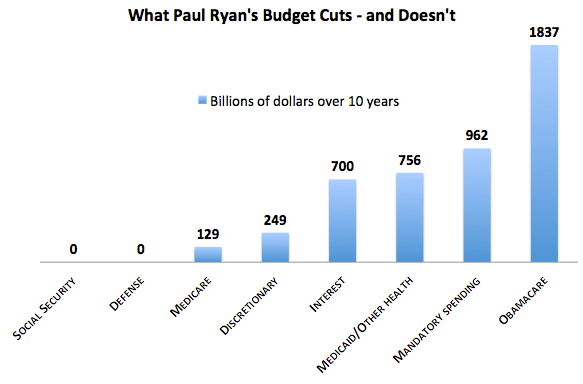
Ryan's Cuts

Derek Thompson looks at what the Ryan budget does and doesn’t cut:

[T]his budget is as notable for what it cuts as for what it doesn’t cut. Social Security, defense, and Medicare — together making up about half of the federal budget — would scarcely be cut at all. After all, it’s hard to win a Republican election if you abandon old voters and the defense industry. As for health care and cash support for the poor? That’s where the hammer hits.

Jon Cohn adds:

The report’s distinct treatment of defense and non-defense spending is actually a great window into Ryan’s fundamental philosophy. The section on defense spending has long passages about the importance of national security and the dangers of intemperate cuts. Rooting out waste is important, the document says, but it must be done carefully. The section on the social safety net has virtually no similar language. A reader unfamiliar with the reality of American life would have no idea that millions of Americans live in poverty—that they struggle, every day, to pay for bare necessities like gas, rent, and food. Of course, if “The Path to Prosperity” mentioned those things, readers might want to know what Ryan proposed to do about them. But Ryan doesn’t propose meaningful substitutes for the support he’d take away. Instead, he puts his faith in the strength of individuals and communities to help those who struggle.

The absence of defense cuts reveals that this is not about fiscal conservatism; it’s about a society that celebrates soaring inequality while attempting to remain the sole global hegemon. It’s almost a parody of a document of how a democracy perishes – because its social contract ends with two utterly separate nations of “hyper-rich” and “always-struggling”, it delegitimizes capitalism by rewarding and even celebrating its abusers, and because its premature austerity could well increase the long-term debt, rather than lower it.

It’s a high school term paper of utopianism. And it’s all Paul Ryan knows.

Chart Of The Day

Right To Arms

Zachary Elkins, Tom Ginsburg, and James Melton find that contemporary constitutions rarely include gun rights:

Constitutions with gun rights were reasonably well- represented in the late 1800s: 17 percent had the right in 1875. Since the early 1900s, however, the proportion has been less than 10 percent and falling. As new countries emerged in the interwar and post-World War II eras, their constitutions reflected a modern set of rights.

If arms were mentioned at all, it was to allow the government to regulate their use or to compel military service, not to provide a right to bear them. Today, only three out of nearly 200 constitutions contain a right to bear arms.

Chart Of The Day

pontifficating

Micah Cohen examines the Papal betting markets:

[C]urrently, four of the top six contenders are from Italy, including Cardinal Angelo Scola, the archbishop of Milan, who leads the list with an average betting line implying a 23 percent chance of becoming pope. The high ranking of Italian cardinals should not be a surprise. While neither of the last two popes was Italian, before Poland’s John Paul II was elected in 1978 the last non-Italian pope was Adrian VI of the Netherlands, who was elected in 1552.

(Screenshot from dataparadigm.com‘s real-time Papal odds tracker, via Francie Diep)

Chart Of The Day

UN Voting

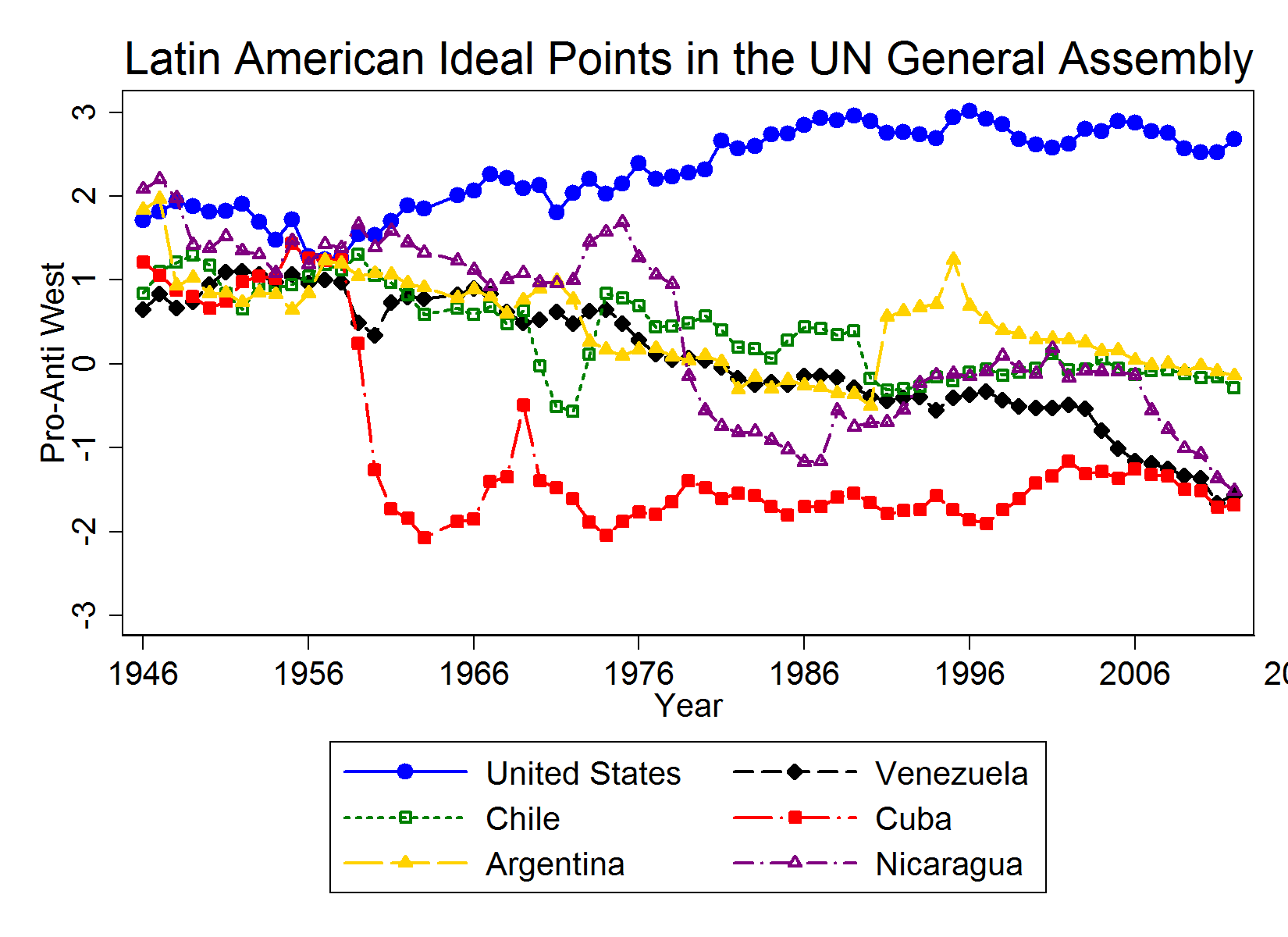
Using votes from the United Nations, Erik Voeten tracks Latin America’s agreement with the US over time:

In the early days of the UN, Latin American states were reliable allies of the U.S. Most Latin America states gradually moved away from the U.S. with the exception of Cuba, which shifted abruptly after its revolution. Hugo Chavez moved very quickly towards Cuba’s ideal point after taking power in 1998. He was joined there by Nicaragua (after the Sandinista came to power) and also Bolivia (not shown). This has created a somewhat bi-polar situation within Latin America; with some countries (like Argentina and Chile) quite a bit closer to the U.S. than others.

Chart Of The Day

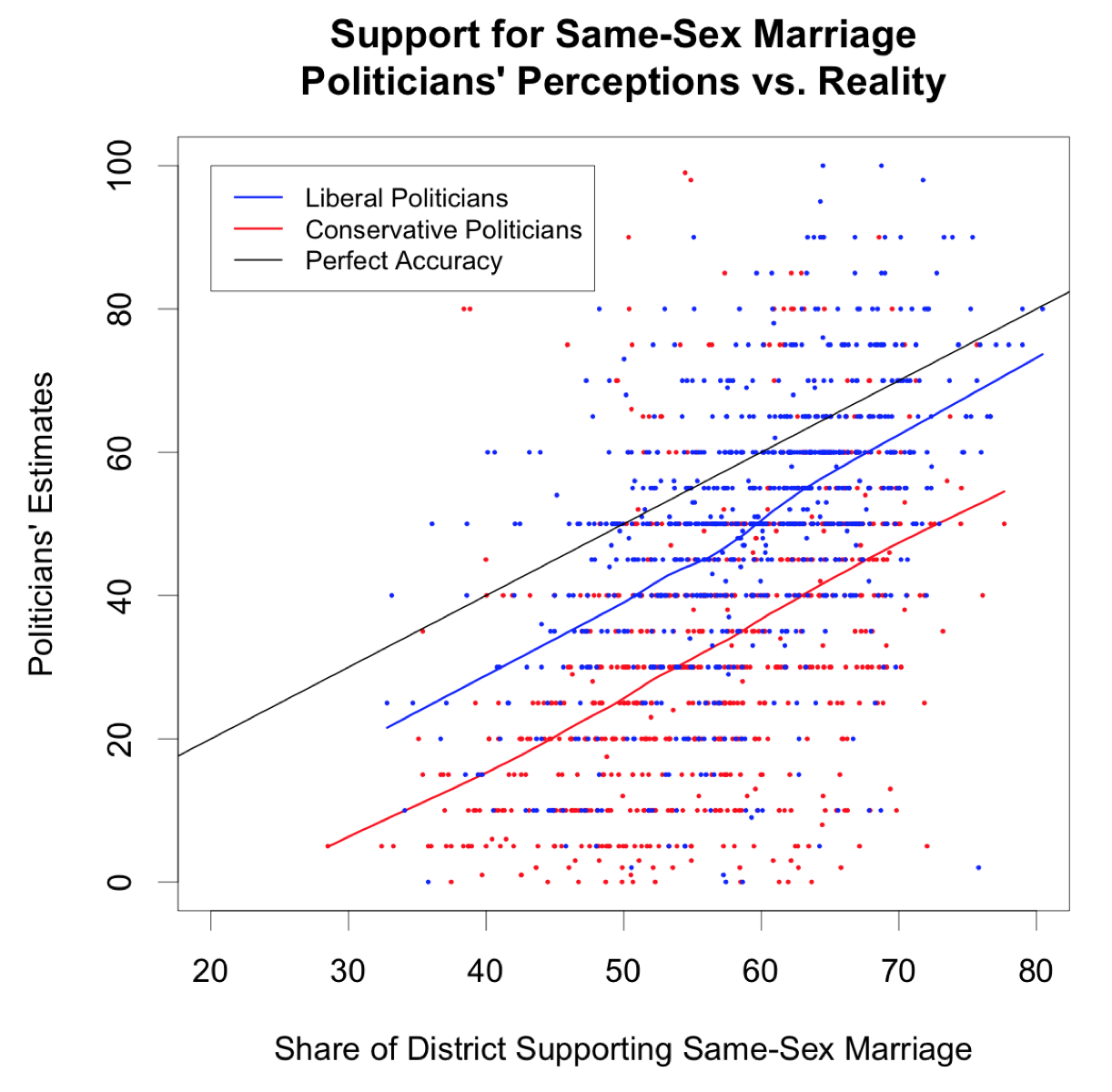
Marriage_Estimates

Dylan Matthews flags a new working paper (pdf) by David Broockman and Christopher Skovron:

Broockman and Skovron find that all legislators consistently believe their constituents are more conservative than they actually are. This includes Republicans and Democrats, liberals and conservatives. But conservative legislators generally overestimate the conservatism of their constituents by 20 points. “This difference is so large that nearly half of conservative politicians appear to believe that they represent a district that is more conservative on these issues than is the most conservative district in the entire country,” Broockman and Skovron write. This finding held up across a range of issues.