Quote for the Day

"There were legitimate reasons to worry about nuclear power, but now that we know about the threat of climate change, we have to put the risks in perspective. Sure, nuclear waste is a problem, but the great thing about it is you know where it is and you can guard it. The bad thing about coal waste is that you don’t know where it is and you don’t know what it’s doing. The carbon dioxide is in everybody’s atmosphere," – Stewart Brand, scarily smart thinker, airing some environmental heresies to John Tierney.

Read the whole thing, and get a little more optimistic about our environmental future. One divide in our culture right now is between optimists and pessimists. The case for pessimism is obvious and we see it every day: the threat of terror, the rise of fundamentalism, the warming planet, cultural dislocation. But the case for optimism is also solid: free societies can and will endure the ressentiment of the left behind, if we do not lose our nerve; technology can solve as well as cause problems; science is forging new vistas in health and ecology. Brand, for example, "sees genetic engineering as a tool for environmental protection: crops designed to grow on less land with less pesticide; new microbes that protect ecosystems against invasive species, produce new fuels and maybe sequester carbon."

And then this challenging statement, one that sees a contest between realism and romanticism at play in our world. It helps illuminate some of the issues in my debate with Sam Harris:

"My trend has been toward more rational and less romantic as the decades go by. I keep seeing the harm done by religious romanticism, the terrible conservatism of romanticism, the ingrained pessimism of romanticism. It builds in a certain immunity to the scientific frame of mind."

I guess I believe there is another conservatism to rival the "terrible conservatism of romanticism": a conservatism of doubt, of realism, of empiricism, and of nerve. That's what my book tries to capture. And it's a deeply optimistic book.

Love, Doubt, Children

Hugsandyhuffakergetty

Here's Sam Harris's latest letter to me. It begins:

Hmm…I'm afraid you chased a few red herrings in your last essay. I did not, for instance, beckon you to a world of my delusions, perfectly free of contingency. Nor did I claim that science is the gateway to such a world. I merely asked you to imagine what it would be like if our discourse about ethics and spirituality were as uncontaminated by cultural prejudice as the discourse of science already is. You appear to have misread me. Consequently, much of your last essay targeted terrain that I have never thought to occupy. I did hear some bomb-blasts in the distance. They were magnificent.

You are, of course, right to point out that science is beholden to the limits of human cognition (though it has begun to escape some of these limits with the aid of computers). Our cognitive horizons are clearly bounded by our neurophysiology, and our neurophysiology is a consequence of our evolution on this earth-which, as you know, is teeming with slithering contingencies as far as the eye can see. The point that I was trying to make is that science is not nearly as beleaguered by contingency as religion is. And this is what is so right with science and so wrong with religion. Needless to say, the discourse of science already exists, and it already functions by norms that are quite alien to religion. If applied in religion, these norms would leave very few traditional doctrines still standing. But contrary to your fears on the matter, this would not make religious music, art, or architecture any less beautiful.

This brings me to a related topic of confusion: there is nothing "purely rational" about the world I am advocating. Your comments seem to invoke a stark opposition between reason and emotion that I do not believe exists (and which now seems quite implausible at the level of the brain). The feeling we call "doubt" can be considered an emotion, and this is this feeling that prompts me to object to much of what you have written over the course of our debate. Could I find your reasoning doubtful without the feeling doubt? I don't know. But it has long been clear that people with neurological injuries that impede certain aspects of emotional processing fail at a variety of reasoning tasks. More to the point, perhaps, I do not think there is anything unreasonable about love, or about valuing love, or indeed, about valuing it above most (perhaps even all) things. While love is not reducible to reason, it is not in conflict with it either. So I think it is time we retire facile oppositions between cold rationality and juicy aesthetics, between truth and beauty, between reason and emotion, etc.

Regarding the fate of our children …

It continues here.

(Photo: Rebecca Jones hugs her dad Staff Sgt. Robert Jones during a homecoming ceremony for members of the 1st Marine Expeditionary Force February 15, 2007 at Camp Pendleton, California. By Sandy Huffaker/Getty.)

A Humanist Jesus, Ctd.

This post prompted an avalanche of emails. It was indeed challenging. Maybe it will help Sam and me narrow our differences in the coming posts. Here's a typical response:

This note spoke to me more than anything I have read in your debate with Sam Harris.

I wrote to you a few weeks ago, stating my theory that religion grew out of man’s awareness that his time on earth is temporary and that he needed a power outside himself and more permanent than himself to to give meaning to his temporary time on Earth. A Methodist minister once told me that we all believe in a god and that god is the idea or goal to which we devote most of our time, talents, and treasure. In too many instances that god is the pursuit of fame, fortune, or power, (sometimes under the guise of religion) all of which are ideas bigger than ourselves, but unfortunately, they have no permanence. Often, we belatedly realize this too late as our lives draw closer to the end.

This is where Sam and I part company. He offers no alternative to our human need to believe in a power outside of ourselves that is greater and more permanent than ourselves. Worshiping some branch of ever-changing science, as Harris seems to suggest, cannot fill that need.

I share with your reader the belief that Jesus’ life and teachings offers each of us born in the Christian tradition an opportunity to realize our full human potential. Whether he was born of a virgin birth, walked on water, or arose from the dead is immaterial. It is the way he lived his life and his principles, and ideas that are permanent and ever-lasting. We can pray or meditate on these concepts in an attempt to incorporate him more fully into our lives and our ways of living. This is a goal worth pursuing.

Truth Now

Prayerandrewwonggetty

Sam Harris moves the debate forward with his latest (and strongest, I'd say) challenge to faith. I'm actually grateful because it gives me a chance next time to fill in more precisely what my faith explicitly includes, and how I distinguish between believing the core of Catholic doctrine, while rejecting other aspects. So far, I haven't explained very well how reason informs a faith that doesn't start in reason – and I acknowledge that's a big challenge. Anyway, here's his latest in full. Here's the blogalogue in full. The pace has slowed a little, but that's a good thing, I think. We're not – or shouldn't be – engaging in quick-fire debate tactics, but in a serious attempt to figure out some common ground on ancient territory made fresh by the religious-political crisis of our time. Stay tuned. Here's a money quote from Sam's latest:

Given your attachment to Christianity and your admiration for the pope (who, as you know, makes far more restrictive—and, therefore, arrogant—claims about God), I suspect there is a raft of religious propositions that you actually do accept as true—though perhaps you are less certain of them than you are of God. I refer now to the specific beliefs that would make you a Christian and a Catholic, as opposed to a generic theist. Do you believe in the resurrection and the virgin birth? Is the divinity of the historical Jesus a fact that is “truer than any proof… any substance… any object”? If these are not the sort of things a person can just know without any justification, why can’t they be known in this way? If a man like James Dobson is wrong to be certain, without justification, that Jesus will one day return to earth, why is your assertion about the existence of a loving God any different? What would you say to a person who once doubted the story of Noah, but whose doubt “suddenly, unprompted by any specific thought, just lifted”? Is such a change of mood sufficient to establish the flood myth as an historical fact? …

Let me make it clear that I do not consider religious moderates to be 'mere enablers of fundamentalist intolerance.' They are worse. My biggest criticism of religious moderation — and of your last essay — is that it represents precisely the sort of thinking that will prevent a fully reasonable and nondenominational spirituality from ever emerging in our world. Your determination to have your emotional and spiritual needs met within the tradition of Catholicism has kept you from discovering that there is a mode of spiritual and ethical inquiry that is not contingent upon culture in the way that all religions are. As I wrote in The End of Faith, whatever is true about us, spiritually and ethically, must be discoverable now. It makes no sense at all to have one’s spiritual life pegged to rumors of ancient events, however miraculous. What if, tomorrow, a blue-ribbon panel of archaeologists and biblical scholars demonstrated beyond a shadow of a doubt that the Gospels were ancient forgeries and that Jesus never existed? Would this steal the ground out from under your spiritual life? It would be a shame if it would. And if it wouldn’t, in what sense is your spirituality really predicated upon the historical Jesus?

Read the full thing here. I'll respond next week.

(Photo: man at prayer after the 2005 tsunami by Andrew Wong/Getty.)

God and the Blogosphere

Thanks for all the links, many directly responding, others taking the conversation in new and interesting ways. Here's one view (from a comments section):

"So sophisticated Christians like Sullivan try to minimize that doctrinal element [of Christianity], and make it a small part of the religion, and pretend that the faith required to believe it is somehow different from the faith required to believe the larger and more baroque doctrines taught by fundamentalists. But no matter how small and moderate-seeming and fluid and guarded he makes it, he can't eliminate it while remaining Christian, and he can't make it rational. Which puts him in a tough spot in this debate."

I've been remiss in not posting more pro-Harris emails and links. Maybe that helps. Here's one from a "post-modern Catholic". Here's another email on those lines:

I have noticed that Harris and you have really been answering and presenting different kinds of reasoning. Harris keeps harping back to the truth of stuff, whereas although Atheism you talk about "a different kind of truth," your main points really get back to how much meaning religion has for people. In both cases, I think that you two are very honest in what you believe – but you keep giving each other answers that don't apply to the questions you think you are asking.

Having a different discussion about "Truth and Meaning" and how the two are different – and where and why each of you find meaning in your lives might be more helpful. Ask Sam why his life is meaningful and where that Meaning comes from. I'm sure he has an answer – and it will most probably be different than yours – but perhaps not so different.

I, personally, as an atheist, find meaning in my own possibility and will to act in this world. I have the opportunity to interact with others and to create things. I have the chance to leave this world a bit better than when I came into it… for my children and for the rest of humanity. I don't do this because a particular flying spaghetti monster ordained that I do it and will punish me with his noodly appendage if I don't. I do it because I have the power and I believe that it is better for me if I help those around me. What else would give my life more meaning than that?

But why is that more meaningful than flying a plane into the World Trade Center?

Letting Go

A reader writes:

I just read your essay on "Why I Call Myself a Christian" on BeliefNet.

Your reflection on faith – this specific faith of Christianity – is beautiful.  Having grown up in a world of conservative evangelicals who were mostly concerned with sheltering me from a dangerous world, your thoughts on the importance of letting go mean much. I had to learn the hard way, first by letting go of faith altogether, that real faith has little to do with control and that the message of Jesus of Nazareth wasn't one of laws and moral codes, but one of self-sacrificing, abundant love. After all, control is mostly about fear, and 1 John 4 makes it clear that fear, not hate, is the opposite of love.

Reading this in the context of your debate with Sam Harris made me think about that relationship between control, fear, and belief in more stark terms. Is the inability to believe rooted in truth, or is it the product of fear of letting go?  There came a point in my life when I just chose to believe, because living without faith, hope, and love was something I just couldn't do.  Was it psychologically weak? Intellectually dishonest?  Maybe, but I don't care. What I understood about the world and about myself didn't make sense if faith wasn't involved.

Truth and Consequences

Eccehomo1

My latest response to Sam Harris:

Dear Sam,

Thank you very much for your latest post. It was clarifying for me – and forced me to think hard about how to respond. I even communicated with my Imaginary Friend about it. You raise a blizzard of points, but there is one above all that needs to be addressed, because it cuts to the chase, and shows, I think, that we are closer than might appear.

Your fundamental point is the following, it seems to me. I can say that the revelation I have embraced is true, but because it cannot be proven by the robust standards of scientific empiricism, I cannot prove it to be true to your satisfaction. If I cannot prove Christiannation it to be true, in empirical fashion, then my faith must be excluded from rational discourse. In fact, if I understand you right, it must not only be excluded, it must be stigmatized. It must be ridiculed. It must end. Even if religion were to mean that everyone loved one another for ever (which, I readily concede, it obviously doesn't), that still would not be relevent for judging its truth. And the truth of a religious claim is the most fundamental thing about it. If I cannot prove this, I should shut up. As you rightly say, with self-fulfilling precision:
"You can call me 'intolerant' all you want, but that won't make unreasonable claims to knowledge sound any more reasonable; it won't differentiate your claims to religious knowledge from the claims of others which you consider illegitimate; and it won't constitute an adequate response to anything I have written or am likely to write."

I agree with all of that, except the last phrase. I believe I can offer an adequate response. It may not be adequate to you; but it is adequate to me, and to many, many others – in fact, to the vast majority of human beings who have ever lived. My response rests on an understanding of truth that is not exhausted by empiricism or materialism. I do not believe, in short, that all truth rests on scientific premises and can be 'proven' by empirical or scientific methods. I believe science is one, important, valuable and respectable mode of thinking about the whole. But there are truth questions it has not answered and cannot answer. What I found insightful about your book was your openness to this possibility. You repeat that openness in your recent posting:

"While I spend a fair amount of time thinking about the brain (as I am finishing my doctorate in neuroscience), I do not think that the utter reducibility of consciousness to matter has been established. It may be that the very concepts of mind and matter are fundamentally misleading us."

So you allow for a space where the logic of science and of materialism does not lead us toward truth, but may even mislead us about it, and lead us away from it. This is a big concession, and it undermines the certainty of your entire case. Such an argument must rest on a notion of ultimate truth that is deeper than science, beyond science. It must rest on a notion that allows for the rational legitimacy of my faith.

It might even include an appreciation of other modes of rational discourse that are not empirical in origin or form. Take, for example, the question of historical truth. You rely in your books on a lot of historical facts to buttress your empirical case. But these facts Tcscover_37 are not true – and could never be proven true – by the scientific method that is your benchmark. There are no control groups in history. There are no experiments. But there is a form of truth. Discovering that historical truth is the vocation of a historian – and it is a different truth than science, and reached by a different methodology and logic.

Similarly, mathematics can achieve a proof that has no interaction with the physical world. It may even be the closest to divine truth that human beings can achieve. But it is still logically separate from empirically verified truth, from historical truth, and even from the realm of human consciousness that includes aesthetic truth, the truths we find in contemplation of art or of nature.

My point here is to say that once you have conceded the possibility of a truth that is not reducible to empirical proof, you have allowed for the validity of religious faith as a form of legitimate truth-seeking in a different mode. The reason why you are not like some other, glibber atheists is that you recognize this. I might say that God has already been in touch with you on the matter.

But that is not the sum of your argument. You argue further that even if you concede the possibility of a legitimate form of religious truth-seeking, the content of various, competing revelations renders them dangerous. They are dangerous because they logically contradict each other. And since their claims are the most profound that we can imagine, human beings will often be compelled to fight for them. For if these profound matters are not worth fighting for, what is?

I agree that this is a central problem for religion in the world. It has always been so. it will always be so. This is not a new problem. It is arguably the oldest human debate. Whether one reads Pascal or Spinoza, Locke or Montaigne, Hobbes or Leo Strauss, the religious question always prompts a political question. I think the problem is eased – if never fully solved – by a critical move that I unpack in my book, "The Conservative Soul." That move is rooted in skepticism. Hobbes put it best, as he often did:

"For the nature of God is incomprehensible; that is to say, we understand nothing of what he is, but only that he is; and therefore the attributes we give him, are not to tell one another, what he is, nor to signify our opinion of his nature, but our desire to honor him with such names as we conceive most honourable amongst ourselves."

In my book, excerpted in Time Magazine here, I put it this way:

If God really is God, then God must, by definition, surpass our human understanding. Not entirely. We have Scripture; we have reason; we have religious authority; we have our own spiritual experiences of the divine. But there is still something we will never grasp, something we can never know – because God is beyond our human categories. And if God is beyond our categories, then God cannot be captured for certain. We cannot know with the kind of surety that allows us to proclaim truth with a capital T. There will always be something that eludes us. If there weren't, it would not be God.

I don't think you're far away from this. That's why you've gone on retreats, explored Buddhism, experimented with psilocybin, as I have. You see: we are closer than you might think. But you differ with me on how this translates into life. You ask legitimately: how can I, convinced of this truth, resist imposing it on others? The answer is: humility and doubt. I may believe these things, but I am aware that others may not; and I respect their own existential decision to believe something else. I respect their decision because I respect my own, and realize it is indescribable to those who have not directly experienced it. That's why I am such a dogged defender of pluralism and secularism – because I believe secularism alone does justice to the profundity of the claims of religion. The attempt to force or even rig laws to encourage others to share my faith defeats the point of my faith – which is that it is both freely chosen and definitionally dealing with matters that cannot be subject to common consensus.

And that brings me to the asymmetry of our positions. We both accept that there may well be a higher truth beyond empirical inquiry or proof. I respect your opinions in this matter, and feel informed by them. You regard my opinions as inadmissible in public debate, ludicrous, a form of lying, and irrational. Yes, you are being intolerant. More, actually. The entire point of your book is intolerance. Where I respect your position, you refuse to respect mine.

Or maybe, now that I've unpacked it, you respect my position a little more. Let me know,

God bless,

Andrew

(Painting of Jesus with Pilate by Antonio Ciseri.)

Debating Sam

A reader butts in:

I agree with you that the views in Sam Harris's book(s) are important because they are on people's minds and must be said without bullshit, but we also must ask whether his extreme views of the world's major religions are truly representative of those religions before we can argue with him about why faith isn't null. If all he wants to say is that religion is unnecessary because we have science, and that religion cannot co-exist with science (which is an odd claim considering that many of the great scientists of the West were passionately religious) then please proceed with the discussion, I'm interested in the debate.

If he wants to argue that religion is dangerous because religions like Islam are inherently violent and isolating, well then he'd have to at least answer to the facts that the Quran makes clear that one must not be the aggressor, but rather one must only fight those who attack or oppress one; and that Islam accepts Jews and Christians as people of the book – that the Quran is said not to be the one true word of God, but the Final Revelation from God to mankind – including Jewish texts, Christian texts, and their Prophets, as earlier Revelations from God.

On my current reading list are Vali Nasr's "The Shia Revival," and Reza Aslan's "No god but God." I am convinced there is a future for a humble Christianity; but in all truth, I do not know enough to make a serious, similar argument about Islam. Hence my attempt to understand more.

Debating Sam I Am

Sanddune

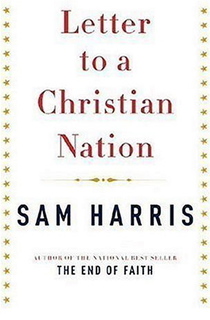
Today, I'm responding to the first post in a blogalogue with Sam Harris, author of "The End of Faith" and, most recently, "Letter To A Christian Nation." You can read his opening joust here. Money quote:

Given my view of faith, I think that religious "moderation" is basically an elaborate exercise in self-deception, while you seem to think it is a legitimate and intellectually defensible alternative to fundamentalism.

Read the rest here. My response:

Dear Sam,

First off, same back at you. I found your book, "The End of Faith" to be an intellectual tonic, even when I strongly disagreed with it. It said things that needed to be said – not least because many people were already thinking them – and it said them without cant or bullshit. I was and am grateful for that. And I wrote the religious passages of my own book, "The Conservative Soul," with some of your arguments in mind.

We agree that Islamic fundamentalism is by far the gravest threat in this respect (because of its confort with violence); and that the core feature of what occurred on 9/11 was not cultural, political, or economic – but religious. We agree that a large part of the murder and mayhem in today's Iraq is also rooted in religious difference, specifically the ancient rift between Sunni and Shia. We also agree, I think, that the degeneration of American Christianity into the crudest forms of Biblical inerrantism, emotional hysteria and cultural paranoia is a lamentable development. But we differ, I think, on why we find these developments discouraging.

The reason I find fundamentalism so troubling – whether it is Christian, Jewish or Muslim – is not just its willingness to use violence (in the Islamist manifestation). It is its inability to integrate doubt into faith, its resistance to human reason, its tendency to pride and exclusion, and its inability to accept mystery as the core reality of any religious life. You find it troubling, I think, purely because it upholds truths that cannot be proved empirically or even, in some respects, logically. In that sense, of course, I think you have no reason to dislike or oppose it any more than you would oppose my kind of faith. Your argument allows for no solid distinctions within faiths; my argument depends on such distinctions.

I'm struck, in other words, by the difference between Christianity as it can be and Christianity as it is expressed by fundamentalists. You are struck by the similarity between my doubt-filled, sacramental, faith-in-forgiveness and fundamentalism. We Christians are all as nutty as one another, I think you'd say. And my prettifying up religion as something not-so-crazy or unreasonable therefore may be more irritating to you than even the profundities of Rick Warren or Monsignor Escriva. At least, that's where I predict you will aim your next rhetorical fire. I'm braced.

Here's the nub, I think. You write:

I think that faith is, in principle, in conflict with reason (and, therefore, that religion is necessarily in conflict with science), while you do not.

Agreed. As the Pope said last year, I believe that God is truth and truth is, by definition, reasonable. Science cannot disprove true faith; because true faith rests on the truth; and science cannot be in ultimate conflict with the truth. So I am perfectly happy to believe in evolution, for example, as the most powerful theory yet devised explaining human history and pre-history. I have no fear of what science will tell us about the universe – since God is definitionally the Creator of such a universe; and the meaning of the universe cannot be in conflict with its Creator. I do not, in other words, see reason as somehow in conflict with faith – since both are reconciled by a Truth that may yet be beyond our understanding.

But just because that Truth may be beyond our human understanding does not mean it is therefore in a cosmic sense unreasonable. As John's Gospel proclaims, in the beginning was the Wordlogos – and it is reasonable. At some point faith has to abandon reason for mystery – but that does not mean – and need never mean – abandoning reason altogether. They key is with Pascal: "l'usage et soumission de la raison." Or do you believe that Pascal, one of the great mathematicians of his time, was deluded into the faith he so passionately and simultaneously held?

Cheers,

Andrew